REVIEW · UDAIPUR
Heritage & Cultural Walk of Udaipur -Guided Walking Tour
Book on GetYourGuide →Operated by Yo Tours · Bookable on GetYourGuide
A city clock, a palace view, and tight lanes. This 2-hour walk gives you a smart route through Udaipur’s key sights, plus the smaller lanes and side-stories you’d usually skip.
I like the way it’s built around real places (Clock Tower, Bagore Ki Haveli, Jagdish Temple, Lake Pichola ghats, City Palace, and Tripolia Gate). I also like the guide-led mix of facts and fun—think quick history, local context, and playful talk that ranges from past royalty to modern celebrity culture.
One consideration: it packs a lot into 2 hours, so you’ll be on your feet and you should come prepared—especially since a water bottle isn’t included.
In This Review
- Key highlights at a glance
- A 2-hour Heritage Walk that actually feels efficient
- Clock Tower: the first public clock of Udaipur
- Old market lanes: narrow streets, heritage buildings, and street-level history
- Bagore Ki Haveli and Jagdish Temple: where ornate stone does the talking
- Lake Pichola waterfront: Gangori Ghat to Lal Ghat
- City Palace: balconies, towers, and the lake-facing dominance
- Tripolia Gate (1711) and Jagat Shiromani Temple details you’ll miss alone
- The guide factor: Yash-style storytelling and practical local tips
- What you actually learn (and why it sticks)
- Price and value: why $14 can be a smart use of your time
- Practical planning: what to do before you meet the guide
- Should you book this Udaipur walking tour?
- FAQ
- FAQ
- How long is the Heritage & Cultural Walk of Udaipur?
- What does it cost?
- Is this tour private?
- What languages does the guide speak?
- What’s included in the tour?
- What is not included?
- What sights will I see?
- Do we walk through lesser-known parts of the city?
- What should I bring?
- Is free cancellation available?
Key highlights at a glance
- Clock Tower history tied to the Mewar royal family (the city’s first public clock)
- Old market streets: narrow, crooked, and full of heritage buildings
- Bagore Ki Haveli + Jagdish Temple with ornate carving details
- Gangori Ghat to Lal Ghat along Lake Pichola’s waterfront
- City Palace views across the lake from balconies, towers, and cupolas
- Tripolia Gate (1711) plus Jagat Shiromani Temple’s marble torana and more
A 2-hour Heritage Walk that actually feels efficient
Udaipur is one of those cities where a self-guided stroll can turn into a lot of wandering—and not always the useful kind. This tour keeps you moving on a route that makes sense, then slows down when the details matter.
At $14 per person, you’re paying mainly for two things: a guide who can connect the dots, and access to the corners of the old city that aren’t always obvious at street level. It’s a good fit if you want big landmarks plus the smaller context that makes them click.
The tour is listed as a private group, which usually means you get a better chance to ask questions and keep the pace comfortable for your group. The guide is a storyteller-type who talks with energy (and apparently with no shortage of entertaining opinions).
You can also read our reviews of more walking tours in Udaipur



Clock Tower: the first public clock of Udaipur
You start with the Clock Tower, described as the city’s first public clock built as a souvenir to the royal family of Mewar. That simple detail changes how you look at the tower. It’s not just a landmark for photos—it’s a clue to how royal power filtered into public life.
Even if you’ve seen clocks in other cities, this one carries a very specific local message: it was made to honor the Mewar family. Your guide’s job here is to frame that connection so it doesn’t feel like trivia.
What to watch for: take a moment to look at the clock’s placement in the area around it. Starting here sets the tone for the rest of the walk—Udaipur’s old center is full of small statements like this, where power, culture, and everyday street life overlap.
Old market lanes: narrow streets, heritage buildings, and street-level history
After the clock, you pass through the old market—narrow, crooked, timeless streets where heritage buildings line up along the way. This is where a guided walk earns its value. Without local help, it’s easy to walk through such a maze and only notice the obvious storefronts.
The tour’s approach here is practical: you’re not just moving from one monument to another. You’re being shown how the street pattern, the building facades, and the general feel of the lanes connect back to Udaipur’s history and culture.
What makes this stop work is the rhythm. You get some context, you take in a few turns, and suddenly you understand the old city layout as something purposeful rather than random.
If you prefer slow sightseeing where you can linger at every wall, know that this portion is more about walking and noticing. You’ll get stops with explanation, but it stays action-oriented.
Bagore Ki Haveli and Jagdish Temple: where ornate stone does the talking
Next up is Bagore Ki Haveli, described as an 18th-century structure built by a Mewar prime minister. That matters. “Haveli” buildings are often discussed as architecture, but your guide is meant to connect this one to the people and politics behind it.
You’ll also see the Jagdish Temple, decorated with ornate carvings. This is one of those sights where the best use of time isn’t rushing to the front gate—it’s slowing down just enough to spot what the carvings are doing. Temple decoration can be decorative, yes, but it also teaches you how symbolism and craftsmanship were treated as serious business.
Why this works on a walking tour: these sites break your route into meaningful chunks. Bagore gives you a sense of power in domestic form, and Jagdish shifts you into religious artistry and public devotion.
A small drawback: ornate carving rewards patience, and with a strict 2-hour format you might not be able to linger as long as you would on a standalone temple visit. Still, having a guide point out what to notice can make your 5–10 minutes feel like 30.
Lake Pichola waterfront: Gangori Ghat to Lal Ghat
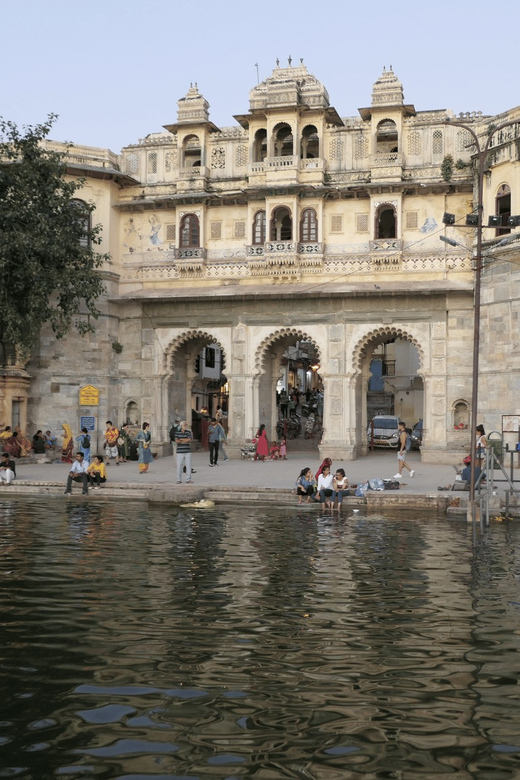
Then you reach the Gangori Ghat and Lal Ghat, described as famous waterfront spots on shimmering Lake Pichola. The word shimmering here isn’t just poetic—it’s a reminder that the waterfront look is partly about light and partly about how the city meets the water.
This part of the walk gives you a visual reset. After stone buildings and lane turns, you get open sightlines to the lake. That matters in Udaipur, because the whole city often reads differently once you can see how it sits beside the water.
What to expect: you’ll move along the waterfront while your guide explains the significance of the ghats. Even if you’re not planning to ride a boat, seeing where the city’s edges meet the lake helps you understand Udaipur’s shape.
Practical tip: take a moment to stand still. Waterfront photos are one thing, but the real payoff is letting your eyes adjust so the buildings along the water start to line up in your head.


City Palace: balconies, towers, and the lake-facing dominance
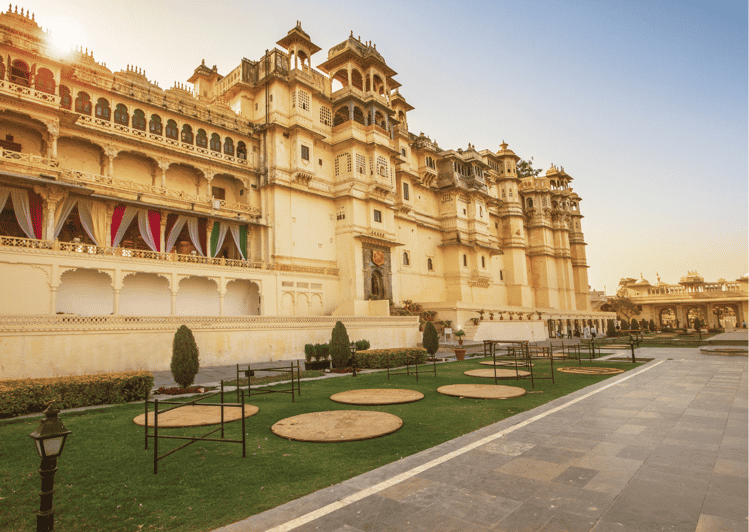
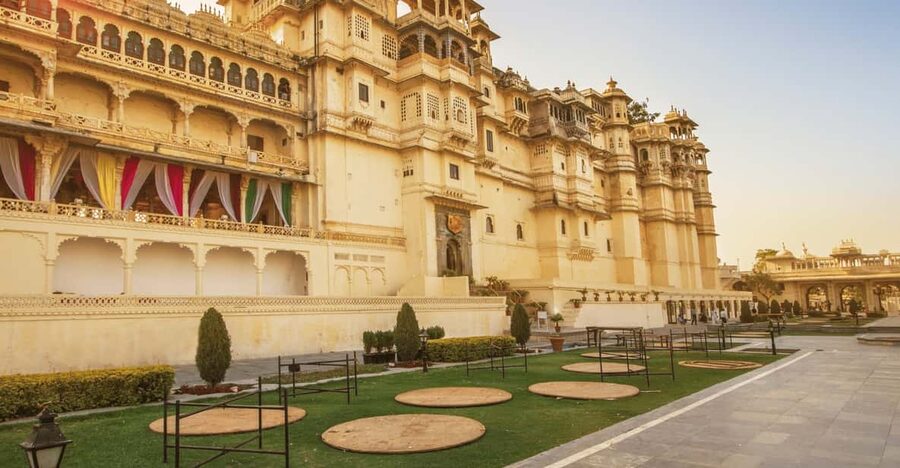
No guided walk of Udaipur feels complete without City Palace. Here, it’s described as majestic and overwhelming, full of balconies, towers, and cupolas towering over the lake.
This is a great stop for anyone who likes architecture that shows status without needing explanations. The palace reads as a statement: the city’s skyline was designed to communicate power and permanence.
How to get more out of it on a walking route: don’t only look straight ahead. Look for the shapes that repeat—balcony patterns, tower forms, and rooftop structures. When your guide frames what you’re seeing, those design details start to feel connected rather than random.
A consideration: City Palace can make you want to spend more time than the itinerary allows. This tour gives you a strong overview, but if you love palaces, you might still want to come back later for a slower second look.
Tripolia Gate (1711) and Jagat Shiromani Temple details you’ll miss alone
The tour closes with Tripolia Gate, described as a three-arched gate built in 1711. Then comes the Jagat Shiromani Temple, including a carved marble torana, plus a Garuda chhatri and mandapa.
This is the kind of end-of-walk stop where a guide really changes your experience. Gates and temple elements can look like decoration if you don’t know what to focus on. With the names and components given in the tour, you get a checklist you can actually see with your eyes.
Tripolia Gate is especially useful because it’s time-stamped. A built-in-1711 gate creates a concrete anchor for your mental timeline of the city.
Why it’s a strong finale: by the time you reach this area, you’ve already walked through royal-era stories (Clock Tower, Bagore Ki Haveli), religious art (Jagdish), and the city’s water connection (Lake Pichola ghats). Tripolia Gate and Jagat Shiromani Temple pull those themes together—power, devotion, and the built environment all in one place.
The guide factor: Yash-style storytelling and practical local tips
A walking tour rises or falls on the guide, and this one is sold as a trained storyteller who can speak English and Hindi. That language flexibility matters in India, especially when you want explanations that feel smooth rather than simplified.
One detail that stood out from real-life feedback: a guide named Yash was praised for enthusiasm, clear explanations, and making the experience fun without turning it into chaos. Yash was also specifically linked with local food specialties and chai spots, which is exactly what makes a city walk feel local rather than museum-like.
Even if your tour guide isn’t named Yash, the format is clear: you’re there for more than sight-seeing. You’re there for conversation, plus money-saving and practical local recommendations.
Also worth noting: the tour includes mildly scurrilous talk about past and present celebrities and defunct royals. That might sound odd, but it’s basically how the guide uses humor to keep history from feeling stiff. It’s not about being offensive—it’s about staying entertained while you learn.
What you actually learn (and why it sticks)
Udaipur has plenty of famous landmarks, but knowing what you’re looking at is the real upgrade. This tour is built to connect the big pieces of the city—Mewar royal references, haveli life, temple carving, waterfront life, and palace dominance—into one flowing narrative.
You also learn how the old city works as a system. The lanes aren’t random. The waterfront isn’t just pretty. The palace isn’t just a big building. Each stop feeds into the next, so your brain doesn’t dump everything at the end of the day.
And because you’re moving, the learning sticks better. Stationary museum visits can blur together. Here, you remember the feeling of turning a corner and suddenly finding a new landmark—or hearing a story that makes a familiar facade suddenly make sense.
Price and value: why $14 can be a smart use of your time
$14 for a 2-hour guided walk is a bargain in many parts of the world, but the real question is value. Here, your money is buying more than someone to point directions.
You’re getting:
- a highly trained, friendly storyteller/guide
- English and Hindi interpretation
- access through hidden lanes and places
- local tips to save money and explore better
- conversations that keep the pace from going dull
If you’re the type who likes to wander anyway, a guided walk still helps because Udaipur’s old streets are complicated. It’s easy to see a landmark and miss why it matters. In 2 hours, this tour attempts to fix that.
If you’re short on time and want a quick first pass through the city’s core, this is the kind of tour that prevents you from wasting a day drifting without a plan.
Practical planning: what to do before you meet the guide
There’s no hotel pickup or drop, so plan to get yourself to the starting area on your own. The tour also notes that a water bottle isn’t included, so bring one if you think you’ll need it.
Bring comfortable clothes—that’s the only specific packing advice given. Since it’s a walking tour, you’ll want to wear what lets you move easily.
The experience is listed as a private group. If you’re traveling with friends or family, this can be a smoother way to do Udaipur than a crowded public group, because you can ask questions and adjust pace without constantly waiting.
If you want the tour to feel more relaxed, consider choosing a time when you won’t feel rushed. You have 2 hours; the most enjoyable pacing is when you can match the guide’s rhythm rather than fight it.
Should you book this Udaipur walking tour?
Book it if you want an efficient introduction to Udaipur’s core: Clock Tower, haveli life at Bagore Ki Haveli, Jagdish Temple carvings, Lake Pichola waterfront ghats, City Palace, and Tripolia Gate. The combo is designed to show you the city from multiple angles in one morning/afternoon-style outing.
Skip it if you want long, slow visits where you can spend lots of time inside each site. This walk is structured for storytelling and coverage, not extended wandering at every doorway.
One more reason to consider booking: the guide is the product here. With trained English/Hindi storytelling, local food and chai recommendations, and routes through lesser-seen lanes, this is the sort of tour that can turn a basic sightseeing day into a more coherent Udaipur day.
FAQ
FAQ
How long is the Heritage & Cultural Walk of Udaipur?
It lasts 2 hours.
What does it cost?
The price is $14 per person.
Is this tour private?
Yes, it’s listed as a private group.
What languages does the guide speak?
The guide speaks English and Hindi.
What’s included in the tour?
Included are a highly trained friendly storyteller/guide, great local tips and recommendations, access to hidden lanes and places, and interesting stories and conversations.
What is not included?
Hotel pickup and drop are not included, and a water bottle is not included.
What sights will I see?
You’ll visit the Clock Tower, Bagore Ki Haveli, Jagdish Temple, Gangori Ghat and Lal Ghat on Lake Pichola, Udaipur City Palace, and Tripolia Gate with Jagat Shiromani Temple and its described carved elements.
Do we walk through lesser-known parts of the city?
Yes. The tour includes access to hidden lanes and places.
What should I bring?
Bring comfortable clothes.
Is free cancellation available?
Yes, free cancellation is offered up to 24 hours in advance for a full refund.