REVIEW · BAKU
Baku’s Ancient Heart
Book on Viator →Operated by Guide Baku Heydar · Bookable on Viator
Baku’s Old City tells stories on every corner. This 2-hour walking tour threads history and everyday life through UNESCO-listed lanes, with Maiden Tower viewpoints, Silk Road stops, and mosque legends led by Heydar in English or Russian. You’ll also get handy context for what you’re seeing, from merchant tales to the shapes and symbols in the architecture.
I love how the tour stays fun and conversational, not lecture-style, with Heydar’s mix of clear explanations and humor that keeps the pace light. I also love the tight, efficient route: lots of small stops that add up fast, so you walk away with a real sense of how the Old City works without spending half a day in museums.
One thing to plan for: the Maiden Tower climb is narrow and has no elevator, so the top is not ideal if stairs are a deal-breaker. Also, the tour runs in good weather, so you may need a flexible mindset if conditions are bad.
In This Review
- Key highlights you’ll remember fast
- Where the Old City journey starts: Maiden Tower viewpoints
- Open-air grave stones and the Silk Road’s trading story
- Tiny fortress energy: Multani and Bukhara caravanserais
- Legends you can spot: Lovers and Cats
- Life inside power: House of Baku Khans
- Before you climb: Yeraltı hamam (underground bath)
- Ali Shamsi workshop: the lion-head art detail
- Palace of the Shirvanshahs: why you might not go inside
- Miniature books you can’t quite believe: Guinness-level scale
- Poetry and symbolism: Vahid monument as a tree of life
- Aptek Museum and bathhouse: from Soviet filming to a working hammam
- Pomegranate wine stop: Absheron Sharab shop
- Vagif Mustafazadeh house museum: mugam meets jazz
- Mosque route: Muhammad Mosque, Juma Mosque, Lezgi Mosque
- Price and value: what $25 buys you in real-world terms
- Who this tour suits best (and who should think twice)
- How to make the most of your walk
- Should you book Baku’s Ancient Heart Old City walk?
- FAQ
- How long is the Old City walking tour?
- What does the $25 price include?
- Is the Maiden Tower climb included?
- Are there admission fees for the stops?
- What languages is the guide available in?
- How large is the group?
- Where does the tour start and where does it end?
- Does the tour run in bad weather?
- Can I cancel if my plans change?
- Is the tour suitable for most people?
Key highlights you’ll remember fast
- Maiden Tower, with optional top access and citywide views (stairs only)
- Silk Road caravanserai lore, including Multani and Bukhara stories tied to larger empires
- Underground and old-school bathing, including the Yeraltı hamam beside the main gates
- Miniature books in the Guinness story, including an extremely tiny Holy Koran
- Mosques with specific social details, including one where women can pray in the Old City
- Heydar’s family-friendly pacing, easy to talk with and patient when you ask questions
Where the Old City journey starts: Maiden Tower viewpoints
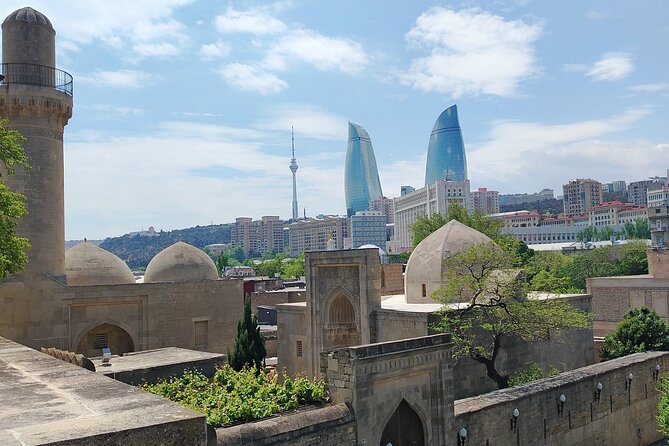
Most Old City tours start with the big landmark. This one makes it practical by beginning at Maiden Tower, the photo magnet that also acts like your orientation point. The guide sets you up with the kind of questions people naturally have—why it was built, what it was for, and how it worked—so you’re not just looking at a tower, you’re reading it.
You’ll have the option to go up to the top. Do it if you want that payoff: sweeping views across the Old City roofs and out toward the modern city. But be clear-eyed about the climb. The stairs are narrow, and there’s no elevator, so take your time and don’t rush it.
Even if you skip the top, the Maiden Tower area is still worth it because it anchors the rest of the walk. The Old City feels like a maze until you understand what the main landmarks are doing visually and historically.
You can also read our reviews of more tours and experiences in Baku.


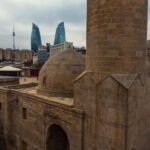
Open-air grave stones and the Silk Road’s trading story
Right next to Maiden Tower, you’ll pass the Open Air Museum, along with remains of the Saint Bartholomew chapel. This is one of those places where the scale feels small, but the story is heavy: more than 50 grave stones were found here.
Locals call this spot a market place—a key idea because it reframes the area from a “quiet memorial” into a place tied to trade routes. In your head, try turning the present into the Great Silk Road era: merchants moving through, people gathering, and objects and beliefs changing hands.
The practical upside: this is a quick stop with a lot of meaning. The gentle downside: because it’s short, you’ll get more out of it if you stay tuned to what Heydar is linking it to, instead of treating it like another quick photo.
Tiny fortress energy: Multani and Bukhara caravanserais
Then you hit the caravanserai stops, and this is where Baku’s Old City starts to feel like a working network, not just a collection of monuments.
At Multani Caravansarai, the story is simple and vivid. When the Great Silk Road passed close by, merchants—especially from Multan—stayed inside a fortified setup for safety. Think: travel meant risk, so the “little fortress” mattered as much as the goods.
Next comes Bukhara Caravanserai. Why Bukhara? The explanation ties the naming to larger historical forces, including Tatato-mongol troops under Tamerlan capturing the region of modern Azerbaijan. That kind of link is why this tour feels more connected than a random list of sights: you learn how names travel, even when people didn’t stay.
These stops are short, so you won’t get a full history lecture at each one. What you do get is enough structure to connect the next places you see—like how royal life and merchant life sat side by side in the same Old City fabric.
Legends you can spot: Lovers and Cats
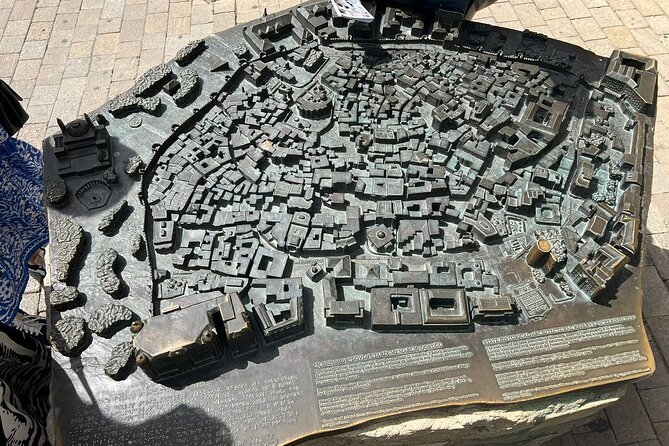
One of the more playful stops is the Monument to Lovers and Cats. It’s quick, but it’s also a good reminder that Old City culture isn’t only stone and dates.
There are local legends here—some sad, some tied to love—and Heydar will share them. Even if you don’t know the background, you can read the mood by how the site is treated in the neighborhood.
This is a great pause point if your legs are starting to protest. And it breaks up the heavier themes so the rest of the walk stays enjoyable.
Life inside power: House of Baku Khans
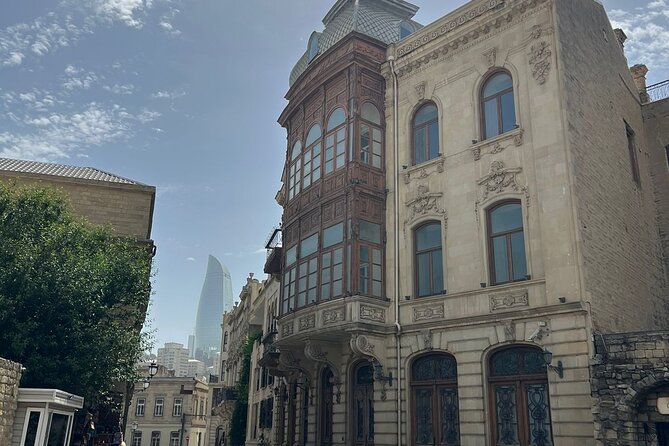
After monuments and memorials, the walk turns toward governance with the House of Baku Khans. This is where the Old City stops being just “ancient” and starts being very human: a city within a city, ruled by khans during a specific time window.
The tour frames it around the period from the late 1700s into the early 1800s. From 1747 to 1806, the khans lived there. That detail matters because it helps you picture the building not as a museum object, but as a residence tied to real decisions, servants, and daily routines.
If you like context, you’ll appreciate how the guide connects this to bigger political changes—like the Russian Empire annexation mentioned in the tour narrative—so the building fits into a timeline instead of sitting as an isolated landmark.
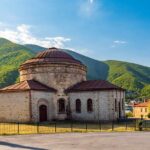
Before you climb: Yeraltı hamam (underground bath)
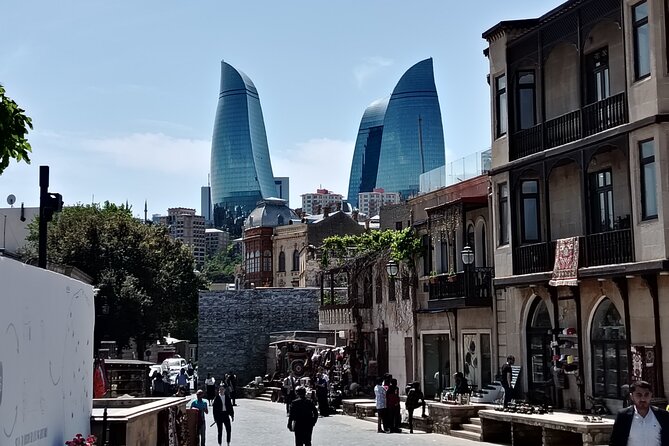
Right near the Old City main entrance, on the left side from the double gates, you’ll find Yeraltı hamam (the underground bath). The tour places it in the 17th century and makes a smart point: when you understand bathing culture, you understand a lot about daily life.
This is a short stop, but it’s also visually memorable. The idea of heat and water below street level is exactly the kind of detail that sticks with you when you later see other historic baths in the city.
One practical note: because the stop is close to the entrance area, it’s easy to get caught up in photos and forget your footing. Watch where you step.
Ali Shamsi workshop: the lion-head art detail
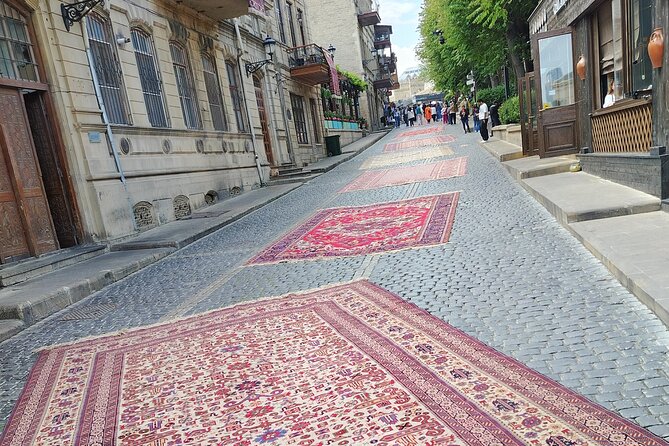
Next is Workshop Ali Shamsi, a smaller art stop that’s easy to miss if you’re only scanning for the biggest monuments. But the tour nudges you toward it by pointing out a specific visual clue: a big lion head depicted on the wall.
This kind of stop is valuable because it shows how the Old City keeps producing culture at street level. It’s not only past glory. It’s also living craft and local artistic identity.
It’s also a good example of why a guided walk helps: the best parts often aren’t labeled in a way that screams for your attention.
Palace of the Shirvanshahs: why you might not go inside
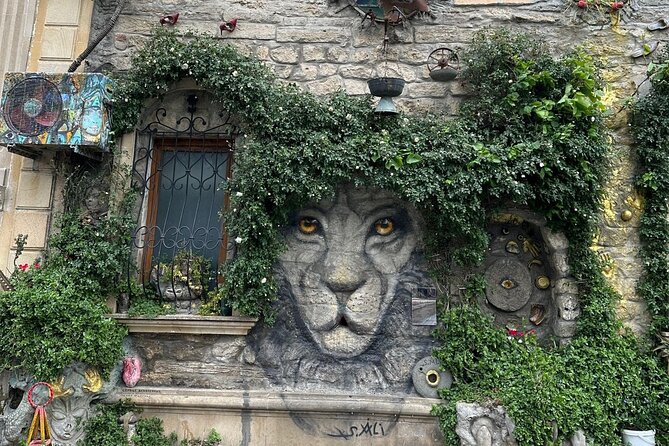
Then you reach the Palace of the Shirvanshahs, a major UNESCO component tied to Old City Baku. The tour gives the timeframe as 12th to 15th centuries and notes that it was damaged over time, with restoration in 2004.
What I like about this stop is the clarity about expectations: the tour says you do not go inside because the area is large and you’d need extra time—at least an additional hour—to do it properly.
So this is a “see and understand” stop, not a “check every room off” stop. If you want interior spaces, you’ll need to plan extra time outside the tour. If you just want a strong overview, this part works very well.
Miniature books you can’t quite believe: Guinness-level scale
One of the most surprising stops is the Baku Museum of Miniature Books. The tour highlights that the collection was included in the World Guinness book since 2014, framed as the biggest collection of miniature books in the world.
This is where your brain has to do some recalibration. You’ll see books sized down to something like nail-scale, including a tiny Holy Koran from the 17th century.
Even if you normally skip small museums, I think this one is worth it because it’s not just “look at objects.” It’s “look at what humans can make,” and then use that awe to understand the broader theme of Old City learning culture.
Because the museum is a set stop with a defined item type, it also helps structure the end of the walk before you head into the mosque stretch.
Poetry and symbolism: Vahid monument as a tree of life
The Vahid Monument adds a different flavor: literature and symbolism. It’s tied to the Azerbaijani poet who contributed to satiric poetry, and the statue’s design is explained through an idea of the tree of life.
You’ll hear what the head is depicting—used to talk about how life begins and how it ends. That’s a lot of meaning squeezed into a small stop, and it gives you a new way to read the visual language of the Old City.
If you enjoy learning what symbols mean before you get lost in the crowd, this is a strong mid-route checkpoint.
Aptek Museum and bathhouse: from Soviet filming to a working hammam
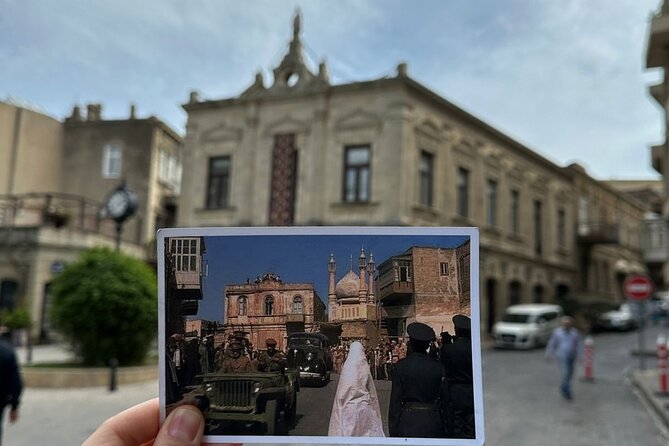
The Aptek Museum and Bathhouse stop connects eras in a clever way. The guide references the Soviet comedy movie Brilliant Hand and points out a spot associated with filming in 1968—the tour calls it the place people often ask about, using the punchy nickname damn it.
But the real practical value for visitors is the living element: within the Old City there are several bathhouses built hundreds of years ago, and one still functions as a bathhouse. The tour says this operating hammam traces back to the 18th century and continues today.
This combo—pop culture detail plus a still-working tradition—helps you see the Old City as a place where history is not only preserved, it’s used.
Pomegranate wine stop: Absheron Sharab shop
If you like tastings, the Absheron Sharab wine shop stop is a straightforward palate break. Azerbaijan is described here as especially known for pomegranate wine, and you’ll have the chance to taste if you want.
This isn’t a long detour. It’s a quick way to make the day multi-sensory. Just pace yourself, especially if you’re planning to do more walking later.
Vagif Mustafazadeh house museum: mugam meets jazz
Another themed stop is the House Museum of Vagif Mustafazadeh. The tour frames him as having a short life but worldwide fame for mixing Azerbaijani folk music of mugam with American jazz.
I like this part because it’s not stuck in the past. It shows how Azerbaijani culture can connect to other musical worlds while keeping a local core.
If you’re traveling through Azerbaijan hoping to understand identity beyond monuments, this stop helps a lot.
Mosque route: Muhammad Mosque, Juma Mosque, Lezgi Mosque
The final stretch turns into a focused mosque walk, and that’s where you’ll start noticing how different religious buildings reflect different rules and social roles.
First is Muhammad Mosque, described as the oldest mosque in the Old City, built in the 11th century. The tour connects it to a likely earlier Zoroastrian fire temple, pointing out signs like traces of fire under the prayer hall and spiritual artifacts. Locals also have a name tied to a broken tower, which the guide shares the meaning of.
Next comes Juma Mosque, described as the single mosque where women are allowed to pray inside in the Old City. It’s also the main, biggest Old City mosque, built in the 12th century and restored in the early 20th century.
Finally, you reach Lezgi Mosque. The tour explains that there were once 28 mosques in this small city, but now fewer remain for visiting or seeing, and this one is under reconstruction. It was built in the 12th century by Ibragim Ashur, also known as Lezgian mosque.
Even though the stops are brief, the message is consistent: religion here is built into daily life, and the buildings reflect rules, community rhythms, and layers of time.
Price and value: what $25 buys you in real-world terms
The price is $25 per person, for about 2 hours on foot, with a mobile ticket and a small group size (maximum 15 travelers). What makes that price feel fair is the format: you’re not only paying for landmarks—you’re paying for the guide’s ability to connect what you see.
You also get licensed English and Russian speaking guidance. That matters because with Old City architecture, the details are often too subtle to catch on your own in a quick walk.
One caution on value: the tour price is described as including only the walking tour itself. Some sites—especially if you choose to go to the top of Maiden Tower—may require separate entry arrangements. It’s usually worth it if you want the view, but it’s smart to decide in advance.
If you have limited time in Baku, this is exactly the kind of tour that helps you get orientation fast. It’s also good if you prefer walking with a plan rather than wandering and guessing what matters.
Who this tour suits best (and who should think twice)
This walk fits well if you:
- want an organized Old City route without a long museum day
- like learning stories alongside landmarks, not just taking photos
- enjoy a small-group vibe where you can ask questions
- need a flexible, family-friendly pace (the guide is described as attentive and easy to talk to)
It may be less ideal if:
- you struggle with stairs, because Maiden Tower has narrow upstairs and no elevator
- you hate walking and prefer everything to be close to one another
- you’re traveling with very rigid timing, since the Old City route is designed as a sequence of short stops
How to make the most of your walk
A few small choices can upgrade the whole experience.
Wear shoes you can trust on cobblestones and uneven surfaces. The tour is mostly short stops, so your feet do the heavy lifting. Bring water, even if each segment is brief.
If you want Maiden Tower top access, decide early. Your mood changes once you know you’ll climb. If you’re not sure, do the tower at the start while you still have energy.
Finally, use the guide’s explanations as a filter. When someone talks about how a site ties to trade routes or political shifts, it’s not trivia—it helps you notice what you’d otherwise miss.
Should you book Baku’s Ancient Heart Old City walk?
If you’re seeing Baku for the first time and you want a fast, meaningful Old City orientation, I think this tour is a strong bet. You get a guided route through the UNESCO core, practical context at major landmarks like Maiden Tower and the Palace of the Shirvanshahs, and a few surprises that add character—miniature books, a working bathhouse tradition, and even pop-culture filming trivia.
The main reason to hesitate is mobility. The Maiden Tower climb is not built for anyone who needs an elevator. If stairs are manageable for you, this is an efficient, well-guided walk that turns the Old City into a story you can actually follow.
FAQ
How long is the Old City walking tour?
It’s listed as approximately 2 hours.
What does the $25 price include?
The price includes the walking tour itself. Tips are not included.
Is the Maiden Tower climb included?
The tour description says you can choose to go to the top if you want, and it warns there’s no elevator and the stairs are narrow. This suggests top access may require arranging a ticket separately.
Are there admission fees for the stops?
Many stops in the route are labeled admission ticket free, but the Maiden Tower top is presented as optional and tied to getting a ticket if you want to go up.
What languages is the guide available in?
The guide is licensed and provides English and Russian speaking interpretation.
How large is the group?
The maximum group size is 15 travelers.
Where does the tour start and where does it end?
It starts at Asəf Zeynallı küç, Bakı, Azerbaijan, and ends back at the meeting point.
Does the tour run in bad weather?
It requires good weather. If canceled due to poor weather, you’ll be offered another date or a full refund.
Can I cancel if my plans change?
Yes, free cancellation is available up to 24 hours in advance for a full refund.
Is the tour suitable for most people?
The tour says most travelers can participate, and service animals are allowed. Still, the Maiden Tower has narrow stairs and no elevator, so that’s the biggest physical consideration mentioned.