REVIEW · BAKU
Baku Oil Heritage & Old Town Walking Tour
Book on Viator →Operated by Azerbaijan Traveller · Bookable on Viator
Fountains Square tells you what Baku used to be. I love how the tour connects oil-boom street life to what you see today, so the city reads like one continuous story.
The big win for me is the human scale: a small group, a private guide’s attention, and plenty of stops where you can ask questions without feeling rushed or herded.
One possible drawback: this walk focuses on explanations from the outside—if you’re hoping to go inside every monument, you may need extra time and any admission fees you choose to pay separately.
In This Review
- Key things I’d bank on before you go
- Fountain Square: where Baku’s oil boom energy still lingers
- Icherisheher (Old City) without rushing the UNESCO sites
- Istiglaliyyat Street: the oil barons’ urban plan, in stone and institutions
- Philharmonic Fountain and the Ali and Nino link
- Town Hall, Saadet Sarayi, and the romance of oil wealth
- Women’s education, manuscripts, and Azerbaijan’s first independence
- Ismailiyya Palace: Venetian Gothic and a father’s memorial
- How the 2.5 hours really works (pace, group size, and your best prep)
- Price and value: is $70 a fair deal for this kind of walking tour?
- Should you book this Baku Oil Heritage & Old Town walk?
- FAQ
- How long is the Baku Oil Heritage & Old Town Walking Tour?
- Where does the tour start and end?
- How much does it cost?
- Is bottled water included?
- What’s included vs not included?
- Do you enter the UNESCO sites?
- What are the main areas you’ll cover?
- What group size is the tour limited to?
- What if the weather is bad?
Key things I’d bank on before you go
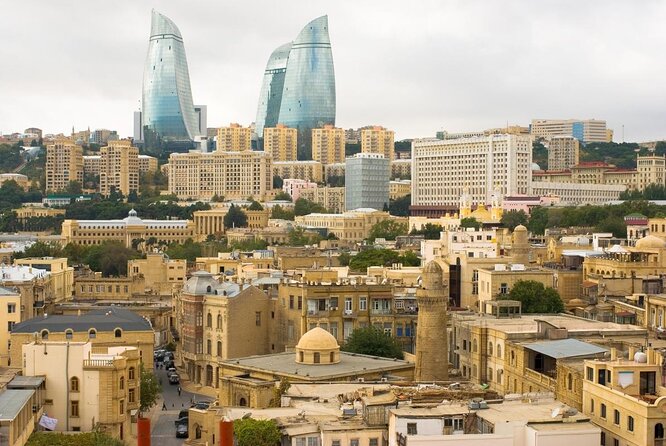
- Fountain Square, real downtown history tied to the first oil boom trading street
- Icherisheher (Old City) UNESCO views with smart photo-and-story stops instead of ticket lines
- Istiglaliyyat Street’s makeover showing how oil barons reshaped Baku’s institutions and neighborhoods
- Architecture with a plot: oil-baron love stories, schools for women, and Venetian Gothic style
- Guides like Gani (and sometimes Lina) are known for lively, clear English and practical add-ons
- 2.5 hours, max 30 people with a pace meant to keep you moving, not waiting
Fountain Square: where Baku’s oil boom energy still lingers
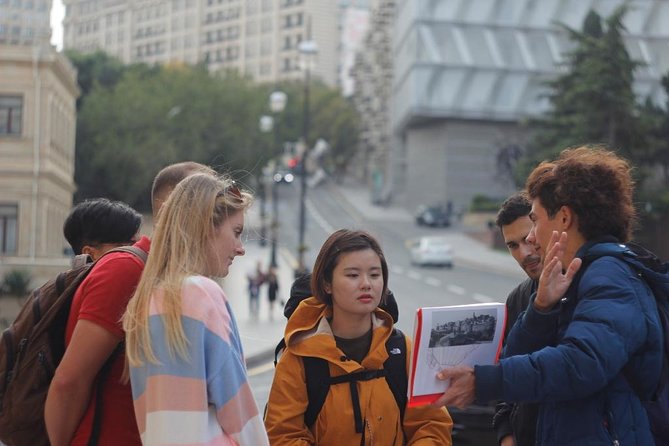
Your tour begins at Fountain Square in central Baku, and that’s not an accident. This is the kind of downtown meeting point that feels modern—until your guide starts talking about how this area operated during Baku’s first oil boom, when it became a main trading street in the late 1800s and early 1900s. Suddenly the fountains and open square stop being just scenery and start acting like a time marker.
I like that you get context early. Instead of walking into Old City as a separate “old thing,” you first learn how the oil economy created the money, the ambition, and the building projects that still shape the streets around you. You also get an easy rhythm: short walks, frequent pauses, and quick orientation so you don’t waste time wondering where you are.
Practical note: since this is a walking experience (about 2 hours 30 minutes), comfortable shoes matter. The route includes narrow lanes in Old City and several street-level viewpoints, so plan for steady steps, not casual strolls in sandals.
You can also read our reviews of more tours and experiences in Baku.

Icherisheher (Old City) without rushing the UNESCO sites
Then you move into Icherisheher, Baku’s Old City—home to four UNESCO World Heritage sites. What I found useful is the approach: the tour explains and frames the sights, often without you needing to enter buildings. That means you can spend your energy learning what you’re looking at instead of spending it in entry lines and ticket counters.
You’ll start with the dramatic Gosha Gala gate, described as the main entry to the Old City. It’s a great “threshold” moment because it signals that you’re not just walking streets—you’re crossing into a historic system of walls and defenses that dates back centuries. From there, you’ll pass by the citadel walls, listed as a 12th-century UNESCO site.
The stops around the Maiden Tower and the Muhammad Mosque are especially good for understanding why these places mattered. You won’t necessarily go inside, but your guide will explain what’s significant at the entrances—useful if you want the main takeaways fast. The Maiden Tower is described as 12th century, and the Muhammad Mosque (spelled Muhammad Mosue in the tour description) is listed as an 11th-century UNESCO site.
A big part of the appeal is how you move through narrow streets. This is where the tour feels most “Baku” in a real way: small-scale lanes, layers of history, and moments where your guide can point out details you’d normally miss if you just wandered.
You’ll also cover the Shirvanshakh’s Palace (15th century) with explanation offered without entering, plus a stop for the Museum of Miniature Books. If you’re the kind of person who likes cultural corners—tiny formats, old manuscripts, small-but-meaningful collections—this adds character to the architecture-heavy sections.
What to watch for: this Old City focus is about perspective, not checklists. If you want maximum time inside museums or buildings, you’ll likely want to add separate time after the tour.
Istiglaliyyat Street: the oil barons’ urban plan, in stone and institutions
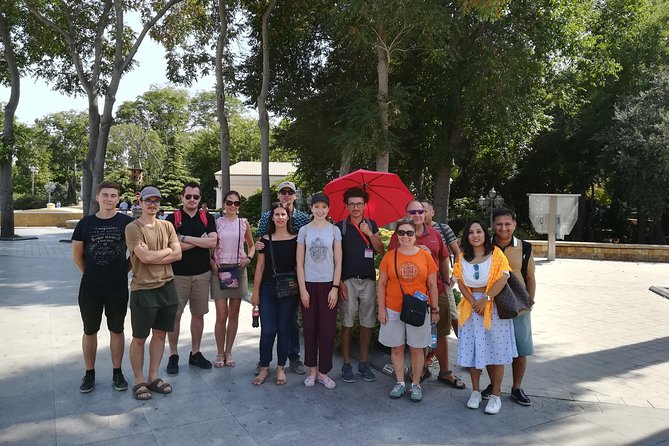
After Old City, the tour shifts to the broader city—Imperial Russian-era streets and the urban transformation that came with oil money and ambition. The star of this section is Istiglaliyyat Street, historically known as Nikolayevskaya and Kommunisticheskaya.
Think of this as the “how modern Baku formed” chapter. Your guide ties the architecture and institutions to the oil barons’ quest for personal glory and public legacy. You start seeing Baku not just as a port city, but as a place where wealth funded civic buildings, cultural halls, and educational projects.
Along Istiglaliyyat Street, you can expect viewpoints and stories linked to several landmarks, including the Governor’s Garden and the Town Hall. There’s also the Philharmonic Hall, the Palace of Happiness, and stops tied to learning and literature like the Institute of Manuscripts of Azerbaijan and the Literature Museum. The description also calls out the Ismaliyya Palace, connected to the Muslim Charitable Society, and a statue of Nizami.
This section is valuable because it helps you connect the dots between the oil boom and everyday life. Those big buildings weren’t built in a vacuum. They reflect who had money, what communities cared about, and how power wanted to be seen.
Tip: if you enjoy photo stops, this is a great area for it. Architectural façades and institutional buildings give you clean angles and obvious details for your guide to explain.
Philharmonic Fountain and the Ali and Nino link
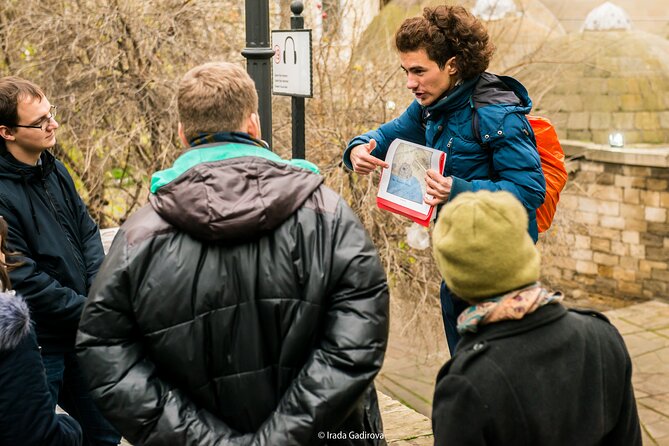
Next comes the Philharmonic Fountain, a shorter stop but a memorable one. You’re looking at part of the city’s expansion beyond the fortress wall, and the tour ties the garden story to the book Ali and Nino.
Even if you don’t know the story already, the connection helps you understand why literature and landscape often travel together in Baku. The fountain and its surrounding garden area become more than decoration—they’re part of how the city narrates itself.
This stop also works as a mental reset. After Old City’s stone lanes and the institutional density along Istiglaliyyat Street, you get open space again and a chance to refocus before the next architecture-heavy section.
Town Hall, Saadet Sarayi, and the romance of oil wealth
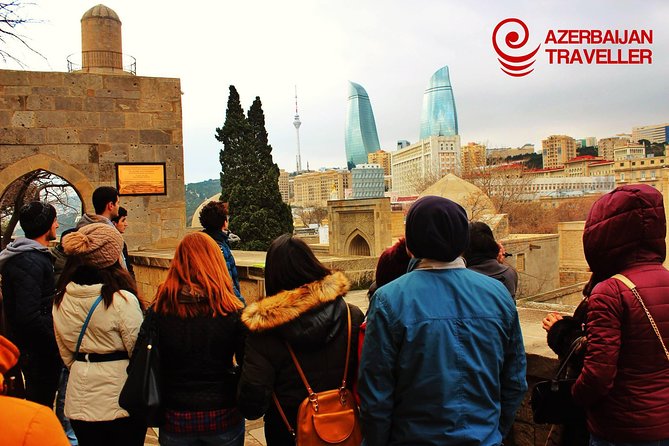
Baku Town Hall is the next major anchor point, framed in the tour as a monumental landmark from the oil boom era. Here you get a direct explanation of why the buildings matter: your guide points out European architectural influences and how those styles reflect the city’s cosmopolitan mix.
Then the tour moves to Saadet Sarayi, described as a story about an oil baron and his wife, with their love story retold through weddings held in the mansion today as a marriage registry. If you like human-scale history—relationships, personal ambition, and how romance shows up in architecture—this stop delivers it in a memorable way.
You’ll also see how the tour keeps the oil theme grounded. Oil wealth isn’t presented only as extraction and economics. It’s presented as housing, institutions, civic pride, and social life—sometimes in very literal ways like a building serving today’s ceremonies.
Women’s education, manuscripts, and Azerbaijan’s first independence
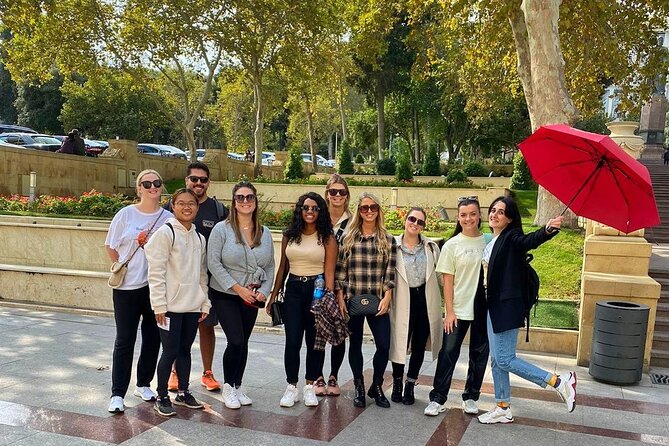
One of the more meaningful segments happens around the former Taghiyev School for Girls, now associated with the Institute of Manuscripts of Azerbaijan. This stop is built as a modernization story, not just a photo opportunity.
Your guide explains it as Baku’s first secular school for Muslim women and connects that education push to broader changes in society. The description also links this to Azerbaijan’s first independence, so the story stretches beyond one building and into a wider timeline.
This is the kind of stop that’s easy to overlook if you’re only chasing famous viewpoints. But if you’re trying to understand why Baku felt different from other regional cities—why it produced new kinds of institutions—this is where the tour earns its time.
Also, because it’s tied to manuscripts, you get a cultural angle, not just a political one. Even at an exterior explanation level, it helps you see education and preservation as part of the same momentum.
Ismailiyya Palace: Venetian Gothic and a father’s memorial
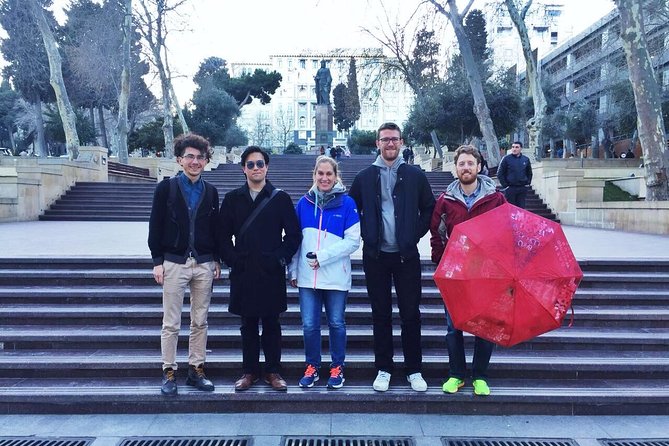
The tour ends its major architecture run at Ismailiyya Palace. The story here is specific: an oil baron commissions a palace in memory of his son, and the result becomes an important architectural landmark in Venetian Gothic style.
That combination—money, memory, and imported design language—fits perfectly with the tour’s overall theme. Baku’s oil era didn’t only fund industry. It funded identity. People wanted their names, their families, and their values to show up in the skyline.
Since you’re walking back toward Fountain Square at the end, this stop also works as a final “big image” moment before you return to the starting point. You’re already primed with the oil story, so the palace’s style and meaning land faster.
How the 2.5 hours really works (pace, group size, and your best prep)
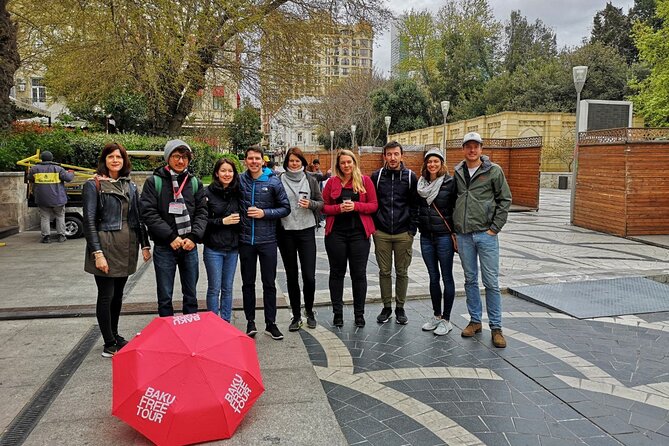
The tour runs about 2 hours 30 minutes and is designed for momentum. You’ll cover a lot of ground without feeling stuck waiting for other travelers, since the highlights emphasize not wasting time and keeping the group moving.
Group size matters here: the tour has a maximum of 30 travelers, which is large enough to feel social but small enough that your guide can still manage the flow at each stop. You also get bottled water included, which is a small detail that actually matters on a city-walk day.
When I think about value, I translate it into simple questions:
1) Do you get context fast enough to enjoy the city afterward?
2) Do you get practical guidance beyond dates and facts?
From the guides’ style—especially with people like Gani, who are praised for storytelling, humor, and clear pacing—you can reasonably expect more than a list of sights. Many guides also share follow-up suggestions such as where to eat next, plus simple Azerbaijani phrase tips that make your next interactions easier. Some guides even offer food direction like baklava ideas and vegetarian suggestions.
Price and value: is $70 a fair deal for this kind of walking tour?
At $70 per person, you’re paying for three things: a live guide, a tight route, and interpretation. You are also paying for time-saving. Instead of figuring out what each building meant (oil boom? Russian-era transformation? Ottoman influences? secular schools?), your guide gives you the connective tissue while you walk.
What you get that affects value:
- Bottled water is included.
- Most stops are free to view externally, with explanations offered without entering certain sights.
- The tour covers multiple “chapters” of Baku—Old City UNESCO sites, oil-baron architecture, modernization education, and cultural ties like Ali and Nino.
What you might pay extra for:
- Admission fees are not included, even though the core stops are described as explanations without entry. If you choose to enter museums or towers on your own time, that’s where extra costs could appear.
- Lunch isn’t included, so build in a meal afterward.
If you’re the type who likes history but hates wasted time, the price makes sense because the guide turns scattered sights into a readable narrative.
Should you book this Baku Oil Heritage & Old Town walk?
I think you should book it if you’re visiting Baku for the first time and want a structured way to understand why the city looks the way it does. This tour is particularly strong if you care about how oil shaped institutions, architecture, and social life—not just monuments.
Skip or adjust if you want a slow, inside-everything day. The tour is built for learning from the street and the entrances, with explanations at key points rather than heavy time inside multiple buildings.
Finally, book it with an eye toward your guide. People like Gani and Lina are highlighted for keeping groups engaged and for answering lots of questions. That kind of guide-to-traveler interaction is what makes a 2.5-hour walk feel like more than “just going around.”
FAQ
How long is the Baku Oil Heritage & Old Town Walking Tour?
It runs for about 2 hours 30 minutes.
Where does the tour start and end?
The tour starts at KFC9RCP+28F, Nizami St, Baku, Azerbaijan, and ends back at the same meeting point.
How much does it cost?
The price is $70.00 per person.
Is bottled water included?
Yes. Bottled water is included.
What’s included vs not included?
Included: bottled water. Not included: lunch, private transportation, and any admission fees.
Do you enter the UNESCO sites?
The description says you’ll walk in Old City and that explanations are offered without entering certain sights. For example, it notes no entry for specific sites like the Maiden Tower and Shirvanshakh’s Palace, while still providing an explanation at the entry.
What are the main areas you’ll cover?
You’ll cover Fountain Square, Old City (Icherisheher) UNESCO stops, and several landmarks along Istiglaliyyat Street, plus stops tied to the Philharmonic Fountain, Town Hall, Saadet Sarayi, the former Taghiyev School for Girls/Institute of Manuscripts area, and Ismailiyya Palace.
What group size is the tour limited to?
The maximum group size is 30 travelers.
What if the weather is bad?
This experience requires good weather. If it’s canceled due to poor weather, you’ll be offered a different date or a full refund.