REVIEW · BARCELONA
Barcelona Gothic Quarter History Tour
Book on Viator →Operated by WONDER WANDER · Bookable on Viator
Roman streets and Gothic façades share the same walk. This 2-hour tour connects MUHBA Roman sites with Catalan Gothic landmarks, and it stays fun because the group is limited to up to 8 people. One thing to consider: the experience depends on good weather, so plan for the possibility of a date change.
I like that the pacing works well for a first visit. You get guided storytelling in English, a mobile ticket for easy entry, and each stop is scheduled for short, focused chunks so you’re not stuck listening for hours. The price is $57.99 per person, and with guide time plus included fees and taxes, it can feel like good value.
You’ll also end in a lively spot. The route starts at Carrer de Duran i Bas, 11 in Ciutat Vella and finishes at Plaça Reial, so you can keep the evening going right away. Expect stops tied to Rome, the Crown of Aragon, the inquisition, the Spanish Civil War, and Catalan Judaism—plus a late-quarter look at Plaça Reial and its history.
In This Review
- Key highlights worth knowing
- Price and what $57.99 really buys you
- Meeting at Carrer de Duran i Bas, ending at Plaça Reial
- MUHBA Via Sepulcral Romana: the Roman cemetery stop
- Plaza del Pi: Catalan Gothic and the Santa María del Pi moment
- Barcelona Cathedral: history you can see in the stone
- Plaça del Rei: Rome, the Crown of Aragon, and the inquisition
- MUHBA Temple d’August: Roman Forum energy, condensed
- Placa Sant Felip Neri: a Spanish Civil War reminder in the quarter
- Catalan Judaism: the story layer you’ll want to ask about
- Plaça Reial: the 200-year-old shop and plaza storytelling
- What I’d look for if I were choosing this tour
- Should you book this Barcelona Gothic Quarter History Tour?
- FAQ
- Is the tour offered in English?
- How long is the Barcelona Gothic Quarter History Tour?
- Where do I meet the guide, and where does the tour end?
- What time does the tour start?
- How many people are on the tour?
- Are tickets or admissions included for the stops?
Key highlights worth knowing
- Small group, slower details: max 8 travelers makes it easier to ask questions and catch the visual clues.
- Roman to Gothic in one walk: MUHBA Via Sepulcral Romana and Temple d’August sit alongside medieval landmarks.
- Free admission listed for the main stops: MUHBA and the scheduled landmarks are marked ticket-free in the route plan.
- Serious topics, handled outdoors: the inquisition and Spanish Civil War come up without turning the walk into a lecture.
- Finishes at Plaça Reial: a practical endpoint that’s easy to use for dinner plans.
Price and what $57.99 really buys you
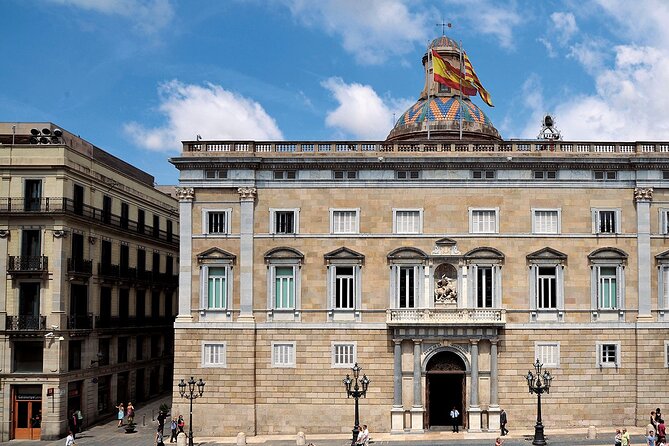
At $57.99 for about 2 hours, this isn’t a “grab a photo and move on” tour. What you’re paying for is the in-person guide time, the English-language experience, and all fees and taxes included in the price. The math feels more reasonable when you remember the walk covers multiple major landmarks rather than just one building.
Another value booster: the tour plan lists free admission for the featured sites and viewpoints, including the MUHBA Roman locations and key public squares. That means you’re not scrambling to add museum tickets on top of the tour cost. Even if you’re a quick walker, you’ll likely spend more than 2 hours just trying to orient yourself in the Gothic Quarter without a guide.
The group size also matters for value. When the cap is 8 people, you’re less likely to get that “look at the next sign” feel that bigger groups can create. In past walks, Andrea has been praised for explaining things clearly, spotting details most people miss, and keeping the energy friendly with fun facts (and time for delightful bites).
You can also read our reviews of more historical tours in Barcelona
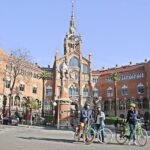
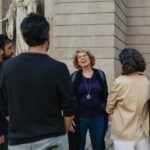

Meeting at Carrer de Duran i Bas, ending at Plaça Reial
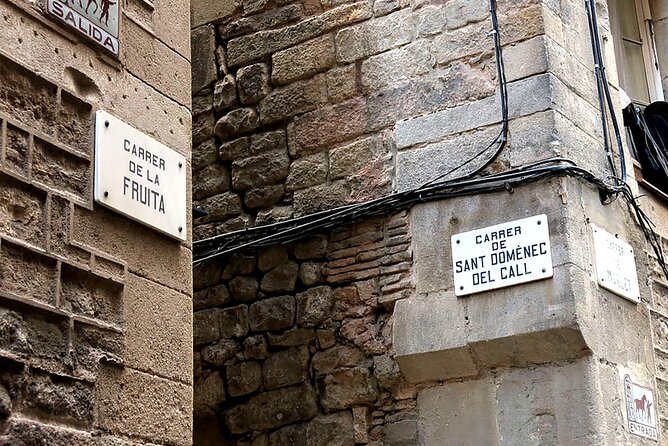
The meeting point is Carrer de Duran i Bas, 11 (C iutat Vella, 08002 Barcelona). That’s a good starting area because you’re already deep in the old quarter, so the tour doesn’t waste time getting you to the action.
The tour starts at 4:00 pm and runs for roughly 2 hours. Late afternoon can be a sweet spot for walking: you may get less glare than mid-day and a nicer atmosphere for looking closely at stone façades and street-level details. Still, keep an eye on the forecast—this experience requires good weather.
It finishes at Plaça Reial. I like this as a tour endpoint because it’s practical. You’re dropped near a famous square where you can grab a meal, find a café, or simply keep strolling without needing another transport plan. And visually, it also acts like a bridge: you move from Roman and medieval layers into a more “Barcelona now” public space.
MUHBA Via Sepulcral Romana: the Roman cemetery stop
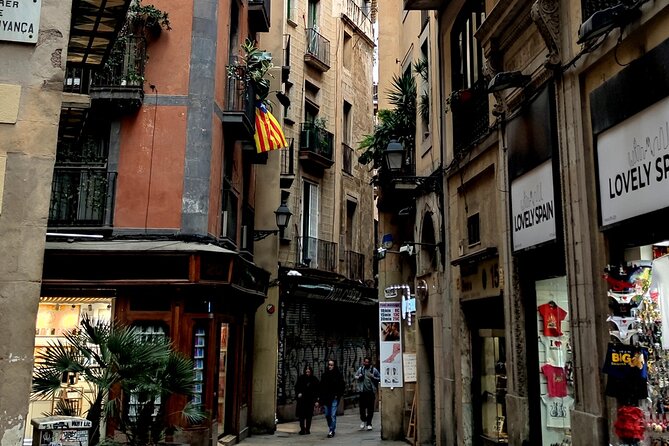
One of the most memorable parts of the route is MUHBA Via Sepulcral Romana, where you visit the old Roman cemetery. Even though it’s scheduled for about 5 minutes, it sets the tone fast: you’re not starting with medieval walls—you’re starting with Rome, with burial spaces and a very different sense of scale.
This is the kind of stop that works best when you don’t just look at stone. You’ll get a guide-led story about what you’re seeing and why Roman cemeteries mattered in how ancient people planned the city. It’s a quick hit, but it helps you read the quarter differently for the rest of the walk.
A small consideration: because the time is short, you’ll want to stay present and keep your questions simple. If you’re the type who loves long museum-style reading, you might wish this Roman section lasted longer. If you’re after orientation plus a guided “what am I looking at?” moment, this stop nails the job.
Plaza del Pi: Catalan Gothic and the Santa María del Pi moment
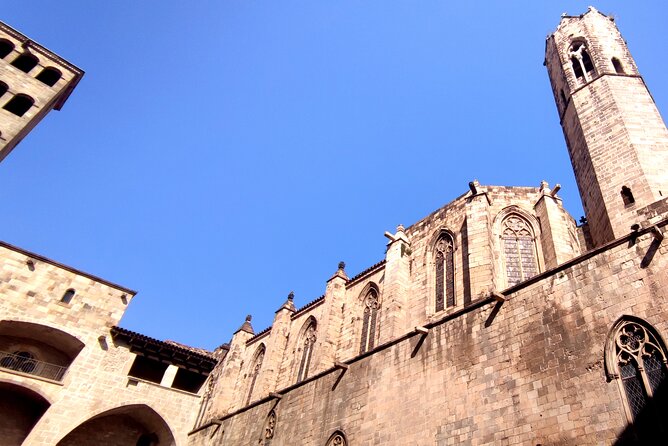
Next up is Plaza del Pi, scheduled for about 15 minutes. This is where Catalan Gothic comes into focus, especially through Santa María del Pi. The square gives you room to look up and then look around, and the guide will connect the church style to what makes this part of Barcelona distinct.
You’ll also hear about treasures of Petrixol street. That matters because it’s easy to walk past side streets in the Gothic Quarter without realizing they’re part of the larger story. Petrixol is one of those streets where a little context turns it from just another lane into a place with personality.
What I like about this stop is how it balances big visuals with small clues. The guide can point out architectural details on the church and then show how the surrounding streets fit the pattern of the neighborhood. If you enjoy architecture, this is likely one of the most satisfying parts of the 2-hour route.
Barcelona Cathedral: history you can see in the stone
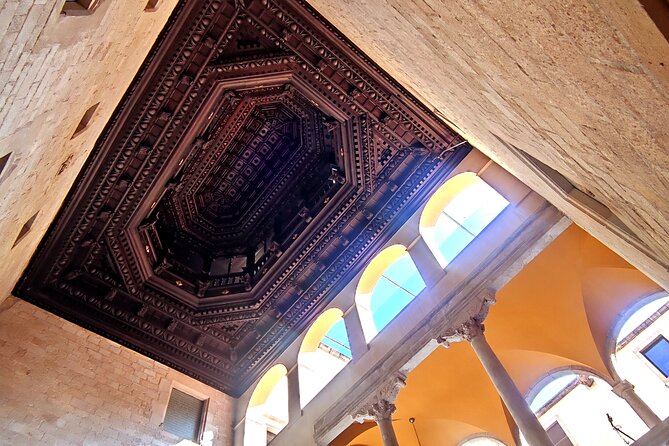
The Barcelona Cathedral stop is about 10 minutes, and the focus is history of the cathedral itself. A cathedral is never just one era. The stones around you tend to hold multiple layers—builders, changes in style, and shifting power—so a guide is helpful to connect what you can actually see with the long timeline behind it.
In a short segment like this, the best outcome is not memorizing dates. It’s understanding the “why.” Why this cathedral grew here. Why the quarter organized itself around places like this. And why the building became a reference point for later politics, religion, and civic identity.
One practical tip: wear something comfortable for looking up. Cathedral exteriors are easiest when you can tilt your head without strain and still move with the group. If you go in expecting a quick orientation, you’ll get exactly what this stop is designed to deliver.






Plaça del Rei: Rome, the Crown of Aragon, and the inquisition
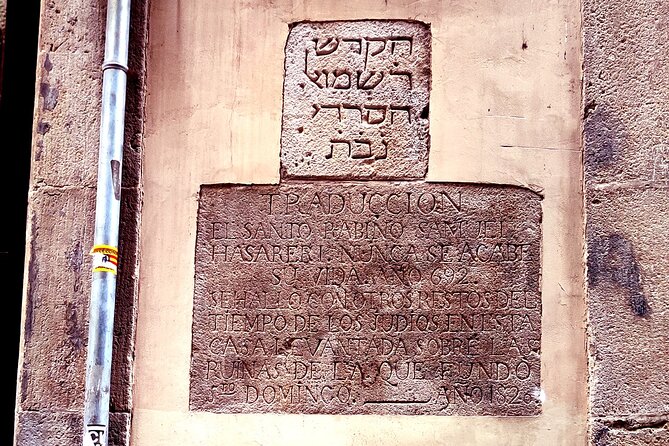
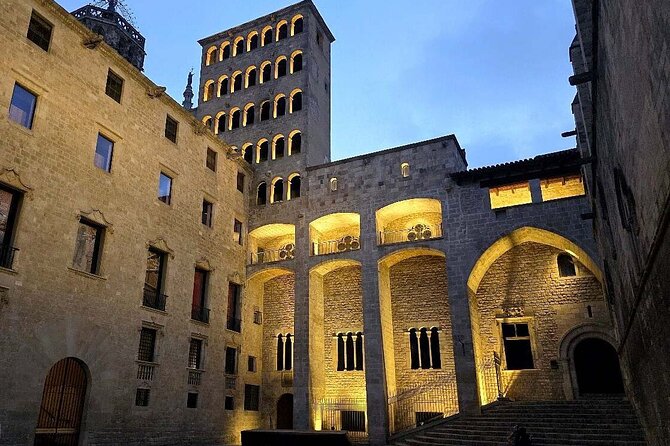
Plaça del Rei is scheduled for about 15 minutes, and it’s one of the heavier thematic stops. Here, the guide talks about Roman past, the Crown of Aragon, and the inquisition. The square’s power comes from how concentrated the stories feel—you’re standing in an open civic space, but the narrative jumps across eras and institutions.
The Roman past angle is important because it prevents the Gothic Quarter from becoming a purely medieval-only story in your head. You’ll be reminded that the city didn’t start with Gothic architecture. It grew over earlier layers.
The Crown of Aragon and inquisition themes add political and religious weight. Outdoor tours can handle topics like this well because you’re not stuck in a classroom tone. Still, consider your own comfort level. If you prefer only light themes on vacation, this is the stop you might want to emotionally pace yourself.
MUHBA Temple d’August: Roman Forum energy, condensed
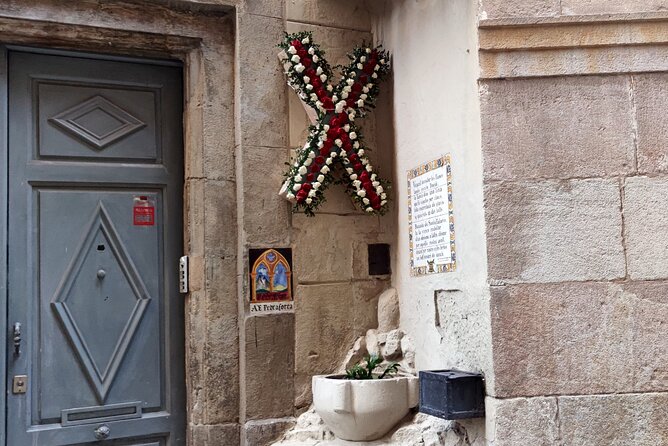
MUHBA Temple d’August is listed for about 10 minutes. This stop is tied to a temple that was part of the Roman Forum, which is a great pairing with the earlier Roman cemetery visit. You start to see Rome not as one isolated ruin, but as a planned system of public life and religious space.
In practice, you’ll likely get a “connect the dots” feeling: how the Forum related to power, how temples shaped daily civic identity, and how those Roman ideas echoed after the centuries. Because it’s a short stop, your guide’s explanation is crucial. Without context, it can be easy to think, This is just another old structure. With context, it becomes a clue.
If you’re fascinated by Roman urban planning, this stop is a strong match. If you want longer time at Roman sites, you may wish you had scheduled an extra hour elsewhere. But for a 2-hour overview, Temple d’August helps the tour keep its main promise: layers, not just highlights.
Placa Sant Felip Neri: a Spanish Civil War reminder in the quarter
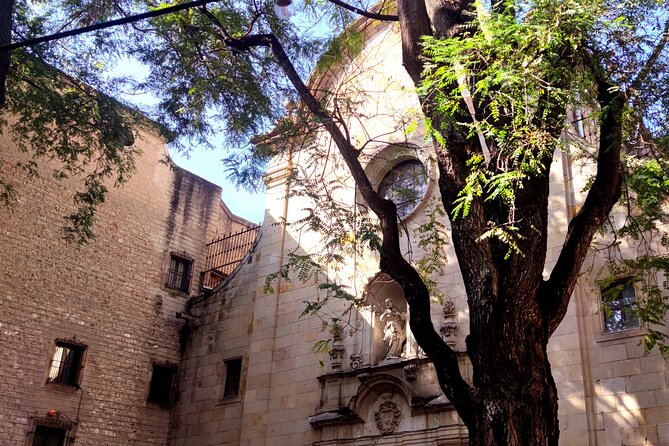
Placa Sant Felip Neri takes about 10 minutes, and the topic is the Spanish Civil War. This is where the tour proves it’s not only about architecture. It’s also about memory—how the city keeps traces of modern conflict inside the same streets people walk every day.
This stop works best if you pay attention to how a public square becomes a place for reflection and storytelling. You don’t need to know every historical detail to benefit. The guide’s job is to give you a clear thread so you understand what connects the Civil War to this part of the quarter.
A consideration: you may feel the emotional weight more in this segment than in the Roman/Gothic sections. That’s not bad—it’s honest. Just be prepared for a shift in tone so you can absorb it instead of rushing past.
Catalan Judaism: the story layer you’ll want to ask about
The tour also includes a segment where you’ll learn about Catalan Judaism. The route description doesn’t list a precise named stop for it, so treat this as a guided thematic moment woven into the walk. That’s actually a good thing for some people: you’re not trapped in a single “look at this plaque” scenario.
What you can expect is a guide-led explanation that helps you see how Jewish life contributed to the quarter’s historical identity. In the Gothic Quarter, that kind of context matters because the visible architecture often tells only part of the story. A solid guide makes sure you understand the rest.
If Catalan Judaism is a topic you care about, this is the part where I recommend keeping an ear open and using your questions. With a small group, you’ll have more chance to ask for clarification without feeling rushed.
Plaça Reial: the 200-year-old shop and plaza storytelling
You finish at Plaça Reial, with about 10 minutes here. The tour connects the plaza’s history to a magical 200-year-old shop, which is the kind of detail that makes a destination feel real instead of generic.
Plaça Reial is a strong final stop because it naturally shifts you from “interpretation mode” into “enjoy Barcelona mode.” By the time you reach the square, you’ve already built a framework—Rome, medieval power, conflict, and religious identity—and now you can look at the space with more meaning.
I like that the tour doesn’t end on a grave seriousness. The tone can lighten because you’re back in a public square where people linger. If you want to turn your history walk into a full evening, Plaça Reial makes that easy.
One practical note: since this is where the tour ends, check what you want next before you get dropped there. Decide if you want to eat nearby, browse, or just continue strolling. Having that plan helps you avoid losing time right at the finish line.
What I’d look for if I were choosing this tour
This tour is a good match if you want a guided walk that covers multiple eras without turning into a long museum day. You get Roman sites, Gothic landmarks, major civic squares, and even modern history threads like the Spanish Civil War—all wrapped into a tight schedule.
It also suits you if you like learning through details. The best praise for this walk is about attention: noticing what you normally miss, and getting explanations that stick without being overly complicated. Andrea’s style is described as enthusiastic and patient, which matters on a historical walk where some people want more time to process.
You might consider another option if your ideal vacation is very deep, slow, and reading-heavy. With only about 2 hours and short stop durations (often 5–15 minutes), you’re getting a guided overview, not a full academic treatment. Think of it as a guided orientation that makes the quarter easier to explore on your own afterward.
Should you book this Barcelona Gothic Quarter History Tour?
If you want your first taste of Barcelona’s layers—Roman, medieval, and modern—in one compact 2-hour walk, this is an easy yes. The value feels strong for the price, especially with included guide time, a small group size, and the route’s main stops marked as free admission. Ending at Plaça Reial is also a smart practical touch.
Book it if you’ll enjoy guided storytelling and want someone to point out the cues that make buildings and squares make sense. Choose another format if you want a longer, ticket-heavy deep dive. But for most people trying to get oriented fast, this tour hits a sweet spot.
FAQ
Is the tour offered in English?
Yes. The tour is offered in English, and the in-person guide is listed as English and Spanish.
How long is the Barcelona Gothic Quarter History Tour?
It runs for about 2 hours.
Where do I meet the guide, and where does the tour end?
You start at Carrer de Duran i Bas, 11, Ciutat Vella, 08002 Barcelona, Spain. You end at Plaça Reial, Pl. Reial, Ciutat Vella, 08002 Barcelona, Spain.
What time does the tour start?
The start time listed is 4:00 pm.
How many people are on the tour?
This tour has a maximum of 8 travelers.
Are tickets or admissions included for the stops?
The tour schedule marks the stops with admission ticket free. The package also lists all fees and taxes as included.