REVIEW · BARCELONA
Private Jewish Heritage Journey by Barcelona Dreaming
Book on GetYourGuide →Operated by BARCELONA DREAMING · Bookable on GetYourGuide
Barcelona’s Jewish story is written in stone.
This private Jewish Heritage Journey by Barcelona Dreaming takes you off the usual sightseeing track and into the medieval heart of the city, with expert-led stops and a real-world look at Jewish life in Catalonia.
I especially like two things: you get access to the Ancient Synagogue of Barcelona plus a hidden Mikveh, and the guide shapes the tour around your family’s pace so it doesn’t feel rushed. The biggest drawback to consider is that it’s a walking tour with cobblestones and some uneven ground, and the synagogue entry involves a few steps.
If you want Barcelona’s history with context, not just postcards, this is a smart choice.
In This Review
- Key highlights you’ll feel in the moment
- What makes this private Jewish Quarter tour work
- Starting in Plaça Sant Jaume: the neighborhood sets the tone
- King’s Square to the medieval Call: how your guide reads the streets
- Entering the Ancient Synagogue: seeing a surviving landmark up close
- The secret Mikveh moment: why this stop feels unforgettable
- Ramban and Rashba stories: scholars you can place in the city
- Casa Adret and the clues around Jewish presence
- Guide quality and pacing: how this tour stays comfortable
- Price and value: what $94 buys in real terms
- Practical tips for a smooth Gothic Quarter walk
- Who should book this tour (and who might skip it)
- Should you book the Private Jewish Heritage Journey by Barcelona Dreaming?
- FAQ
- How long is the private Jewish heritage journey?
- Where do we meet?
- Is this experience private or shared?
- What’s included in the price?
- What languages are available?
- Is the synagogue accessible for wheelchairs?
- Is it suitable for seniors with mobility limitations?
Key highlights you’ll feel in the moment
- 100% private guidance tailored to your pace, questions, and interests
- Ancient Synagogue entry with skip-the-ticket-line convenience
- A look at a hidden medieval Mikveh that most people never know exists
- Stories tied to major scholars like Ramban and Rashba
- Expert routes through the medieval Jewish Quarter and spots often missed without local eyes
What makes this private Jewish Quarter tour work
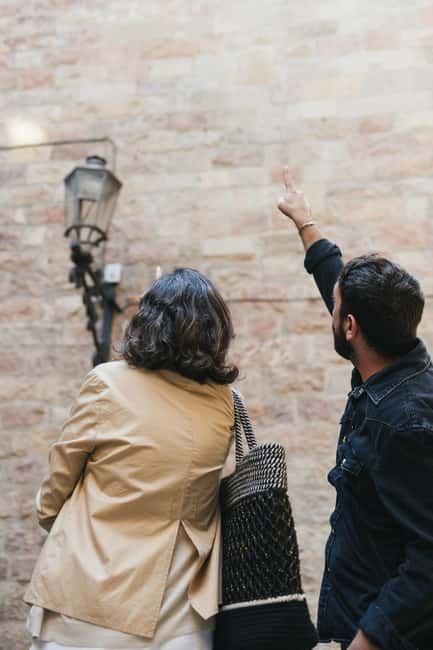
Barcelona has plenty of tours. This one works because it’s built around Jewish heritage as lived history, not a quick “then this happened” slideshow.
You walk through the medieval streets of the Gothic Quarter and focus on the Call, the Jewish heart of Barcelona. Your guide isn’t just pointing at buildings—they explain why the stones, symbols, and street plan matter, and how Jewish scholarship shaped Catalan culture over centuries.
And because it’s private, you can slow down for family questions, ask for more background, or keep things moving if your group has limited stamina. That pacing matters on a two-hour city walk, especially with kids, multigenerational groups, or anyone who needs frequent pauses.
One more practical win: your experience includes entry fees for the synagogue, plus an expert who can recommend what to eat after the tour, including kosher and local dining ideas.
You can also read our reviews of more tours and experiences in Barcelona.


Starting in Plaça Sant Jaume: the neighborhood sets the tone
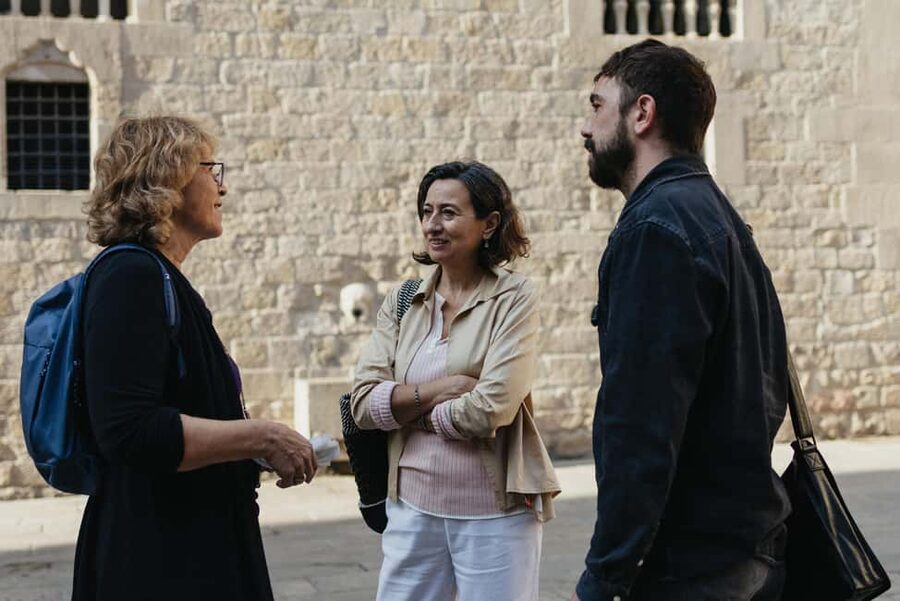
You begin near Conesa Entrepans | Gòtic, right by Plaça Sant Jaume. This is a good start point because it puts you in the thick of old-town Barcelona quickly, without a long transit shuffle.
From there, your route heads toward the big historic squares that act like anchors in the Gothic Quarter. The guide uses these spaces as a way to explain the logic of the area—where people likely traveled, where power sat, and how the medieval Jewish community fit into the city’s wider life.
If you like tours that give you a mental map early, you’ll appreciate this structure. Even if you’ve visited Barcelona before, this kind of grounding helps you notice details you’d otherwise walk right past.
King’s Square to the medieval Call: how your guide reads the streets
After the first orientation stops, you move toward King’s Square. This segment is part “walk and look,” part “story time,” and it matters because the Gothic Quarter can feel like one long maze if nobody explains the layers.
This is where the tour earns its reputation for finding what most people miss. The guide helps you identify hidden symbols on ancient stone walls, and connects the street corners to the people who once worked, studied, prayed, and argued here.
The tone stays balanced. You hear about the bright periods—when coexistence shaped daily life and scholarship—and you also learn how the shadows grew during the years of persecution, including the complex reality created by the Inquisition. The goal is not guilt or drama. It’s understanding.
Entering the Ancient Synagogue: seeing a surviving landmark up close
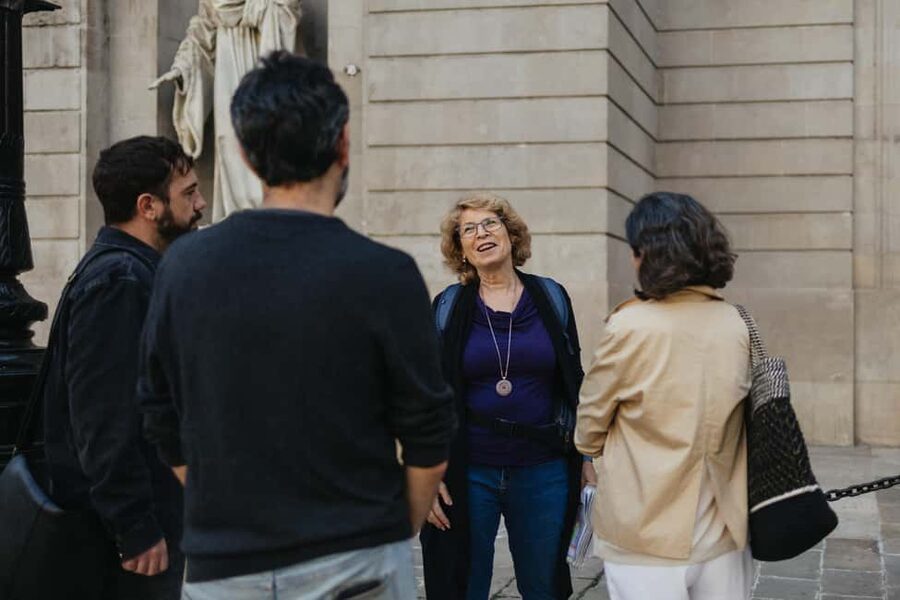
One of the tour’s biggest draws is step inside the Ancient Synagogue of Barcelona. You also get skip-the-ticket-line, which is a small detail that saves time and keeps the flow of the visit smooth.
This stop is short on paper but big in impact. Even if you know Jewish history in general, the synagogue visit makes it real because it’s tied directly to place. You’re not just hearing about architecture or tradition; you’re standing in a preserved piece of the city’s story.
There’s also a very practical consideration: the tour notes that the synagogue entry involves a few steps, so it may be less friendly for mobility limitations than the rest of the walk. The overall route is described as wheelchair accessible, but this is the one part you should plan around.
If you’re using a stroller, the cobblestones and steps are worth factoring in, too. Bring water and keep expectations realistic: this is a heritage experience, not a flat-and-smooth museum loop.
The secret Mikveh moment: why this stop feels unforgettable
The tour includes access to a hidden medieval Mikveh, described as secret and rarely seen. This is one of those moments that tends to shift the way people understand the past.
A mikveh is not just a religious concept—it’s a ritual connected to everyday life, community rhythms, and personal responsibility. When you hear the guide’s explanations in the context of medieval Barcelona, it stops being abstract.
You also get to connect the Mikveh to broader storytelling about how Jewish scholarship and community leadership shaped what people believed and how they lived. That’s where the tour’s “beyond the surface” pitch becomes real.
And since the tour is private, you can ask the questions that matter to you—how rituals worked, what changed over time, and why certain structures survived while other parts of the community didn’t.
You can also read our reviews of more historical tours in Barcelona



Ramban and Rashba stories: scholars you can place in the city
Your guide brings the medieval Jewish intellectual world to life through stories tied to Ramban and Rashba. These names come up often in Jewish learning, but in Barcelona they become more than references.
Here’s what makes this part valuable for your trip: it connects big ideas to a small geography. Instead of hearing that scholars mattered “somewhere in Spain,” you’re hearing how the city’s Jewish life could shape learning, legal thought, and community identity in ways that echoed beyond the neighborhood.
The tour also points out the Rashba House as a site that’s often missed. That’s exactly the kind of detail that upgrades your Barcelona walk from sightseeing to comprehension. You start seeing the city’s layers as intentional, not accidental.
Casa Adret and the clues around Jewish presence
Another named stop is Casa Adret. This is a key point in the route because it gives you more than one “anchor” in the story—you’re building a sense of how Jewish life spread across the medieval quarter, not just one isolated site.
Casa Adret is part of why this tour works for people searching for family connections or cultural memory. The guide’s role here is to connect physical remnants to historical meaning, including what you can still infer today when only parts of the original life remain.
One thing I’d watch for: on old streets, details can be easy to miss. If you’re someone who likes photos, bring your camera—but also be ready to look away from the lens for a minute and actually listen. The guide often explains what you’re seeing right then, not two stops later.
Guide quality and pacing: how this tour stays comfortable
The reviews and tour description align on one point: the guide makes the experience flow. You’re not stuck with a script that ignores your group.
In particular, you may be guided by instructors such as Alan, Edu, Ella, Dina, Lilach, Leiach, Eyal, or Lior. Across these names, a recurring strength shows up: guides answer questions clearly and adapt pace when people need time to process or rest.
Also, guides handle the conversation differently depending on your interests. If you’re exploring Sephardic roots, you’ll likely get more focus on identity and cultural continuity. If you want the broader European history context, the guide can shift to political and social change over time.
That flexibility is especially helpful if your group includes kids or teens. The tour is built to keep the storyline moving while still leaving space for back-and-forth.
One drawback you should consider: this is still a two-hour walking experience through cobblestones, and you may not find many opportunities to sit down. If your group needs regular breaks, I’d plan ahead and bring what you need to stay comfortable.
Price and value: what $94 buys in real terms
At $94 per person for 2 hours, the price looks reasonable when you break down what’s included.
You’re paying for:
- A private, expert-led walking tour
- Entry to the Ancient Synagogue of Barcelona
- All entrance fees related to the visit
- Storytelling plus maps and historical context
- Recommendations for kosher/local dining
In other words, you’re not just buying a walk with a lecture. You’re buying access to specific heritage spaces plus a guided explanation that ties everything together.
Also, privacy changes the value. A group tour can be cheaper, but it often forces you into the same speed and same level of detail as everyone else. Here, the tour is tailored to your family’s pace, which can matter more than a small price difference.
If you care about Jewish history in Spain and want a guided lens rather than self-guided wandering, this is solid value.
Practical tips for a smooth Gothic Quarter walk
This tour is rain or shine, so plan like a local: Barcelona weather can shift quickly, and the tour keeps going.
Here’s how to show up well:
- Wear comfortable shoes. Cobblestones and uneven surfaces are part of the experience.
- Bring water.
- Expect some walking between stops and a short time at each heritage point.
- If you’re using a wheelchair or stroller, know that most of the route is described as accessible, but synagogue entry involves steps.
A couple of house rules to keep in mind: no weapons or sharp objects, and no alcohol or drugs. It’s a straightforward, respectful tour environment.
One last logistics note that helps: the meeting point is Plaça Sant Jaume, just next to Conesa entrepans. If you arrive early, take a moment to look for the guide before everyone starts moving in different directions.
Who should book this tour (and who might skip it)
This experience makes the most sense if you want:
- A private Jewish heritage walk in Barcelona
- Meaningful context about the medieval Jewish Quarter, not generic city facts
- Time to ask questions and move at your group’s pace
- Actual access to a synagogue and a Mikveh
It’s also a good fit for multigenerational groups, especially because the guide can adapt timing to mobility needs. That said, the tour data specifies it is not suitable for people over 95 years. If that affects your party, you’ll want to consider an alternative format.
Should you book the Private Jewish Heritage Journey by Barcelona Dreaming?
If your goal is Barcelona with context, not just a list of famous streets, I think you’ll be glad you booked. The combination of Ancient Synagogue access, the hidden Mikveh, and scholarship-focused storytelling about Ramban and Rashba is a rare mix.
Book it if you value:
- Private pacing
- Expert-led, place-based history
- A route through the medieval Jewish Quarter that helps you notice symbols and sites you’d probably miss alone
Skip or think twice if:
- Your group needs lots of frequent seating breaks
- Mobility limits make a synagogue stair entry a problem
- You prefer a casual stroll with minimal talking
If you’re trying to choose one “heritage-first” activity in Barcelona, this is one of the best bets for getting the city’s Jewish story in a way that actually sticks.
FAQ
How long is the private Jewish heritage journey?
The tour lasts 2 hours.
Where do we meet?
Meet in Plaça Sant Jaume, next to Conesa entrepans.
Is this experience private or shared?
It’s a private group and described as a 100% private journey.
What’s included in the price?
Inclusions are a guided walking tour, a professional Jewish English-speaking guide, entry to the Ancient Synagogue of Barcelona, maps and historical context, and kosher/local dining recommendations, plus all entrance fees for the synagogue.
What languages are available?
The live guide can be in English, Hebrew, or Spanish.
Is the synagogue accessible for wheelchairs?
The tour notes that most of the route is accessible, but entry to the Ancient Synagogue involves a few steps, so it may not be accessible for all.
Is it suitable for seniors with mobility limitations?
The tour data says it is not suitable for people over 95 years. It also notes you’ll walk on cobblestones with uneven surfaces, and comfortable shoes are recommended.