REVIEW · SICILY
Ancient Syracuse: private guided tour of the Neapolis archaeological park
Book on Viator →Operated by Hermes Sicily Tourist guides group · Bookable on Viator
Neapolis feels made for a guided walk, and this tour does it right. You get a private pace so the ruins don’t blur together, plus stories that make stone feel like real people. The one catch is that park admission isn’t included, and in spring and summer the Greek theatre can be covered.
This is a compact tour (about 1.5 hours) in English, built around the Parco Archeologico della Neapolis and a few high-impact stops like Teatro Greco and the Ear of Dionysius. It starts at Largo Anfiteatro, 2, and ends back where you met—nice when your day is already booked.
In This Review
- Key things I’d focus on before you go
- Neapolis in one walk: why Syracuse’s ruins make more sense with a guide
- What private means here: faster comprehension, less wasted time
- Stop 1: Parco Archeologico della Neapolis—where the story really starts
- Teatro Greco: the big theatre in Sicily—and the summer reality check
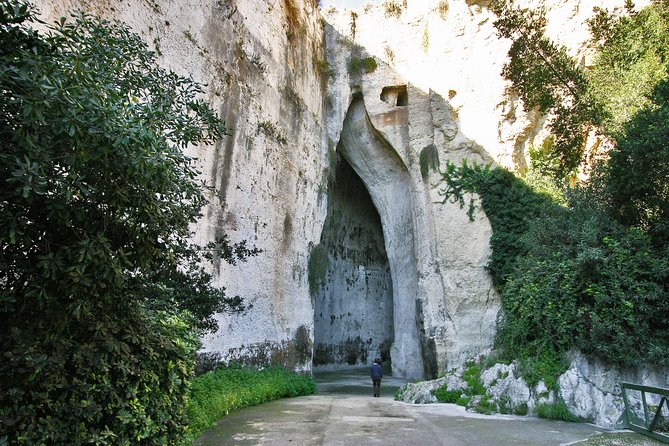
- Ear of Dionysius: myth and a close-up limestone moment
- The ancient Greek stone quarries: where sound gets weird (in a fun way)
- Roman Anfiteatro di Siracusa: gladiator stories, but grounded in place
- Time and logistics: fitting a Neapolis-focused tour into a real day
- Price: is $108.24 per person actually good value?
- Who this tour suits best (and who might want something different)
- Should you book Ancient Syracuse: Neapolis private guided tour?
- FAQ
- Do I need to buy admission tickets for the Neapolis park?
- How long is the tour?
- Is this tour private?
- Where does the tour start and end?
- What language is the guide?
- Will Teatro Greco be fully visible during spring and summer?
- What should I bring for a comfortable visit?
Key things I’d focus on before you go
- Private guiding in a big archaeological park so you don’t spend time guessing what you’re looking at
- Teatro Greco in a performance season: you may see only part of the theatre if it’s covered
- Ear of Dionysius plus the quarries where acoustics and myth both play a starring role
- Roman amphitheater stop with the gladiator-style story anchored to the actual site
- English guide and small-group feel (just your group) for Q&A without rush
- Park ticket planning since the main admission is marked as not included
Neapolis in one walk: why Syracuse’s ruins make more sense with a guide
Syracuse’s ancient sites aren’t laid out like a museum floor. They sprawl, split into zones, and carry layers—Greek, then Roman, then later centuries of change. That’s exactly why a guided route matters. With a good guide, you stop seeing isolated chunks of stone and start seeing one connected city.
This tour is designed to keep you moving, but not sprinting. It’s private, so you can set a pace that works for your group. If someone in your party likes asking questions, you’ll have room to do it without feeling like you’re constantly being reeled back in. And if you’re visiting with kids, the structure helps too: key points, short stops, and “why it matters” explanations.
You can also read our reviews of more tours and experiences in Sicily.

What private means here: faster comprehension, less wasted time
A private guided walking tour sounds fancy, but the real benefit is practical. Neapolis is the main archaeological park, and it can be confusing if you’re going on your own. You’ll likely stand in front of something impressive and still wonder, so what am I actually looking at?
With a guide, you get:
- a direct route through the big highlights
- context as you walk, not after the fact
- time to ask why certain places were built the way they were
You also have flexibility. The tour offers morning or afternoon departure times, which helps when you’re juggling heat, lunch, or your next stop in Syracuse.
Stop 1: Parco Archeologico della Neapolis—where the story really starts
This is the heart of the outing. The Parco Archeologico della Neapolis is where Syracuse’s main ancient monuments are concentrated, so it’s the part of the day where your guide can connect the dots. Expect a guided walk through the park’s major features rather than a quick pass-by.
Two things make this stop valuable:
First, it’s where the physical layout starts to click. Greek and later Roman power structures weren’t just about buildings—they were about controlling space, sound, view corridors, and movement through the city. Walking the park with someone who can point out patterns makes the ruins feel less like random remains and more like a designed environment.
Second, this is where you can slow down mentally. A private pace means you don’t have to choose between seeing everything and understanding anything. If you’re the type who wants the “what” and the “why,” the Neapolis segment is the time for it.
One practical note: admission ticket for the park isn’t included for the base tour. That matters because if you arrive without a plan, you can lose time at the ticket counter on-site.
Teatro Greco: the big theatre in Sicily—and the summer reality check
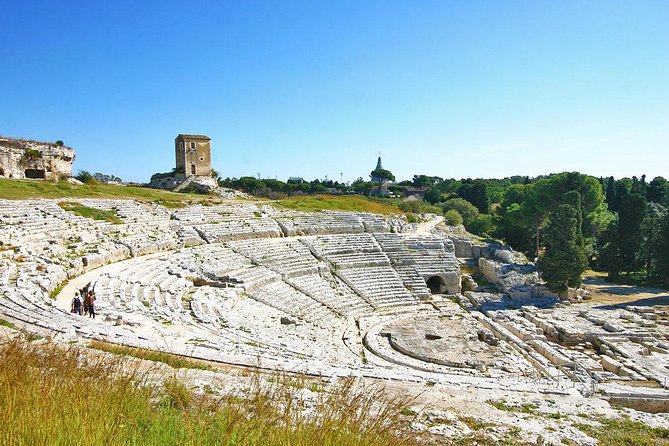
Teatro Greco is the headliner. It’s described as the most important ancient Greek theatre in Sicily, and it’s usually the first place you recognize as “yes, this is the real deal.”
The time set aside for this stop is shorter (about 40 minutes), so your guide will likely focus on what’s most useful: the theatre’s role in Greek civic life, how it worked, and what makes this one stand out.
Now for the important seasonal consideration. During the performance season (usually spring and summer), the theatre can be covered and only partially visible. Some set-ups use temporary wooden bleachers for staged plays. In other words: if your mental picture is of an open, fully exposed amphitheatre bowl, adjust your expectations before you book.
My advice: if you’re coming in spring or summer, treat Teatro Greco as a “still worth it” stop even if the view is partially blocked. A guide can explain what you’re seeing and what you’re missing—so you don’t feel like you paid to look at scaffolding.
Ear of Dionysius: myth and a close-up limestone moment
The Ear of Dionysius is one of those places that sounds like a legend—then you get there and it becomes oddly tangible. This stop is brief (around 15 minutes), but it’s high impact. It’s one of Syracuse’s most legendary sites, and it tends to be memorable because it ties a famous story to a very physical feature.
The best part of having a guide here is interpretation. You’re not just standing at a name on a sign; you’re getting the setting and the logic behind the structure so it makes sense in context with the city around it.
Also, this area connects nicely with the nearby stone-working world of the quarries, so your brain keeps the same theme rolling: stone shaped for purpose, then repurposed by time and storytelling.
The ancient Greek stone quarries: where sound gets weird (in a fun way)
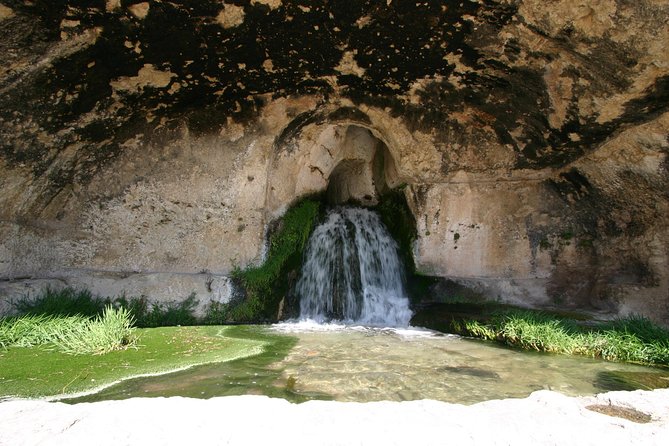
The tour includes a stop at the ancient Greek stone quarries. This is one of those “secondary” areas that can turn into the emotional highlight of the day—especially if you like odd details.
One of the most distinctive points from people’s experiences: the quarries can have excellent acoustics. That doesn’t mean you’ll be doing a performance, but it does mean echoes and sound carry in a way that’s hard to ignore once you notice it. If someone in your group likes experimenting with claps or humming just to test how the space sounds, this is the place to do it.
The quarries also give you a different angle on the city. Instead of only looking at where Romans and Greeks gathered for entertainment or civic life, you see the working side—how stone was extracted that later became the bones of impressive architecture.
Roman Anfiteatro di Siracusa: gladiator stories, but grounded in place
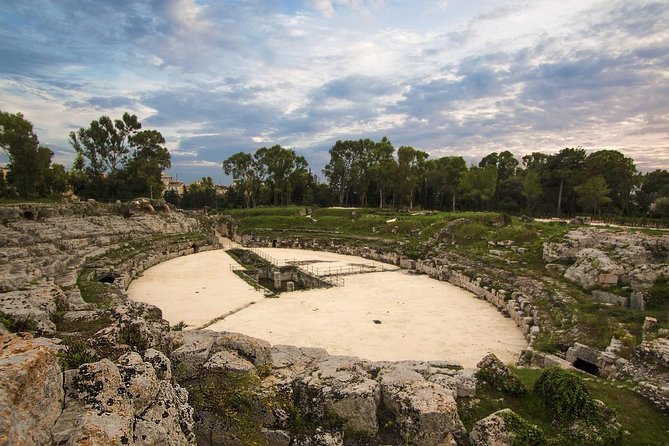
After the Greek stops, the tour shifts to Roman-era storytelling with the Anfiteatro Romano di Siracusa. You’ll spend about 15 minutes here, and the focus is on Roman gladiators and the amphitheater itself.
Even in a short stop, this works because amphitheaters communicate Roman values fast. You can see how designed space funnels attention, how crowds were meant to feel, and how entertainment became a form of power. With a guide, the gladiator discussion doesn’t float in the abstract. It ties back to the site in front of you.
Time and logistics: fitting a Neapolis-focused tour into a real day
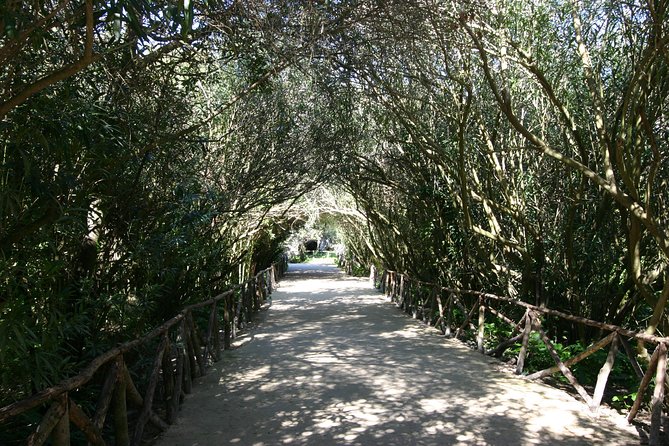
This is built as a tight, efficient walk. Expect about 1 hour 30 minutes on average, though your actual time will depend on how the group moves and how ticketing goes at the park.
Here’s what you can do to keep it smooth:
- Arrive at the meeting point on time. The start is Largo Anfiteatro, 2, 96100 Siracusa SR. If you’re late, the guide has to adapt, and adaptation costs time.
- Plan for park admission if you book the base option. The tour notes that the Neapolis admission ticket is not included (and only a Tour + Ticket option would cover it).
- Bring comfortable shoes. This is a walking tour through uneven outdoor areas.
Also, there’s a small but real “day planning” detail: the tour is described as requiring good weather. If conditions are poor, you may be offered a different date or a full refund.
And yes, English is available, which is a big deal in archaeology. Even strong self-guided reading can’t replace a guide translating how the architecture functioned and why it was built that way.
Price: is $108.24 per person actually good value?
At $108.24 per person for a private guided walk, the price is most likely worth it if you care about meaning, not just photos. Archaeology tours can turn into a checkbox exercise if there’s no explanation. Here, you’re paying for a professional guide and a private format, which is exactly what helps you get “understanding per minute.”
Value usually depends on your group type:
- If you’re a couple or small family, private guiding often feels efficient because the cost is spread across fewer people.
- If you’re history-focused, a good guide can reduce the frustration of trying to piece together Greek and Roman timelines alone.
- If your group includes a kid or two, the short, structured stops are easier to manage than a long wandering day.
Where value can dip: the base price doesn’t include park admission. If you have to buy tickets on arrival, you’ll want to build a little buffer into your day.
Who this tour suits best (and who might want something different)
This private tour is a strong fit for:
- first-time visitors to Syracuse who want the “main hits” without getting lost
- people who learn faster through stories than through reading alone
- anyone who values Q&A and a pace that isn’t controlled by a larger group
It may be less perfect if:
- your priority is a totally open-air view of Teatro Greco with no seasonal coverings
- you dislike handling ticket purchases and prefer everything bundled
If you’re traveling with mobility limitations, the tour notes that most travelers can participate, but it also recommends comfortable walking shoes. That’s a clue to think about how much walking your group can handle.
Should you book Ancient Syracuse: Neapolis private guided tour?
I’d book it if you want your Syracuse ruins to come with explanations in real time. This tour is built around the highest-impact places, and the private format helps you slow down where it counts—especially at Neapolis and when you hit the Greek theatre area. The Ear of Dionysius and the quarries can be surprisingly memorable, and having a guide turns quick stops into real understanding.
If you’re going in spring or summer, do it with eyes open about Teatro Greco being partially covered. Also, check that you’re ready for the park admission ticket requirement in the base tour pricing.
If your goal is photos only, you might feel you’re paying for interpretation you could do on your own. If your goal is to understand how Greek and Roman Syracuse worked, this private guided walk is one of the smarter ways to spend 90 minutes.
FAQ
Do I need to buy admission tickets for the Neapolis park?
The tour states that the park admission ticket is not included. You’ll need to purchase it unless you choose a Tour + Ticket option. Some categories may be entitled to free or reduced tickets, which require presenting an ID at the ticket office.
How long is the tour?
It runs about 1 hour 30 minutes on average.
Is this tour private?
Yes. It’s a private walking tour, and only your group will participate.
Where does the tour start and end?
It starts at Largo Anfiteatro, 2, 96100 Siracusa SR, Italy and ends back at the meeting point.
What language is the guide?
The tour is offered in English.
Will Teatro Greco be fully visible during spring and summer?
Not always. During the performance season (usually spring and summer), the Greek theatre is covered and only partially visible.
What should I bring for a comfortable visit?
Comfortable walking shoes are recommended. If you’re visiting in hotter months, plan for sun and heat during outdoor walking.