REVIEW · BOLOGNA
Bologna’s Ancient and Recent History: A Self-Guided Audio Tour
Book on Viator →Bookable on Viator
Bologna rewards slow walking, and this audio route makes it easy. You get a self-paced stroll through the city’s ancient core and the more recent stories that shaped daily life, all without wrangling a group schedule. I like that it’s built around major sights you’ll actually see—then adds context that helps them click.
Two things I really like: the route uses VoiceMap with GPS playback (so you’re not constantly checking a map), and you get offline use for audio, maps, and geodata. I also appreciate the flexibility of unlimited access—before your booking date and after—plus the option for a virtual tour at home.
One consideration: this is not a museum tour. You won’t be guided through interiors of the stops mentioned on route, so if you want to go inside churches or other attractions, you’ll need to pay on your own and plan a little time.
In This Review
- Key highlights at a glance
- Why Bologna is perfect for an audio walking tour
- Price and value: what $7.99 buys you
- How VoiceMap works on the ground (and at home)
- Route overview: from Neptune’s Fountain into Bologna’s story engine
- Neptune Fountain to Piazza Maggiore: the city’s dramatic opening scene
- San Petronio Basilica and the world’s largest sundial
- Roxy Bar and Vasco Rossi’s Bologna reference
- Two Towers: Dante’s shadow and a UNESCO portico walk
- Santo Stefano’s Seven Churches: a pause-friendly church district
- Santa Maria della Vita and the art-and-faith rhythm
- University of Bologna origins: learning history, not just sightseeing
- Portici di Bologna: why these covered streets change your experience
- Piazza Galvani: the frog-electrification finale
- Small planning notes (so the audio walk stays fun)
- Should you book this Bologna audio tour?
- FAQ
- How do I use the tour after I book?
- Is the tour available in English and Italian?
- Can I download the audio for offline use?
- How long is the walking route?
- Where does the tour start and where does it end?
- Do I need my own smartphone and headphones?
- Are museums or paid attractions included in the tour?
Key highlights at a glance
- VoiceMap GPS playback makes navigation simple, even on busy streets
- Offline access means audio and directions keep working when service gets spotty
- San Petronio’s world’s largest sundial is a standout moment on the route
- Two Towers, Dante connections, and UNESCO porticos tie together Bologna’s layers
- Piazza Galvani and frog-electrification experiments give you a surprising scientific ending
Why Bologna is perfect for an audio walking tour
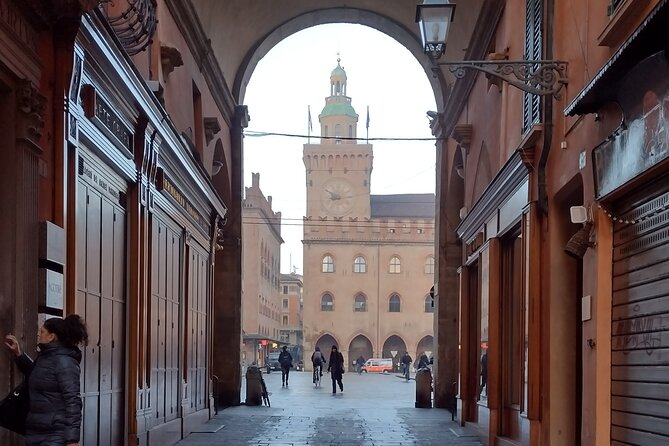
Bologna can feel like a city that’s always thinking. It’s famously academic, steeped in art, and proud of craft—so a guided-sounding narration fits it better than a quick checklist.
You’ll also walk through spaces that encourage lingering: big squares, church districts, and the famous porticos that make the city feel practical and human. Even John Berger called Bologna an improbable city, which is a nice way to describe the mix of serious scholarship and everyday life in the same streets.
With self-guided audio, you can stop when something catches your eye—without needing to keep pace with strangers or worry about being late to the next group stop. That control matters most in Bologna, where the best bits are often the in-between ones.
You can also read our reviews of more tours and experiences in Bologna.
Price and value: what $7.99 buys you
At $7.99 per person, this is priced like a budget lunch, not a high-end guided excursion. The real value is what comes with it: lifetime access, plus offline audio and maps through the VoiceMap app.
Lifetime access is the big deal. You’re not just paying for a single afternoon—you’re buying a tool you can use again whenever you return, or even use virtually at home if you want to preview the layout. At this price, you’re not risking much if you decide you want to explore longer once you’re on the ground.
If you’re comparing it to a standard guided tour, remember this: there’s no included entry into museums or ticketed attractions. If you plan to go inside multiple buildings, you’ll spend money separately. If you mostly want stories that match what you’re seeing from the street, this format can be a strong value.
How VoiceMap works on the ground (and at home)
After you book, you’ll get a ticket with instructions and a unique code. Before you go, you install the VoiceMap app on your phone, enter your code, and the app handles the rest.
Here’s the practical part: VoiceMap provides directions to the starting point, and once you’re there, you use your headphones and tap start. It uses automatic GPS playback and turn-by-turn guidance, and it works offline, which is a lifesaver in older city centers where signal can get moody.
You also get unlimited use before your booking date and after. That means you can adjust your plans if the weather turns or you want to repeat sections later. And if you prefer learning at home first, there’s a virtual tour option too.
One small reality check: you must bring a smartphone and headphones. No phone, no audio. (Also, it helps to have your phone charged—carry a small power bank if you can.)
Route overview: from Neptune’s Fountain into Bologna’s story engine
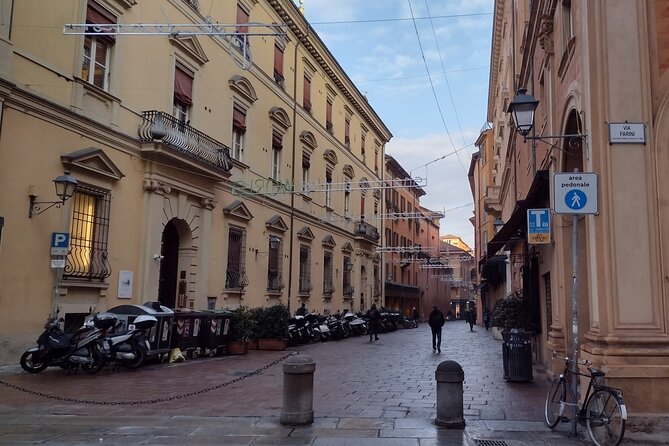
Your walk begins at Neptune’s Fountain in Piazza del Nettuno. This is a great starting point because it’s central and easy to orient yourself around. From there, the route aims you toward Piazza Maggiore and the area where Bologna’s “big identity” shows up.
The narration is designed to connect the visuals. You won’t just hear dates and names. You’ll get little story threads—culture, science, religion, art-world references—that make the next street feel less random.
Timing-wise, you’re looking at about 1 hour to 1 hour 30 minutes depending on how long you pause. If you like photos and readings, lean toward the longer end. If you prefer steady movement, you can finish closer to the shorter time.
Neptune Fountain to Piazza Maggiore: the city’s dramatic opening scene
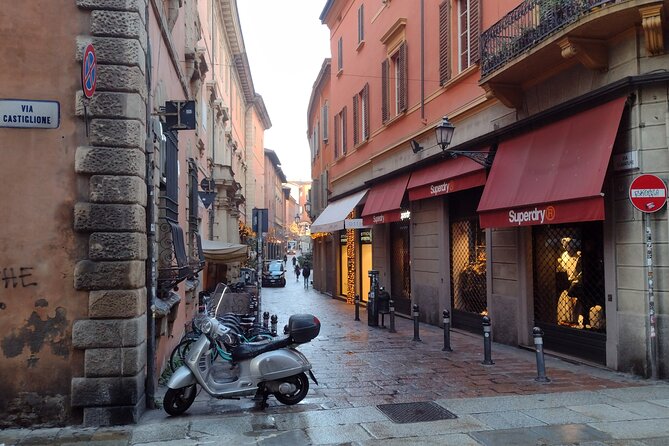
After you start, the audio frames Bologna as a place that’s both architectural and personal. Piazza del Nettuno is your launchpad, and soon you’re moving into Piazza Maggiore’s wider, more iconic feeling.
This section matters because it sets expectations for the rest of the walk. You’re learning how Bologna’s layout shapes daily life: where people gather, where power and worship show up, and how the city’s identity feels different in each pocket.
It’s also a good place to get your rhythm. Before the route turns into major landmarks, you can settle into the walking flow, adjust volume, and make sure GPS playback is working smoothly.
San Petronio Basilica and the world’s largest sundial
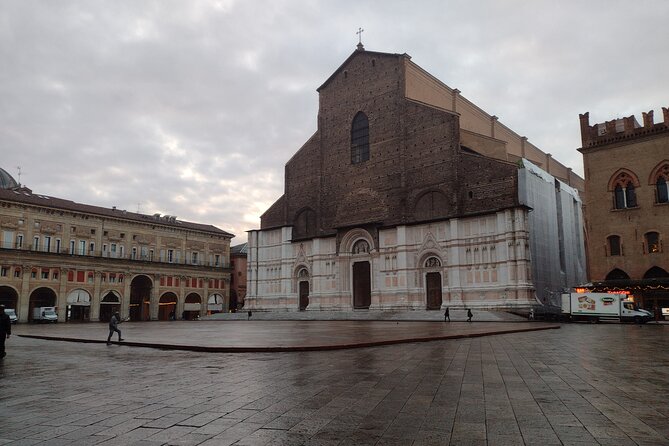
One of the most specific and memorable stops is San Petronio Basilica, where you’ll see the world’s largest sundial. Even if you’re not a science person, it’s hard not to be impressed by a timekeeping object built at that scale.
Why it’s worth your attention: sundials are about light, measurement, and design. In Bologna, they also act like a bridge between everyday reality and institutional power—this is a city that historically used knowledge in public spaces.
Because this tour doesn’t guide you through interiors like a museum tour would, you’ll experience the sundial as you encounter it on the route. If you want deeper access inside the basilica, you’ll need to plan your own entry and time budget.
Practical tip: if you’re visiting near midday, you’ll likely get the most useful light conditions for the sundial area. If clouds roll in, it still beats guessing—go with what you can see and let the audio context do the rest.
Roxy Bar and Vasco Rossi’s Bologna reference
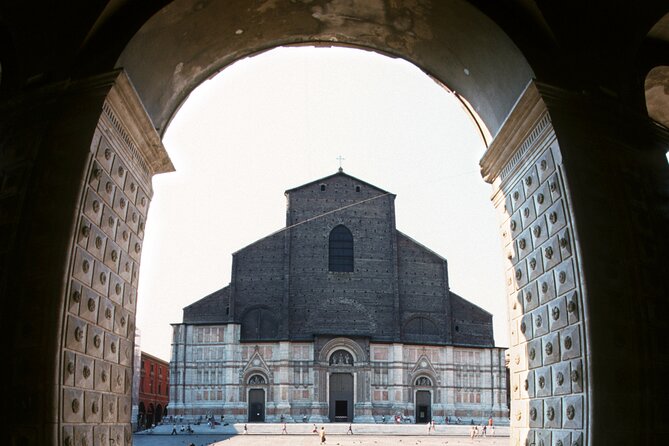
As you move along, the route has you passing the Roxy Bar, tied to Italian superstar Vasco Rossi’s song Vita Spericolata (The Reckless Life). This kind of pop-culture nod is a smart choice for an audio tour because it reminds you that cities don’t just stay old.
Instead of treating Bologna like a time capsule, the narration connects street life and art to a modern cultural beat. Even if you’re not familiar with Rossi’s work, you’re still getting a sense of how certain places gain meaning long after their original purpose.
This stop is more about the story thread than the object itself. Think of it as a quick flavor moment: a reminder to watch for how artists and musicians “map” the city in their own way.
Two Towers: Dante’s shadow and a UNESCO portico walk
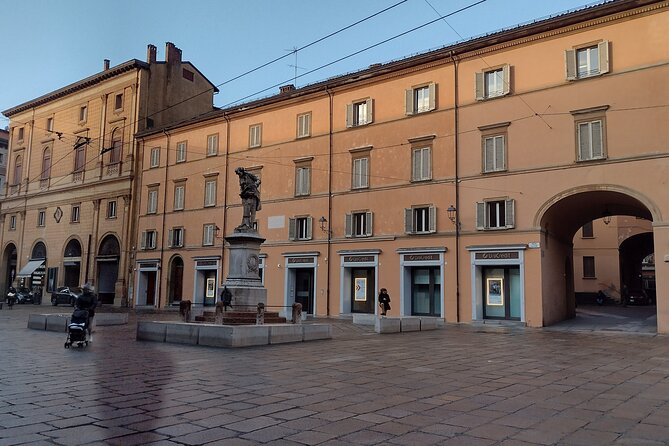
Then the tour turns toward the Two Towers, one of which is mentioned in Dante’s Inferno. That’s a big thematic shift—Bologna becomes not just a real city you can touch, but a literary reference point.
The payoff is how you can “read” the buildings with the narration in your headphones. You’ll also feel the change in atmosphere as you approach the tower area—there’s more vertical presence, and the streets can feel narrower or more focused.
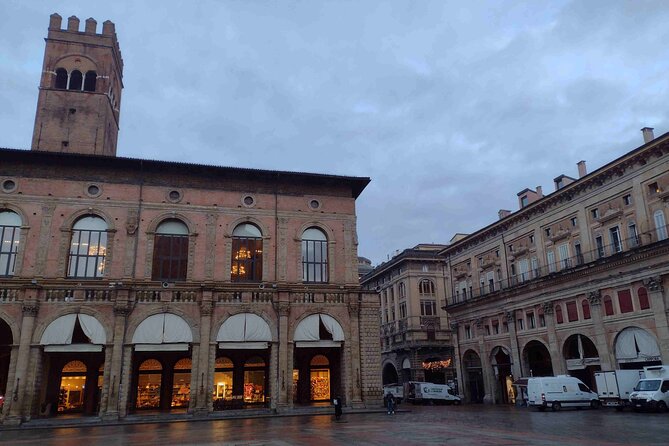
From there, you stroll beneath the famous porticos that became a UNESCO World Heritage site in 2021. Porticos are one of those features you might think you already understand until you walk them with context. Then they start to feel like infrastructure for community: shelter, strolling space, and everyday routine all in one.
Because porticos also affect your walking comfort, this is an underrated benefit of the route. If weather changes, you may still stay comfortable longer while you keep listening.
Santo Stefano’s Seven Churches: a pause-friendly church district
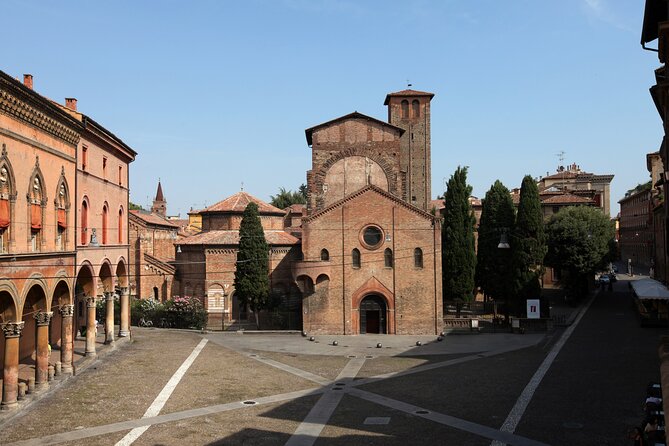
Along the way, you can take in the Seven Churches of Santo Stefano. This is one of those “slow down” locations in Bologna because the church cluster invites brief comparisons—different facades, different vibes, and a sense of spiritual layering.
This tour doesn’t include museum-style guidance inside churches, but the audio still helps you look with intention from your walking position. If you’re the type who likes to step closer, read, and take a quick photo, this is a good place to stretch the timeline.
Potential drawback here: if you were expecting the audio to fully replace an in-person guided explanation inside each church, you might find that you still want more. The tour handles the overview and street-level story. You bring your curiosity for deeper entry.
Santa Maria della Vita and the art-and-faith rhythm
The route passes Santa Maria della Vita, which is a useful stop even if you only catch it from the street. Not every listener will want to enter every church, especially on a short 1 to 1.5 hour walk.
That said, passing by places like this gives the tour a better pace than “only squares and monuments.” It puts Bologna back into its normal category: art and faith mixed into everyday movement.
If you choose to step inside anything you spot, keep it simple. Pick one interior you really care about. Doing multiple can turn a 1 hour walk into an all-morning project.
University of Bologna origins: learning history, not just sightseeing
One segment of the route is dedicated to how the world’s oldest university got its start. This is where Bologna’s identity becomes more than architecture.
I like this kind of stop because it explains a cause, not just a fact. Once you understand the university origin story, you start noticing the academic DNA everywhere—how people gather, how the city “thinks,” and why certain buildings and districts feel oriented toward learning and debate.
Even without ticketed museum time, the audio can make the street feel smarter. If you’re into education history, this will be one of the more satisfying story beats of the route.
Portici di Bologna: why these covered streets change your experience
You’ll also see and learn about the Portici di Bologna, and you’ll do it as you walk. In Bologna, porticos aren’t just a view. They’re a system that shapes how you move, where you rest, and how the city feels in different weather.
As the route connects porticos with major sights, the learning sticks better. You’re not reading about architecture—you’re experiencing how covered space affects pace and comfort.
This is especially good for practical travelers. If you walk for 60 to 90 minutes in rain, you’ll be glad the route naturally includes the covered sections. It’s not magic, but it helps.
Piazza Galvani: the frog-electrification finale
To close, the route loops past Piazza Galvani and tells you about scientific experiments that electrified frogs. That is a wonderfully odd way to end a walk through medieval streets.
Why this ending works: it prevents Bologna from turning into a museum of old Europe. You get a modern scientific spark at the finish line, which makes the city feel like it’s still producing ideas.
It’s also a nice tonal shift after towers, churches, and porticos. Science stories are often more vivid when they’re strange. Frogs are strange. That strangeness helps you remember the city.
After the science beat, you head back toward where you started. The activity ends back at the meeting point, and the route description places the ending back at Via d’Azeglio. In any case, expect a loop that brings you full circle rather than a one-way hike.
Small planning notes (so the audio walk stays fun)
This experience is for a group that stays to itself—only your group participates. That fits the self-guided style because you don’t have to coordinate with a crowd.
Also, it’s not refundable and can’t be changed if you cancel. I’d treat that as a “commitment day” activity, so pick a time you’re comfortable keeping.
Finally, remember: you’ll need smartphone + headphones. If you show up with low battery, you’ll miss the whole point.
Should you book this Bologna audio tour?
Book it if you want a low-cost way to understand what you’re seeing in Bologna, especially if you like clear, stop-by-stop storytelling. It’s ideal for travelers who hate rigid tour schedules but still want more than a phone map.
Don’t book it if you expect an inside-the-building guided experience. The tour won’t guide you through museums or other attractions mentioned along the way. If your dream Bologna day is about paid entries and long explanations inside, you’ll need to pair this with separate tickets or a guided option.
Also consider it if you want flexibility: unlimited access, offline audio, and a virtual tour option are strong perks for a $7.99 purchase. When you’re in Bologna, your best plan is often to walk, pause, and let the city unfold at your pace—and this tour is built for exactly that.
FAQ
How do I use the tour after I book?
You’ll receive a ticket with instructions and a unique code under Before You Go. Install the VoiceMap app, enter your code, then use the app to follow directions to the start. When you’re in the right spot, start the audio with your headphones.
Is the tour available in English and Italian?
Yes. You get lifetime access to the tour in English or Italian.
Can I download the audio for offline use?
Yes. The app includes offline access to audio, maps, and geodata.
How long is the walking route?
Plan for about 1 hour to 1 hour 30 minutes.
Where does the tour start and where does it end?
It starts at Neptune’s Fountain in Piazza del Nettuno, Bologna. It ends back at the meeting point, with the route described as looping back toward Via d’Azeglio.
Do I need my own smartphone and headphones?
Yes. Smartphone and headphones are not included.
Are museums or paid attractions included in the tour?
No. You won’t be guided through museums or other attractions mentioned en route. If you want to enter places along the way, you’ll need to pay for them separately.