REVIEW · CHANDIGARH
The Hipster Chandigarh Architecture History Tour
Book on Viator →Operated by Rusty · Bookable on Viator
Concrete, geometry, and stories in one city. This two-day Chandigarh architecture history tour uses Le Corbusier and Pierre Jeanneret as the thread, with insider access to major sites like the UNESCO Capitol Complex and some places most visitors simply can’t get close to.
My favorite part is the way Rusty turns architecture into something you can picture fast. You also get lots of time for photos and careful, human explanations across the day’s walking pace, with admissions and photography fees handled for you.
One thing to plan for: the schedule mixes indoor museums with open-air structures, so good weather matters. If it’s hot, windy, or disrupted, you’ll want to stay flexible.
In This Review
- Key highlights you’ll actually care about
- Why Chandigarh feels different with this kind of guide
- Price and what you get for about $71 a day’s worth of structure
- Day 1: Capitol Complex to Pierre Jeanneret’s house museum
- Capitol Complex: Secretariat, Assembly Hall, and the Open Hand Monument
- Le Corbusier Centre: early sustainability shown with your eyes
- Gandhi Bhawan: the spinning lotus roof moment
- Chandigarh Architecture Museum: Le Corbusier’s Zurich Pavilion homage
- Open Hand Monument again, up close
- Geometric Hill: sculptural earth and concrete grids
- The Tower of Shadows: a sun-study building you can feel
- Panjab University: architecture in a working campus
- Museum Maison Jeanneret: Pierre Jeanneret’s first Chandigarh house
- Day 2: Sukhna Lake, Sector 17, and museums with real art objects
- Sukhna Lake: designed for groundwater and cooling
- Sector 17 Market: commerce and community in built shade
- Chandigarh War Memorial: architecture that holds silence
- Government Museum and Art Gallery: pre-partition artifacts and Greco-Buddhist art
- Lake Club: rare access to Corbusier’s yacht-club idea
- How the pacing stays friendly (and why that matters on a packed design day)
- What to watch for at each stop (so the learning sticks)
- Who this tour fits best
- Should you book the Hipster Chandigarh Architecture History Tour?
- FAQ
- How long is the Hipster Chandigarh Architecture History Tour?
- What is the price per person?
- Is pickup included?
- Are admission fees and photography fees included?
- What is not included in the tour price?
- How big is the group?
- What if the weather is bad?
- Is there a mobile ticket?
Key highlights you’ll actually care about
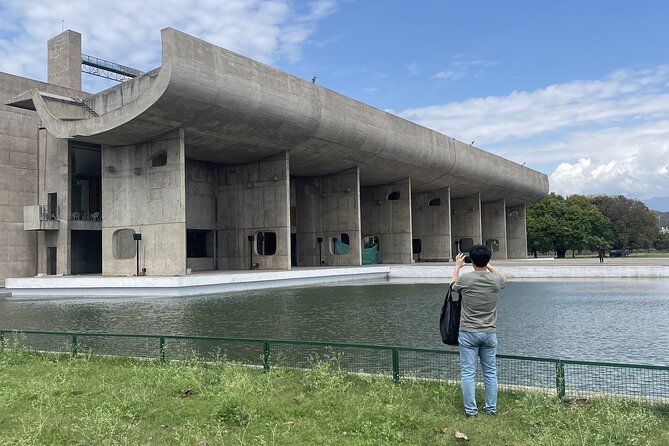
- UNESCO Capitol Complex access with close viewing of the Secretariat, Assembly Hall, and the Open Hand Monument
- Le Corbusier Centre + Chandigarh Architecture Museum in the same day, connecting early ideas to later modernist experiments
- Pierre Jeanneret spotlight at Gandhi Bhawan, plus a rare visit to Pierre Jeanneret’s house museum
- Tower of Shadows as a practical lesson in how the sun was treated as a design tool
- Sukhna Lake and Sector 17 Market showing how planning reaches beyond government buildings
- Included tickets + photography fees plus parking and pickup/drop-off, so your “real cost” stays predictable
Why Chandigarh feels different with this kind of guide
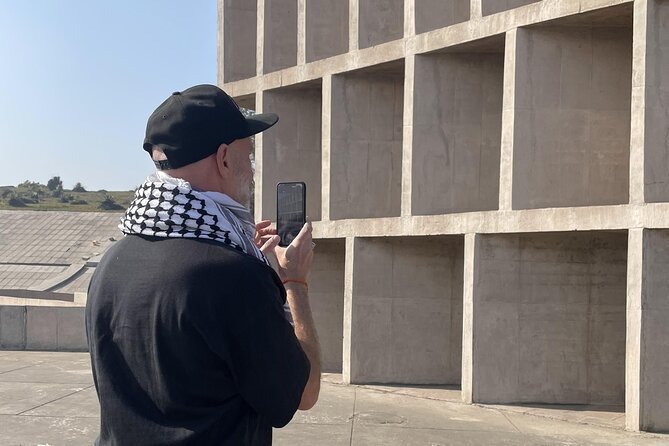
Chandigarh is an administrative city, but it’s also a design classroom in concrete. I love that this tour doesn’t treat the buildings like fancy scenery; you learn why the city looks the way it does, and how the planners thought about people and climate.
The guide is Rusty (sometimes listed as Rustom), a long-time local who clearly speaks from lived experience. He also has a knack for keeping the mood light and the facts steady, which matters on a topic as dense as modernist planning.
Price and what you get for about $71 a day’s worth of structure
At about $71.02 per person for roughly two days, the best value is what’s bundled. You’re not paying separately for entry tickets at each stop, and photography-related fees are included too.
You also get an air-conditioned vehicle with pickup and drop-off, plus parking and driving/waiting time covered. For a city like Chandigarh—where sites are spread out—this matters more than you might think. It’s the difference between a “mostly walking” day and a day where you can actually keep up.
Day 1: Capitol Complex to Pierre Jeanneret’s house museum
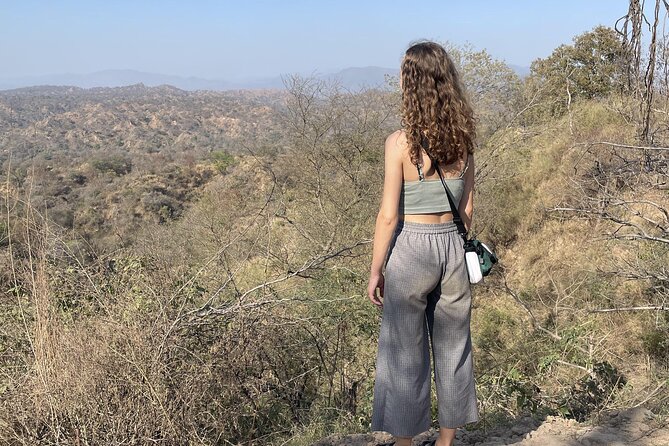
Day one is built around the Capitol Complex area and the modernist logic that shaped the city. Expect a lot of “look, then understand” moments, plus multiple UNESCO-level stops where you can take your time.
Capitol Complex: Secretariat, Assembly Hall, and the Open Hand Monument
You start with insider-guided access to the UNESCO World Heritage site at the Capitol Complex. This is where Chandigarh’s brutalist concrete style turns into a readable system: strong forms, deliberate placements, and symbols tied to the city’s public identity.
You’ll focus on the Secretariat and Assembly Hall, plus the Open Hand Monument, which is the standout peace-and-unity symbol linked to Le Corbusier’s vision. This part is generous with time, and it’s the kind of stop where you’ll want photos even if you usually don’t.
Le Corbusier Centre: early sustainability shown with your eyes
Next is the Le Corbusier Centre, an older architects’ building turned museum/memorial space. The point here is not just “look at history,” but see how early ideas about sustainability and natural cooling were tested in Chandigarh’s context.
You get an insider-style guided visit, roughly 50 minutes. If you like when a guide points out design logic you can actually notice—shading, airflow concepts, and how buildings respond to heat—this stop lands well.
Gandhi Bhawan: the spinning lotus roof moment
Gandhi Bhawan is one of those Chandigarh buildings you recognize even if you can’t place it. You’ll get an insider guided look at the university’s heart, including the distinctive spinning lotus-shaped roof tied to Pierre Jeanneret’s design.
This stop is shorter (about 30 minutes), but it’s built for visual impact. If you’re traveling with someone who gets impatient with long museum rooms, this kind of exterior-plus-explanation stop is a smart pace check.
Chandigarh Architecture Museum: Le Corbusier’s Zurich Pavilion homage
After that, you move into the Chandigarh Architecture Museum, described as an homage to Le Corbusier’s 1965 Zurich Pavilion. The setting is raw concrete and a tubular stairway, and you’ll explore multiple levels—about three floors of exhibits.
What I like about this stop is that it connects Chandigarh’s story to Le Corbusier’s broader design thinking. You don’t just see buildings; you see how concepts traveled.
Practical note: this is a good place to slow down and read labels, because the architecture themes you’re learning start clicking together.
Open Hand Monument again, up close
Yes, you spend time at the Open Hand Monument as a major anchor point, and you’ll get closer, guided access in that second segment. This is the moment for wind, shadows, and a clear view of why the form is treated as a crowning symbol.
It’s around 25 minutes. If you’re there on a windy day, you’ll feel that playful breeze effect the guide mentioned—another reason it works as a photo stop.
Geometric Hill: sculptural earth and concrete grids
Then comes Geometric Hill, part of the Capitol Complex’s broader idea of moving public space and form together. You’ll see grid-like earth mounds and concrete elements, and how the design treats the ground like architecture.
At about 20 minutes, it’s not long, but it adds texture to a day that can otherwise feel too “official.” This is where Chandigarh’s playful geometry shows up.
The Tower of Shadows: a sun-study building you can feel
The Tower of Shadows is one of the tour’s most educational stops, even though it’s short (about 15 minutes). The structure is designed as a demonstration building to study solar movement.
This is where you stop thinking of the city as static and start thinking in patterns: how sunlight changes, how form responds, and why design in Chandigarh isn’t just about shapes—it’s about time.
Panjab University: architecture in a working campus
Next up is Panjab University with an insider tour for about 40 minutes. This adds daily-life context. Government buildings can feel like “set pieces,” but a campus helps you see how modernist design functions as a living system.
You’ll likely walk through the university areas at a calmer pace than a pure sightseeing sprint.
Museum Maison Jeanneret: Pierre Jeanneret’s first Chandigarh house
Day one ends with a rare visit to Museum Maison Jeanneret, described as the first house built in Chandigarh. You’ll see it as Pierre Jeanneret’s residence for about 11 years, now functioning as a museum/memory space for his work.
This stop is around 30 minutes. If you want the human side of the city’s design—how collaborators lived inside the experiment—this is a strong closer.
Day 2: Sukhna Lake, Sector 17, and museums with real art objects

Day two shifts from the government/campus zone into public life and cultural institutions. You get a gentler start with a lake walk, then a market, a memorial, and museums, and finally a rare private club visit.
Sukhna Lake: designed for groundwater and cooling
You begin at Sukhna Lake, described as a manmade lake designed by Corbusier to refresh groundwater and cool the northern sectors of Chandigarh. You’ll take a gentle walk (about 30 minutes) and hear the story of how it was created and how it evolved into a well-known public pause.
This stop is a nice break from concrete-only thinking. It also sets you up for the rest of day two, where you’ll see planning connect to everyday comfort.
Sector 17 Market: commerce and community in built shade
Next is Sector 17 Market, a walk and talk through Corbusier’s commercial designs. You’ll move along shaded, tree-lined walkways and spend time people-watching.
This stop is about one hour. It’s also the reminder that Chandigarh’s design isn’t only monuments. Markets are where your urban-planning lesson becomes real-life.
Chandigarh War Memorial: architecture that holds silence
Then you’ll visit the Chandigarh War Memorial in a tribute park tucked within the Bougainvillea Garden of Sector 3. You get around 30 minutes and an explanation tied to its creator, Lt. Gen. J.F.R. Jacob.
This stop is quieter than the rest of the day. If you’re the type who likes reflection, you’ll appreciate the respectful pacing. If you prefer faster energy all the time, just know this is meant to slow you down.
Government Museum and Art Gallery: pre-partition artifacts and Greco-Buddhist art
After that, it’s Government Museum and Art Gallery, guided for about one hour. The museum is a 1960s heritage building designed by Le Corbusier, and it holds pre-partition era artifacts from Pakistan, including one of the world’s largest collections of Greco-Buddhist art objects.
This is one of the best stops if you want Chandigarh to feel like a doorway into wider South Asian cultural history, not only architectural design. It’s also a good reminder that modernism in Chandigarh wasn’t happening in isolation.
Lake Club: rare access to Corbusier’s yacht-club idea
You finish at Lake Club, described as a private yacht club for recreational boating and socializing designed by Corbusier about a year before his death. You’ll get an insider guided tour of roughly 30 minutes.
This final stop is the “wait, Chandigarh has that?” ending. Even if you don’t care about yachts, you’ll likely care about what it shows: how design ideas followed Le Corbusier across different public and private roles.
How the pacing stays friendly (and why that matters on a packed design day)
The tour starts at 9:00 am, and it’s built as a steady flow of site visits with time for photos and short breaks. The max group size is 41 travelers, so you generally get enough attention without feeling stuck in an endless crowd line.
You’ll also have the option of pickup and drop-off, plus the vehicle covers driving and waiting time. That reduces the “wasted time penalty” of a two-day tour.
One practical thing I appreciate: snack stops aren’t included, but the guide plans frequent ones and keeps them budget friendly. That means you can eat without turning lunch into a separate expense project.
What to watch for at each stop (so the learning sticks)
If you want the most out of a design-heavy tour, you need a simple mental checklist. Here’s mine, based on the themes the route pushes hard:
- Follow the symbols: Open Hand is more than a shape. It’s connected to a peace-and-unity message and Le Corbusier’s vision.
- Notice climate-thinking: Tower of Shadows and the Le Corbusier Centre push you to see how sun and cooling were treated as part of design.
- Compare public and domestic: Start with Capitol buildings, then end with Maison Jeanneret. The city feels different when you see where collaborators lived.
- Look beyond monuments: Sector 17 Market and Sukhna Lake show Chandigarh as a city people actually use.
Who this tour fits best
This is a great match if you like modern architecture and want context that goes beyond saying the buildings are famous. It also works well if you’re new to Chandigarh, because the guide builds the story from origins and design logic.
The tour is also described as friendly for families and kids, mainly because it mixes museum time, photo moments, and outdoor structures. And for couples or solo travelers? You’ll likely enjoy the steady rhythm and the chance to ask questions without the day feeling rushed.
Should you book the Hipster Chandigarh Architecture History Tour?
If you want two days of serious Chandigarh architecture without doing the planning math yourself, I think this tour is a solid booking. The included entry tickets and photography fees cut down the “surprise costs,” and the pickup/vehicle coverage keeps the pace workable.
Book it especially if you care about the human story behind Le Corbusier and Pierre Jeanneret, not just the famous exteriors. The rare access element—like the house museum and the public socialist housing visit opportunity on day two—makes it feel more like a guide-led experience than a drive-by checklist.
Skip it only if you hate walking and outdoor elements, or if you don’t want a structured two-day plan. This tour needs good conditions, and it runs like a thoughtful itinerary, not a free-form day.
FAQ
How long is the Hipster Chandigarh Architecture History Tour?
The tour runs for 2 days, with the schedule built from multiple stops across both days. Exact timing by stop can vary, but you’ll start at 9:00 am.
What is the price per person?
The price is listed as $71.02 per person.
Is pickup included?
Yes. The tour includes pickup and drop charges, and you’ll travel by an air-conditioned vehicle.
Are admission fees and photography fees included?
Yes. Entrance fees are included for the stops that require tickets, and photography tickets/fees are included as well.
What is not included in the tour price?
Snacks aren’t included, though the tour plans frequent snack stops that are meant to stay cheap. Gratuities are optional.
How big is the group?
The tour has a maximum of 41 travelers.
What if the weather is bad?
The tour requires good weather. If it’s canceled due to poor weather, you’ll be offered a different date or a full refund.
Is there a mobile ticket?
Yes. The tour includes a mobile ticket.
If you tell me your travel dates and whether you’re more into museums, outdoor structures, or city planning, I can help you decide if this exact pacing fits your style.