REVIEW · CEBU CITY
Cebu: Guided Heritage City Tour
Book on GetYourGuide →Operated by Explore Cebu Tours · Bookable on GetYourGuide
Cebu’s old streets tell their story fast. This Cebu heritage tour strings together major landmarks in a tight loop, so you can get oriented quickly while an English guide ties the sites together. I like how the plan mixes faith landmarks like Magellan’s Cross and the Basilica Minore del Santo Niño with practical colonial-era stops such as Fort San Pedro.
My other favorite part is the pacing: you get guided time at several sites, plus photo stops when you just want to take it in. The one drawback to keep in mind is that the whole experience can feel very dependent on how smooth your van ride and pickup timing are, and one bad experience showed how serious communication problems can be at the meeting point.
In This Review
- Key highlights worth your attention
- Why Cebu’s 3-hour heritage loop is a smart way to start
- Hotel pickup, AC van time, and why timing can make or break it
- Magellan’s Cross: where the route gets its story anchor
- Basilica Minore del Santo Niño: the spiritual heartbeat stop
- Colon Street and Parian Plaza: history you can feel in the sidewalks
- Yap-SanDiego Ancestral House: architecture plus a story pause
- Fort San Pedro: cannons, gardens, and a clear military story
- Taoist Temple: a different spiritual angle near the finish
- What’s included (and what that means for your budget)
- Price and value: is $46 fair for this Cebu City loop?
- Who this tour fits best (and who should rethink it)
- Small risks to handle before you go
- Should you book the Cebu Guided Heritage City Tour?
- FAQ
- How long is the Cebu: Guided Heritage City Tour?
- What are the main stops on the tour?
- Is hotel pickup and drop-off included?
- What’s included in the price?
- Is food and drinks included?
- Can I cancel or use reserve and pay later?
Key highlights worth your attention
- Magellan’s Cross and Santo Niño in the same morning-style route, with guided time at each stop
- Colon Street on foot, including the feel of old storefronts and market areas
- Fort San Pedro’s cannons and gardens, a clear Spanish-period military snapshot
- Yap-SanDiego Ancestral House for architecture-and-photo time
- Taoist Temple visit with guided context and a photo opportunity
- Skip-the-ticket-line and entrance fees handled for you
Why Cebu’s 3-hour heritage loop is a smart way to start
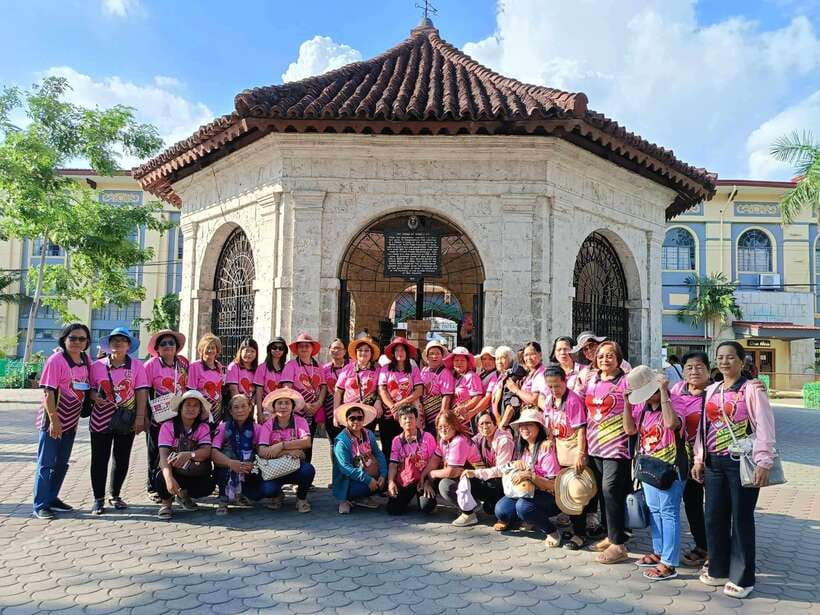
Three hours sounds short until you see how the route is built. This is basically a guided sampler of Cebu City’s “you should know this” landmarks, with hotel pickup and drop-off, and an air-conditioned van that handles the in-between travel.
For value, that matters. At $46 per person, you’re not just paying for a walk and a few photos. You’re paying for transportation, a live English guide, and applicable entrances and fees. If you were to do this on your own, you’d still spend time figuring out where to go next, paying for tickets one by one, and trying to find a coherent story line.
You’ll also notice the tour isn’t only about monuments. It includes marketplace-style streets and a couple of stops that feel more like local life than museum display. That’s a good combo for first-timers: landmarks first, then the streets that connect them.
You can also read our reviews of more tours and experiences in Cebu City.

Hotel pickup, AC van time, and why timing can make or break it
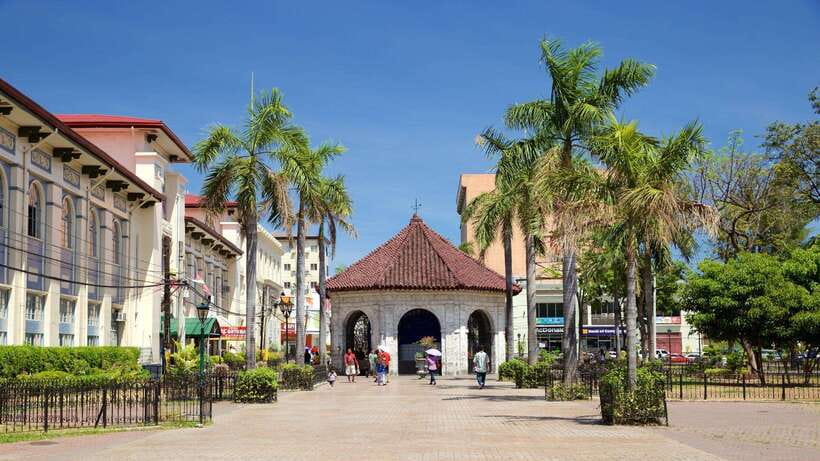
The tour includes pickup in Cebu City, and you’re asked to wait in the hotel lobby about 10 minutes before pickup time. The driver waits no longer than 10 minutes after the scheduled pickup time, so don’t count on a late-start being “part of the charm.”
This is also where you should set expectations. The day has van segments (including about an hour early on), plus guided visits and photo stops. Some stops are listed for short windows, which means if the group moves slowly, you can feel the squeeze on the ground.
I’ll say it plainly: the most repeated practical lesson here is that the experience can depend a lot on how smoothly the driver handles pickups and timing. One poor rating pointed to confusion at the meeting point with no reply when someone tried contacting the group. That doesn’t have to happen, but it’s a good reminder to take pickup seriously and show up early.
Tip: if you’re the type who always goes at the exact minute, switch to “early” for this one. Being ready beats getting rushed.
Magellan’s Cross: where the route gets its story anchor
You start at the historic core, and the first big “marker in your mind” is Magellan’s Cross. It’s more than a postcard spot. The way the tour frames it, Magellan’s Cross symbolizes Cebu’s deep history and the introduction of Christianity to the Philippines.
You get a photo stop plus guided time (15 minutes). That’s a useful length: long enough for context, short enough that you won’t feel trapped listening while everyone else is waiting.
Why this stop works: it gives you a reference point before you move into the church site that follows. When you later stand at the Basilica Minore del Santo Niño, you’re not just looking at an attraction—you’re connecting it to why people in Cebu built devotion around this moment in history.
Basilica Minore del Santo Niño: the spiritual heartbeat stop
Next is the Basilica Minore del Santo Niño de Cebu. This is one of the centerpiece stops on the route, with a photo stop and guided tour time (about 30 minutes).
What I like about this stop is that the tour doesn’t treat it as only architecture. You’re introduced to the spiritual role of the Santo Niño statue, described here as the oldest Christian relic in the country, along with the devotion of Filipino people.
Practical note: church stops can be emotionally intense even for visitors who aren’t there for religion. The best way to enjoy it is respectful attention—give the guide your focus, keep your photos sensible, and let the atmosphere do its job.
If your goal is “understand why this matters to locals,” this is the point on the tour where that clicks fastest.
Colon Street and Parian Plaza: history you can feel in the sidewalks
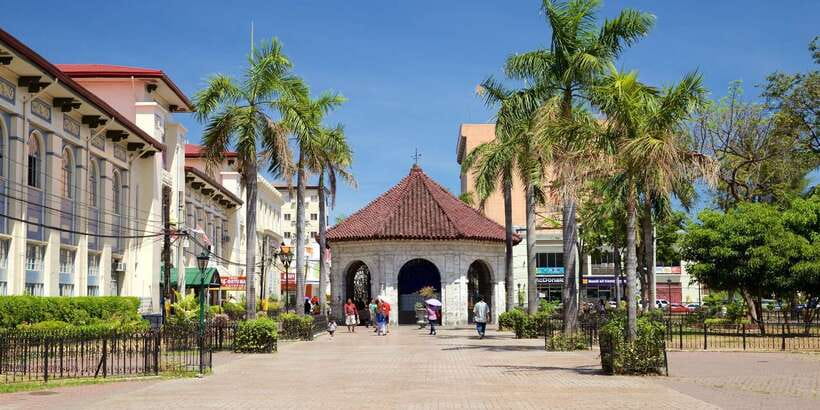
After the major landmark anchors, the tour shifts into street-level history. The experience includes time along Colon Street, described as the Philippines’ oldest street, with a feel for century-old buildings and the marketplace energy around it.
Even though street time isn’t always long, it’s important. Colon Street is where you get the sense of Cebu as a living city, not just a list of stops. It’s the kind of place where a guide’s commentary helps you notice what you’d otherwise walk past.
Parian Plaza also appears on the route as a short photo stop (about 15 minutes). That quick block matters because it breaks up the heavier sites and keeps your attention fresh.
When you’re short on time, the goal isn’t to “see everything.” It’s to get your bearings fast and understand what kind of city Cebu is—commercial, old, crowded with meaning, and still actively used.
Yap-SanDiego Ancestral House: architecture plus a story pause
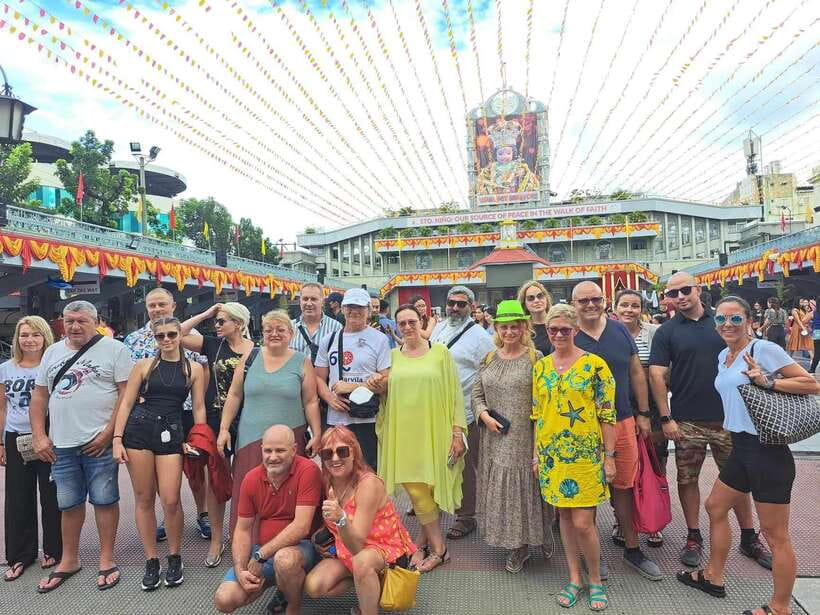
Another stop that balances the route is the Yap-SanDiego Ancestral House, scheduled for photo time and a guided tour (about 30 minutes).
This is where you slow down. A heritage house stop like this usually works best when you treat it as a context builder: who lived here, what the design communicates, and how it ties into colonial-era Cebu. The tour includes guided time, so you won’t just be guessing what you’re looking at.
Even if you don’t consider yourself an architecture fanatic, ancestral houses are a great way to understand everyday history—how power, trade, and local status were built into homes and spaces.
The only caution: don’t plan to spend this stop “grazing.” Thirty minutes can go quickly, so if you want photos, decide what you’re after before your group moves.
Fort San Pedro: cannons, gardens, and a clear military story
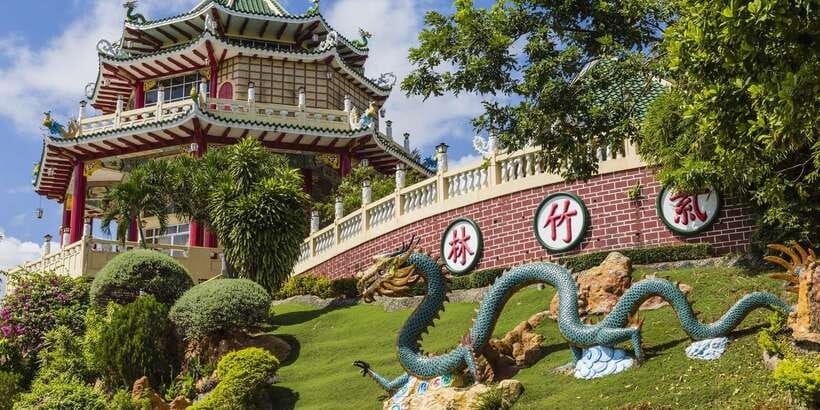
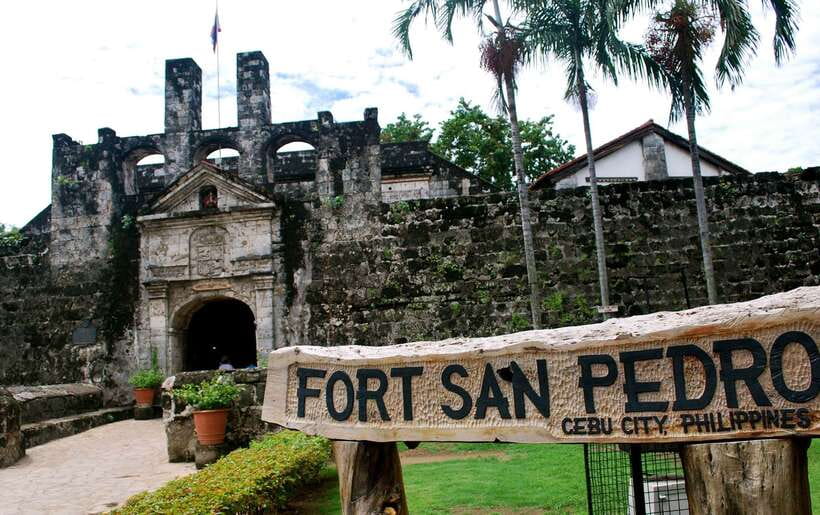
Fort San Pedro is a major stop with guided visit time (about 30 minutes). It’s described as a military fortress built during the Spanish colonial period, and the tour points out elements like the strategic layout, cannons, and lush gardens.
This is one of the easiest stops to grasp because the physical features do a lot of teaching. Fort walls, open areas, and cannons help your brain picture what kind of defense and siege planning happened here. And the gardens add balance, so it isn’t only heavy history.
Why this stop is worth your time: it connects the street-level colonial architecture you’ve been seeing to a larger political and military reality. You stop seeing the old city as just pretty and start seeing it as designed for conflict and control.
If you’re short on patience for lecture-heavy museums, this can still work. The setting helps the guide’s story land.
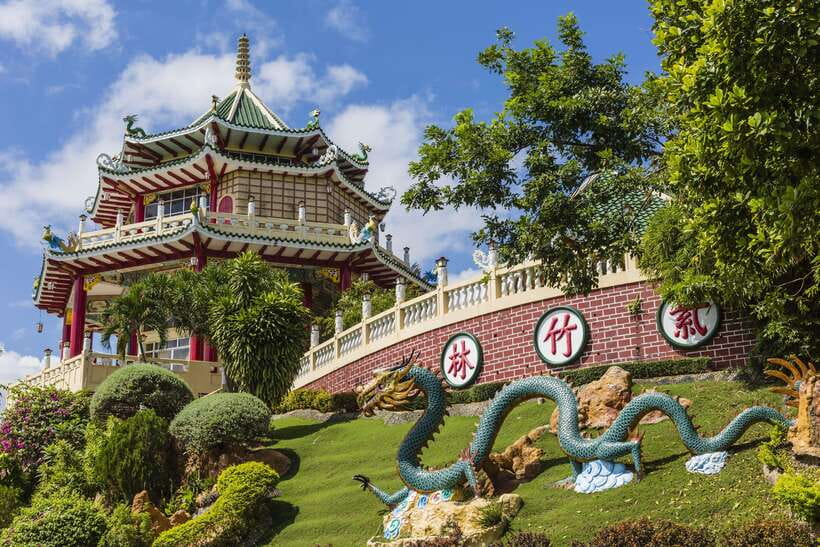
Taoist Temple: a different spiritual angle near the finish
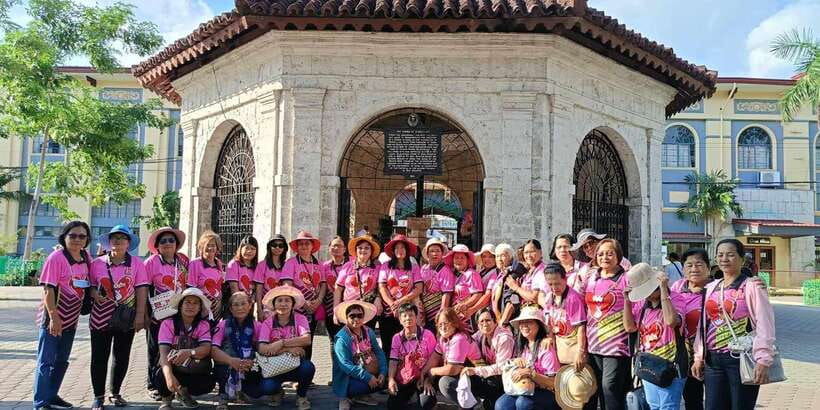
The route ends with another meaningful contrast: the Taoist Temple. You’ll get a photo stop plus guided tour time of about 30 minutes.
This stop changes the tone. After Catholic and Spanish-era markers, you’re now looking at a different religious tradition and cultural imprint in Cebu City. Even without inventing details, the value here is perspective—Cebu isn’t shaped by one single influence, and this kind of visit helps you notice that.
I also appreciate that the tour gives guided context rather than leaving you alone with the buildings. That matters because temple architecture often has symbols you can easily miss without explanation.
What’s included (and what that means for your budget)
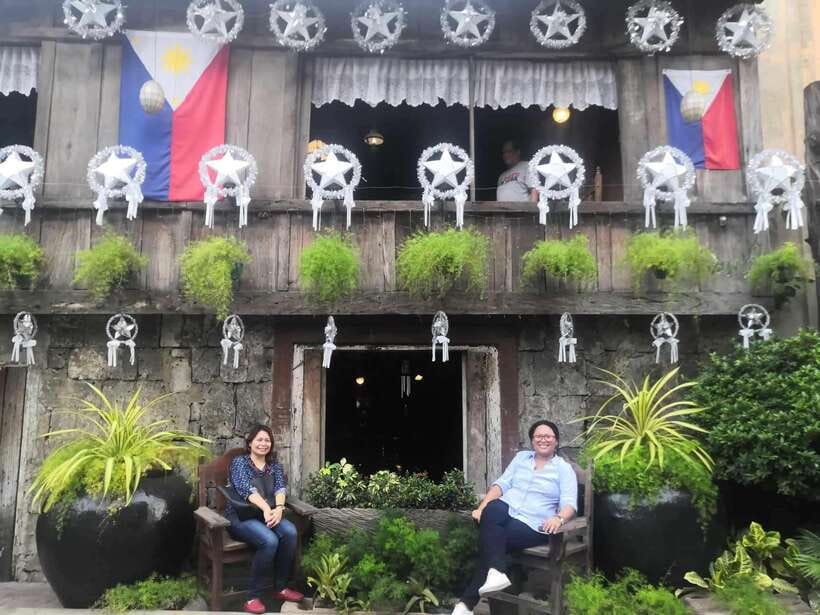
Here’s what you’re covered for:
- Hotel pickup and drop-off
- Live English guide
- Air-conditioned transportation
- Assistance of the coordinator or tour guide
- Applicable entrances and fees
- Skip-the-ticket-line
And what you’re not covered for:
- Food and drinks
That inclusion list is the practical heart of the pricing. Entrances and fees add up, and ticket-line delays can waste your precious hours. Skip-the-line plus pre-arranged entrances is the difference between a smooth tour and a day that feels like mostly waiting around.
For meals, plan something before or after. Since the tour is only 3 hours and doesn’t include food, you don’t want to turn your day into a rushing scramble. If you’re taking this as a first activity, I’d schedule it when you can stay energized for street walking afterward.
Price and value: is $46 fair for this Cebu City loop?
At $46 per person, the question isn’t just “Is it cheap?” It’s “Does it buy you time and convenience?”
You’re getting:
- A guided route that covers multiple major landmarks
- English commentary
- Transport and drop-off convenience
- Entrance fees handled
- Skip-the-line access
If you’re staying somewhere in Cebu City and want a structured way to see the essentials in a single morning or afternoon block, $46 is a reasonable deal. It’s especially fair if you value context and you don’t want to spend half your day figuring out tickets and route order.
If you’re the type who prefers wandering with zero schedule and you already know exactly what you want to see, you might find self-guided routes cheaper. But you’ll likely pay in time and confusion—exactly what this tour is designed to reduce.
Who this tour fits best (and who should rethink it)
This guided heritage loop is a strong choice if:
- You’re new to Cebu City and want an orientation built around major landmarks
- You like having a guide connect sites into a storyline
- You want transportation handled, especially in hot weather (AC van is included)
- You’d rather pay for entrance fees once than manage them yourself
You may want to rethink if:
- You’re very sensitive to timing and dislike strict meeting points
- You require long stays at fewer sites (some stops are short by design)
- You’re expecting a tour where communication problems never happen—because even a single serious failure at the meeting point is a real risk
Small risks to handle before you go
Two practical issues stand out from the experience feedback pattern:
1) The experience can depend on the driver. Smooth van timing and pickup behavior change how relaxed the tour feels.
2) One serious complaint involved not being able to join despite repeated attempts to reach the group at the meeting place, with no reply.
You can’t control the other side of the situation, but you can reduce your risk:
- Be at the pickup location early, not “right on time.”
- Keep your hotel lobby departure organized so you don’t miss the pickup window.
- When in doubt, double-check the name of the meeting point with your coordinator ahead of time so you’re not searching in the wrong place.
Should you book the Cebu Guided Heritage City Tour?
I’d book it if you want a guided, time-efficient way to understand Cebu City through landmark stops—especially the pairing of Magellan’s Cross and the Basilica Minore del Santo Niño, plus Fort San Pedro. The mix of spirituality, colonial-era defense, and street-level history gives you a solid mental map fast.
Skip it only if you know you’ll struggle with short stop windows or strict meeting-point timing. If that’s you, a slower self-guided plan might fit better.
If you do book, go in expecting a “guided sampler” rather than a slow deep visit. Come ready to move, stay respectful at religious sites, and you’ll get a lot of meaning out of those three hours.
FAQ
How long is the Cebu: Guided Heritage City Tour?
The tour duration is 3 hours.
What are the main stops on the tour?
Key stops include Basilica Minore del Santo Niño de Cebu, Magellan’s Cross, Yap-SanDiego Ancestral House, Parian Plaza, Fort San Pedro, and Taoist Temple, with time along Colon Street mentioned in the tour experience.
Is hotel pickup and drop-off included?
Yes. Hotel pickup and drop-off are included, and pickup is in Cebu City.
What’s included in the price?
The price includes hotel pickup/drop-off, a live English guide, air-conditioned transportation, assistance from a coordinator or tour guide, and applicable entrances and fees. Skip-the-ticket-line is also included.
Is food and drinks included?
No. Food and drinks are not included.
Can I cancel or use reserve and pay later?
You can cancel up to 24 hours in advance for a full refund. You can also reserve now and pay later.