REVIEW · SAO MIGUEL
São Miguel: Azores Whaling & Lookout Legacy Tour
Book on Viator →Operated by Azores Whale Watching TERRA AZUL · Bookable on Viator
Whaling history meets a whale-spotter’s job. I love that this tour is equal parts real maritime artifact and hands-on lookout practice, not just a lecture. I also like the mix of indoor briefing time and outdoor scanning time at the viewpoints. One thing to plan around: it depends on good weather, and on quieter days the “spotting” part can feel more like patient searching than instant payoff.
You’ll check in at the Marina of Vila Franca do Campo, then follow a tight loop through the past: a visit to the 1945 whaleboat Senhora de Fátima, a van ride to the Vigia da Furada lookout, and a guided tour of the 1957 Ponta Garça Lighthouse. It’s built for small groups (max 7), so questions don’t get lost. In English, with a multinational team that tries to accommodate preferences, you can still expect clear guiding and pacing.
This is a short, focused 3-hour experience. Bring sun protection, light food is fine, and pack warm layers too—temperatures can shift once you’re up near the coast. Also, protect your camera gear; you’ll be out in the elements and moving between stops.
In This Review
- Key things I think are worth your attention
- Getting to Vila Franca do Campo and starting on time
- Whaling culture briefing, then the 1945 whaleboat Senhora de Fátima
- The van ride to Vigia da Furada: where 1830 spotting methods meet today
- Try the lookout role: scanning with long-range binoculars
- Ponta Garça’s 1957 Lighthouse: keeper-led stories and sea views
- How long is this, and does it feel worth $46.86?
- Who should book this tour (and who might want something else)
- Quick practical tips so your day goes smoothly
- Should you book the São Miguel Whaling & Lookout Legacy Tour?
- FAQ
- What time does the tour start?
- Where do I check in for the tour?
- Is hotel pickup included?
- How long is the tour?
- What language is the tour offered in?
- What’s included in the price?
- What should I bring with me?
- What happens if the weather is poor?
Key things I think are worth your attention
- A preserved 1945 whaleboat: The sea-worthy evidence of São Miguel’s whaling era, the Senhora de Fátima.
- Lookout role with real tools: You’ll scan using specialized long-range binoculars from the Vigia da Furada.
- 1830 spotting techniques explained: You’ll learn the old method that helped shape Azorean whale watching into what it is today.
- Air-conditioned van between stages: Fewer logistics headaches between viewpoints.
- Ponta Garça Lighthouse, 1957: A guided stop with keeper-guided stories and serious sea views.
- Small group max 7: Easier interaction and more time for questions at each briefing point.
Getting to Vila Franca do Campo and starting on time
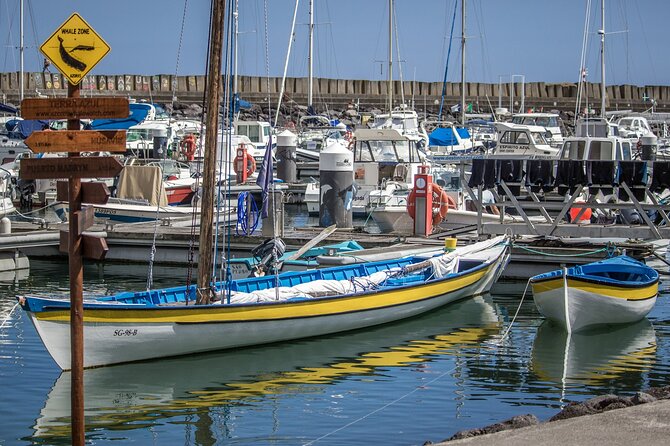
Your tour meets at the Azores Whale Watching TERRA AZUL location at the Marina of Vila Franca do Campo (Marina de Vila Franca do Campo 4, 9680-187 Vila Franca do Campo). Check-in happens at the specified time, and the tour starts at 1:15 pm, so I’d treat that as a real “arrive a bit early” situation.
Hotel pickup is offered, but it’s subject to availability and starts before the designated time. If you want pickup, confirm your exact pickup time when you can. Everyone gets a mobile ticket, which keeps things simple once you’re on site.
This is a 3-hour loop that ends back at the meeting point. That matters because you won’t need to plan a complicated return to your base after the last stop—your transport problem mostly disappears.
Whaling culture briefing, then the 1945 whaleboat Senhora de Fátima
Right after check-in, you’ll get a short briefing and a presentation about local whaling culture. The goal isn’t doom-and-gloom. It’s context—how whaling shaped life here, and how the knowledge and tools evolved over time.
Then you visit the Senhora de Fátima, a whaleboat from 1945 that’s described as the single fully operational and sea-worthy evidence of the era in São Miguel. Standing in front of something that still fits the “sea-worthy” description changes how you think about history. It stops being vague and starts being tangible.
You’ll get guided interpretation during the visit, which is what makes this stop more than a quick photo stop. If you’re the type who likes your history with physical details—materials, purpose, and how it worked—this is the part you’ll likely remember.
Practical tip: take your time looking at the boat details before you move on. The visit is only part of the tour, so if you rush, you’ll feel it later.
The van ride to Vigia da Furada: where 1830 spotting methods meet today
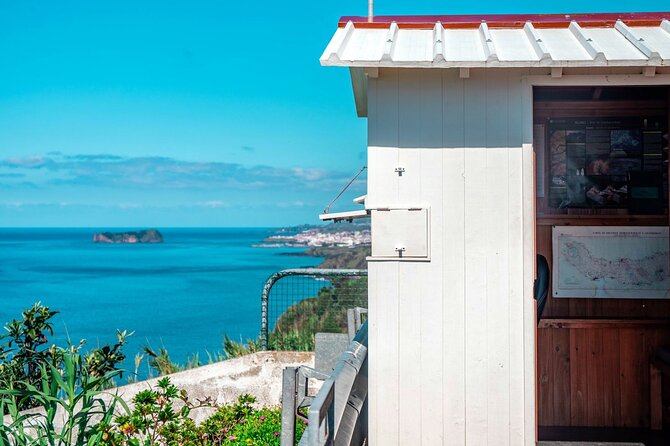
After the boat visit, you switch to a van transfer to the whaler lookout Vigia da Furada. This segment is nice because the van is air-conditioned, which helps when you’re moving between the marina area and the lookout zone.
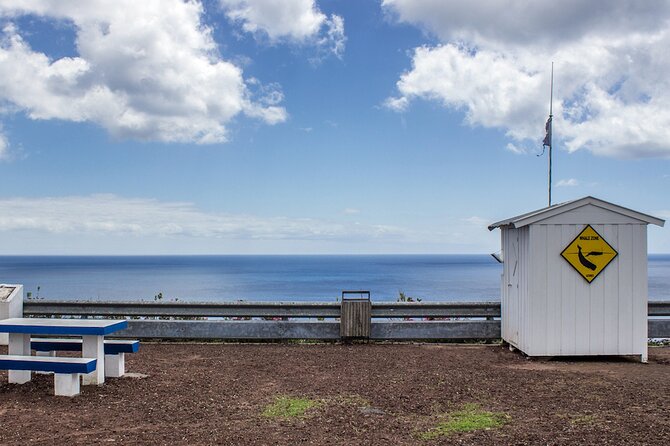
At Vigia da Furada, the tour turns into a story about technique and adaptation. You’ll learn the ancient whale spotting methods from the 1830 era—specifically how those practices helped evolve Azorean whale watching into one of the world’s best-known traditions.
This matters because it explains the “why” behind the lookout culture. It’s not just that people watched. It’s that they developed methods to spot what they needed, from where they could stand, with the tools they had. When you understand the system, the lookout becomes a working viewpoint rather than a scenic stop.
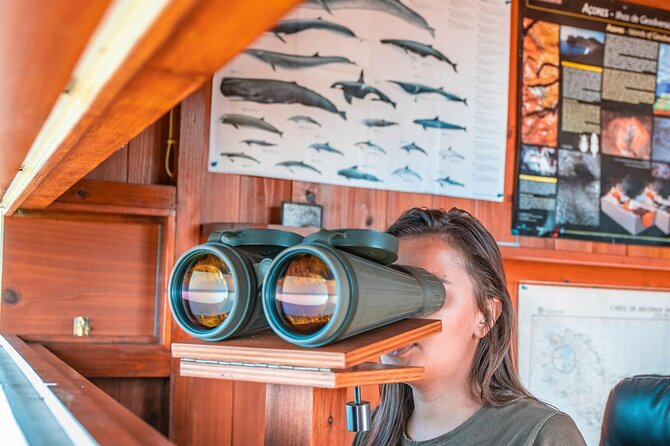
And yes, this is where the modern part enters: you’ll get the chance to practice the lookout role with specialized long-range binoculars.
Try the lookout role: scanning with long-range binoculars
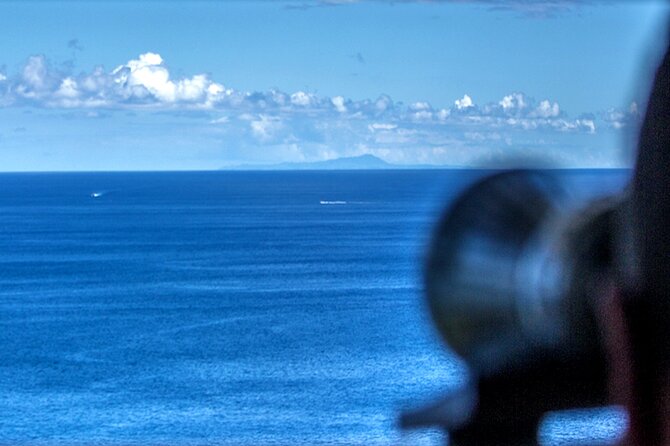
This is the hands-on segment, and it’s usually the most fun for people who learn by doing. You’re not just hearing about whale spotting. You’re actively searching from the lookout position using long-range binoculars.
Because you’re practicing a lookout role, the “success” of the experience can vary with the day’s conditions and what’s visible from the viewpoint. I like that the tour frames it honestly: you’ll scan and search, not that you’ll guarantee dramatic sightings.
So how do you make the most of it? Keep your scanning patient. Move in slow sweeps, and don’t spend all your time staring too close—your job is to cover the horizon efficiently. If you can, listen to the guide’s cues and adjust quickly once they show you where attention should go.
Camera tip: this is where people get over-excited and forget technique. Protect your gear (sunscreen and salt air are not your camera’s friends). If you want photos, get stable first, then shoot—don’t try to film while sprinting your view around.
If you have questions—about the lookout position, the historical method, or what you’re looking for—ask them here. This segment is your best chance to connect the past technique to what you’re doing in real time.
Ponta Garça’s 1957 Lighthouse: keeper-led stories and sea views
Once the lookout practice is done, you head to Ponta Garça’s 1957 Lighthouse. This part works because it adds a second maritime theme: navigation and safety, not hunting and spotting.
Your stop includes a lighthouse keeper guided tour. You’ll learn interesting facts about the building, its importance for maritime activities, and how it connected to seamen’s lives. Even if you’re not a lighthouse person, you’ll likely come away with a new appreciation for why coastal communities built and maintained these stations.
Then there are the views. From the lighthouse area, you’ll get a chance to take in the island and ocean scenery in a way that feels earned. You’ll have already been “working” as a lookout earlier, so the shift to sightseeing doesn’t feel random—it feels like a reward.
Timing note: because the full tour is about 3 hours, you don’t get a long stand-still at each stop. I’d rather see you treat the lighthouse as a “soak it up with intent” moment: listen first, then look, then take photos.
How long is this, and does it feel worth $46.86?
At $46.86 per person for about 3 hours, the value comes from what you get packed into that time: multiple guided components, transport, and insurance. You’re not paying for one attraction. You’re paying for a curated sequence that links whaling history, lookout skills, and maritime navigation in one loop.
Included items that actually matter for value:
- local whaling history session
- guided van tour and whaler lookout tour
- lighthouse keeper tour
- insurance
- a guide who ties it together
The tour also stays small (max 7). That matters because smaller groups often mean better Q&A and a more thoughtful pace. If you’ve ever been stuck in a big crowd where you can’t ask questions, you’ll appreciate this size.
Not included is also simple: you need your personal water supply. Bring water so you’re not buying it at the last minute—or worse, rationing while you’re scanning with binoculars.
For most people, the best “value test” is whether you’d pay extra to get a historical interpretation plus hands-on lookout practice plus a lighthouse guided stop in one package. If that sounds like your idea of a great São Miguel afternoon, this price makes sense.
Who should book this tour (and who might want something else)
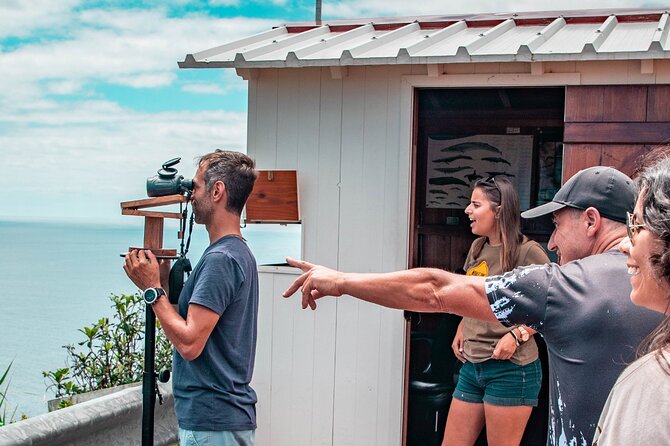
This experience is a strong match if you:
- like history you can touch, not just read about
- want nature and maritime culture connected in one story
- enjoy structured viewpoints and guided interpretation
- want small-group touring without a huge time commitment
It can also be a good fit for couples and solo travelers, since you’re not stuck in a crowd and the route is efficient. Most travelers can participate, and service animals are allowed.
I’d consider a different option if you mainly want a long, guaranteed whale-watching cruise. This legacy tour is built around lookout practice and maritime context, not a full day at sea. The spotting part is real and participatory, but the tour’s promise is the role and the technique, not a certainty of whales.
Quick practical tips so your day goes smoothly
- Pack warm layers even if the morning looks sunny. Coastal wind at a lookout can change the feel fast.
- Bring sunscreen and chap-stick. You’ll likely be outdoors for more than a quick snapshot moment.
- Eat light; light food is permitted, and it helps you stay comfortable during scanning and walking.
- Bring your own water since it’s not included.
- Protect your camera and phone setup. You’ll be outdoors and moving; salt air and sudden sea spray are real considerations on coastal islands.
Also, English is the official language, but guides are part of a multinational team. If you have a specific language preference, it’s worth aiming for clarity during check-in—accommodation is best-effort, not guaranteed.
Should you book the São Miguel Whaling & Lookout Legacy Tour?
I’d book it if you want the “how” behind Azorean whale watching as much as the “what.” The tour’s structure—history session, the preserved 1945 whaleboat Senhora de Fátima, practice at Vigia da Furada with specialized binoculars, and then a keeper-led stop at the 1957 Ponta Garça Lighthouse—gives you a complete maritime picture in only about 3 hours.
Skip it if you’re chasing only one thing: guaranteed whale encounters on open water. This is about technique, viewpoint, and maritime heritage, and that’s exactly what it does well.
If the weather is good and you’re comfortable with outdoor time, it’s a smart, high-value way to spend an afternoon on São Miguel.
FAQ
What time does the tour start?
The tour starts at 1:15 pm.
Where do I check in for the tour?
Meet at Azores Whale Watching TERRA AZUL, Marina de Vila Franca do Campo 4, 9680-187 Vila Franca do Campo, Portugal.
Is hotel pickup included?
Hotel pickups are subject to availability and begin prior to the designated time. You’ll need to contact the provider to book and confirm your exact pickup time.
How long is the tour?
The tour lasts about 3 hours.
What language is the tour offered in?
English is the official language. The team is multinational and will do their best to accommodate other preferred languages, but it’s not guaranteed.
What’s included in the price?
Included are a local whaling history session, a guided air-conditioned van tour and whaler lookout tour, a lighthouse keeper tour, insurance, and a guide. Mobile ticket is also provided.
What should I bring with me?
Bring your personal water supply, sunscreen, chap-stick, and warm clothing since temperatures can vary. A camera is essential for photography, and you should protect your equipment.
What happens if the weather is poor?
The experience requires good weather. If it’s canceled due to poor weather, you’ll be offered a different date or a full refund.