REVIEW · DARJEELING
Colonial Heritage Walking Tour in Darjeeling
Book on Viator →Operated by Darjeeling Walks · Bookable on Viator
Colonial Darjeeling, on foot. I like how this guided route strings together major landmarks like the Clock Tower and Planters Club, so colonial power feels real, not textbook. I also love the mix of temples, churches, and old photographs, which shows Darjeeling as both spiritual and social—not only British tea-administration. The one thing to watch: most stops are short (often 10–30 minutes), so you’ll need to keep pace if you prefer lingering.
This is a 2 to 3 hour group walk with a small maximum group size (up to 50) and a professional guide. You’ll get timed visits to classic colonial-era buildings, plus stops that help you understand how Darjeeling worked as a hill-town hub—religion, commerce, and education all in one circuit.
Because it’s weather-dependent, bring a flexible plan for the day. Bad weather can cancel the experience (you’ll be offered another date or a full refund), and the route involves many quick site changes—great for focus, less great for slow sightseeing.
In This Review
- Key highlights worth planning for
- How the colonial story clicks into place on a short walk
- Darjeeling Clock Tower: your quick orientation to 1850s town life
- Planters Club and Gymkhana Club: where British social life lived on
- Head Post Office (May 1921): a communication hub with UNESCO weight
- Keventer’s and Glenary’s: two included food stops with big hill-town atmosphere
- St. Andrews Church: Anglican architecture along the Mall Road
- Darjeeling Mall and Raj Bhavan: winter capital politics in plain sight
- Das Studio: old panoramas that make Darjeeling feel time-travel real
- Shops that support the walk: curios and books you’ll actually want
- Darjeeling Himalayan Railway and Old Market: commerce and movement
- Himalayan Tibet Museum and Dhirdham Temple: religion and refuge in one arc
- Schools, women’s institutes, and the local side of colonial planning
- Price, time, and value: what $27.97 buys you in real-world sightseeing
- Best fit: who will enjoy this tour the most
- Should you book this Colonial Heritage Walking Tour in Darjeeling?
- FAQ
- How long is the Colonial Heritage Walking Tour in Darjeeling?
- What does it cost per person?
- Where does the tour start and end?
- What’s included in the tour?
- Is a mobile ticket used?
- How big is the group?
- What if the weather is poor?
- What hours is the tour activity available?
Key highlights worth planning for
- Clock Tower and Town Hall: a built-in-1850 landmark that sets the colonial timeline fast.
- Planters Club (since 1868): a window into how British families organized life in Darjeeling.
- UNESCO-listed Head Post Office: a May 1921 building tied to the region’s communication history.
- Keventer’s viewpoint stop: a classic pause in the middle of the hill town, with time built in.
- Das Studio photos: old panoramas that help you see Darjeeling change across eras.
- Church and temple architecture close together: St. Andrews Church and Dhirdham Temple give two religious styles in one walk.
How the colonial story clicks into place on a short walk
What makes this tour work is the way it builds an actual timeline without turning into a lecture. You start at one of Darjeeling’s biggest markers—the Clock Tower—built in the 1850s. From there, the stops keep moving through the kinds of institutions colonial administrators and European residents used: town governance, clubs, communications, worship, and education.
I like that the route doesn’t only cover “British stuff.” You also visit spiritual sites, including an Anglican church along the Mall Road and a temple near the railway area. That matters because Darjeeling didn’t become important only because of the British; it became important because different communities overlapped there.
And if you care about why tea-era Darjeeling developed the way it did, this kind of walking circuit helps. It’s easier to understand Darjeeling’s role when you see the physical places where people lived, met, and connected—rather than just reading about them.
Darjeeling Clock Tower: your quick orientation to 1850s town life
The tour kicks off at the Darjeeling Clock Tower, built in the 1850s, where the town hall is located inside the structure. This is a smart first stop because the tower is both a visual anchor and a practical one: it gives you a reference point for the rest of the day.
Plan for the stop to feel like orientation rather than a deep museum moment. You’re allocated about 30 minutes, which is enough time to understand what the building represented and to get your bearings before you move into clubs, churches, and markets.
If you’re the kind of person who likes to photograph architecture, this is also a good place to start. Getting the Clock Tower early means you can compare later viewpoints and streetscapes with fresh eyes.
Planters Club and Gymkhana Club: where British social life lived on
After the Clock Tower, you’ll head to the Darjeeling Planters Club, which traces back to 1868 for British planters and their families. The tour frames it as more than a building—it’s a lens into how colonial society organized itself in a hill-town setting.
The next club stop is the Darjeeling Gymkhana Club, established in 1909. This one is especially useful for understanding daily life: it’s described as having badminton courts, card rooms, and an excellent library. Even if you’re not there to play a game, the point is clear—you’re seeing how leisure and knowledge sat alongside power.
One practical note: because these club visits are time-limited, go in with a clear goal. Look for details the guide points out, then take your photos and move on. If you try to read every sign, you’ll feel rushed by the group pace.
Head Post Office (May 1921): a communication hub with UNESCO weight
Next up is the Darjeeling Head Post Office, built in May 1921. The listing calls it one of the oldest post offices in the region, and it’s described as UNESCO World Heritage.
This is one of those stops that feels surprisingly important. When you’re traveling in India, you see how much daily life still depends on networks—messages, packages, government notices, and business correspondence. A post office building is basically infrastructure you can walk through, and it makes the colonial era’s global connections feel less abstract.
You’ll have a shorter visit window (around 15 minutes), so treat it like a guided “why this building matters” stop. If you want a deeper look, save that curiosity for later by noting what to look up.
Keventer’s and Glenary’s: two included food stops with big hill-town atmosphere
The tour builds in two famous Darjeeling breaks: Keventer’s and Glenary’s.
At Keventer’s, the emphasis is on a cozy, nostalgic setting tied to Mr. Edward Keventer’s dairy farm of Ghoom, with time set aside for hearty breakfast and snacks. It’s also positioned for viewpoint moments in the middle of the hill town, so you’re not just eating—you’re taking in the town’s mood.
Then there’s Glenary’s—Bakery, Restaurant & Pub, associated with an Austrian founder. This stop is described as a tea room and sunset-oriented hangout, with an open cafeteria and bar.
Because these two stops are marked as included in the tour, they’re a good value for your time. You don’t need to hunt for what to eat between sites. Just pace yourself: with so many quick cultural stops, it’s easy to snack your way through the day without getting full meals.
St. Andrews Church: Anglican architecture along the Mall Road
St. Andrews Church is where the tour’s colonial religion story becomes visible. The church is originally built in 1843 as an Anglican church along the Mall Road. It’s also described as holding memories of Lt. Gen A Lyod, believed to be the discoverer of Darjeeling.
This stop is short (about 15 minutes), but it’s a strong contrast to some of the other sites on your route. The clubs show British social structure; the church shows British religious structure. Together, they make the colonial presence feel like a whole system, not just a few buildings.
If you’re into architecture, watch for the way the church’s placement along the Mall Road relates to the rest of the town. Darjeeling’s Mall was part of the winter capital era, and the church fits that planning mindset.
Darjeeling Mall and Raj Bhavan: winter capital politics in plain sight
The tour then goes to Darjeeling Mall, tied to the winter capital period. The focus here is on the Government House, also known as Raj Bhavan. It’s described as initially built by the British in 1840, then later becoming associated with the Maharaja of Coochbehar in 1877.
This is where you see how control changed hands while the built environment stayed. Colonial planning is visible, but it didn’t stay colonial forever. That transition is what makes this stop interesting: you’re seeing the same hill-town stage with different actors.
You’ll spend around 15 minutes here. Use the time to understand where you are on the Mall and what kind of town layout people expected when Darjeeling functioned as a winter seat.
Das Studio: old panoramas that make Darjeeling feel time-travel real
One of the most memorable parts of this tour is Das Studio, described as one of the oldest photography studios in Darjeeling, started in 1927. The walls are decorated with panoramic photographs from different time periods.
This is a great “slow down” moment inside a fast-moving day. Even if you’re not a photography person, old panoramas do something practical: they help you map the past onto the present. When you later walk past streets and landmarks, you can mentally overlay earlier versions of town life.
The stop is brief (around 10 minutes), so take a quick scan first—then decide on two or three photos to study closely. If you’re going to buy anything later, you’ll also get a sense of what kinds of scenes sell well and what era you’re drawn to.
Shops that support the walk: curios and books you’ll actually want
Before you reach the Old British Market area, you pass a couple of practical shopping stops that fit the tour theme without feeling like a hard sell.
Habeeb Mullick & Sons (estd 1890) is presented as one of the best places to experience handcrafted curios. Oxford Book and Stationery Co. is described as having hill-style cottage architecture and an enormous collection of souvenirs, including items for gifts.
These are short stops (often about 10 minutes each). The value here is the context: you’re learning where these kinds of goods fit into Darjeeling’s hill-town culture. If you see something you like, buy it then, not later—because your time is structured and the tour ends at St. Andrews Church.
Darjeeling Himalayan Railway and Old Market: commerce and movement
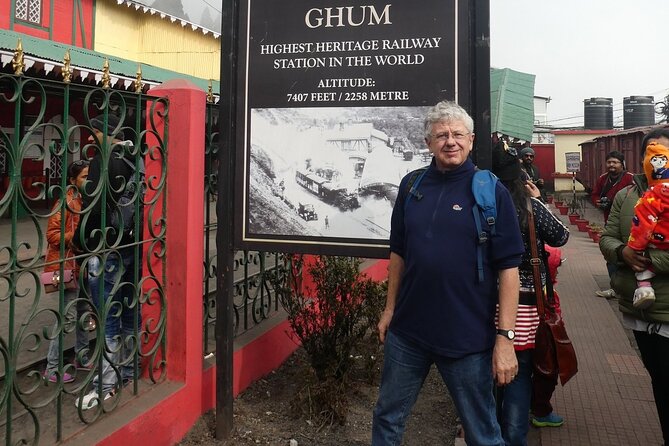
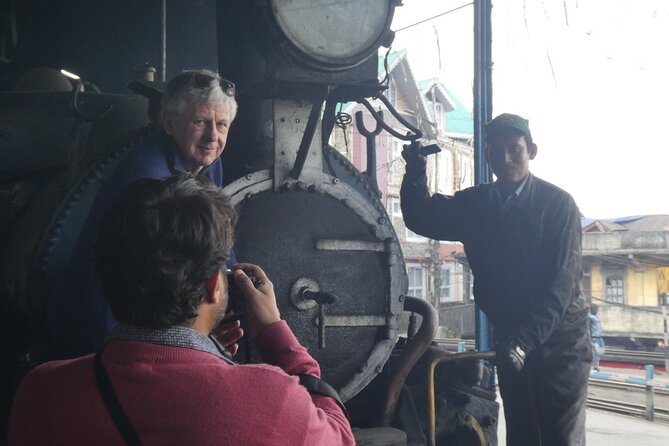
The tour includes time for Darjeeling’s legendary Himalayan Railway, described as starting in the 1870s. Even without riding, it’s worth seeing this as the town’s movement engine. In hill towns, transport routes shape what becomes busy, what becomes reachable, and how people trade.
Next is the Old Market area, framed as the heart of old British Market, Old Rly Station, and the old British Ropeway. This is your chance to feel the energy of a historic commercial core—less about grand architecture now, more about the way a town organizes daily life around transport.
There’s also a Chittaranjan Das Memorial stop, tied to the Indian independence movement. It’s a reminder that colonial-era spaces didn’t just get preserved; they became part of India’s broader political story too.
The practical idea: by pairing railway/history with market space, you understand how Darjeeling functioned as more than a scenic getaway.
Himalayan Tibet Museum and Dhirdham Temple: religion and refuge in one arc
One of the more distinctive stops is the Himalayan Tibet Museum, described as covering indigenous Tibetan history and the long Tibet–India relationship. This connects nicely to the tour’s broader colonial-era context: hill towns became places of refuge and cultural crossover, and Darjeeling sits in that kind of story.
Then there’s Dhirdham Temple, near the railway station, built in a style described as similar to Kathmandu’s Pashupatinath temple. It adds variety to the religious architecture you’ve already seen with St. Andrews Church.
If you like understanding the human side of history, this section matters. Darjeeling isn’t only British tea administration and club culture. It’s also where communities carried beliefs, rebuilt community life, and adapted religious spaces in new locations.
Schools, women’s institutes, and the local side of colonial planning
Toward the latter part of the tour, you visit educational and community-focused sites that round out the colonial picture.
Turnbull High School is described as one of the lesser known colonial schools in Darjeeling, placed after crossing St. Columbas Church. The tour also notes other related schools in the area, helping you see the education network rather than treating one building as a standalone.
Hayden Hall is also included, highlighted as part of the Hayden Hall Institute and connected to enterprising women. The tour’s use of this stop helps shift the perspective from power structures to people making life work through education and organization.
These are shorter visits, but they’re high value if you want more than architecture. They add that practical question: who was educated, who gained skills, and how did those skills shape Darjeeling?
Price, time, and value: what $27.97 buys you in real-world sightseeing
At $27.97 per person, this walking tour is priced like a budget-friendly orientation plus multiple guided-entry-style stops. The value comes from the mix: you get a professional guide, time at major historic landmarks, and several marked stops with admission or included items.
You’re looking at about 2 to 3 hours. That’s a sweet spot for Darjeeling. You can do it without sacrificing your whole day, and it gives you a framework for the rest of your time in town.
Two things you should consider:
1) The schedule is stop-heavy, so it’s best if you enjoy a guided pace.
2) The tour requires good weather, and bad weather can trigger a cancellation. If your trip dates are fixed, build in a little flexibility.
Best fit: who will enjoy this tour the most
This walk is a good match if you like historic towns but don’t want a 6-hour slog. It also fits well for first-time Darjeeling visitors who want fast orientation to colonial landmarks, religious sites, and the market/railway area.
You’ll get the most out of it if you’re the type who likes to connect stories to places. Each stop adds a piece: governance (Town Hall), social clubs (Planters/Gymkhana), communication (post office), food-and-viewpoint pauses (Keventer’s/Glenary’s), and community context (museum, memorials, schools, temples).
If you’re traveling with limited patience for group movement, shorten expectations. Many stops are 10–20 minutes, so you won’t get long free roaming at every location.
Should you book this Colonial Heritage Walking Tour in Darjeeling?
Book it if you want a structured, walkable way to understand Darjeeling beyond scenery—through clubs, churches, post office history, old photos, and the town’s spiritual and educational side. I think the best value is the way it balances colonial landmarks with human-context stops like the Tibet-related museum and the religious architecture contrast.
Skip or rethink it if your style is slow and photo-only. The tour is designed to cover a lot in a short time, and the timing doesn’t leave much room for extended wandering.
If you do book, come with one priority: pick what you care about most—British-era institutions, religion, or the old photos. Then let the rest of the route support that theme as the day unfolds.
FAQ
How long is the Colonial Heritage Walking Tour in Darjeeling?
It runs about 2 to 3 hours (approx.).
What does it cost per person?
The price is $27.97 per person.
Where does the tour start and end?
It starts at Limbugaon, Darjeeling, West Bengal 734101, India and ends at St. Andrews Church (27X8+4QG, Chauk Bazaar, Darjeeling, West Bengal 734101, India).
What’s included in the tour?
All fees and taxes are included. The tour also lists admission ticket included for several stops such as Keventer’s, Glenary’s, the Gymkhana Club, the Darjeeling railway-related stop, Turnbull High School, Old Market, Chittaranjan Das Memorial, the Himalayan Tibet Museum, Hayden Hall, and Dhirdham Temple.
Is a mobile ticket used?
Yes, the tour includes a mobile ticket.
How big is the group?
The maximum group size is 50 travelers.
What if the weather is poor?
This experience requires good weather. If it’s canceled due to poor weather, you’ll be offered a different date or a full refund.
What hours is the tour activity available?
The listed opening hours are 7:00 AM to 7:00 PM, Monday through Sunday.