REVIEW · TOLEDO
Toledo: Ancient Underground City Tour in Spanish
Book on GetYourGuide →Operated by Secretos de Toledo · Bookable on GetYourGuide
Toledo hides beneath your feet. This tour strings together five underground places in about two hours, turning rock-cut tunnels into real stories with a strong Spanish guide focus. I love the way the route connects practical details (water, shelter, passageways) to the legends that grew around them, and I especially like the careful architectural explanations you may hear from guides like Ruth. One thing to consider: it is not suitable for people with mobility impairments, so wear shoes with grip and plan for uneven, enclosed spaces.
You’ll learn how Toledo’s older layers overlap: Arab/Islamic bathing spaces, Roman reuse, and Jewish presence show up underground and in the buildings above. Along the way, you’ll hear why people excavated stone in the first place, from water storage to hiding during conflict, and how the same spots can be read differently across cultures.
In This Review
- Key Points at a Glance
- Walking Into Toledo’s Rock-Cut Past
- Where To Meet: Secretos de Toledo, Hall of Nº7
- The “Underground City” Logic: Why These Rooms Exist
- Stop One: Bath Cenizal and the 11th-Century Arab Hammam
- Stop Two: The Roman Nuncio Baths as Social Space
- Stop Three: Salvador’s Well and the Mosque Connection
- Stop Four: The Church of the Savior as a Tie-Point
- Stop Five: The House of the Jew and the Underside of Neighborhood Life
- What You Learn: 3 Cultures Without Feeling Like a Lecture
- Price and Value: About $15 for Entry Plus a Specialized Guide
- Timing and Pacing: Two Hours Works Well Underground
- What to Bring (and What Not To)
- Who Should Book This Tour—and Who Should Skip It
- The Final Verdict: Should You Book Toledo’s Underground City Tour?
- FAQ
- FAQ
- Where is the meeting point for the tour?
- How long is the Toledo Ancient Underground City Tour?
- What language is the guide?
- What underground sites are included in the tour?
- Is this tour suitable for people with mobility impairments?
- Is video recording allowed during the tour?
- What should I bring?
- What is included in the price?
- Can I cancel and get a full refund?
Key Points at a Glance
- 5 underground locations in 2 hours: efficient pacing, lots to see without feeling rushed.
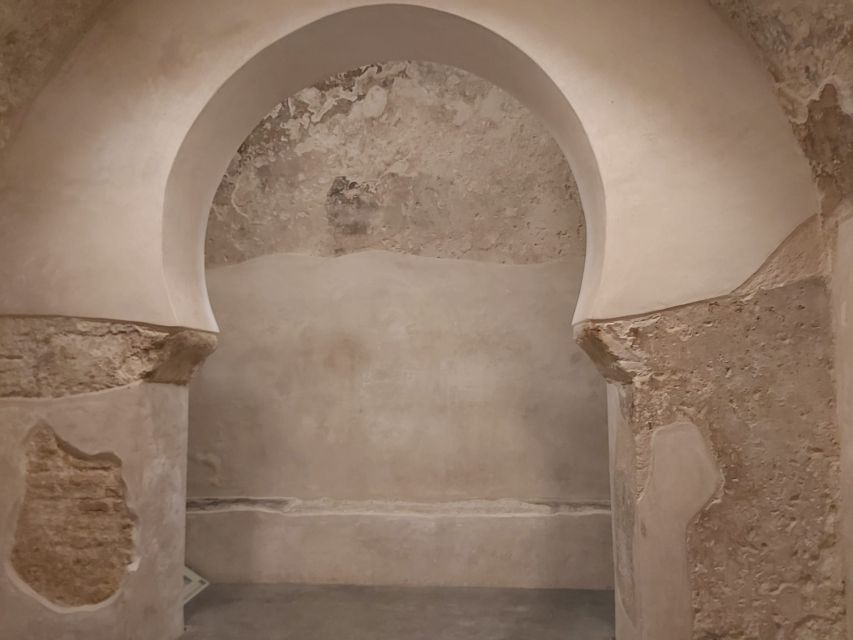
- Bath Cenizal (Arab hammam) in the spotlight: 11th-century bath design and use, explained clearly.
- Roman Toledo reuse is part of the story: the old social bathing spaces tie past to present.
- Salvador’s Well links to the mosque era: an 11th-century well that connects different eras.
- Three culture influences, one underground route: Roman, Arab/Islamic, and Jewish layers come through as you move.
- Spanish-only guided experience: specialized Toledo history is delivered live, not via apps.
Walking Into Toledo’s Rock-Cut Past
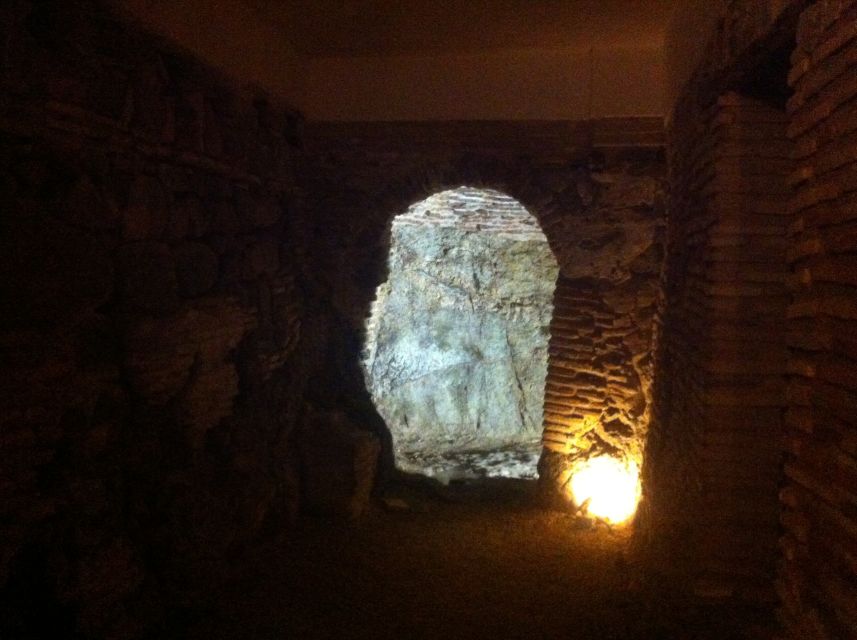
If you like history that you can almost touch, this tour gives you that feeling fast. Toledo has been shaped by stone excavation for ages, not just for monuments above ground. Long before modern plumbing, people carved rock for water storage, shelter, hidden routes, and even bathing spaces.
That matters because it explains the mood of the city. Underground rooms are never just rooms here. They come with legends attached, sometimes filling gaps where facts are hard to pin down, and sometimes disguising what’s already known. With a Spanish guide specialized in Toledo’s history, the tour makes those layers easier to follow, even when the stories get a little wild.
You can also read our reviews of more tours and experiences in Toledo.

Where To Meet: Secretos de Toledo, Hall of Nº7
The meeting point is simple once you know what to look for. Enter the hall of Nº7, and when you reach the end on the right, you’ll find the office of Secretos de Toledo.
This is one of those small details that saves time. If you arrive late, the tour still moves through underground spaces that are not designed for long pauses on the stairs.
The “Underground City” Logic: Why These Rooms Exist
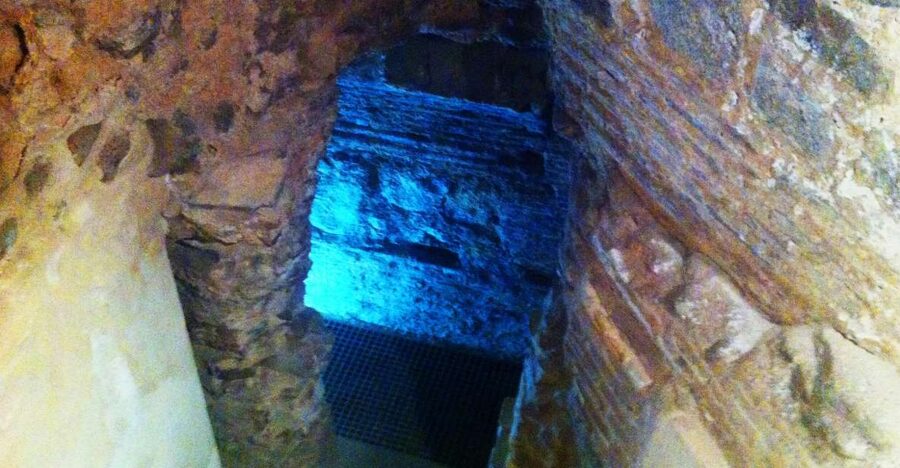
The tour’s foundation is practical, not just poetic. Toledo’s forefathers excavated rock for different purposes, including:
- Storing water
- Creating shelter during wars
- Building hidden passageways and tunnels
- Developing baths, spas, and related underground spaces
This is the part I appreciate most as a visitor. When you understand why spaces were cut into stone, the whole route clicks. The baths make sense as daily life infrastructure, the wells make sense as survival tech, and the passageways make sense as security planning.
And then the legends arrive. You’ll hear stories meant to explain the unexplainable, plus a few tales that may blur lines between known history and myth. It is history as it lived: partly documented, partly remembered, partly invented to make sense of the dark.
Stop One: Bath Cenizal and the 11th-Century Arab Hammam
The tour begins with the Bath Cenizal, an old hammam often described as Arab baths from the 11th century. Even if you have visited other Spanish bath traditions, this one stands out because it is presented as an architectural and cultural machine, not just a pretty room.
Your guide will talk through architectural curiosities and why the space was used the way it was. That includes how hammams were designed for routines and transitions, rather than one single function. In other words, these aren’t “one big bath” spaces. They’re structured experiences.
A practical tip: treat the first stop as your setting moment. As soon as you’re under Toledo’s stone, your sense of direction can flip. Pay attention early, and later rooms will feel connected instead of scattered.
Stop Two: The Roman Nuncio Baths as Social Space
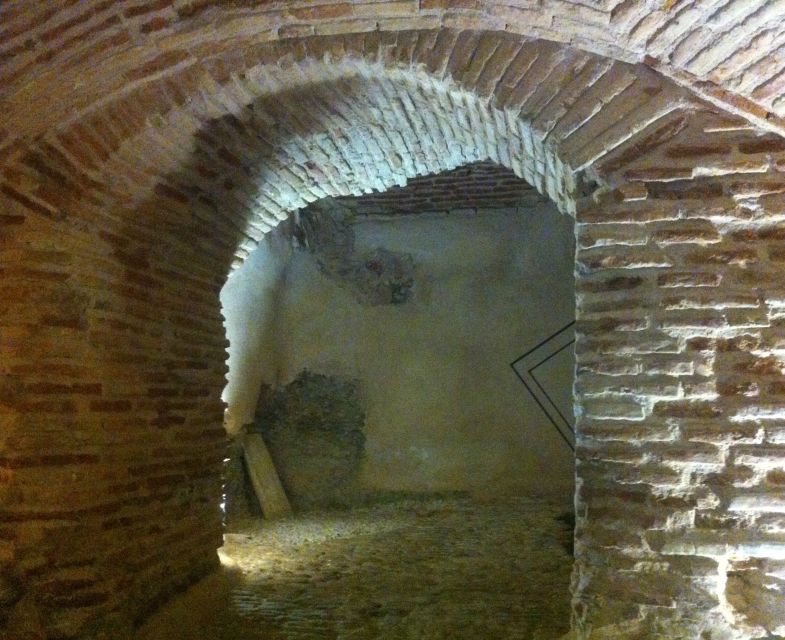
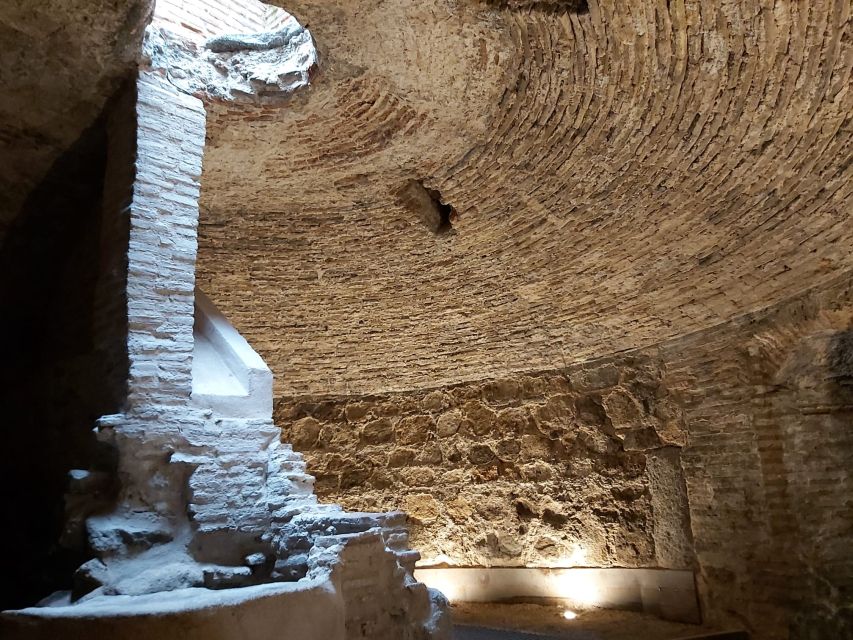
Next comes the old Roman baths, described as the old nuncio baths. Here the emphasis is on Roman Toledo and how these spaces worked as social life. The tour frames them as a gathering place, not just hygiene.
That Roman angle is valuable because it shows reuse and continuity. The same kind of environment that supports bathing also supports conversation, relationships, and community rhythm. When you compare this to the Arab hammam stop, you start seeing a pattern: bathing spaces keep getting reinterpreted, because people always need warmth, water access, and social meeting points.
This is also where the tour’s “layers” idea becomes real. You’re not only seeing different cultures. You’re watching how later societies inherited the stone infrastructure left by earlier ones.
Stop Three: Salvador’s Well and the Mosque Connection
Then you’ll visit Salvador’s Well, an old well from the 11th century that belonged to the mosque. This is one of those stops that can feel simple at first glance, but the explanation is where it turns meaningful.
Wells were not optional. They were life support. In a city shaped by excavation and tight spaces, wells represent the difference between stability and crisis. By connecting the well to the mosque era, the tour also helps you understand how Muslim Toledo used underground systems as part of daily life.
If you like details, focus on how the guide ties the physical well to the broader story. The well isn’t just a relic. It’s part of a network that likely supported bathing, water needs, and the general functioning of the neighborhood.
Stop Four: The Church of the Savior as a Tie-Point
After the well, the tour moves on to the Church of the Savior. Even though this is not described as an underground site in the same way as the baths, it’s presented as a key stop in the underground route story.
This works well for visitors because it shows how later history stands above earlier structures without erasing them. The guide’s storytelling connects the church to what came before, including the underground spaces you have already seen. That makes the route feel like a timeline you can walk, not a list you have to memorize.
I also like that the guide does not treat any one culture as the final word. The church stop feels like the thread that helps you connect the earlier water-and-bath world to the later religious landscape.
Stop Five: The House of the Jew and the Underside of Neighborhood Life
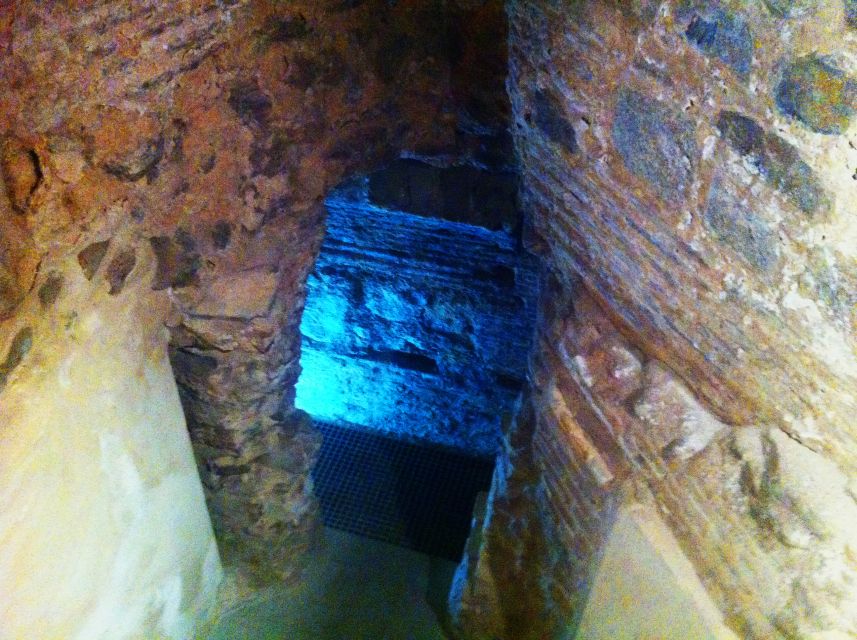
The final named stop is the House of the Jew. This part of the tour ties the underground story to the Jewish presence in Toledo, giving you another cultural influence alongside Roman and Arab/Islamic layers.
It is easy for underground tours to focus only on architecture. This one tries to keep neighborhood life in view, and that makes the experience more grounded. You’re not only touring rooms carved into stone. You’re learning how different communities left traces that can still be read today.
When you reach this stop, the underground path starts to feel like a map of everyday life: water access, bathing routines, social spaces, and communal identity. That is what makes the tour stick after you climb back above street level.
What You Learn: 3 Cultures Without Feeling Like a Lecture
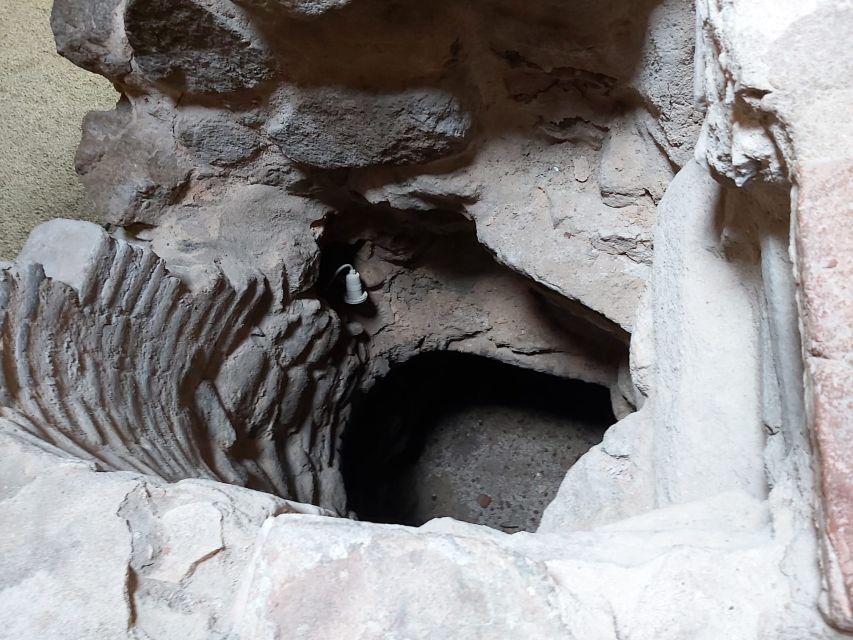
One of the most praised strengths of this tour is the storytelling quality. The tour’s structure is built around three different cultures influencing the underground spaces. You see Roman Toledo through the old baths, you see Arab/Islamic Toledo through the Bath Cenizal and the mosque-connected well, and you see Jewish Toledo through the House of the Jew.
The best part is how the guide connects architecture to purpose. You’re not just told what something is. You’re told what it did and why it mattered.
And from the Spanish guide perspective, it’s not dry. In a guide interaction like Ruth’s, the explanations can run longer than the average tour pacing, with extra history and anecdotes designed to keep the thread understandable.
Price and Value: About $15 for Entry Plus a Specialized Guide
At around $15 per person for a two-hour experience, this is a strong value if your goal is guided interpretation rather than solo wandering. You get entry to the sites plus a Spanish-speaking guide specialized in the history of Toledo.
That combination matters. Underground spaces can confuse you fast if you go alone. The guide helps you read the stone work and the cultural references as you move, so your time is spent learning instead of guessing.
Also, the tour is a good match for a short visit. Two hours gives you a concentrated Toledo “secret underground” experience without eating a full day. If your schedule is tight, this is the kind of activity that gives you a lot of payoff per hour.
Timing and Pacing: Two Hours Works Well Underground
The duration is 2 hours, and it runs based on starting times you can check for availability. Underground tours usually feel longer than they are, mostly because you’re moving carefully and listening closely.
Here the pacing is designed for flow: move through the hidden spaces, stop for explanation, and keep moving so you don’t get stuck waiting in the same cramped area for too long. Bring the expectation that you’ll be walking and standing for an extended stretch, just in a cooler, darker setting.
What to Bring (and What Not To)
You only need a couple things to make this tour comfortable.
Bring:
- Comfortable shoes with good grip
Not allowed:
- Video recording
It is worth planning for shoe choice even if the surface looks fine. Underground floors can be uneven, and you’ll want stability on every step.
Who Should Book This Tour—and Who Should Skip It
I think this tour is perfect if you like historical layers and you want a guided explanation that focuses on real usage: baths, wells, shelter, and passageways. It is also a great option if you’re traveling with curiosity and a desire to understand why Toledo developed the way it did.
It may be a poor fit if:
- You need mobility accessibility. The tour is explicitly not suitable for people with mobility impairments.
- You rely on video recording as your main way to remember experiences. Video recording is not allowed.
If you’re a Spanish speaker or comfortable following Spanish instruction, you’ll get more from the live guide style. The tour language is Spanish, so it’s best when you can keep up.
The Final Verdict: Should You Book Toledo’s Underground City Tour?
If you have a couple hours in Toledo and you want a guided, interpretive underground experience, I’d book it. The value is strong for the price, and the stops hit the right themes: Arab hammam life at Bath Cenizal, Roman social bathing, an 11th-century mosque-linked well, and Jewish presence through the House of the Jew.
You’ll come away with a clearer idea of how people used stone for survival and daily routine, plus a better sense of why legends stuck around. Just go in with the right expectations: comfortable shoes, Spanish guide-led learning, and no video recording.
FAQ
FAQ
Where is the meeting point for the tour?
Meet in the hall of Nº7. At the end on the right, look for the office of Secretos de Toledo.
How long is the Toledo Ancient Underground City Tour?
The tour lasts 2 hours.
What language is the guide?
The tour is guided in Spanish.
What underground sites are included in the tour?
The experience includes five underground locations: Bath Cenizal (Arab baths), the old nuncio Roman baths, Salvador’s Well, the Church of the Savior, and the House of the Jew.
Is this tour suitable for people with mobility impairments?
No. It is not suitable for people with mobility impairments.
Is video recording allowed during the tour?
No. Video recording is not allowed.
What should I bring?
Wear comfortable shoes.
What is included in the price?
Entry to the sites and a Spanish-speaking guide specialized in the history of Toledo are included.
Can I cancel and get a full refund?
Yes. Free cancellation is available up to 24 hours in advance for a full refund.