REVIEW · TRIVANDRUM
Cooking classes @ Aryavilla heritage, Varkala
Book on Viator →Operated by Cooking class with Suresh · Bookable on Viator
Spices, banana leaves, and real hands-on learning. I love how this hands-on Kerala cooking class is taught by Suresh inside an old Varkala house, not as a slideshow of recipes. I also love the banana-leaf thali finale, where you eat what you cooked right away. One consideration: the session runs about two hours, so you’ll learn the basics and make around five dishes, but you won’t leave with a full-home-cooking mastery of the entire Kerala menu.
This is a small-group lunchtime class in Varkala, capped at 15 people, and you’ll use a mobile ticket. The meeting point is Aryavilla Heritage in the Vaishakom Building area at the Helipad Cliff, and the class ends back there too.
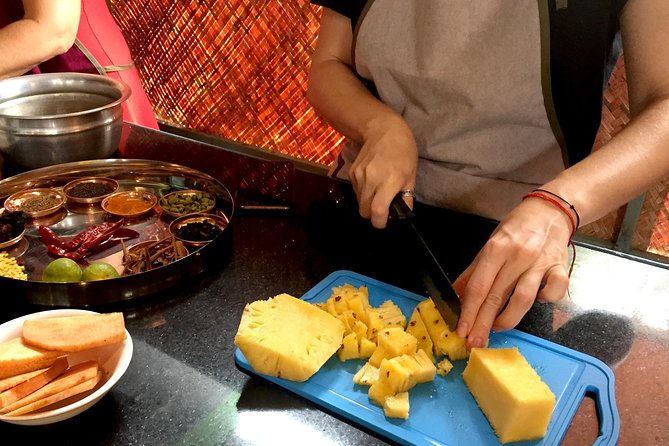
You’ll focus on Kerala flavor building: spice mixes, flavor profiles, and practical steps for classic dishes like aviyal, sambar, and pineapple chutney. You finish with a traditional lunch served on banana leaves, plus rice, the dishes you made, and a traditional dessert.
In This Review
- Key things to know before you go
- Aryavilla Heritage cooking class: stepping into a real Varkala home
- Price and value: what you’re really paying for at $36.31
- Meet Suresh: how the teaching works (and why it matters)
- The 2-hour session plan: what happens from start to finish
- What you’ll cook: Kerala classics plus the logic behind them
- Spice mixes and flavor profiles: the real takeaway skill
- Banana-leaf thali lunch: eating your work the same day
- Small group size and the open-air kitchen: comfort and attention
- Where and when to meet in Varkala (so you don’t waste time)
- Who should book this class?
- Quick tips to enjoy your cooking class more
- Should you book Aryavilla Heritage’s Kerala cooking class in Varkala?
- FAQ
- What is the duration of the cooking class?
- Where does the class start and end?
- Who leads the cooking class?
- How many people are in the group?
- What time does the class run?
- What dishes will we cook?
- Is lunch included?
- Is a mobile ticket used for entry?
- When will I receive confirmation?
- What is the cancellation policy?
Key things to know before you go
- Small-group format (max 15) keeps things hands-on and lets you ask questions while you cook.
- Suresh teaches the flavor logic, not just a copy-the-recipe class.
- You’ll cook around five Kerala dishes during the roughly 2-hour session.
- Banana-leaf thali lunch lets you taste your food the moment it’s finished.
- Open-air kitchen layout (with sides open) helps the room feel less stuffy and more comfortable.
- In quieter times, you may get an exclusive class for a more personal experience.
Aryavilla Heritage cooking class: stepping into a real Varkala home
This class starts with the feeling that you’re not entering a staged cooking studio. You’re welcomed into an older Varkala house setting at Aryavilla Heritage, and that matters because Kerala cooking is deeply tied to everyday home rhythms—spices, grinds, roasting, simmering, and tasting as you go.
I like that it’s set up for learning with your hands. You’re not just watching from the sidelines; you’re working alongside the chef during the cooking time. Even better, the kitchen layout is designed to breathe a bit, with sides open, which can make a midday class feel much easier on you than a closed, hot room.
The value here is practical. You learn how to think about flavors—how Kerala dishes typically balance heat, tang, and aromatics—then you apply that to the dishes you’re cooking. That’s what turns a fun activity into a skill you can use again later.
You can also read our reviews of more historical tours in Trivandrum

Price and value: what you’re really paying for at $36.31
At about $36.31 per person, this is priced like an affordable experience, but it’s not just a cheap souvenir of a class. You get a real meal at the end—served as thali on banana leaves—plus the hands-on cooking time guided by Suresh.
Here’s what makes the value feel right for me:
- You’re learning spices and flavor combinations, not only how to assemble five dishes.
- You cook multiple items in one session, then eat them while they’re fresh and hot.
- The setting (old Varkala house) makes it more than generic instruction.
Also, group size helps you squeeze more value out of the time. When you’re in a class with a small cap (15 people), you’re more likely to get help when you’re chopping, grinding, or adjusting seasoning. That’s hard to get in big cooking demos.
If you’re already spending money on food in Kerala, this class can be a smart “pay once, learn and eat” move—because you’re not only buying a meal. You’re buying guidance that explains the why behind the taste.
Meet Suresh: how the teaching works (and why it matters)
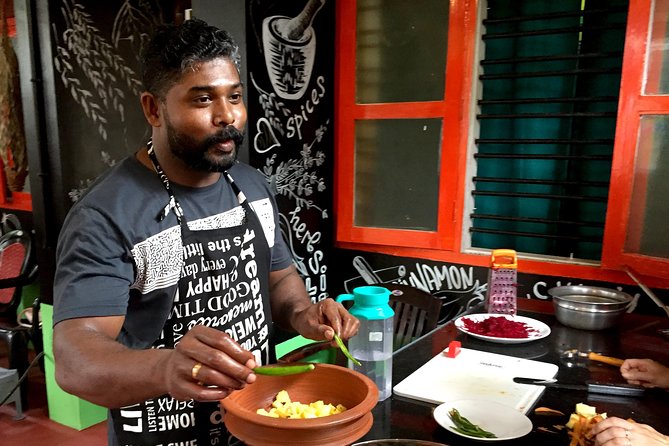
The chef for this experience is Suresh, and the teaching style is built around understanding. The class isn’t presented like a lecture or a performance. It’s more like a guided cooking session where you build confidence step by step.
What you’re getting is instruction on:
- Basic spice combinations
- Flavor profiles (how different flavors show up in Kerala cooking)
- Cooking steps for the most popular dishes you’ll recognize on many Kerala tables
A big plus is that you’ll learn from a local chef who cooks these foods in a Kerala kitchen context. That helps you avoid the common trap of cooking from a recipe alone—because Kerala food is often about adjustments: how intense a spice is, how tangy the sour component should be, and when to stop cooking something so it stays right.
You’ll also likely find that you’re not leaving empty-handed. One detail that people appreciate is having the recipes to take away, which can help you recreate the dishes later without guessing.
The 2-hour session plan: what happens from start to finish
The class runs for about 2 hours during the lunchtime window, with the day’s listed opening hours being 11:00 AM to 1:00 PM. That timing is ideal if you want a mid-day cultural hit without losing your whole afternoon.
Here’s the flow you can expect:
- Start at Aryavilla Heritage (Vaishakom Building, Helipad Cliff). You settle in and get oriented to the cooking setup.
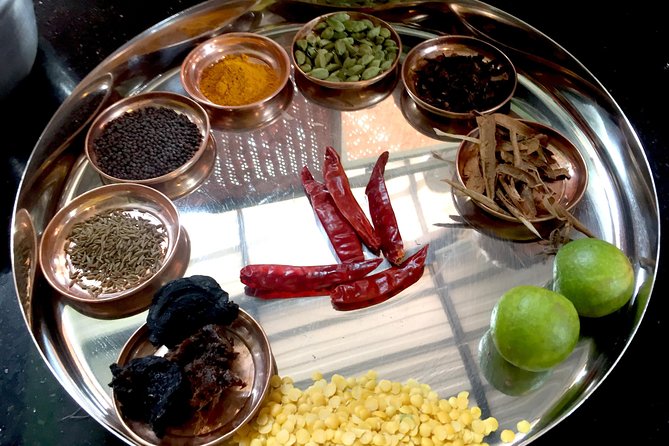
- Spice and flavor prep. Before you jump into dish cooking, you’ll cover basic spice combinations and how flavor profiles work in Kerala food.
- Hands-on cooking for around five dishes. You’ll work on multiple components, not just one dish you repeat.
- Tasting and finishing. The dishes come together during the class so you can eat soon after.
- Lunch on banana leaves (thali style). You sit down with your group and enjoy what you made.
- Traditional dessert is included to wrap up the meal.
The nice part is that nothing feels rushed in a chaotic way. You’ll have a structured timeline, and the class is small enough that you’re not constantly waiting for attention.
What you’ll cook: Kerala classics plus the logic behind them
You’re set up to cook around five Kerala dishes in total. Expect familiar names and signature flavors, including:
- Aviyal
- Sambar
- Pineapple chutney
- Plus a few other Kerala staples as part of the class menu
You’ll also get traditional dessert at lunch.
Why these dishes are a smart choice for a short class:
- They represent different flavor families. Sambar is about lentils and spice depth with vegetables. Aviyal leans more into mixed vegetables and a specific Kerala-style seasoning balance. Pineapple chutney gives you a sweet-sour hit that teaches you how fruit changes the way spices behave.
- Learning them gives you the building blocks for future cooking. Once you understand spice mixing and balancing for these dishes, you can start thinking beyond one-off meals.
Also, the class highlights more than just the end result. You’re trained on spice combos and flavor profiles, so you’re not stuck with a single strict method. In Kerala cooking, the “right taste” often comes from tiny adjustments as you cook.
Spice mixes and flavor profiles: the real takeaway skill
If you take one lesson away from this class, it should be how Kerala dishes get their character from spice and balance. The cooking time is your practice ground.
You’ll learn basic spice combinations and how to connect those combinations to what you’re aiming for on the plate. That means you start to understand questions like:
- Why some dishes need more aromatic spice notes
- When heat feels sharp versus when it feels rounded
- How tang (like the sour kick in chutneys) can make spices taste brighter instead of harsh
One practical benefit: you can apply this at home even if you don’t recreate every dish exactly. You’ll have a better sense of what to add first, what to roast or mix, and how to correct seasoning as you go.
It’s also why this class tends to land so well with people who feel stuck cooking “South Indian” food from generic instructions. Kerala cuisine can be tricky alone, mostly because you need that sense of balance. This class gives you that foundation without making it complicated.
Banana-leaf thali lunch: eating your work the same day
The finale is one of the best parts: a banana-leaf lunch served in thali style. You’ll get rice, the dishes you cooked, plus additional yummy items, and then a traditional dessert to close things out.
This setup does two useful things for you:
- It reinforces learning. When you taste what you cooked immediately, you connect flavor and technique in your brain.
- It helps you notice what goes with what. Banana-leaf serving is part of Kerala dining culture, and the way dishes sit together on a plate gives you a clearer idea of harmony—sour with spice, creamy or savory elements with tang, and so on.
And yes, it’s simply satisfying. You spend time cooking, then you get to sit down and enjoy the payoff. No waiting for dinner later, no “now you clean up and hope it tastes good.” You get to taste while the whole meal is still fresh.
Small group size and the open-air kitchen: comfort and attention
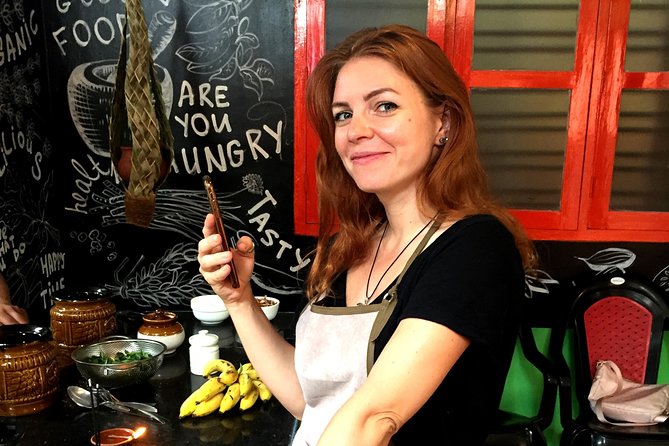
With a maximum of 15 travelers, the class avoids that frustrating big-class vibe where you can’t get help. In a small group, you’re more likely to get hands-on feedback when something needs adjusting.
The kitchen setup also matters for comfort. People love that it’s designed with openings on the sides, helping airflow during cooking. In a warm coastal region like Varkala, that makes a real difference to how pleasant the experience feels.
There’s another nice possibility if you travel off season: you might get an exclusive class, which means even more personal attention. If you want that intimate feel, choosing quieter dates can help.
Where and when to meet in Varkala (so you don’t waste time)
Start location is:
Aryavilla Heritage, Vaishakom Building, Helipad Cliff
PPP3+MJW, Varkala, Kerala 695141, India
The class ends back at the meeting point. The listed class window is Monday through Sunday, 11:00 AM to 1:00 PM, and you’ll receive confirmation at booking.
You’ll also be close to public transportation, which is handy if you’re moving around Varkala during your trip. And since this is a mobile-ticket activity, you can keep your plan simple on the day.
Who should book this class?
This is a great fit if you:
- Want an authentic Kerala food experience in a real home-style setting
- Like hands-on activities more than watching
- Want spice knowledge and flavor balancing skills you can use later
- Are short on time and want a class that ends with a proper lunch
It’s also a smart choice if Kerala cuisine has felt confusing in the past. This class doesn’t try to teach the entire state’s cooking universe. It teaches the basics you need to understand the rest.
If you’re the kind of traveler who loves cooking classes because you want to eat something you made—this one checks that box loudly. Between the cooking time and the banana-leaf thali meal, you get both learning and immediate payoff.
Quick tips to enjoy your cooking class more
- Arrive hungry. Lunch is included, but you’ll be tasting along the way, so build your appetite gradually rather than rushing in after a big snack.
- Expect to handle spices. The class focus is spices and flavor logic, so you’ll likely do real prep and cooking tasks.
- Ask questions while you’re cooking. This is the best moment to clarify how a flavor balance should work.
- If you can choose dates, consider quieter periods for a more personal class size.
And one more thing: treat it like a skill session, not just a meal. If you pay attention to what Suresh explains about combinations and flavor profiles, you’ll get far more out of the two hours.
Should you book Aryavilla Heritage’s Kerala cooking class in Varkala?
Book it if you want a practical, local-teacher cooking experience that ends with a satisfying meal you can actually connect to what you learned. The value feels strong because you’re paying for hands-on instruction, multiple dishes, and a banana-leaf thali lunch within a short time window.
Skip it only if you’re looking for a long cooking workshop or a deep masterclass on dozens of dishes. This is about the essentials: spice combinations, flavor profiles, and around five classic dishes—done in a small-group, eat-right-away format.
If that sounds like your style, you’ll likely leave with two things that matter: better instincts for Kerala flavors and recipes you can try again after the trip.
FAQ
What is the duration of the cooking class?
The class lasts about 2 hours (approx.).
Where does the class start and end?
It starts at Aryavilla Heritage (Vaishakom Building, Helipad Cliff) in Varkala and ends back at the same meeting point.
Who leads the cooking class?
The cooking class is with Suresh.
How many people are in the group?
The class has a maximum of 15 travelers.
What time does the class run?
The listed opening hours are Monday through Sunday, 11:00 AM to 1:00 PM.
What dishes will we cook?
You’ll cook around five dishes, including popular Kerala items such as aviyal, sambar, and pineapple chutney.
Is lunch included?
Yes. You’ll have a platter lunch served on banana leaves in thali style, including rice, your prepared dishes, additional items, and a traditional dessert.
Is a mobile ticket used for entry?
Yes, the experience includes a mobile ticket.
When will I receive confirmation?
Confirmation is received at the time of booking.
What is the cancellation policy?
You can cancel for a full refund up to 24 hours in advance of the experience’s start time, and the experience has free cancellation.