REVIEW · ATHENS
Private Tour of Apostle Paul’s Footsteps in Ancient Corinth
Book on Viator →Operated by Colours of Greece · Bookable on Viator
Paul’s map is still on the ground. This private day trip strings together the places tied to Apostle Paul’s time in Corinth, from the Corinth Canal to the Agora and the Bema platform. I like the personal pacing of a small group set-up, plus the way your English-speaking driver turns ruins and roads into a clear sense of how Paul moved through the region.
If you’re counting euros, one thing to plan for is the entrance fees not included for the archaeological site and museum (listed as €15 per person). You’ll also want to expect real walking time and Greek sun, even with air-conditioning on the drive.
In This Review
- Key Highlights You Should Know Before You Go
- A Private Paul’s Footsteps Day Trip That Starts With Pickup
- Corinth Canal and the Diolkos Trackway: Engineering Before the Apostle’s Era
- Kenchreai’s Ancient Port: The Harbor Where Paul’s Story Turns Toward Ephesus
- Ancient Corinth, the Agora, and the Bema: Where Marketplace Life Meets Public Trial
- Museum of Ancient Corinth: Artifacts That Make the Ruins Make Sense
- Acrocorinth Fortress: High Views, Thick Walls, and Centuries of Worship
- Apostolos Pavlos Church: A Modern Mosaic That Closes the Loop
- Price and Logistics: Where the Money Goes (and What You Still Pay)
- What to Expect: More Context Than a Sermon
- Should You Book This Private Paul’s Footsteps Tour?
- FAQ
- How long is the private tour of Apostle Paul’s footsteps in Ancient Corinth?
- Where does the tour start?
- Is pickup included?
- Is the tour private?
- What language is the tour in?
- What does the price include?
- What entrance fees should I budget for?
- Are there child seats available?
- What should I wear or bring?
- What’s the cancellation policy?
- Is the tour weather dependent?
Key Highlights You Should Know Before You Go
- Corinth Canal plus the Diolkos: modern engineering views paired with an ancient ship-hauling trackway
- Kenchreai port area: a setting tied to Paul’s arrivals and departures around the early Christian community
- Ancient Corinth Agora and the Bema: the marketplace ground-level perspective on Paul’s public moments
- Acrocorinth fortress: big defensive walls, layered history, and wide views from the acropolis
- Museum of Ancient Corinth: artifacts that help you read the ruins instead of guessing
- Modern Church of Saint Paul: a contemporary mosaic that connects past events to today
A Private Paul’s Footsteps Day Trip That Starts With Pickup
This is the kind of tour that works well when you want one focused destination day without fuss. You’re picked up from your hotel or the port (or at the airport if you add that option), and you stay in an air-conditioned vehicle with WiFi onboard and bottled water. For groups of 1–4, it runs with sedan vehicles, which can make getting in and out of tight parking spots easier.
The tour duration is listed as about 5 to 6 hours including travel time, so you’re not just moving through one site. You’re also getting the full “how this region connects” story: ports, roads, marketplaces, and the high fortress above it all. It’s private, meaning you’re not stuck waiting on a big group plan, and you can ask questions as you go—especially helpful when you care about specific names and moments from Paul’s letters.
You can also read our reviews of more private tours in Athens
Corinth Canal and the Diolkos Trackway: Engineering Before the Apostle’s Era
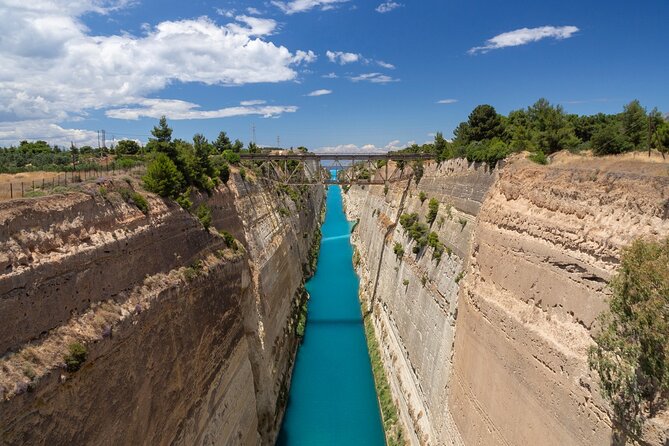
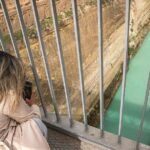
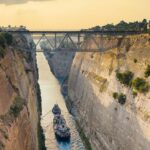
You start at the Isthmus of Corinth, the narrow land bridge linking mainland Greece to the Peloponnese. In antiquity it was both a natural divider and a strategic corridor. Even if you’re not an engineering nerd, it’s an instant mood-setter: the canal cuts through the isthmus with steep limestone walls and clear water views, and you quickly understand why this stretch mattered for trade and travel.
Right nearby is the Diolkos, an ancient stone-paved trackway designed to haul ships overland across the isthmus. This predates the modern Corinth Canal by more than two millennia, and that contrast gives you a useful lesson: people kept solving the same problem—how to avoid the long, risky journey around the Peloponnese.
Both of these stops list admission as free, so you can spend your time looking, photographing, and letting the driver frame the big picture of movement. For Paul-related travel, that matters, because early Christianity spread through real networks of roads, ports, and shipping routes—not just ideas.
Kenchreai’s Ancient Port: The Harbor Where Paul’s Story Turns Toward Ephesus
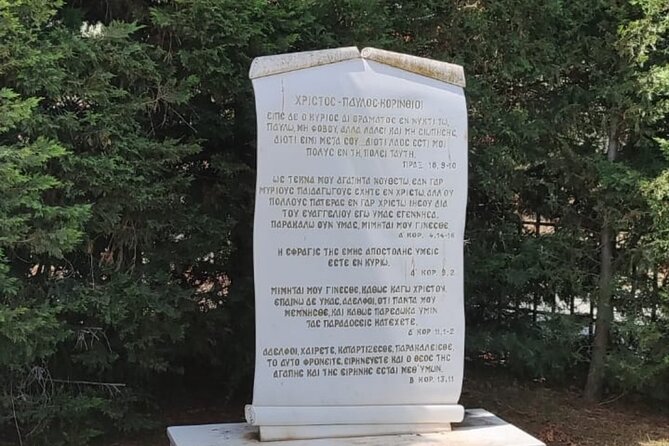
Next you reach the Ancient Port of Kenchreai area (Kechrees), tied to Paul’s activity around 51 A.D. It’s described as the place where he disembarked during his first visit to Corinth, then later sailed out again for Ephesus. There’s also a named connection to early church life: a prominent Christian woman named Phoebe, described as a deaconess of the local church.
One practical note: only modest traces remain of the ancient port. That means you’ll get more value from your guide’s explanation than from hunting for perfectly preserved foundations. This is one of those stops where context turns a small site into a meaningful stop.
It also helps that the tour keeps moving. After the canal-and-trackway engineering start, you’re shifting from infrastructure to people and faith communities—how the region functioned as a meeting point.
Ancient Corinth, the Agora, and the Bema: Where Marketplace Life Meets Public Trial
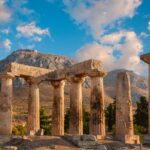
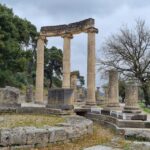
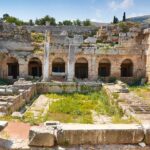
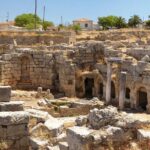
Now you hit the main archaeological focus: Ancient Corinth (Archaia Korinthos). Corinth is presented as one of the most powerful and prosperous cities of the classical world, and Paul arrives into a place with real civic life, not an empty stage.
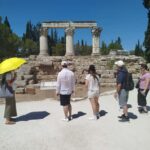
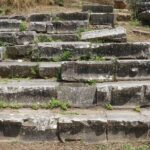
For your Paul connection, the most important piece here is the Bema, a raised platform in the center of the city. It’s the area where Paul is believed to have addressed the local community and where he stood trial before the Roman proconsul. Nearby is the Agora, the marketplace setting that helps you picture what daily Corinthian life looked like—the kind of environment Paul referenced in his letters.
There are two practical considerations. First, admission for this stop is not included. Second, the tour includes a professional English-speaking driver, but it does not list a licensed guide accompanying you inside archaeological sites. So if you’re expecting a fully licensed site guide for every structured interior narration, check expectations ahead of time.
That said, the tour format is still strong for understanding. You’re not just walking through ruins; you’re being guided to the specific civic and religious locations that matter for Paul’s story.
Museum of Ancient Corinth: Artifacts That Make the Ruins Make Sense
After walking the site, you continue to the Archaeological Museum of Corinth, built in 1932 to preserve finds from excavations. This stop is listed as about 45 minutes, and it’s a smart pairing: ruins can feel like puzzle pieces, while a museum explains what those pieces were used for and how they fit together.
The museum focus you’re given includes items from prehistoric finds and material connected to the Sanctuary of Asklepios. That’s a nice contrast to the Paul theme. It reminds you Corinth wasn’t only a Christian setting; it was layered with earlier worship traditions and everyday craft and culture.
Admission for the museum is also not included. Still, for me this is one of the best “value-per-minute” parts of the day because it gives you details you might not be able to extract from the outdoors alone. If you want to leave with clearer mental pictures—rather than just seeing walls and columns—this museum time helps a lot.

Acrocorinth Fortress: High Views, Thick Walls, and Centuries of Worship
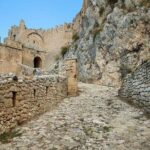
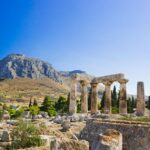
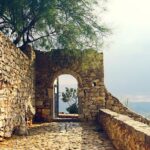
The tour continues up to Acrocorinth, the fortified acropolis that protected ancient and medieval Corinth. What you’re seeing here isn’t one single era. The fortress is described as having walls, towers, and bastions reinforced through Greek, Byzantine, Frankish, Venetian, and Ottoman periods.
This is also where the religious layer is especially visible. Acrocorinth included the Temple of Aphrodite, and it’s noted as being renowned for priestesses—described as a community of up to 1,000. Even if you don’t interpret every architectural detail, the scale and placement explain why religion and power often lived in the same high-walled space.
The best part for most people is the panoramic feeling. You’re on higher ground, looking out over the region, and it helps you understand how ancient communities watched their surroundings—and how visitors today can still grasp strategic geography.
Admission for Acrocorinth is listed as free, so you’re not forced to choose between budget and views. Just plan for walking on uneven ground.
Apostolos Pavlos Church: A Modern Mosaic That Closes the Loop
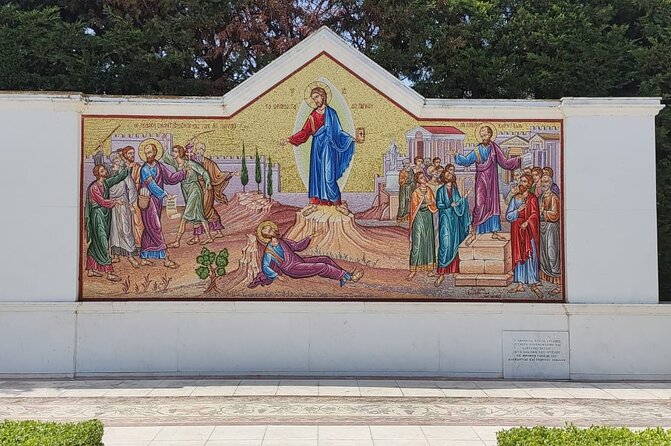
To end, you visit the Apostolos Pavlos Church (Church of Saint Paul) in the heart of ancient Corinth. This is a modern space with a very specific purpose: a contemporary mosaic depicting Paul’s journey and mission in the city.
The mosaic is credited to artists Pastorutti and Tsotsonis. The practical value here is how it gives you an emotional and visual wrap-up after hours of ruins and museum objects. You’re not only thinking about geography anymore—you’re thinking about a narrative that connects the ancient setting to present-day commemoration.
It’s also a good moment to slow down, sit if the church allows it, and reframe what you saw. If you like tours that end with a reflective note rather than a rushed departure, this stop does that job.
Price and Logistics: Where the Money Goes (and What You Still Pay)
The price is listed as $169.03 per person, with a duration of about 5 to 6 hours including travel. For a private tour, that includes a lot of what usually costs extra: hotel and port pickup/drop-off, an air-conditioned vehicle, WiFi onboard, bottled water, and an English-speaking driver with history context.
For groups of 1–4, you also get the sedan vehicle approach, which usually means fewer clunky transfers and easier parking. There’s also mention of group discounts, though the exact discount isn’t spelled out.
Now the part you should budget: €15 per person for entrance fees to archaeological sites and the museum. Some parts list free admission, but you shouldn’t assume everything is covered. If you’re traveling with multiple people, this is where the math matters most.
Optional airport pickup/drop-off is listed as €50 per booking. If you’re already staying in central Athens or near your port, you might keep the plan simple and rely on hotel/port pickup.
What to Expect: More Context Than a Sermon
This tour is clearly built around Paul’s footsteps through Corinth, but it isn’t staged as a church service. Expect a structured walking-and-driving day with history, place context, and clear links to Paul’s movements and the city’s religious environment.
That focus shows up in how stops are chosen: ports, civic trial space, market life, then the fortress world above it. If you want a Bible-heavy, verse-by-verse teaching session, you might find the style more practical than preachy. One consideration to weigh: this is still an archaeology-centered day, so you’ll spend most of your time absorbing places rather than sitting through long religious discussions.
The upside is that even if you’re not steeped in Corinthian background, the driver commentary can guide you to the meaning of what you’re seeing—especially at key stops like the Agora and Bema connection.
Should You Book This Private Paul’s Footsteps Tour?
Book it if you want a focused day that connects Paul to specific locations you can stand in and understand—especially if you’ll enjoy mixing canal-and-port geography with archaeological stops like the Agora and museum artifacts. It’s also a good fit for older travelers or anyone who values comfort and pacing, because the tour is private and built around pickup and easy movement between sites.
Skip or adjust expectations if you’re looking for an explicitly biblical worship-style tour. This one is more about history on the ground, with faith context woven in through the places themselves.
If you want a single day trip from Athens that covers major “Paul in Corinth” locations without turning into a rushed group bus ride, this is a strong choice—just budget the €15 entrance fees and bring sun-ready gear.
FAQ
How long is the private tour of Apostle Paul’s footsteps in Ancient Corinth?
The duration is listed as about 5 to 6 hours, including travel time.
Where does the tour start?
It starts in the Athens area with pickup offered. The first stop is at the Isthmus of Corinth.
Is pickup included?
Yes. The tour includes hotel and port pickup/drop-off. Airport pickup is optional for an additional cost of €50 per booking.
Is the tour private?
Yes. It’s a private tour/activity, meaning only your group participates.
What language is the tour in?
The tour is offered in English.
What does the price include?
Included items are air-conditioned vehicle, WiFi on board, bottled water, professional English-speaking tour drivers with history knowledge, and hotel/port pickup and drop-off.
What entrance fees should I budget for?
Entrance fees to archaeological sites and the museum are listed as €15.00 per person. Some stops list free admission, but the main archaeological site and museum are not included.
Are there child seats available?
Yes, child seats are available upon request.
What should I wear or bring?
Wear comfortable shoes for walking, and bring a hat and sunscreen since Greece can be hot and sunny.
What’s the cancellation policy?
Free cancellation is offered. You can cancel up to 24 hours in advance for a full refund.
Is the tour weather dependent?
Yes. The experience requires good weather. If it’s canceled due to poor weather, you’ll be offered another date or a full refund.