REVIEW · UBUD
Crafting Heritage Batik Painting Workshops
Book on Viator →Operated by Five Art Studio · Bookable on Viator
Wax, dye, and patience—perfect Bali therapy. In this hot-wax batik workshop just outside Ubud, you learn the basic resist method and make a colorful fabric piece you can actually take home and use as a souvenir. It’s hands-on, calm, and very “real” in feel, since it’s run from a family compound studio rather than a flashy tourist workshop.
Two things I really like: the mellow studio setup (peaceful, comfortable, and not rushed), and the flexible teaching where you can choose to work on your own or get closer help when you want it. You also get a window into how Balinese art happens in everyday life, not just as a stage performance.
One possible drawback: batik takes time and some dexterity, so don’t expect perfect lines right away. Wax-resist work is trickier than it looks, and you’ll need a patient mindset.
In This Review
- Key Highlights You’ll Feel Right Away
- Why This Batik Workshop Near Ubud Feels So Relaxing
- Five Arts Studio: A Family-Compound Workshop Setup
- The 3-Hour Flow: What Happens From Start to Finish
- 1) Settling in at the studio with snacks and drinks
- 2) Sketching your design and setting your plan
- 3) Drawing with hot wax (the resist magic)
- 4) Coloring with dyes on selected areas
- 5) Washing off wax to reveal outlines
- Choose Your Style: DIY Motif Ideas or Close Tutor Guidance
- The Real Worth: You’re Learning a Craft, Not Just Buying a Product
- What You’ll Leave With (And Why It’s a Great Souvenir)
- Pace and Comfort: Snacks, Water, and a Casual Studio Rhythm
- Who This Workshop Is Perfect For (And Who Might Want to Rethink It)
- Price and Value: Getting a $29 Workshop That Actually Feels Like One
- Should You Book Crafting Heritage Batik Painting in Ubud?
- FAQ
- FAQ
- How long is the batik painting workshop?
- Where does the workshop take place?
- What is the price and is it per person?
- What’s included in the workshop fee?
- Is lunch included?
- Can I choose to work with the tutor or work more independently?
- Is alcohol included?
- What is the cancellation policy?
- Is the class group size limited?
Key Highlights You’ll Feel Right Away
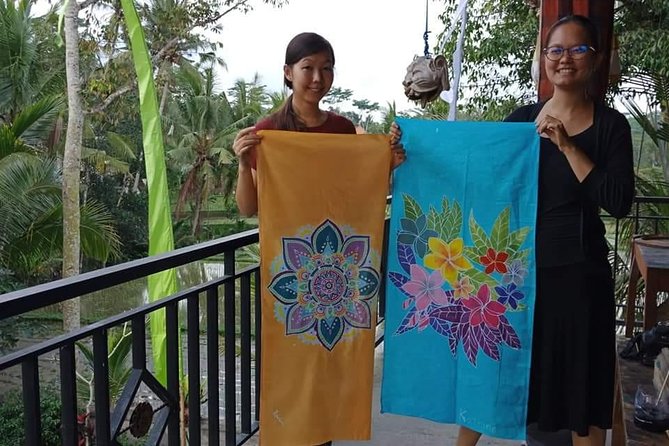
- Hot-wax resist technique that turns your design into a real fabric keepsake
- Calm studio pace in a family compound setting outside Ubud
- Tutor support on your terms, from solo work to close guidance
- Hand-drawn motifs and stencil options with room for your own ideas
- Success-oriented teaching, even when mistakes happen
Why This Batik Workshop Near Ubud Feels So Relaxing
If you’ve been to Ubud and felt the pace get a little loud, this class is the antidote. The vibe is casual and comfortable, and the work itself naturally slows you down. Batik isn’t a “watch and copy” activity. You’re tracing, applying wax, dyeing, and watching a pattern emerge as the fabric changes.
The process also teaches you something practical and cultural at the same time. Batik—hand-painted fabric—is a major part of Indonesian culture, and this workshop gives you the “how” behind it, not just the “what.” You start with a design idea, then use hot wax as a protective barrier. When you wash it out later, those waxed areas keep their original color, leaving behind the crisp lines and shape edges that make batik look so intentional.
And you’re not locked into one style. You can work with a motif idea you like or take inspiration from what the studio offers.
You can also read our reviews of more historical tours in Ubud

Five Arts Studio: A Family-Compound Workshop Setup
The class meets at Five Arts Studio in Keliki (Tegallalang area), and the experience ends back where you start. That matters because the workshop is basically built into the rhythm of the place. Instead of being bused between stops, you settle in, work, and leave with your finished piece.
A big part of why this feels authentic is that it’s run in a family home compound studio environment. The workshop is described as mellow and relaxed, and the teaching is described as step-by-step, with guidance from a master artist and the team. Several people also note the atmosphere feels peaceful and local, not like you’re being herded through a production line.
Group size is capped at 30 travelers, which tends to support better attention. In practice, I’d expect that to make a difference if you want to ask questions while you’re working with wax and dye.
The 3-Hour Flow: What Happens From Start to Finish
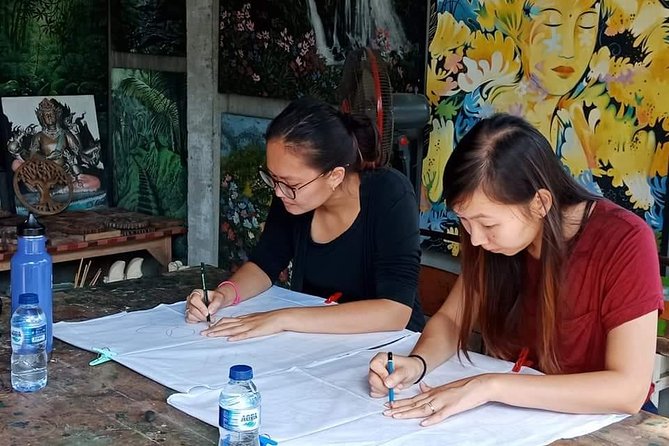
The duration is about 3 hours, and it’s structured enough that you won’t feel lost—but paced enough that you can enjoy the work.
Here’s how the workshop runs in real terms:
1) Settling in at the studio with snacks and drinks
You’re welcomed with snacks and coffee and/or tea, plus mineral water. This sounds simple, but it sets the tone. You’re not arriving hungry and stressed, and you can focus on getting your bearings fast.
2) Sketching your design and setting your plan
Before any dye happens, you’ll sketch out your design. From there, you’ll transfer it to the fabric. The goal is to create a map of where wax will go and where color should appear.
If you like to plan carefully, you’ll probably enjoy this stage. If you’re more spontaneous, you can still have fun—just remember batik rewards slow, deliberate decisions.

3) Drawing with hot wax (the resist magic)
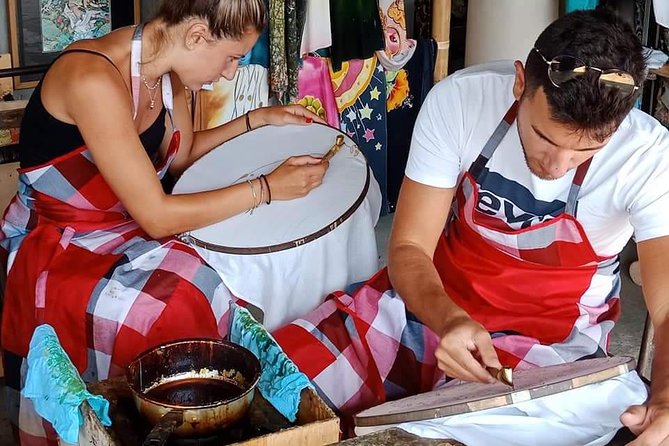
Next is the core batik step: you draw on the fabric using hot wax. Hot wax works like a temporary barrier. Where you apply wax, the later dye won’t soak in the same way, so those shapes stay in their original color.
This is the part that catches some first-timers off guard. Wax is hot and the lines need steady control. If your lines wobble, that doesn’t automatically ruin your piece. You’re learning a craft process, not completing a printed coloring page.
4) Coloring with dyes on selected areas
After the wax is applied, you use colorful dyes on the fabric. The resist method means you’re dyeing strategically—color goes where you want it, while wax-protected sections keep their original tone.
People often expect the “coloring” to be the fun part. It is. But the “design thinking” and careful wax work are what control the final look.
5) Washing off wax to reveal outlines
Finally, the wax is washed off. That’s when the outline effect happens: the areas protected by wax remain in the original color, and the pattern shows up with the kind of sharp edges batik is known for.
That moment is why people come back raving. It’s also why this workshop works well as a souvenir. You can’t buy this effect in a store.
Choose Your Style: DIY Motif Ideas or Close Tutor Guidance
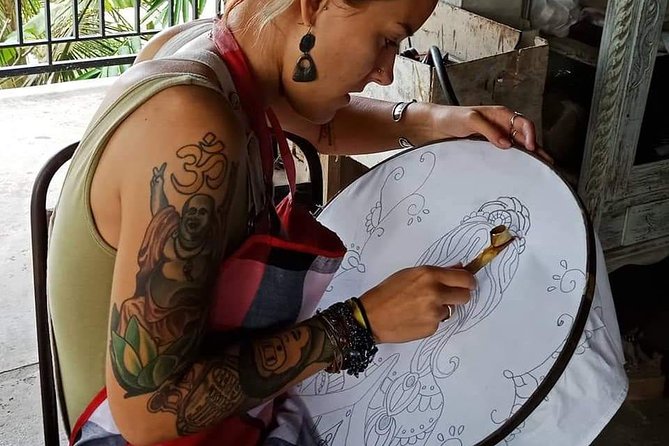
One of the most useful aspects is that you can pick your level of involvement. Some people work more independently, doing more of each stage themselves. Others want a bit more direct help.
That flexibility matters because batik isn’t just art; it’s a process with multiple steps, and some steps require muscle memory (especially wax handling). When you can ask for more help, you’re more likely to finish something you feel proud of.
The studio team includes instructors who help in a patient, practical way. Names that come up include Dika and Agong, and people describe the instruction as hands-on and supportive. In other words, you’re not left to figure it out while everyone else flies through.
If you’re the type who loves to follow instructions exactly, you’ll like the step-by-step guidance. If you’re the type who wants to improvise, you’ll like that there’s room to bring your own ideas, not just copy one single design.
The Real Worth: You’re Learning a Craft, Not Just Buying a Product
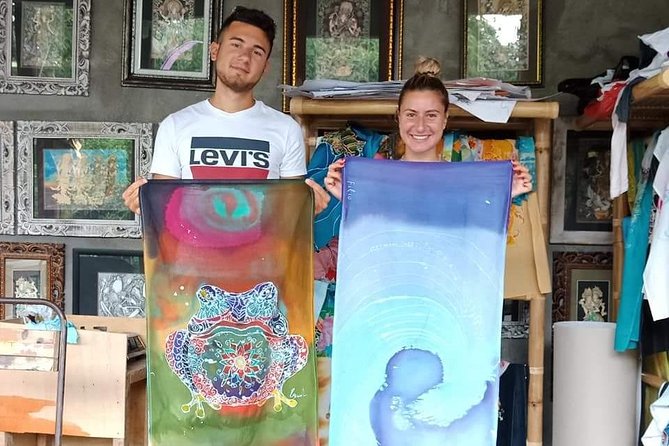
For $29 per person, the value isn’t only that you get a finished item. It’s that you’re learning a traditional technique that takes time and attention.
The class includes all the materials you need to make your own original batik. That matters because it removes the “hidden cost” problem. You’re paying for the full experience of making the piece, not just paying for the privilege of showing up.
You also get short, practical insights into how batik works, including why wax-resist creates those crisp outlines. That’s useful knowledge you can carry home and even try again if you ever find materials later.
If you’re deciding between this workshop and another souvenir-focused activity in Ubud, think of it this way: here, your money buys a skill and a story. You’re not just acquiring an object. You’re making something that visibly reflects your choices.
What You’ll Leave With (And Why It’s a Great Souvenir)
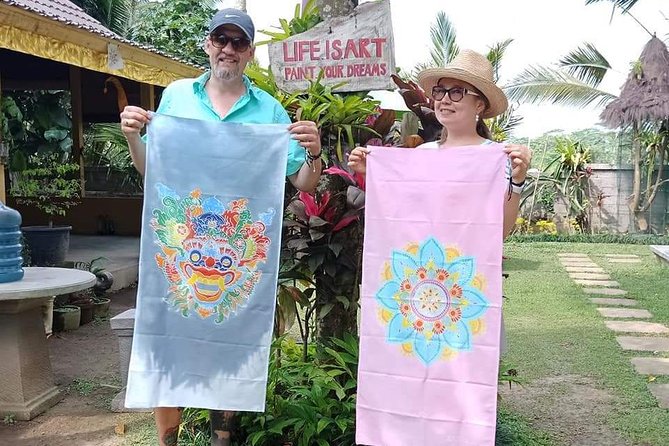
You bring home a gorgeous and unique vacation souvenir made by you. The workshop emphasizes that you create an original piece of colorful fabric art. Since the resist method depends on where you applied wax and how you dyed, your outcome naturally won’t look identical to anyone else’s.
This is also one of those crafts where small “happy accidents” can actually add character. Some first-timers drop wax in unexpected spots or struggle with line control. The helpful part is that the teaching approach is designed to bring you back on track and get you to a satisfying final result.
Practical tip: plan to treat your finished fabric as fragile artwork until it’s fully handled and dried as you need. This is art, not a souvenir mug.
Pace and Comfort: Snacks, Water, and a Casual Studio Rhythm
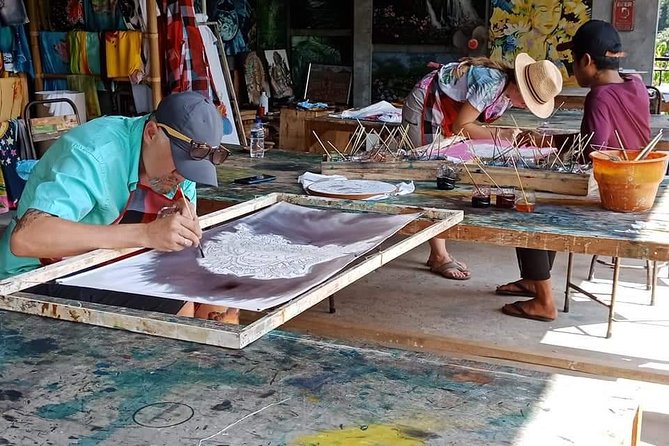
The schedule is built for comfort rather than speed. You’re in a casual but comfortable studio environment in the family compound. You’ll have coffee and/or tea, mineral water, and snacks included.
Not included are lunch and alcohol. Lunch is available to order local food, and alcohol is available to purchase. That’s helpful if you’re building a day plan around other Ubud activities, because you can choose whether you want a full meal right after the class or keep moving.
Who This Workshop Is Perfect For (And Who Might Want to Rethink It)
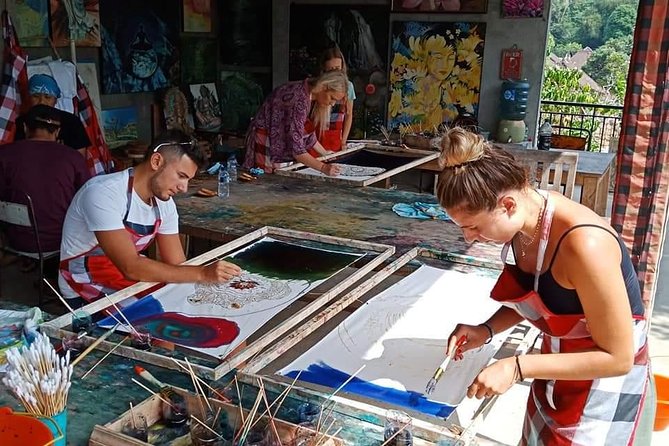
This class suits people who want a calm, hands-on skill in Ubud. It’s friendly for beginners, including people who aren’t naturally “artistic.” You don’t need advanced experience to participate, and the teaching style is supportive and patient.
It also works well for people who like culture that you can touch. You see how batik is made, and you get a glimpse into an artist’s family compound life and workspace.
The main mismatch is if you hate slow, careful tasks. Wax-resist work asks for patience. Some people discover the process is harder than they expected—especially the wax step—and that’s the tradeoff for getting a real, handmade outcome.
Price and Value: Getting a $29 Workshop That Actually Feels Like One
At $29, this class is priced as an accessible craft experience. The reason it feels like good value is straightforward: the materials are included, you get drinks and snacks, and you spend about 3 hours learning a technique end-to-end.
If you’re used to Ubud prices that feel like you’re paying mostly for a photo moment, this one leans the other way. You pay for participation. The result is a souvenir that feels earned, because your hands did the work.
Should You Book Crafting Heritage Batik Painting in Ubud?
I think you should book this workshop if you want a relaxed, authentic-feeling activity with real creative input. It’s ideal for first-timers who don’t want to feel overwhelmed, and it’s also a solid choice if you like traditional crafts and want to understand how the wax-resist method produces that signature batik outline effect.
You might skip it if you’re short on patience or you expect an easy, instant-looking result. Batik is craft time, and the wax step is where you earn your final look.
If your goal is to leave Bali with something handmade, colorful, and genuinely connected to the culture around you, this class is a smart pick.
FAQ
FAQ
How long is the batik painting workshop?
The class lasts about 3 hours.
Where does the workshop take place?
It starts at Five Arts Studio, located on Jl. Raya Keliki, Keliki, Tegallalang, Kabupaten Gianyar, Bali 80561, Indonesia. The experience ends back at the meeting point.
What is the price and is it per person?
The price is $29.00 per person.
What’s included in the workshop fee?
The fee includes all materials you need to make your own original batik, plus snacks, coffee and/or tea, and mineral water.
Is lunch included?
Lunch is not included, but local food can be ordered.
Can I choose to work with the tutor or work more independently?
Yes. You can do everything stage of the process yourself under guidance, or work more closely with the tutor.
Is alcohol included?
Alcohol is not included, but it is available to purchase.
What is the cancellation policy?
You can cancel for a full refund up to 24 hours in advance. If you cancel less than 24 hours before the start time, the amount paid is not refunded.
Is the class group size limited?
Yes. The maximum is 30 travelers.