REVIEW · TAKAYAMA
Departing from Takayama [Regular sightseeing bus] World Heritage Sites Shirakawago and Gokayama Ainokura
Book on Viator →Operated by Nohi Bus · Bookable on Viator
Gassho villages, minus the stress. This Nohi Bus day trip from Takayama strings together Gokayama’s Ainokura and UNESCO Shirakawa-go, two famous gassho-zukuri settlements with steep thatched roofs that look unreal when the mountains are misty or snowy. You ride in an air-conditioned bus, get guided context en route, then wander the villages on your own schedule.
I especially like the contrast: Ainokura feels quieter and more tucked into the hills, while Shirakawa-go is the big-name postcard village. I also love that you’re not just staring at rooftops—you get a real sense of how the settlements are laid out, plus a chance to step inside a gassho-style home and visit the included open-air museum.
The main drawback is time. The longer you eat and queue, the less breathing room you have for the view deck and museum at Shirakawa-go—so you’ll want a simple plan before you sit down.
In This Review
- Quick Take: What’s Special Here
- Why Ainokura + Shirakawa-go Makes Sense Together
- Price and Value: What $64.80 Buys (and What It Doesn’t)
- Riding From Takayama: Comfortable Bus, Real Planning Help
- Stop 1: Ainokura Gassho Community in Gokayama (A Quiet Start)
- Stop 2: Historic Villages of Shirakawa-go (Where the Postcards Come From)
- Shirakawa-go Gassho Zukuri Minkaen: The Included Museum You Should Not Skip
- Tenshukakau Observatory: The Classic Overlook, Fast and Focused
- Lunch at Shirakawa-go: Convenience vs. Time Loss
- Weather Matters: When Snow Turns the Day Magical
- Who This Tour Fits Best (and Who Might Want Another Plan)
- The Little Things That Make the Day Run Smooth
- Should You Book This Tour? My Decision Guide
- FAQ
- What villages are visited on this day trip from Takayama?
- Is lunch included in the tour price?
- Are tickets and admissions included for the sights?
- How long is the tour, and what time does it start?
- Where do I meet and redeem my voucher?
- Is the Shirakawa-go Minkaen open year-round?
- What happens if weather is bad?
Quick Take: What’s Special Here
![Departing from Takayama [Regular sightseeing bus] World Heritage Sites Shirakawago and Gokayama Ainokura - Quick Take: What’s Special Here](https://l.historytourer.com/wp-content/uploads/departing-from-takayama-regular-sightseeing-bus-world-heritage-sites-shirakawago-and-gokayama-ainokura-1.jpg)
- Two UNESCO villages in one day: Ainokura first, then Shirakawa-go, so you see both the quiet and the crowd.
- A guide with route-and-time smarts: clear explanations on the bus, maps at the stops, and tips on where to walk.
- Included museum time at Shirakawa-go: Shirakawa-go Gassho-zukuri Minkaen is part of the experience, not an optional add-on.
- Poster-worthy photos at Tenshukakau: a short hop to an observation point famous for that classic overlook view.
- Lunch is on you: you can eat at Shirakawa-go, but queues can eat into your sightseeing.
Why Ainokura + Shirakawa-go Makes Sense Together
If you’re basing yourself in Takayama, this is one of the easier ways to reach two UNESCO World Heritage sites that are otherwise a headache on your own. You’re doing a long mountain day, but the bus takes care of the hardest part: getting up there.
What I like is the sequencing. You start with Ainokura (Gokayama, Aikura/Ainokura Gassho community), which gives you a calmer arrival. Then you go to Shirakawa-go, the place most people picture first. That order matters. It helps you appreciate how different the villages feel, even though both rely on the same gassho-zukuri roof style.
And yes, the roofs really do look like old folded hands—steep triangles built for heavy snow. When you see them back-to-back, you get why this style evolved in snowy mountain regions.
You can also read our reviews of more historical tours in Takayama
Price and Value: What $64.80 Buys (and What It Doesn’t)
![Departing from Takayama [Regular sightseeing bus] World Heritage Sites Shirakawago and Gokayama Ainokura - Price and Value: What $64.80 Buys (and What It Doesn’t)](https://l.historytourer.com/wp-content/uploads/departing-from-takayama-regular-sightseeing-bus-world-heritage-sites-shirakawago-and-gokayama-ainokura-2.jpg)
At $64.80 per person for roughly 7 hours 20 minutes, you’re paying for more than transport. You’re also getting:
- an air-conditioned bus
- guided storytelling and planning help while you ride
- free admission at the main heritage stops listed
- included entry to Shirakawa-go Gassho Zukuri Minkaen
- time to explore each village with a structure that keeps the day from slipping away
The part you must budget for is lunch. It’s not included. The tour suggests eating at Shirakawa-go, which is convenient, but it’s also the moment where your time can disappear if you’re stuck waiting for a table.
So the value is best if you want a guided day with built-in sights and you’re okay handling your own meals.
One more practical note: if you booked through a reseller, double-check the final charge against what you expected. One review flagged a higher card charge than the email confirmation stated. It’s not common, but it’s an easy thing to verify.
Riding From Takayama: Comfortable Bus, Real Planning Help
![Departing from Takayama [Regular sightseeing bus] World Heritage Sites Shirakawago and Gokayama Ainokura - Riding From Takayama: Comfortable Bus, Real Planning Help](https://l.historytourer.com/wp-content/uploads/departing-from-takayama-regular-sightseeing-bus-world-heritage-sites-shirakawago-and-gokayama-ainokura.jpg)
This is a regular sightseeing bus run by Nohi Bus, not a private charter. It’s shared with other guests, and your booking size is capped on the application (the listing notes a max of 4 travelers per application). The bus itself can be medium or large.
What you should expect: a guide who talks during the ride and helps you make sense of what’s ahead. Reviews repeatedly mention the guide being organized without overwhelming people, and that matches the format here. You’re not getting a constant walking escort; you’re getting the context and a map, then you’re free to roam during the stop windows.
That approach works well if you like a day that’s structured but not restrictive. It also helps you travel in a relaxed way through mountain roads that can be tiring if you’re driving yourself.
Stop 1: Ainokura Gassho Community in Gokayama (A Quiet Start)
![Departing from Takayama [Regular sightseeing bus] World Heritage Sites Shirakawago and Gokayama Ainokura - Stop 1: Ainokura Gassho Community in Gokayama (A Quiet Start)](https://l.historytourer.com/wp-content/uploads/departing-from-takayama-regular-sightseeing-bus-world-heritage-sites-shirakawago-and-gokayama-ainokura-4.jpg)
Your first on-the-ground stop is Ainokura Gassho Community in Gokayama (Nanto City, Toyama Prefecture). Admission here is listed as free, and the visit window is about 50 minutes.
This is the smaller village in the mix. That’s not just a size detail—it changes the experience. Ainokura tends to feel more anchored to the mountain. You’ll walk through a pocket of surviving gassho-zukuri houses (the tour notes 20 houses still in existence), so you can focus on the rooflines and the way the settlement sits in the terrain.
The big payoff of starting here is vibe. If you go straight to Shirakawa-go first, you might spend your first hour wondering where to look and how to fight the crowds. Here, you get to collect yourself. You can take photos, understand the basic layout, and then carry that sense of place into the larger village later.
Stop 2: Historic Villages of Shirakawa-go (Where the Postcards Come From)
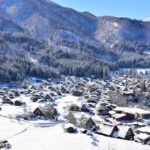
Next up is Shirakawa-go, with 114 thatched gassho-zukuri houses noted as still retaining the classic old-Japan scenery. Admission at this stop is also free, and the time on site is about 2 hours.
This is the star village, so expect more people. That doesn’t ruin it, but it changes how you should move.
Here’s what I recommend:
- Walk first for 20–30 minutes to get oriented, then pick your viewpoints.
- Don’t wait too long at places to eat if you also want the view deck and museum later.
- If you want photos without everyone standing in front of your lens, shift your angles. The gassho-roof shapes give you lots of built-in perspective.
One practical upside: Shirakawa-go’s popularity means you’ll have more dining options and more shopping choices. A few reviews mention good restaurants and gift shops, and that lines up with what a major heritage site typically offers.
Shirakawa-go Gassho Zukuri Minkaen: The Included Museum You Should Not Skip
![Departing from Takayama [Regular sightseeing bus] World Heritage Sites Shirakawago and Gokayama Ainokura - Shirakawa-go Gassho Zukuri Minkaen: The Included Museum You Should Not Skip](https://l.historytourer.com/wp-content/uploads/departing-from-takayama-regular-sightseeing-bus-world-heritage-sites-shirakawago-and-gokayama-ainokura-5.jpg)
After the village walk, you get Shirakawa-go Gassho Zukuri Minkaen for about 30 minutes, with entrance included.
This is an open-air museum where you can step beyond the outdoor scenery and into the story of the houses themselves. The tour notes that during the walk you can also enter the museum, and that the entrance fee is part of what you pay.
There’s one scheduling detail to know: the park is closed on Thursdays from December to March. If it’s closed on your date, the tour indicates they’ll provide an original mascot instead. That means you won’t lose the whole experience, but you should mentally prepare that the museum component may be different in winter.
If you only have one museum-style stop in your day, this is the one I’d prioritize. It turns the roofs from a photo subject into a sense of how people lived.
Tenshukakau Observatory: The Classic Overlook, Fast and Focused
Your final sightseeing stop is Tenshukakau Observatory for about 20 minutes, with admission included.
This is the viewpoint described as the one you often see on posters. And yes, it’s short. The point isn’t to make this a long hike—it’s to give you the iconic panorama after you’ve already wandered the village streets below.
Because the window is tight, I suggest doing this:
- arrive, find the main overlook angle,
- take photos quickly,
- then take one slow look without your camera for a minute.
Those 20 minutes can be the difference between thinking you saw Shirakawa-go and actually understanding how the village sits as a whole.
Lunch at Shirakawa-go: Convenience vs. Time Loss
Lunch is not included, but the tour suggests you eat at Gassho Village in Shirakawago. That’s convenient because your lunch is right inside your main sightseeing window.
The trade-off is time. One review mentioned the lunch queue ate into their Shirakawa-go stop, cutting down what they could do, including skipping the view deck. Another review suggests you might be able to manage if you plan your walk first.
So, my simple strategy:
- Decide your lunch target before you sit down to eat.
- If the line is long, consider ordering to-go or moving to a different nearby spot.
- Keep the end of your visit in mind, especially if you want museum + observatory.
If you’re traveling with a group mindset (everyone wants to eat at the same time), queues can feel like a deal-breaker. But if you travel flexibly, lunch becomes easy without wrecking the rest of your route.
Weather Matters: When Snow Turns the Day Magical
This tour works best when conditions are good. The experience notes it requires good weather; if it’s canceled due to poor weather, you’ll be offered a different date or a full refund.
That’s not just fine print. Gassho villages look most like themselves when the hills are clean and the air is clear enough to see the village shape. One review called out a storybook day in snowy villages, and another highlighted visiting with snow during March.
If you’re going in winter or shoulder season, dress for cold and for sudden changes. You’ll be walking in an outdoor village environment, not just sitting on a warm bus.
And keep a small mental buffer. Mountain roads and weather can affect timing, and on a day trip, even a few delays can tighten your stop windows.
Who This Tour Fits Best (and Who Might Want Another Plan)
This is a great fit if you:
- want two UNESCO sites without renting a car
- like guided context while still having time to roam on your own
- appreciate an organized day where you don’t have to puzzle out how to get from place to place
It’s also a solid choice if you like contrast: Ainokura first, then Shirakawa-go.
You might consider a different approach if you:
- want a fully guided walking tour for every step (this is more bus guidance + map than a constant escort)
- have a short attention span for transfers, because the day is long and the stops are timed
- are very sensitive to queues, especially at lunch in Shirakawa-go
The Little Things That Make the Day Run Smooth
A few practical details show up again and again in how people experience this trip.
First: voucher redemption. One review warns that you’ll need to go to the office to exchange a voucher for tickets, and that it wasn’t obvious at first. The good news is the process is straightforward once you know where to do it. Your meeting and ticket redemption point is listed at 6-chōme-125 Hanasatomachi, Takayama, Gifu.
Second: the guides. Reviews mention names like Yamashia and Ikuichinami, and describe guides who explain layout, history, and what to do without piling on too much information. That’s exactly what you want on a day with multiple stops and limited time.
Third: the schedule balance. Many reviews praise having enough time in each village, with the ability to roam independently. That independence is what lets you speed up when you see something you really like and slow down when you spot a good roof angle.
Should You Book This Tour? My Decision Guide
Book it if your goal is a value-priced, low-stress day that hits both Ainokura and Shirakawa-go with included museum time and an iconic observatory.
Skip or reconsider if your priority is a slow, unhurried Shirakawa-go experience and you hate the idea of time pressure. In practice, the Shirakawa-go stop can feel tight depending on lunch and how you choose to use your window.
My bottom line: this is one of the better ways to see these hard-to-reach heritage sites from Takayama. Just show up with a simple plan for lunch, keep your museum/view deck priorities straight, and you’ll get the best of both villages in one trip.
FAQ
What villages are visited on this day trip from Takayama?
You’ll visit Ainokura Gassho Community in Gokayama and the historic villages of Shirakawa-go, plus time for Shirakawa-go Gassho Zukuri Minkaen and Tenshukakau Observatory.
Is lunch included in the tour price?
No. Lunch is not included. The tour encourages you to eat at Shirakawa-go.
Are tickets and admissions included for the sights?
Admission is listed as free for Ainokura Gassho Community and the historic villages of Shirakawa-go, and included for Shirakawa-go Gassho Zukuri Minkaen and Tenshukakau Observatory.
How long is the tour, and what time does it start?
The duration is about 7 hours 20 minutes, and it starts at 8:30 am.
Where do I meet and redeem my voucher?
The meeting point and ticket redemption point are listed at 6-chōme-125 Hanasatomachi, Takayama, Gifu 506-0026, Japan. Reviews also note you should go to the office to exchange a voucher for tickets.
Is the Shirakawa-go Minkaen open year-round?
No. The tour notes the open-air museum (Minkaen) is closed on Thursdays from December to March. If it’s closed, you’ll be given an original mascot instead.
What happens if weather is bad?
The experience requires good weather. If it’s canceled due to poor weather, you’ll be offered a different date or a full refund.