REVIEW · SALALAH
East Salalah Highlights: Half-Day Heritage & Scenic Countryside
Book on Viator →Operated by Amazing Salalah Tourism · Bookable on Viator
Salalah in 4–5 hours hits different. I love the mix of ocean viewpoints and Wadi Darbat’s cool valley air, and I love that you end at Sumhuram Old City (UNESCO) with an included visit; the one catch is timing can shift if Taqah Castle is under maintenance or weather isn’t cooperating.
Hotel pickup makes the morning easy, and the guide’s storytelling style helps the places feel connected instead of like a checklist. This is a private setup too, so your group won’t get lost in someone else’s photo line.
In This Review
- East Salalah Highlights: Why This Half-Day Works So Well
- Value and Price: Is $170 Actually Fair?
- How the Private Setup Impacts Your Day
- Getting There Comfortably: Pickup and Vehicle Choices
- Stop 1: Taqah Castle and Wali-Era Oman
- Stop 2: Taqah Coast Cliff Viewpoint and Dolphin Chances
- Stop 3: Wadi Darbat’s Spring, Falls, and Cooler Air
- Stop 4: Tawi Attair (Well of Birds) Limestone Sinkhole
- Stop 5: Samhan Baobabs at Wadi Hinnah
- Stop 6: Samhan Gravity Point and the Neutral-Gear Trick
- Stop 7: Sumhuram Old City UNESCO Port of Frankincense
- Best Fit: Who Should Book This Half-Day?
- Small Guide Touches That Make It Feel Personal
- Should You Book East Salalah Highlights?
- FAQ
- How long is the East Salalah half-day tour?
- Is pickup from hotels in Salalah included?
- What’s included in the price?
- Which stops have admission fees and which are free?
- What happens if Taqah Castle is closed for maintenance?
- Is the tour private or shared?
- What if the weather is bad?
- Can I cancel for a full refund?
East Salalah Highlights: Why This Half-Day Works So Well
- UNESCO stop without wasting a day at Sumhuram Old City, plus a provided video at the information centre.
- Real nature oddities: the limestone Well of Birds sinkhole and Samhan’s controversial gravity point.
- Sights along the Indian Ocean from Taqah’s coastline cliff, with a chance of dolphins underneath.
- Wadi Darbat’s “spring + falls” feel in a valley setting, especially lively after monsoon time.
- Photo-ready baobabs in Samhan, with local names for the trees and plenty of time to linger.
Value and Price: Is $170 Actually Fair?
At $170 per person for a 4 to 5 hour outing, this doesn’t feel like a “budget bus tour.” The value comes from what’s included rather than just the number of stops.
You get hotel pickup, an air-conditioned vehicle, bottled water, and a local Arabic/English-speaking guide. On top of that, all fees and taxes are covered, including a fuel surcharge. Two of the seven stops include admissions (Taqah Castle and Sumhuram Old City), while several others are free-entry points—so you’re not constantly wondering what costs extra when you arrive.
Another small but real value point: the provider keeps the day moving with a vehicle choice that fits your group size. For small parties, you travel 2WD; for larger groups, the plan shifts to 4WD and even uses two 4WD vehicles when needed. That helps reduce delays when you’re bouncing between coastline views and mountain-area stops.
If you’re only in Salalah for a short time, this is the kind of half-day that gets you “yes” moments—ocean views, a valley escape, and a UNESCO site—without turning your day into a logistics project.
How the Private Setup Impacts Your Day

This is listed as private: only your group participates. That changes the feel of a half-day tour in a good way. You’re not competing for the same quick photo angle at every stop, and your guide can pace the timing closer to how your group actually moves—especially helpful when you’re doing a mix of viewpoints and walking portions.
It’s also a good fit if your group has different interests. One person wants ocean photos. Another wants the unusual science-y stuff (the sinkhole and the gravity phenomenon). The day balances all of that, and the short time at each stop keeps things from dragging.
One practical consideration: because it’s a half-day, each place is still a “watch, understand, take photos, move on” rhythm. You won’t have hours and hours to wander slowly. Plan for quick enjoyment rather than a long, independent exploration.
Getting There Comfortably: Pickup and Vehicle Choices
Hotel pickup is included, so you’re not trying to coordinate taxis while juggling timing in Salalah. Once you’re in the vehicle, you’re in air-conditioning, which matters when you’re bouncing between coastline and Samhan mountain areas.
The vehicle setup depends on group size:
- 1–3 adults: 2WD
- 4–6 adults: 4WD
- 7–9 adults: two 4WD vehicles, with 1 guide and 2 drivers
That detail matters more than it sounds. It’s a sign the tour is designed for the terrain and route style, instead of forcing everyone into one vehicle plan that doesn’t quite fit.
And because the tour includes bottled water and fuel/taxes/fees, you avoid the mid-day scramble for small expenses.
Stop 1: Taqah Castle and Wali-Era Oman
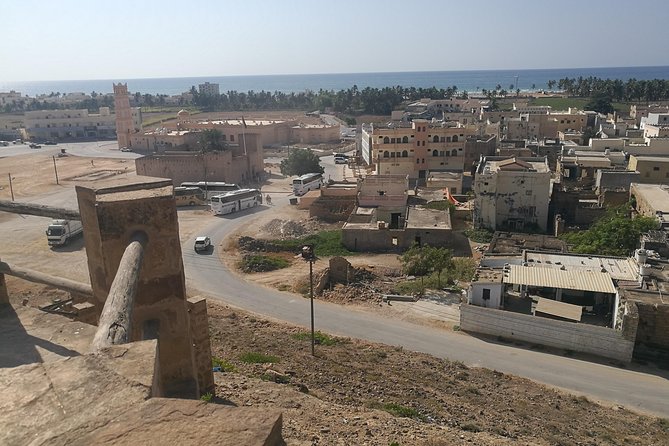
The day starts in Taqah, with a stop at Taqah Castle. You pass by the Taqah sandy Beach area en route, and the town itself is known for dried sardines, rural harvests, and traditional Dhofari mud houses.
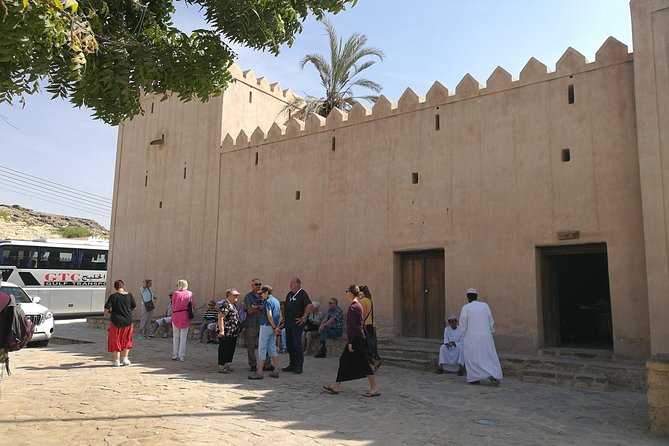
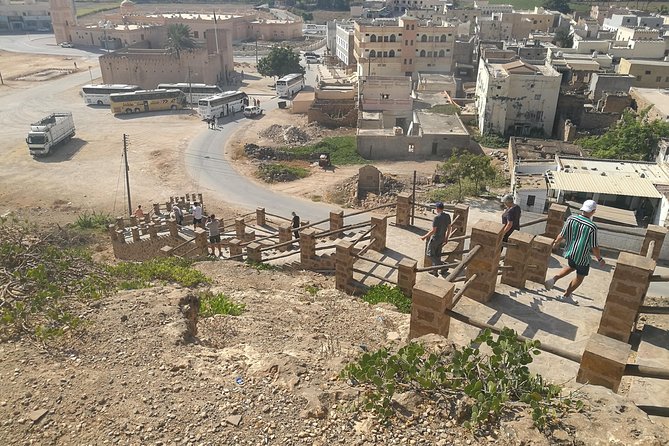
At the castle, you’re stepping into the earlier authority system of the region. The site was the previous authority home of the Wali (Governor), and it’s now used as a historical centre with displays that help translate the past into something you can picture.
You also get a chance to see hints of nearby old defenses and structures, including an overlooking monitor tower (described as an old fort) on the slope, plus the manor area.
Time here is about 45 minutes, and admission is included. It’s a solid start because it gives context fast: ocean trading + local governance + everyday life. That context makes the later stops feel less random.
One important note: Taqah Castle is under maintenance. When that happens, you won’t lose the stop—you’ll get extra time at the nearby Taqah Cliff view point instead.
Stop 2: Taqah Coast Cliff Viewpoint and Dolphin Chances
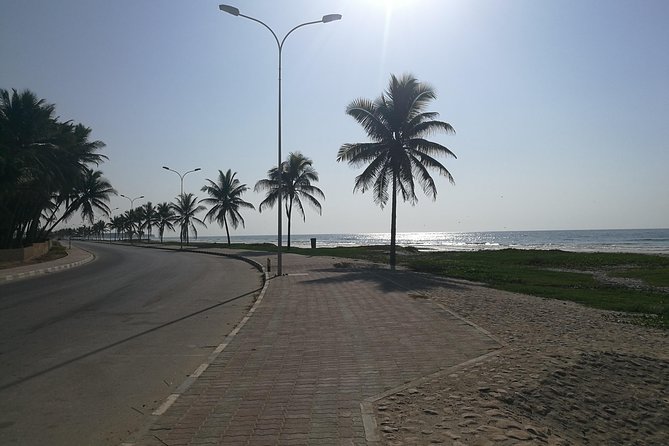
Right along the Taqah coastline, you head to a rocky cliff viewpoint: a ~15 meter high spot with ocean breeze and wide views over the Indian Ocean and Taqah city.
This stop is built for short, satisfying moments:
- you reach the top,
- let the sea air reset your brain,
- take photos,
- and (here’s the fun part) you have a high chance of spotting dolphins swimming underneath the cliff.
Admission here is free, and the timing is tight—about 20 minutes. That’s exactly what you want for a viewpoint stop. Long enough to enjoy the moment. Not long enough to turn it into a “waiting around” exercise.
If you’re the type who loves “weather + timing” nature sightings, keep your eyes open when the guide points out where the movement usually shows up.
Stop 3: Wadi Darbat’s Spring, Falls, and Cooler Air
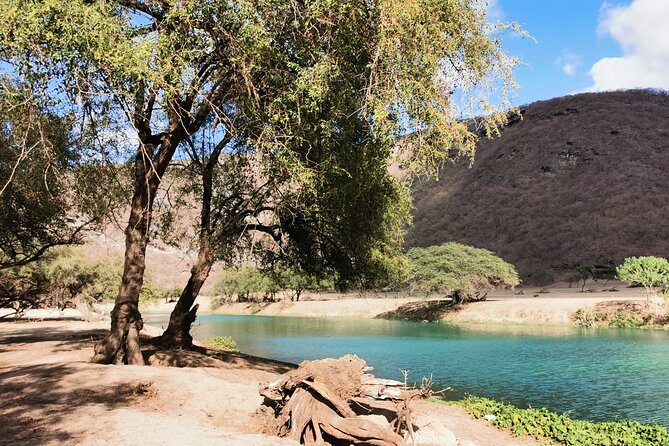
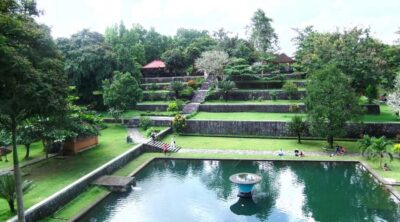
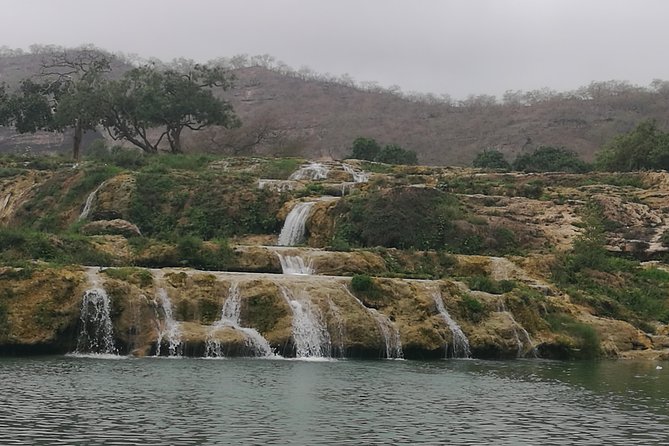
Next up is Wadi Darbat, one of the region’s best-known nature breaks. Expect a valley feel with a spring system: underground water shapes a lake, and you’ll see smaller water features and falls, especially after monsoon time.
You get about 1 hour here, and admission is free. This is where the tour shifts from human-made history and unusual geology to a nature setting that’s easier to breathe in.
Two things I like about Wadi Darbat as a tour stop:
- It’s not just scenery. The description includes active water-life around the lake. After monsoon time, you might see activities such as pedal kayaking, speedboats, and kayak pontoons (availability varies by season and conditions).
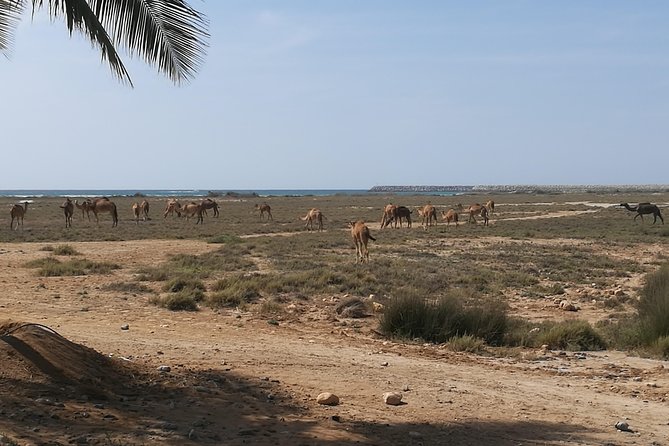
- You can mix observation with a calm reset. The climate is described as good for relaxing, and it’s common to spot local herds around the area—camels, cows, and goats.
This stop also works well for families because the time is long enough to enjoy a break, but not so long that you feel trapped in one spot.
Stop 4: Tawi Attair (Well of Birds) Limestone Sinkhole
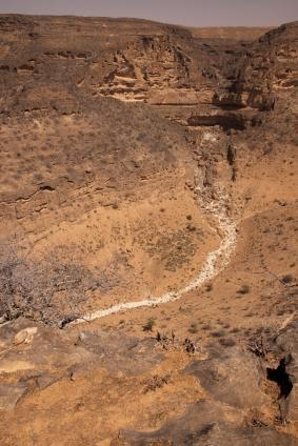
Now the day gets scientific in the best way: Tawi Attair, known locally as the Well of Birds. This is a karst formation in limestone with a sinkhole depth of 211 meters—described as being like a building around 60 floors high.
Your guide explains what you’re seeing, then takes you to the viewpoint. The key “wow” moment is the birds. Because nests are in the walls of the limestone plateau, you can hear birds chirping and you may spot the movement around the opening.
Admission here is free, and the on-site time is about 25 minutes—short enough to keep it energetic, long enough to feel the scale.
Why this stop matters: it gives you an “Oman doesn’t do normal” kind of contrast after Wadi Darbat. One is about water gathering and cooling. The other is about water’s long-term work carving limestone into a dramatic sinkhole.
Stop 5: Samhan Baobabs at Wadi Hinnah
From sinkhole science to tree-shaped weirdness. In the Wadi Hinnah area near Samhan mountain, you visit giant baobab trees—locally known as Ankiji or Al Mashwa. The tour text notes the scientific name as Adansonia digitata.
You get about 15 minutes here with free admission, which is just enough time to take photos and look slowly without feeling rushed.
A few details that make this stop more than a quick snapshot:
- There are about 200 baobab trees in Dhofar.
- These trees can grow up to 25 meters tall with trunks up to 2 meters in diameter.
- Baobabs are commonly associated with Africa (especially Madagascar), so seeing them in Dhofar feels like a cultural and ecological surprise.
If you like nature that has personality, this is a great stop. The shape alone makes you want to keep looking.
Stop 6: Samhan Gravity Point and the Neutral-Gear Trick
Then comes the controversial, fun-to-watch moment: the Earth gravity stop on Samhan mountain. The description is simple and wild—a stretch of road where, when you put the car in neutral, it appears to move uphill.
You’re there for about 15 minutes, with free admission. Your guide’s job is to help you experience it without turning it into a guessing game. The point is the sensation of the phenomenon.
A note to keep your expectations realistic: “appears to move” is the key phrasing. It’s not a lab experiment. It’s a natural effect that can look like the laws of motion have gotten confused.
But that’s exactly why it’s worth doing. Even if you don’t fully explain it, it’s a memorable way to spend a short chunk of time.
Stop 7: Sumhuram Old City UNESCO Port of Frankincense
The grand finale is Sumhuram Old City, a UNESCO World Heritage site. You drive up to preserved remnants of an ancient settlement on a small hill, with views back toward the Indian Ocean.
This stop is about 1 hour, and admission is included.
Here’s why Sumhuram hits:
- The city is tied to a human settlement history going back to around 5 BC.
- It connects directly to the region’s port role in the Dhofari frankincense trade in later years.
- The information centre provides a 6-minute video clip that frames what you’re looking at, so you’re not just staring at ruins without the story.
It’s a good ending because it ties together the day’s themes:
- coastal movement (Taqah views and sea context),
- natural power (Wadi Darbat and the sinkhole),
- and then the human side—how the region’s location mattered for trade and settlement.
If you do only one “history with a viewpoint” stop today, this is it.
Best Fit: Who Should Book This Half-Day?
This tour fits best if you want a fast hit of variety:
- ocean scenery in the Taqah area,
- a valley break at Wadi Darbat,
- and two standout “wait, what is that?” stops at the Well of Birds and the gravity point,
- capped with a UNESCO site.
It’s also a strong choice for:
- couples who don’t want a full day,
- families who want a nature stop plus easy, short photo moments,
- travelers who like when a guide explains the why behind the sites.
If your idea of travel is slow, unstructured wandering for hours at each place, you might prefer a longer, more flexible day elsewhere. This one is intentionally timed and moving.
Small Guide Touches That Make It Feel Personal
One of the best parts of guided tours is when the guide connects the dots. In this case, guides may explain how older authority systems worked in Taqah (including the role of the Wali) and how local life linked to trade and frankincense around Sumhuram.
For example, Hamid is specifically praised for walking through multiple time periods and making Oman’s story feel understandable, not just read off a sign. That kind of pacing matters a lot on a half-day itinerary, because you’re constantly switching gears—castle to cliff, valley to sinkhole, baobabs to gravity trick, then UNESCO ruins.
Should You Book East Salalah Highlights?
I’d book this tour if your time in Salalah is tight and you want maximum variety in 4 to 5 hours—especially if UNESCO is on your must-do list.
I would think twice if you’re the type who needs long stops to properly unwind, or if you’re very sensitive to weather timing. The day is clearly designed to run best with good conditions, and Taqah Castle can also switch to the nearby cliff viewpoint if it’s not available.
If you like your tours with ocean views, odd natural phenomena, and an ending that feels important, this one is a smart bet for the money and the time you’re spending.
FAQ
How long is the East Salalah half-day tour?
The tour runs about 4 to 5 hours.
Is pickup from hotels in Salalah included?
Yes. Hotel pickup is available for your convenience.
What’s included in the price?
The tour includes bottled water, all fees and taxes, an air-conditioned vehicle, fuel surcharge, and a local Arabic/English speaking guide. Admission tickets are included for Taqah Castle and Sumhuram Old City.
Which stops have admission fees and which are free?
Taqah Castle has admission included, and Sumhuram Old City has admission included. The viewpoint cliff, Wadi Darbat, the Well of Birds (Tawi Attair), the baobab trees, and the gravity phenomenon are listed as free.
What happens if Taqah Castle is closed for maintenance?
The tour notes that Taqah Castle is currently under maintenance, and instead you’ll be offered extra time at the nearby Taqah Cliff view point.
Is the tour private or shared?
This is a private experience. Only your group participates.
What if the weather is bad?
This experience requires good weather. If it’s canceled due to poor weather, you’ll be offered a different date or a full refund.
Can I cancel for a full refund?
Yes. You can cancel up to 24 hours in advance for a full refund. If you cancel less than 24 hours before the start time, the amount paid isn’t refunded.