REVIEW · GUANGZHOU
Guangzhou: Cantonese Heritage Tour with Key Cultural Stops
Book on GetYourGuide →Operated by Guangzhou Travels · Bookable on GetYourGuide
This is a small-group tour where the stories stick. You’ll get a tight route through Cantonese daily life, then a big cultural payoff with Bruce Lee’s former residence and the Cantonese Opera Art Museum. I like how the itinerary mixes recognizable landmarks with street-level scenes you can actually picture later.
Two standout perks: the guide’s engaging English explanations and the chance to chat with local people during market and cultural stops. One thing to keep in mind: it’s a walking-focused half-day, so expect comfortable-shoe time and some crowds around popular pedestrian streets.
In This Review
- Key Highlights You’ll Feel During the Walk
- Meeting at Cultural Park Metro Exit E and How the 3.5 Hours Fits
- Qingping Herbal Market: Traditional Medicine You Can See and Ask About
- Shangxiajiu Pedestrian Street: Old Arcade Streets and Real-World Shopping
- Yongqingfang Wharf Lanes: Courtyards, Cafes, and a Lighter Pace
- Guangzhou Intangible Cultural Heritage Street: Crafts and Lion Dance Prep
- Bruce Lee at Lixiaolong Ancestral Home: Family Roots in Guangzhou
- Cantonese Opera Art Museum: Costumes, Movements, and Meaning
- Hidden Gems Without Guesswork: How the Guide Makes It Click
- Price and Logistics: Why This $6 Half-Day Can Make Sense
- Who This Tour Fits Best in Guangzhou
- Should You Book This Cantonese Heritage Tour?
- FAQ
- How long is the Cantonese Heritage Tour in Guangzhou?
- What is the group size?
- What language is the guide?
- Where do I meet the guide?
- What are the main stops on the tour?
- Is tipping recommended, and how much?
- Is free cancellation available?
Key Highlights You’ll Feel During the Walk
- Bruce Lee connection at Lixiaolong Ancestral Home, tied to family roots rather than just movie mythology
- Qingping Herbal Market sights and smells of traditional Chinese medicine, explained clearly
- Shangxiajiu Pedestrian Street with arcade-style streetscapes and local snack stops (without turning it into a food tour only)
- Yongqingfang for courtyards, lanes, and that old-meets-new feel near the waterfront
- Cantonese Opera Art Museum with costume and movement symbolism that makes the performance make sense
Meeting at Cultural Park Metro Exit E and How the 3.5 Hours Fits
You start at 文化公园地铁站(Guangzhou Cultural Park Metro Station)Exit E, outside. Ending point is 粤剧艺术博物馆 (Cantonese Opera Art Museum), so you finish right where the story of performance culture lands.
This runs about 3.5 hours and is small group (max 8). That size matters in Guangzhou. You’re not lost in a crowd, and your guide can adjust pacing when people ask questions.
The tour is English-led, with a professional guide. Based on past visitors, guides are easy to talk to and don’t shut down follow-ups. If you’re the type who likes to ask why something is the way it is, you’ll get your money’s worth fast.
You can also read our reviews of more historical tours in Guangzhou

Qingping Herbal Market: Traditional Medicine You Can See and Ask About
Qingping Herbal Market is the kind of stop that hits multiple senses at once. You’ll spend about 30 minutes here, guided through the day-to-day world of traditional Chinese medicine.
What I like is the practical framing. Instead of treating herbs like museum objects, you’re shown how Cantonese life overlaps with this craft. You’ll notice the variety of products and the specialist know-how behind it, and you’ll have a chance to interact with people who do this work.
A small consideration: markets are active. If you’re sensitive to strong smells, take it slowly and don’t rush your photos. Also, keep an eye on your personal belongings—busy pedestrian areas always require normal street smarts.
Shangxiajiu Pedestrian Street: Old Arcade Streets and Real-World Shopping
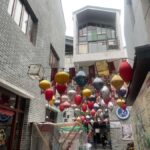
From Qingping, you move to Shangxiajiu Commercial Pedestrian Street for about 30 minutes. This is one of the places where you can feel the Cantonese city rhythm without needing a lecture hall.
Expect architecture with arcade buildings and a street layout built for browsing. Your guide points out details you might otherwise miss, like how shopfronts and walkways shape daily life. You’ll also get help spotting what’s worth stopping for, including snacks and small local treats your guide recommends.
I like that this isn’t just window-shopping. It’s more about learning how the street works—where people linger, how shopkeepers present their products, and what kinds of food and goods match the area’s identity.
If you come at a peak hour, the sidewalks can compress. Keep water handy and plan for short stops rather than long lingering unless your group pace allows it.
Yongqingfang Wharf Lanes: Courtyards, Cafes, and a Lighter Pace
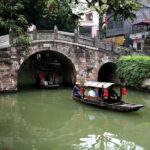
Next is Yongqingfang for about 45 minutes. This stop changes the mood from market-to-street into something more relaxed, with lanes and waterfront atmosphere.
Here’s what you’ll notice: quiet courtyards tucked behind busier streets, plus modern cafes and everyday hangouts in the same area. Your guide helps you connect the dots between the old street bones and the newer daily life layered on top.
This is a good segment for photos and for just watching how locals move. It’s also where the tour starts to feel less like a checklist and more like a guided walk with cultural commentary.
A practical tip: lanes can be shaded but uneven. Wear shoes you can trust, and don’t sprint between corners—your guide usually wants you to see what’s at eye level, not just down the street.
Guangzhou Intangible Cultural Heritage Street: Crafts and Lion Dance Prep
The tour includes time at a cultural heritage area often associated with living crafts and performances. In the schedule, this shows up as a hidden gem stop for about 30 minutes, and it’s one of the most hands-on-feeling segments.
You might see people working on crafts—think delicate embroidery—and you may also catch the mood of lion dance preparations. Even if you don’t fully understand everything at first glance, your guide helps you read the signals: what the tools and materials suggest, why certain preparations matter, and how these arts stay connected to community life.
This is valuable because it shifts Cantonese heritage from something historical-only to something still practiced. You’re not only looking at artifacts. You’re seeing how tradition continues through daily work.
The only real caution here is timing. Craft areas can be schedule-dependent, and work may look different day to day. Still, a good guide makes the moment understandable even if the exact activity in front of you varies.

Bruce Lee at Lixiaolong Ancestral Home: Family Roots in Guangzhou
This is the stop with the biggest “wait, really?” factor. You’ll visit Lixiaolong Ancestral Home, which connects directly to Bruce Lee’s former residence. The time budget is about 30 minutes.
The way it’s explained matters. Instead of turning Bruce Lee into a single-name celebrity stop, your guide connects his global legend with the roots tied to Guangzhou and his family story. That angle makes the visit feel more grounded and less like a themed detour.
I like this because it gives you a cultural bridge. You see how a famous figure still ties back to place, family, and local identity. And if you’re a Bruce Lee fan, you’ll likely leave with a clearer sense of context—not just trivia.
Practical note: ancestral homes can feel quiet compared with the streets. Keep your voice low and move at a sensible pace so the group stays together.
Cantonese Opera Art Museum: Costumes, Movements, and Meaning
The final cultural payoff is Cantonese Opera Art Museum, with about 20 minutes. This is a tight museum segment, so the guide’s explanations are key.
You’ll look at exhibits related to Cantonese opera performance and learn how costume colors and designs connect to meaning. You’ll also hear how movement works in the art form—your guide explains symbols behind costume details and the logic behind performance elements.
This stop is worth it even if you’ve never watched Cantonese opera. The museum gives you a framework for what to watch for later, so the next time you see performers, you’ll recognize the patterns your guide pointed out.
One consideration: 20 minutes isn’t long. If you’re the type who likes to read every label, plan to take notes on what matters most to you and let the guide’s spoken highlights do the heavy lifting.
Hidden Gems Without Guesswork: How the Guide Makes It Click
A tour like this can go two ways: either it’s a list of places, or it’s a list of stories that make places readable. The feedback around this experience strongly leans toward the second.
Guides often highlight context in plain language and answer questions on the spot. People specifically noted guides like Tony for English ability, engaging explanations, and an ability to reply easily even when the group asks lots of questions. One review also mentioned that the guide was open to individual requests, which helps if you’re curious about something beyond the plan.
Another practical strength: guides introduce local foods at the right moments, not randomly. One person mentioned being guided to local delicacies they could try during the tour. That matters because street food choices in an unfamiliar neighborhood can be intimidating.
If you want good results, show up with curiosity. Ask one or two questions early. A good guide will steer you toward what you didn’t know you were looking for.
Price and Logistics: Why This $6 Half-Day Can Make Sense
The price listed is $6 per person, and that’s the kind of number that makes you question what’s included. Here, the value comes from two things: the guided route and the small-group structure.
You’re paying for a professional guide and guided time at multiple culture-focused stops. You’re also paying for organization and for the chance to interact with local people, which is hard to do when you’re wandering on your own without context.
Could you do some of these areas independently? Sure—Shangxiajiu and Yongqingfang are walkable zones. But the difference is interpretation. With the guide, you don’t just see places; you learn what to notice and what questions to ask. That’s where the cost often pays for itself.
One more thing: the guide’s effort is supported partly through a tip recommendation of 200 RMB (about 30 USD / 20 GBP) per traveler. If this is your main organized activity for the day, tipping at that level is a straightforward way to keep the experience sustainable.
Who This Tour Fits Best in Guangzhou
This is a strong choice if you want Cantonese culture without spending a full day on museums only. You’ll get a mix: medicine market, pedestrian shopping street, heritage lanes, a major pop-culture tie-in, and opera culture explained in human terms.
It’s especially suitable for:
- First-time visitors who want a guided orientation to Cantonese neighborhood life
- People who enjoy asking questions during tours
- Anyone who wants cultural context around places tied to performance and craft
- Travelers who prefer a small group over big-bus touring
If you’re very short on time, the half-day format works. If you dislike walking, you may find the pacing a bit active, though the total time is only 3.5 hours.
Should You Book This Cantonese Heritage Tour?
I’d book it if you want more than photos. This tour is built to help you read the city: why certain markets exist, what opera symbolism is trying to communicate, and how place ties into a story like Bruce Lee’s.
Skip it if your travel style is ultra-minimalist. If you don’t want any guided context and prefer to set your own pace, you might feel like it’s too scheduled. Also, if you’re allergic to strong smells, Qingping may be an issue.
But if you’re aiming for a smart introduction to Cantonese heritage with an English-speaking guide who can actually explain, this is good value for the time and effort.
FAQ
How long is the Cantonese Heritage Tour in Guangzhou?
The tour lasts about 3.5 hours.
What is the group size?
It’s a small group, limited to 8 participants.
What language is the guide?
The live tour guide speaks English.
Where do I meet the guide?
Meet at 文化公园地铁站(Guangzhou Cultural Park Metro Station)Exit E, outside.
What are the main stops on the tour?
The tour includes Qingping Herbal Market, Shangxiajiu Pedestrian Street, Yongqingfang, a cultural heritage crafts area stop, Lixiaolong Ancestral Home (linked to Bruce Lee’s former residence), and the Cantonese Opera Art Museum.
Is tipping recommended, and how much?
A recommended tip is 200 RMB / 30 USD / 20 GBP (or equivalent) per traveler to support the guide.
Is free cancellation available?
Yes. You can cancel up to 24 hours in advance for a full refund.