REVIEW · PARIS
Private Historical Tour of Notre Dame
Book on Viator →Operated by Paris in person · Bookable on Viator
Notre-Dame looks best when you understand what you’re looking at. This private tour pairs an art historian with a tight route of exterior stops, so you leave with clear stories behind the stones. I like the private format because you can ask questions and steer the pace. I also like how the visit is built around “readable” viewpoints, from Point Zero to the Western Portal.
There’s one big thing to know up front: this is an outside-only experience. The cathedral’s interior isn’t accessible as part of the tour, and the Archeological Crypt of the Parvis is discussed without entering, with that ticket sold separately.
Still, if your goal is expert context for the façade, windows, statues, and symbols of Notre-Dame, you’ll get a lot in about 1 hour 30 minutes. And if you land with a guide like Boris, Allison, Mila, Shelby, Mira, Isabella, Barbara, or Bella, you’re in the hands of art-historian specialists who can answer tough questions on art, theology, and politics.
In This Review
- Key things to know before you go
- Why this Notre-Dame tour is built for meaning, not just photos
- Getting your bearings: Parvis meeting point and what to expect on arrival
- Stop 1: The Archeological Crypt of the Parvis explained without entering it
- Stop 2: Point Zero and the kind of symbolism most people miss
- Stop 3: The Equestrian Statue of Charlemagne and how Notre-Dame fits into France
- Stop 4: The Western Portal—reading statues and reliefs like a language
- Stop 5: Rue du Cloître Notre-Dame—side views, windows, and gargoyle logic
- Stop 6: Fontaine de la Vierge—back views and the complexity of Gothic design
- Stop 7: Petit-Pont-Cardinal-Lustiger—full-cathedral overview and the Marian story
- “Private” and “1.5 hours”: how the timing changes the experience
- What’s included, what isn’t, and why that matters for your expectations
- Price vs value: what you’re paying $299.57 per person for
- Who should book this private Notre-Dame tour
- Should you book it?
- FAQ
- Is this tour private?
- How long does the Notre-Dame tour last?
- Is the tour offered in English?
- Does the tour include going inside Notre-Dame?
- Is the Archeological Crypt of the Parvis included inside?
- Where do we meet for the tour?
- Do I need cash for tickets during the tour?
- Can I cancel for free?
Key things to know before you go
- Private, English-speaking art historian guide: just your group, lots of Q&A time.
- Outside-only route: the cathedral interior isn’t part of this access.
- Crypt stop is view-based: the Parvis crypt is explained, but you don’t enter.
- Point Zero gets the attention it deserves: a short stop with big symbolism.
- Western Portal taught like a “visual language”: statues and reliefs tied to meaning.
- A viewpoint sweep that stays practical: side, back, and full-cathedral perspectives in 90 minutes.
Why this Notre-Dame tour is built for meaning, not just photos
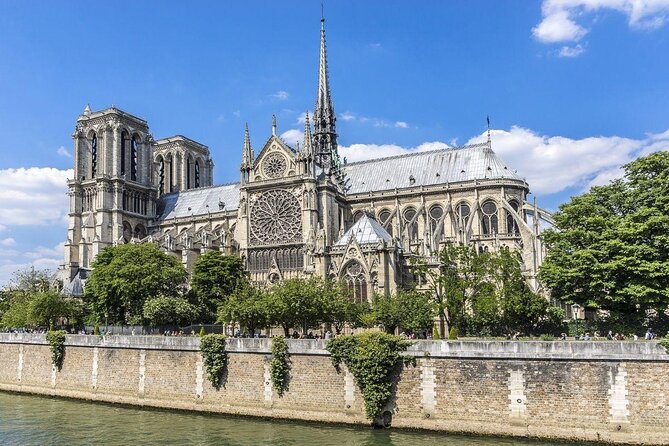
The biggest win here is simple: you’re not walking up to Notre-Dame and guessing. You’re standing in exactly the spots where the building “talks.” A professional art historian guide turns the façade, the sculpted details, and even the angles of the structure into a story you can follow.
The route also keeps you moving without feeling rushed. The tour is about 1 hour 30 minutes, and the stops are timed in a way that makes sense outdoors: you get a lesson, you get a look, then you move to the next vantage point.
And because it’s private, you’re not stuck with a fixed script. If your group is curious about theology, political history, medieval art symbolism, or how Gothic design works, you can ask. This matters at Notre-Dame, because the building rewards questions.
You can also read our reviews of more tours and experiences in Paris.
Getting your bearings: Parvis meeting point and what to expect on arrival
You’ll meet at 7 Parvis Notre-Dame – Pl. Jean-Paul II, 75004 Paris. Starting at the Parvis is smart because it’s the visual “hub” for the cathedral’s stories, whether you’re focused on medieval Paris, Marian devotion, or the way the Gothic façade communicates.
The tour ends back at the meeting point, so you’re not left improvising your way out after you’ve spent your best attention on the cathedral. It’s also near public transportation, which is a real deal in Paris, where waiting for a connection can eat into your energy fast.
One more practical note: you’re going to be outside. Wear shoes you can stand in for short bursts, and plan for changing weather. The cathedral is free to access, but this tour is about guided interpretation outdoors, not a long indoor museum session.
Stop 1: The Archeological Crypt of the Parvis explained without entering it
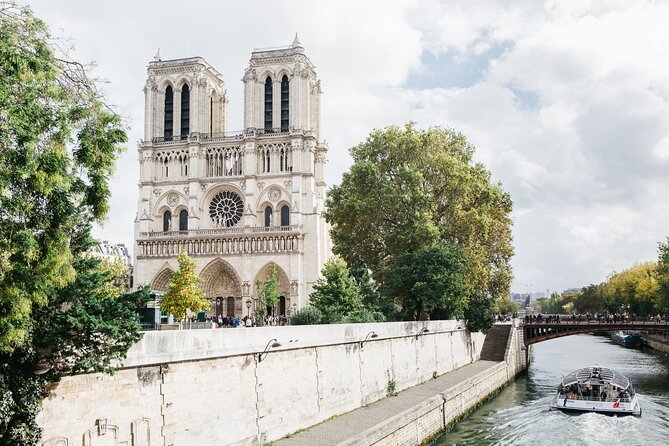
This is a clever setup, even if it sounds like a tease at first. You spend about 10 minutes on the Archeological Crypt of the Parvis of Notre-Dame, learning about the underground and why it matters to the history of Notre-Dame and Paris. But the tour does not enter the crypt.
The ticket is not included, and the crypt is described as a separate visit. So what do you gain from this stop? You get context that helps you understand why the Parvis area isn’t just a plaza. It’s part of a layered city history, and the crypt is one of those places where the past literally sits below your feet.
Consideration: if you want the experience of going underground, you’ll need to plan a separate visit to the crypt. This tour gives you the interpretive framework, not the crypt access.
Stop 2: Point Zero and the kind of symbolism most people miss
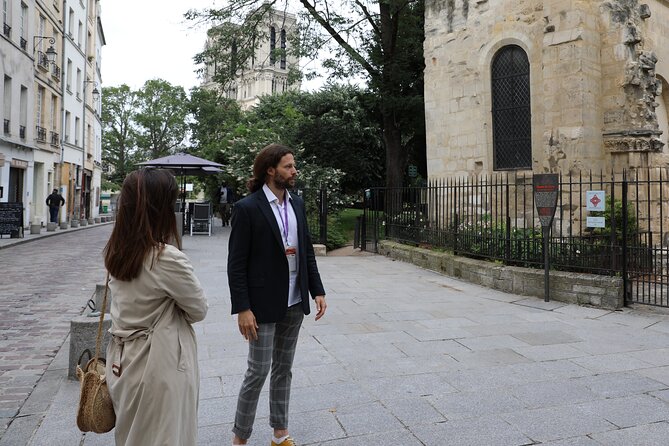
Then you shift to Point Zero, with about 15 minutes on the historic, cultural, and symbolic relevance of a site that’s often overlooked. In practice, this works well because it interrupts the “cathedral bubble.” You connect Notre-Dame to the larger Paris story, not only to medieval church politics.
Point Zero is short, but it’s the kind of stop that changes how you look at the whole area afterward. You start noticing how sites around Notre-Dame function as markers of identity, not just locations on a map.
This stop is free, which helps you get a meaningful learning moment without feeling like your money is only paying for time outside. You’re paying for the art historian’s explanations—exactly the value most people want.
Stop 3: The Equestrian Statue of Charlemagne and how Notre-Dame fits into France
Next is the Equestrian Statue of Charlemagne, also about 15 minutes, with the story tied to how France came to be and Notre-Dame’s significant role in that arc. This stop is free, and it’s not just “look, a statue.”
It’s a history lesson in how power and identity form. You get a sense of why a cathedral like Notre-Dame isn’t only a religious building. It also becomes a statement about legitimacy, culture, and national storytelling.
If you like your history with a clear spine—who mattered, what changed, and why—it’s a strong link between the exterior sculptures you’ll study next and the larger historical narrative.
Stop 4: The Western Portal—reading statues and reliefs like a language
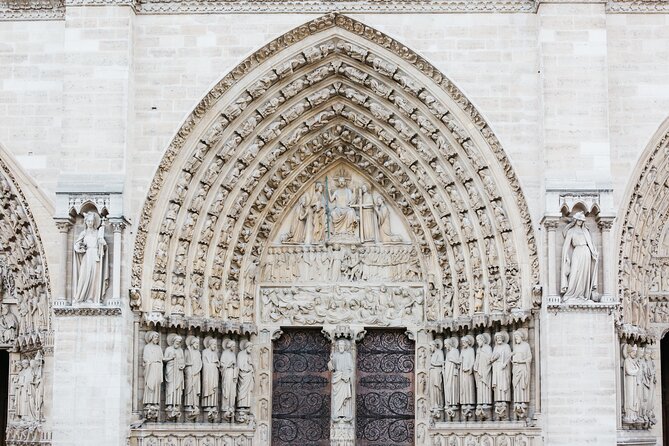
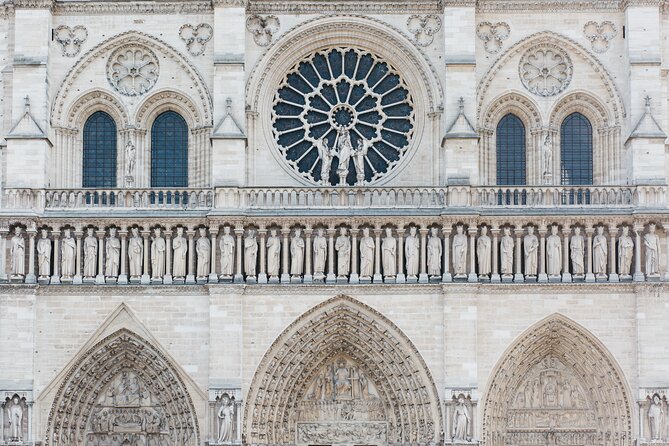
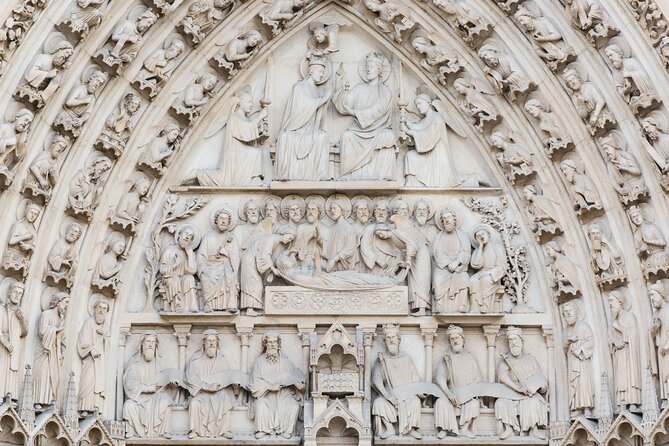
This is the star stop. You’ll spend about 20 minutes at the Cathedrale Notre-Dame de Paris, focusing on the Western Portal—what the sculpted statues and reliefs mean and how to interpret them.
The guide frames it in a practical way: art isn’t ornamental. It’s symbolic and instrumental. In other words, the building isn’t just meant to impress. It teaches.
Here’s what makes this stop valuable for most people: you start recognizing that the façade is designed to communicate ideas visually. The lesson connects the statues and reliefs to their meaning and relevance, so you’re not just looking at detail—you’re reading it.
Small reality check: this is still outdoors, and the portal is close to high foot traffic areas. If crowds make it hard to linger, your private guide can usually adjust the pace so you still get the story.
Stop 5: Rue du Cloître Notre-Dame—side views, windows, and gargoyle logic
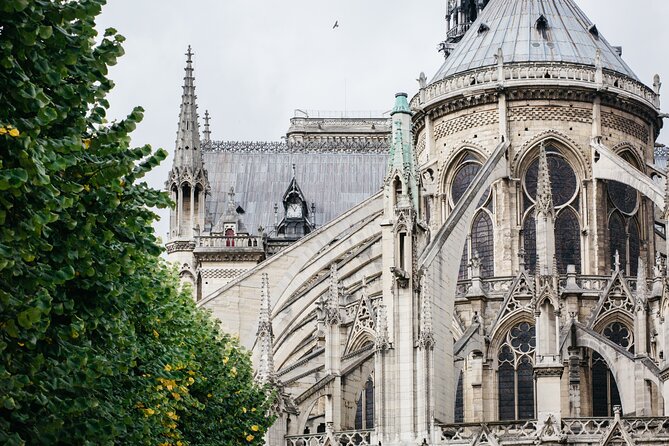
The tour moves to Rue du Cloitre Notre-Dame for about 15 minutes. This is your side-view section, and it’s a smart complement to the Western Portal because it shifts you from “front façade meaning” to “how the architecture actually works.”
From here, you discuss architecture and windows, and how everything connects—symbolically and functionally. Gargoyles come into the conversation too. That’s useful because many people see gargoyles as pure decoration. The explanation helps you understand why they’re part of the design system.
This stop is free and it gives you a new angle on the building’s craft. If you’re the kind of traveler who enjoys noticing how things fit, you’ll likely enjoy this segment a lot.
Stop 6: Fontaine de la Vierge—back views and the complexity of Gothic design
At the Fontaine de la Vierge, you get a view of the cathedral from the back, with about 10 minutes of discussion on the immense complexity of Gothic architecture.
Back views are often where people realize the cathedral is more than a front postcard. The guide helps you see how the system of design plays out across the full structure. It’s a quick stop, but it adds perspective you can’t get from straight-on angles.
This segment is also free. The value is in having someone explain what you’re noticing, so the cathedral doesn’t just look “big,” it looks engineered and intentional.
Stop 7: Petit-Pont-Cardinal-Lustiger—full-cathedral overview and the Marian story
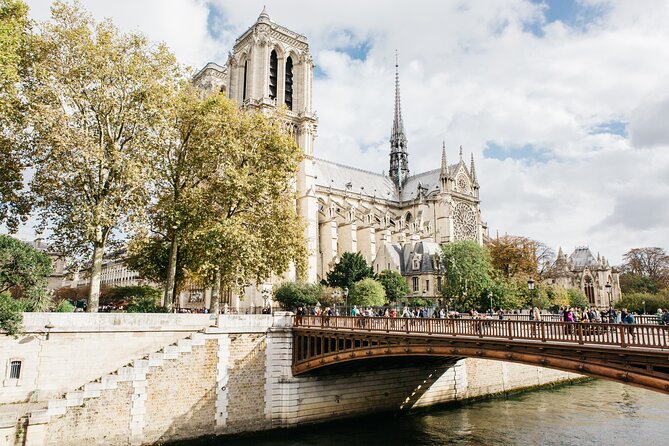
The final stop is Petit-Pont-Cardinal-Lustiger, about 10 minutes, where you step back for an overview of the entire cathedral. The explanation connects the story of Notre-Dame’s beauty to dogma, creation of Marian Catholicism, French identity, and politics.
This is a powerful way to end the tour: you’re reminded that Notre-Dame sits at the intersection of religion, art, and national culture. You’ve spent the morning learning how the building communicates. Now you connect it to why those messages mattered.
This stop is free and it’s a good final photo moment, but the lesson is the payoff. You’ll likely leave with a clearer sense of what Notre-Dame meant to different eras—and why it still matters.
“Private” and “1.5 hours”: how the timing changes the experience
Ninety minutes sounds short until you realize Notre-Dame is a dense subject. The tour’s timing works because it’s broken into bite-sized explanations paired with specific exterior viewpoints.
Private also changes how long you can linger at each stop. If your group gets stuck on one detail—say a statue’s symbolism or a Gothic design question—you can keep going rather than being pushed along with a large crowd.
Also, the booking has a huge choice of departure times online, with departure windows exact to within 30 minutes. That’s useful in Paris, where your day can be built around museum hours, meal plans, and weather changes.
If you’re planning the rest of your day, I’d keep a little flexibility around this tour. You’ll likely want time afterward to look again, now that you understand more of what you’re seeing.
What’s included, what isn’t, and why that matters for your expectations
Here’s the part I’d treat like the fine print that actually affects your experience.
Included:
- Private tour
- Professional art historian guide
- Notre-Dame Cathedral access
Not included:
- Food and drinks
The key detail: the cathedral is not accessible on the inside, and the visit stays on the outside. The service is described as independent of access to the interior of the building. And the Archeological Crypt stop is explained without entering, with admission not included.
So if you’re picturing a guided interior visit with a reserved entry ticket, this isn’t that format. The cathedral’s interior can be free and open to all, but this specific tour isn’t built around entry.
That’s also why the Western Portal and exterior viewpoints become the main event. The tour price is buying expert interpretation outdoors, not special access into the building.
Price vs value: what you’re paying $299.57 per person for
At $299.57 per person, this is not a budget activity. The value comes from three things working together:
- You’re paying for a private art historian guide, not a large group pass.
- You’re paying for interpretation at multiple exterior vantage points, not one generic stop.
- You’re getting a focused route in about 1 hour 30 minutes, which is a realistic way to see a lot without draining your whole day.
But if you’re the type who’s happy to read a guidebook and wander on your own, the price can feel steep. The outside of Notre-Dame is free to approach, and the cathedral interior being free to access (when available) means the guide’s role is what justifies the cost.
For me, the fairest way to judge the price is this: if you’ll use the guide to understand meaning, symbols, and architectural logic, you’ll likely feel it was worth it. If you only want a quick look and a few photos, you may not.
Who should book this private Notre-Dame tour
This tour is a strong fit if you:
- Want art history and symbolic interpretation, not just a sightseeing walk.
- Prefer a quieter, more tailored pace than large-group tours.
- Enjoy asking questions and getting direct answers in English.
- Care about how Notre-Dame connects to broader French cultural and political identity.
It’s also a good choice for families who like stories. Several guides listed, like Boris and Mila, are described as able to answer both serious and lighter questions, which can help keep kids engaged without turning the tour into a lecture.
If your main dream is specifically entering and exploring the cathedral interior with commentary, you may feel mismatched with this format, because the tour keeps you outside.
Should you book it?
Book this private Notre-Dame tour if your priority is understanding what you’re seeing from multiple angles, and you’ll actually use an art historian’s explanations. The best payoff is that you’ll leave with meaning you can point to: Point Zero’s relevance, the Western Portal’s message, and the way Gothic design makes sense from side and back views.
Skip it or reconsider if your goal is a guided interior visit as part of the paid package, or if you specifically want to go into the Archeological Crypt during the tour. This is built around the exterior experience, with crypt discussion from the surface.
If you’re on the fence, my practical advice is simple: go in clear on what you’re buying. Then you’ll get exactly what this tour is good at: sharp context, strong storytelling, and an efficient sweep around Notre-Dame’s most teachable features.
FAQ
Is this tour private?
Yes. It’s a private tour/activity, so only your group participates.
How long does the Notre-Dame tour last?
The duration is about 1 hour 30 minutes.
Is the tour offered in English?
Yes. The tour is offered in English.
Does the tour include going inside Notre-Dame?
No. The cathedral is not accessible on the inside as part of this tour, and the visit stays on the outside.
Is the Archeological Crypt of the Parvis included inside?
No. The crypt is discussed without entering it, and admission is not included.
Where do we meet for the tour?
You meet at 7 Parvis Notre-Dame – Pl. Jean-Paul II, 75004 Paris, France.
Do I need cash for tickets during the tour?
Many stops are free, and the tour includes Notre-Dame Cathedral access for the visit as offered. The Archeological Crypt ticket is not included.
Can I cancel for free?
Yes. You can cancel up to 24 hours in advance for a full refund.