REVIEW · NEPAL
Kathmandu: Guided -Day Tour of World Heritage Sites
Book on GetYourGuide →Operated by Nepalaya Treks & Expedition · Bookable on GetYourGuide
A one-day UNESCO loop beats guesswork. You’ll see the Kathmandu Valley’s big spiritual landmarks—Pashupatinath, Boudhanath, Swayambhunath (Monkey Temple), and more—linked by a comfortable ride and an English-speaking guide.
I like two things a lot: the private car with hotel pickup/drop-off makes the scattered valley sights much easier, and the guide explanations help the temples and stupas make sense, not just look pretty. I also appreciate the flexibility I’ve seen in how people shape the day, including solo visitors feeling safe with drivers and guides like Tirtha and guides such as Ramesh and Sujan.
One possible drawback: you cover a lot in a single day, so you’ll want comfortable shoes and a mindset for crowds and stairs, especially up at Swayambhunath.
In This Review
- Quick Take: What Makes This Day Tour Work
- Why Kathmandu Valley UNESCO Sites Are Hard Without a Guide
- Getting Started: Pickup Options and a Private Car
- Pashupatinath Temple: Pagoda-Style Temple Life on the Bagmati River
- Boudhanath Stupa: Why This Giant Dome Dominates the Skyline
- Swayambhunath (Monkey Temple): The Hilltop Views Worth the Stairs
- Patan Durbar Square in Lalitpur: Carvings, Palaces, and Old City Soul
- How the Day Flows: Pacing for a 1-Day World Heritage Circuit
- Price and Value: What $37 Gets You (and What Doesn’t)
- What to Bring (and What Not to Do) for These Sacred Stops
- The Human Factor: Guides Like Ramesh, Sujan, and Kamal
- Who This Tour Suits Best (and Who Might Want Something Else)
- Should You Book This Kathmandu Valley World Heritage Day Tour?
- FAQ
- FAQ
- How long is the Kathmandu Valley World Heritage tour?
- Which major sites are included in the tour?
- Where can the tour pick you up?
- What languages does the guide speak?
- What’s included in the $37 price, and what isn’t?
- Can I get a full refund if I cancel?
Quick Take: What Makes This Day Tour Work
- Hotel transfers + private car cut the hardest part: getting between sites in time.
- Four UNESCO-style stops give you a real Kathmandu Valley “starter course,” not just one landmark.
- Bagmati River setting at Pashupatinath adds atmosphere you can’t replicate from photos.
- Boudhanath’s scale (about 100m diameter and 40m high) is the kind of wow that holds up in person.
- Swayambhunath’s hilltop views make the Monkey Temple climb feel worth it.
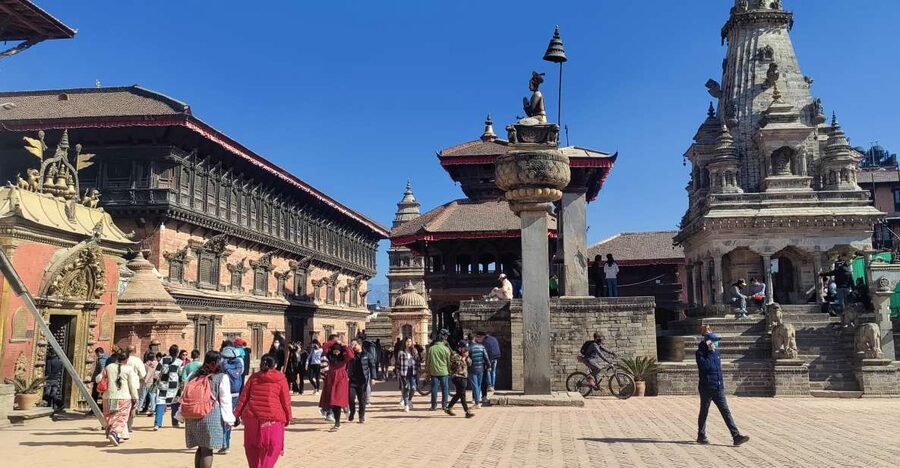
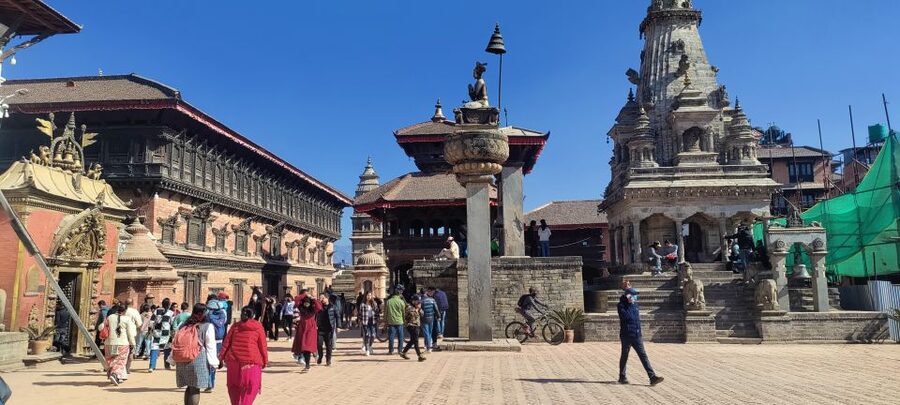
- Patan Durbar Square in Lalitpur adds the carving-and-palace side of the valley story.
Why Kathmandu Valley UNESCO Sites Are Hard Without a Guide
Kathmandu Valley is small, but the sights are spread across it like pieces of a puzzle. That’s exactly why a guided day tour is useful: you get a plan, plus someone to translate what you’re looking at.
The valley acts like an open-air museum. You’ll meet Hindu temples, Buddhist stupas, and monasteries tucked into city neighborhoods. Without context, it can feel like you’re speed-walking from postcard to postcard.
With a guide, you get the “why” behind the “wow.” And when the day is only 1 day long, that meaning matters. It turns this into a first-time orientation you can build on the rest of your trip.
Getting Started: Pickup Options and a Private Car
Your day begins with pickup included—typically meeting your driver at your hotel at the tour start time. Pickup points include Hotel Nepalaya and areas around Thamel and Kathmandu.
What this buys you is simple: less time hunting taxis, less stress with traffic, and more time at the sites. The tour uses a private car, so you’re not constantly waiting for other people to catch up.
You’ll also have drop-off back at Kathmandu, Hotel Nepalaya, or Thamel. That matters in a city where getting back to your base can be its own little adventure.
Pashupatinath Temple: Pagoda-Style Temple Life on the Bagmati River
Pashupatinath Temple is one of the most important Hindu sites in Kathmandu, sitting right on the banks of the holy Bagmati River. It was listed as a UNESCO World Heritage Site in 1979, and it draws huge crowds around major festivals like Maha Shivaratri, when devotees can number in the millions.
The temple itself is a two-storied structure built in pagoda style. That architectural detail is part of what you’ll enjoy here: it’s not just a building, it’s an expression of religious tradition.
A guided visit also helps you handle the practical reality of Pashupatinath: it’s active. You may see ceremony moments during your visit, and one review specifically called out seeing a cremation ceremony as extraordinary. I can’t promise what you’ll see on any given day, but I can tell you this is exactly the kind of place where something meaningful may be happening while you’re there.
My advice: plan for respectful behavior and solid logistics. Bring water, wear shoes that handle uneven ground, and don’t rush. If you’re here for photos, take them, then spend a few minutes just watching how people move and pray.
Boudhanath Stupa: Why This Giant Dome Dominates the Skyline
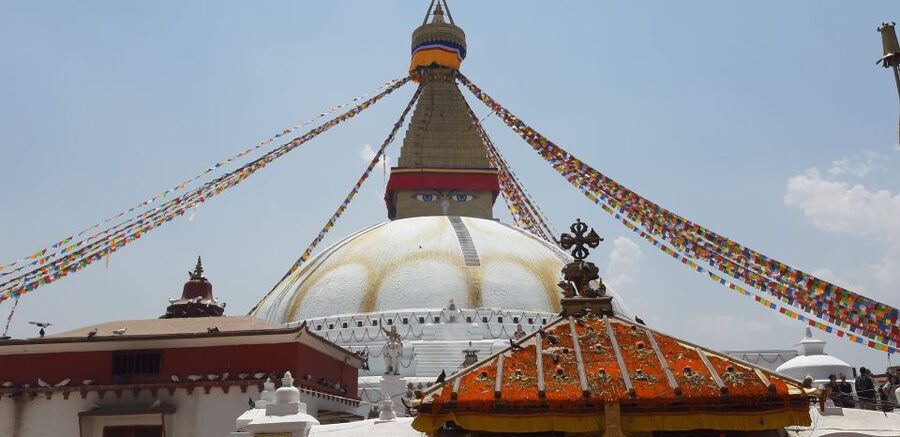
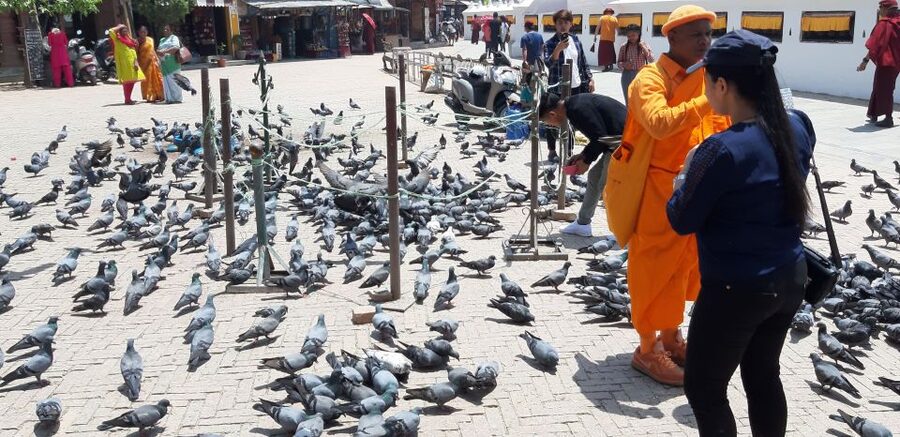
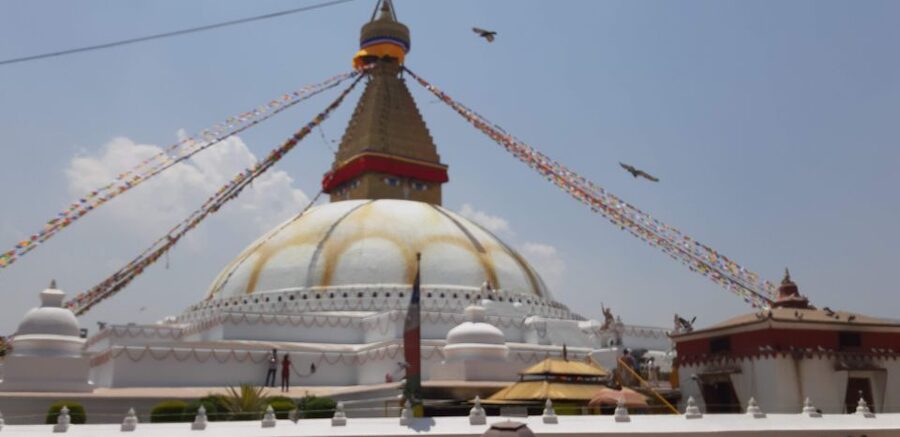
If Pashupatinath is about life along the river, Boudhanath Stupa is about devotion at huge scale. It’s described as one of the largest stupas in the world, and it’s the kind of monument that changes how you experience the skyline.
You’re looking at a stupa with an approximate 100m diameter and about 40m in height. That size isn’t a trivia flex—it affects your whole sense of space when you stand there. It’s big enough that you can feel the building as atmosphere, not just architecture.
Boudhanath is also holiest to both Hindus and Buddhists across the world. Like Pashupatinath, it’s a UNESCO World Heritage Site. The shared importance is part of what makes the place feel international, even when the city around it is very local.
What you’ll probably notice fast: people take their time here. The area around Boudhanath supports a slower pace, which is a welcome change when your day is otherwise packed.
Potential drawback: you’ll likely deal with crowds and close quarters, depending on the time and day. If you’re claustrophobic or dislike busy public spaces, you’ll want to manage your expectations going in.
Swayambhunath (Monkey Temple): The Hilltop Views Worth the Stairs
Swayambhunath, often called the Monkey Temple, sits on a hillock in the northwest part of the Kathmandu Valley. It’s famous enough that you’ll hear the nickname quickly after you arrive, and for good reason: monkeys live here and the area is set up accordingly.
The site is also tied to a legend about the Kathmandu Valley when it was once a lake more than 2,000 years ago. That story gives extra meaning to what you see, especially if you’re thinking about the valley as more than just a collection of monuments.
One of the best practical reasons to visit is the views. It’s widely described as one of the best places to take panoramic views over the valley. Even with haze or clouds, the viewpoint helps you understand how the valley is laid out.
My advice for the climb: bring your patience and good footing. The route can involve stairs and uneven surfaces. Also keep an eye on your belongings, because monkeys plus backpacks equals an unnecessary stress you can avoid with simple care.
Patan Durbar Square in Lalitpur: Carvings, Palaces, and Old City Soul
A well-planned Kathmandu Valley day isn’t complete without stepping into Patan (Lalitpur). Patan Durbar Square is the focal point, and it’s often described as spectacular for its concentration of ancient temples, palaces, and carved monuments.
Patan is considered the oldest of the valley’s three main cities. You’ll hear it referenced as Lalitpur, and the square reflects that identity through craftsmanship—especially the wood and stone carving that shows up across structures in the area.
This stop helps balance the day. Pashupatinath and Boudhanath focus on major religious meaning, while Patan Durbar Square helps you see the valley’s political and artistic side: how rulers built, how communities gathered, and how artisans left their marks.
Potential drawback: depending on timing, this can be one of the busiest places in the circuit. If you’re hoping for quiet wandering, keep your visit purpose-focused: pick a few spots to study, then move on before the crowd thickens.
How the Day Flows: Pacing for a 1-Day World Heritage Circuit
This tour is built as a 1-day experience with included hotel transfers and an English-speaking guide. That format is ideal when you want the highlights fast, but still with explanation.
The pacing is the trade-off. You’ll be moving between sites, so you won’t have hours at a single monument the way a slower itinerary would. For most people, that’s a good deal: you get the big signatures of the valley in one go and can decide what deserves a longer return later.
The benefit of having a guide is that you can steer the time. One review described a guide who was flexible about what the visitor wanted to do, which is exactly what you want from a day tour: not a rigid lecture, but a route that responds to your pace.
Also note the language support. Guides on these tours can speak English, Hindi, and Nepali. If you’re more comfortable in Hindi or Nepali, you may have more options to ask questions and follow along.
Price and Value: What $37 Gets You (and What Doesn’t)
At $37 per person for a day, the value comes from what’s included. You get hotel pickup and drop-off, a private car, an English-speaking guide, plus government tax and service charge.
The items not included are the ones you’d usually pay anyway: food and drinks, sightseeing entry fees, and personal expenses. That’s pretty standard, but it matters because those costs can add up if you’re not expecting them.
The best way to judge value is this: if this is your first full day in Kathmandu, the tour can save you time and navigation headaches. It’s cheaper than hiring a private driver for a full day with a guide, and it’s usually more organized than trying to stitch together routes on your own—especially when the sites are spread across the valley.
My budgeting tip: plan to spend separately on meals and any entry tickets you’re required to pay. Bring some cash so you aren’t hunting at the last second.
What to Bring (and What Not to Do) for These Sacred Stops
This is a religious and cultural day, so simple preparation makes it smoother.
Bring:
- Passport (or ID card, since both are listed)
- Comfortable shoes
- Water
Not allowed:
- Drones
- Alcohol and drugs
Also, be ready to walk. Even if the driving covers the distance between sites, these landmarks often involve steps, ramps, and uneven ground. Good shoes are not optional.
And if you want photos, be respectful. Sacred areas can have rules about where you can stand or how you can photograph. If your guide is explaining, follow their cues.
The Human Factor: Guides Like Ramesh, Sujan, and Kamal
In places like Kathmandu Valley, the difference between a good tour and a great one is often the person guiding it.
In the reviews tied to this experience, Ramesh, Sujan, and Kamal are mentioned as guides, with Tirtha repeatedly named as a punctual, professional driver. The themes are clear: explanations that land, clear communication, and a sense of safety.
One solo female visitor specifically highlighted feeling safe during the day. Another person called out seeing a cremation ceremony at Pashupatinath as extraordinary—those kinds of moments go differently when you have someone nearby who can set expectations and help you understand what you’re seeing.
My advice: treat your guide like a translator for the city. Ask questions while you’re there, not only at the end of the stop. That’s when the answers connect to what you’re actively watching.
Who This Tour Suits Best (and Who Might Want Something Else)
This day tour is a strong match if:
- You have only 1 day and want the main UNESCO-related hits
- You want hotel transfers and a driver so you don’t wrestle with logistics
- You like learning while you’re looking, not after the fact
- You’re visiting for the first time and want a confident orientation
It might be less ideal if:
- You hate crowds or want long quiet time at a single site
- You’re unable or unwilling to handle stairs and uneven walking
- You’d rather spend the day slowly with no schedule pressure
In that case, a slower itinerary across fewer sites could feel better.
Should You Book This Kathmandu Valley World Heritage Day Tour?
If you want a smart first day in Kathmandu Valley, I’d say yes. The combination of hotel pickup/drop-off, private car transport, and a guide who can explain what you’re seeing is exactly what turns UNESCO sites from confusing to meaningful.
It also works well for value: for $37, you’re paying for organization and local expertise, not just transportation. Just remember you’ll still need to budget for food, drinks, and entry fees.
Book it if your goal is: see the big four, understand the basics, and come away with enough context to explore deeper later. Skip it only if you’re set on a slow, private pace with fewer stops and more time per monument.
FAQ
FAQ
How long is the Kathmandu Valley World Heritage tour?
It lasts 1 day. Starting times depend on availability.
Which major sites are included in the tour?
You’ll visit Pashupatinath Temple, Boudhanath Stupa, and Swayambhunath (Monkey Temple). Patan Durbar Square is also part of the overall Kathmandu Valley UNESCO sites discussed for this experience.
Where can the tour pick you up?
Pickup is included, with options such as Hotel Nepalaya and areas in Kathmandu and Thamel. You meet your driver at your hotel at the tour start time.
What languages does the guide speak?
The live tour guide is available in English, Hindi, and Nepali.
What’s included in the $37 price, and what isn’t?
Included: hotel pickup and drop-off, private car, English-speaking guide, and government tax/service charge. Not included: food and drinks, sightseeing entry fees, and personal expenses.
Can I get a full refund if I cancel?
Yes. You can cancel up to 24 hours in advance for a full refund.