REVIEW · NEWCASTLE UPON TYNE
Lightfoot Tours: Historical Tour
Book on Viator →Operated by Lightfoot Tours · Bookable on Viator
Newcastle’s past, sorted in an hour. This Lightfoot Tours Historical Tour uses a tight route, with stops like Blackfriars Court and Grey’s Monument, to connect medieval roots to the Great Fire of 1854 and the industrial revolution.
I especially like the small-group feel (max 15) and how the guides—often Wes or Adam—turn landmarks into stories you can actually remember. One heads-up: it moves briskly, so if you’re hunting museum-grade detail or quiet time at each site, this format may feel a bit fast.
In This Review
- Key highlights to expect
- A 1 to 1.5 Hour Walking Route That Gets Newcastle Straight
- Why the Guide Story Style Makes This Worth $40
- Stop-by-Stop: Blackfriars Court and Newcastle’s Medieval Wall World
- Newcastle Central Station, Rail Growth, and Roman Clues
- St John the Baptist to Grainger Town, Bigg Market, and High Bridge
- Grey’s Monument: Grey Street, a Grand Theatre Feel, and Wild Topic Swerves
- The Route’s Extra Big Hits: Castle, Quayside, and Tyne Bridge
- Themes You’ll Hear About: Great Fire, Industrial Revolution, and Identity-Making Events
- Value for Money: What $40 Buys You Here
- Pace, Comfort, and Who This Tour Best Fits
- Where You Start and End (So Your Day Stays Easy)
- Should You Book Lightfoot Tours Historical Tour?
- FAQ
- How long is the Lightfoot Tours Historical Tour?
- What time does the tour start?
- Where do I meet the guide?
- Where does the tour end?
- What sights does the tour cover?
- Is the ticket mobile?
- How big is the group?
- Is there any guidance on fitness level?
- Are service animals allowed?
- Is free cancellation available?
Key highlights to expect
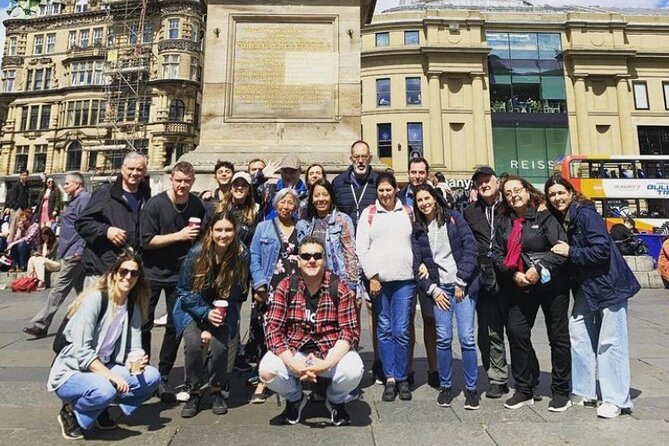
- Max 15 people means you get more real interaction than on big group buses
- Mobile ticket keeps things simple once you arrive
- Stop-based route hits major areas fast: Blackfriars Court, Central Station, Grainger Town, Grey Street
- Big themes in short time: medieval life, war, Roman origins, the Great Fire of 1854, industry, and city-identity events
- Ends near shops and restaurants at Grey’s Monument, so your afternoon is easy to plan
A 1 to 1.5 Hour Walking Route That Gets Newcastle Straight
This tour is built for people who want orientation without spending half a day Googling streets and dates. You’re looking at roughly 1 hour to 1.5 hours, and the pace is steady enough to cover several distinct parts of the city center in one go. Think of it as a guided path through Newcastle’s identity rather than a slow “stand and read” museum experience.
What makes it work is the route design. You start at Newcastle Newgate Street, then work your way through places tied to medieval religious life, Roman-era hints, the rise of rail and major institutions, and the later city shaping of trade and industry. Even if you only know Newcastle from the big landmarks, you’ll end with a mental map that makes the rest of your trip easier.
The best part for many first-timers is that you’re not stuck in one bubble. The guide’s commentary keeps shifting eras and themes, so you come away understanding how different periods overlap in the same streets.
Why the Guide Story Style Makes This Worth $40
At $40, you’re paying for time, walking direction, and—most importantly—someone to connect the dots. A self-guided stroll can get you from point A to point B, but it rarely explains why the city looks the way it does. This tour does.
The repeated praise centers on the guides’ energy and storytelling. Names like Wes and Adam show up in the experience feedback, and the common thread is that the host doesn’t just recite facts. They intersperse history with personal touches, and they’re comfortable answering questions and adjusting to your interests. One review even highlights that Wes tailored the information when the group was small, which is exactly what you want from a tour limited to 15.
If you’re the type who likes to understand the background behind what you see—why a building exists, what event changed the city, how one era leads to another—you’ll get your money’s worth here. It’s not about memorizing a timeline. It’s about building context fast.
Stop-by-Stop: Blackfriars Court and Newcastle’s Medieval Wall World
You begin at Blackfriars Court, where the focus is medieval and religious history—plus the city’s story in war. The stop is listed as about 20 minutes, so it’s long enough for a real narrative arc without dragging.
Why this stop matters: medieval Newcastle isn’t just a collection of old stones. It’s tied to protection, religion, and the strategic importance of the city. When you look at the area around the city walls, the guide’s job is to make those defenses feel practical. You’ll hear how the religious presence connected to life in the city, and how conflict shaped the urban layout over time.
Practical tip: this is also a good spot to ask clarifying questions. If you want the tour to focus more on war, medieval life, or how the city grew, you’ll get the most out of that conversation right early, before the route locks you into later themes.
Newcastle Central Station, Rail Growth, and Roman Clues
Next comes Newcastle Central Station, another 20-minute segment. Here the tour zooms in on construction of the station and the railway, plus St Mary’s Cathedral. The commentary also ties in Roman origins and social history—so you get both the long view and the modern infrastructure story.
This is one of the stops where the guided format really helps. Railways can feel like just background scenery, but the guide explains how the station and rail network altered how the city functioned and how people moved. Add in the Roman thread and you get a fuller picture: Newcastle as a place with layers, not a single era.
If you like history that affects daily life—how transportation, institutions, and population shaped the city—you’ll enjoy this part. It’s also a helpful bridge between the medieval setting of the first stop and the later city identity you’ll see as the walk continues.
St John the Baptist to Grainger Town, Bigg Market, and High Bridge
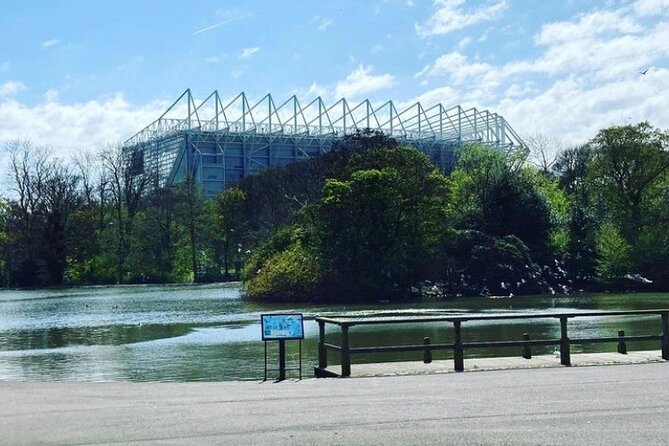
After the station, you move to the Church of St John the Baptist. This segment is also about 20 minutes, and it’s where the tour walks you through the feeling of Grainger Town.
You’re guided from St John the Baptist toward Bigg Market and High Bridge. Even though the tour doesn’t name every single building detail on paper, the stop is clearly set up to show how neighborhoods and streets form a connected story. Grainger Town, Bigg Market, and High Bridge are different vibes, so you’ll feel the shift as you go. That shift is the point: Newcastle’s identity isn’t one style. It’s a mix of working life, civic life, and the physical geography that shapes it.
One consideration: because you’re moving through busy central streets, this portion benefits from comfy shoes and a bit of patience. The guide can keep you oriented, but you’ll still want to stay aware of foot traffic as you walk.
Grey’s Monument: Grey Street, a Grand Theatre Feel, and Wild Topic Swerves
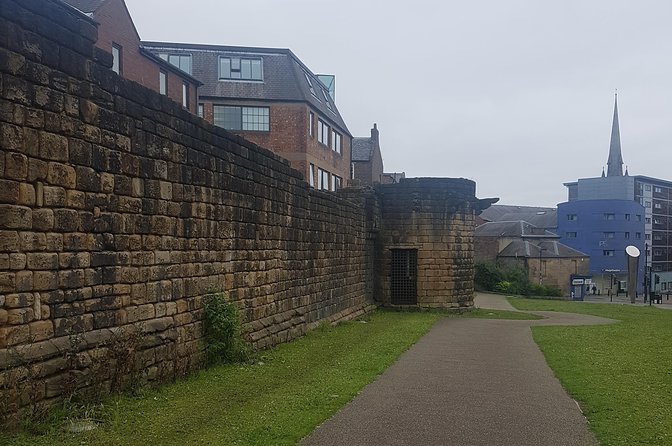
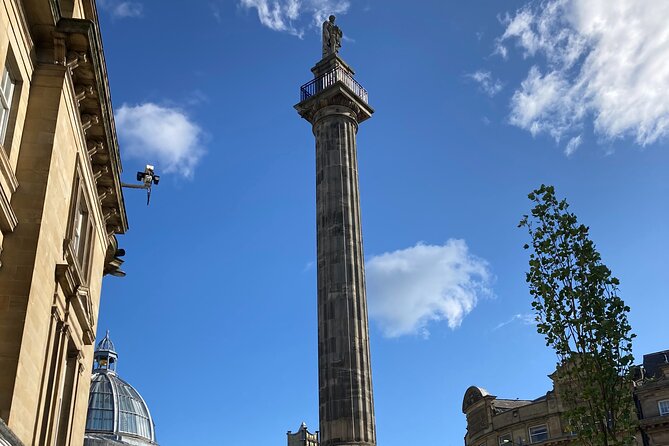
Your final main stop is Grey’s Monument on Grey Street, another 20-minute chunk. The tour description here is especially fun because it signals several kinds of stories at once: a grand theatre presence, important inventions, underground rivers, and even Vikings.
Yes—Vikings. That’s the kind of topic mix that makes this tour feel lively rather than stiff. The “underground rivers” angle is also a reminder that cities aren’t just above ground. Water, infrastructure, and geography shape what gets built—and what survives.
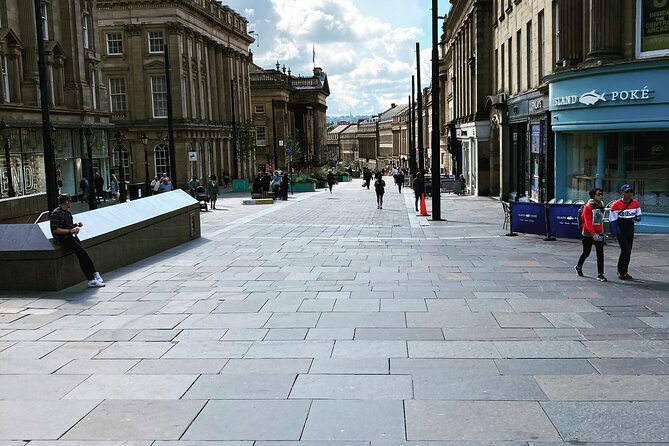
Grey Street is where the tour starts to land. By the time you’re standing near Grey’s Monument, you’ve seen enough eras to understand why this city developed a strong sense of self. The guide’s job here is to tie those threads together so you leave with a “why” behind the scenery, not just a list of sites.
The Route’s Extra Big Hits: Castle, Quayside, and Tyne Bridge
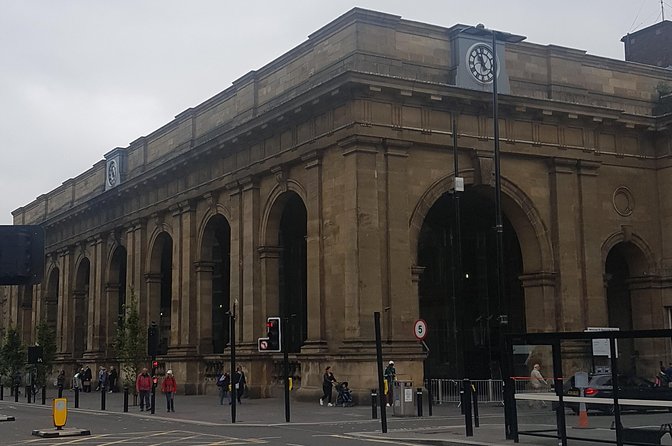
Even though the itinerary shows four main stop points, the tour’s feature list says it passes Newcastle Castle, the Quayside, and The Tyne Bridge. That matters because those are the postcard-and-pride landmarks many people want to see, even on a short walk.
So what should you expect? You’ll likely get viewpoints and context as you go—more like a guided “look here, notice this, remember that” tour than a deep wait-in-line experience. If your goal is to see the major sights while learning what makes them important, this is a good fit.
If your goal is purely visual, you’ll still benefit. A guide calling out connections can make those iconic views feel more meaningful, and it saves you from wandering around wondering what you’re looking at.
Themes You’ll Hear About: Great Fire, Industrial Revolution, and Identity-Making Events
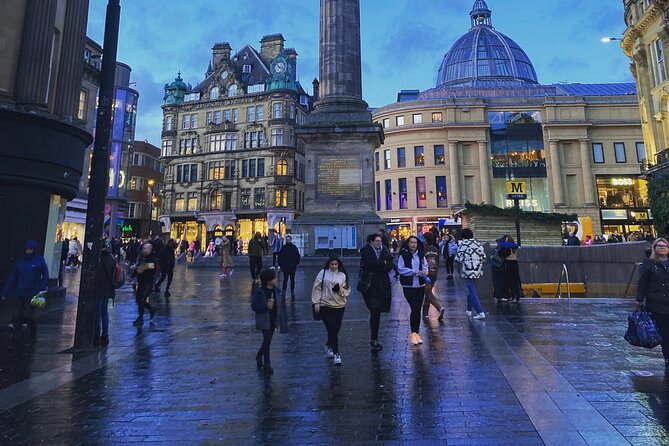
The tour’s overview is clear about the themes: medieval landmarks, the Great Fire of 1854, the industrial revolution, and events that helped shape Newcastle’s identity. These topics aren’t random history trivia—they connect directly to how the city grew, rebuilt, and rebranded itself through tough times.
Here’s how those themes usually play out along a route like this:
- Medieval and religious history helps explain early urban structure and community life.
- War ties into why fortifications and strategic spaces mattered.
- The Great Fire provides the “big change” moment that city history often hinges on—what gets rebuilt and how.
- The industrial revolution gives you the reason behind later infrastructure and the city’s economic pull.
- Identity-making events help you connect the past to what Newcastle still feels like today.
You won’t leave with a textbook. You’ll leave with a story framework. And that framework is what turns the rest of your self-guided wandering into something more satisfying.
Value for Money: What $40 Buys You Here
Let’s talk value, because pricing can be tricky on short tours. At $40 for about 1–1.5 hours, you’re paying for:
- A guided route through several distinct historic areas
- Context you likely wouldn’t find quickly on your own
- A small group size (max 15), which generally means fewer distractions and more chance to ask questions
The feedback also points to a key value driver: time. Several comments mention that the guide takes time to answer questions and keeps the tour engaging. That’s worth something. You’re not just buying movement; you’re buying explanation and interaction.
If you like to plan lightly and want someone else to handle the historical connections, this price feels fair. If you want a long, stop-everywhere pace or you’re hoping for museum entries and lengthy indoor time, you might find the short format doesn’t match your style.
Pace, Comfort, and Who This Tour Best Fits
The tour asks for moderate physical fitness, and it’s a walking experience. That doesn’t mean it’s intense hiking, but it does mean you should plan for uneven energy: you’re on your feet, moving between landmarks, and staying together.
What I’d suggest:
- Wear shoes you’d happily walk in for an hour without regret.
- Bring water if you tend to get thirsty while walking.
- If you’re sensitive to walking time, treat this as a history orientation session, then plan longer stops afterward on your own.
Who it suits best:
- First-time visitors who want quick context
- Anyone who likes story-based walking tours
- People who want to see big highlights without committing to an all-day plan
- Small groups and couples, especially since the maximum is 15
Where You Start and End (So Your Day Stays Easy)
You start at Newcastle Newgate Street, Newcastle upon Tyne NE1 5TG, and you begin at 10:00 am. The tour ends near Grey’s Monument at 150 Grainger St, Newcastle upon Tyne NE1 5AF.
That end location is practical. Grey’s Monument sits in the center of the city’s shopping and restaurant area, so you can roll straight into lunch or a final wander without needing transportation planning. For a short tour, that kind of convenience is a big deal.
Also, you get a mobile ticket, and confirmation is received at booking. In practice, that’s one less thing to manage when you’re navigating a new city.
Should You Book Lightfoot Tours Historical Tour?
I think you should book this tour if your goal is simple: get oriented fast and understand why Newcastle looks the way it does. The small-group cap of 15, the strong guide presence (with hosts like Wes and Adam mentioned in feedback), and the mix of eras—from medieval to the Great Fire of 1854 and the industrial revolution—make it a smart use of time.
I’d skip it if you want long stops, museum-level detail, or a slow pace with lots of independent exploring during the tour itself. This is a walking tour designed to keep momentum, not one designed for lingering.
If you’re planning a day in Newcastle and you want a high return on a short time block, this one is a solid bet.
FAQ
How long is the Lightfoot Tours Historical Tour?
The tour runs for about 1 hour to 1 hour 30 minutes.
What time does the tour start?
The start time is 10:00 am.
Where do I meet the guide?
You meet at Newcastle Newgate Street, Newcastle upon Tyne NE1 5TG, UK.
Where does the tour end?
The tour ends at Grey’s Monument, 150 Grainger St, Newcastle upon Tyne NE1 5AF, UK.
What sights does the tour cover?
Along the route, you pass Newcastle Castle, the Quayside, and The Tyne Bridge, and the stops include Blackfriars Court, Newcastle Central Station, and the Church of St John the Baptist, plus Grey’s Monument.
Is the ticket mobile?
Yes. You receive a mobile ticket.
How big is the group?
The tour has a maximum of 15 travelers.
Is there any guidance on fitness level?
Yes. It recommends moderate physical fitness.
Are service animals allowed?
Yes. Service animals are allowed.
Is free cancellation available?
Yes. You can cancel for a full refund up to 24 hours before the experience start time. If you cancel less than 24 hours before, there’s no refund.