REVIEW · NIKKO
Magnificent Nikko World Heritage and Breathtaking Scenic Beauty in one day
Book on Viator →Operated by Fulfilling Inc. · Bookable on Viator
Nikko in one day is a real sprint. You’ll hit top sights like Shinkyo Bridge and Toshogu Shrine with a guide, then ride up toward the Kegon Falls/Lake Chuzenjiko views. I like that hotel pickup and drop-off save you from Tokyo logistics, and I like the private, customizable pace so your group can actually enjoy the stops. One catch: most entrance fees and add-ons aren’t included, and this tour relies heavily on public trains and buses.
You’ll start early from Tokyo, then move through Nikko in a guided rhythm that feels efficient rather than rushed for the day length. The tour is designed for “high impact, low planning,” with a mobile ticket and a guide who helps with transit. Just expect a full day out—about 12 hours—and plan your budget for tickets on top of the tour price.
In This Review
- Key highlights at a glance
- From Tokyo To Nikko: Why This One-Day Route Works
- Price and What You’ll Pay On Top (Budget Reality Check)
- The 7:30 Start: Hotel Pickup and a Smooth Start Into the Day
- Shinkyo Bridge: Vermilion Views Over the Daiya River
- Toshogu Shrine: The See No Evil, Speak No Evil, Hear No Evil Moments
- Akechidaira Observation Area: Ropeway Ride and the Kegon Overlook
- Kegon Falls: One of Japan’s Three Most Beautiful Falls
- Private and Customizable, Yet Built Around Public Transport
- Lunch, Pace, and What You Should Plan For
- Who This Tour Fits Best (And Who Might Prefer Another Day)
- Should You Book This Nikko World Heritage Day Trip?
- FAQ
- How long is the Nikko one-day tour?
- What time does the tour start?
- Is hotel pickup and drop-off included?
- Is this tour private?
- Are admission tickets included?
- Are transportation costs included for JR Pass holders?
- Is there a cancellation refund option?
Key highlights at a glance
- Hotel pickup and drop-off in Tokyo so you don’t wrestle with trains before sunrise
- Private, only-your-group format with a guide who can tailor the flow
- UNESCO-focused Nikko route built around Shinkyo Bridge and Toshogu Shrine
- Kegon Falls viewpoint access via the observation area route
- Mobile ticket included for smoother check-in
- Public transport is a major part of the day, so build your schedule around it
From Tokyo To Nikko: Why This One-Day Route Works
If you want the big Nikko hits without turning your whole trip into transportation homework, this format makes sense. You leave Tokyo early, then spend the day in and around the key UNESCO area and the scenic waterfall zone.
The value is in the structure. You get an English-speaking guide, private attention, and help with train and bus segments, which can feel like a hassle when you’re doing it alone. For many visitors, that’s the whole point: you trade planning time for on-the-ground time.
This is also a smart option if you already know you’ll spend at least a couple days in the Tokyo area. A one-day Nikko day trip gives you a cultural and nature contrast without burning more hotel nights.
You can also read our reviews of more historical tours in Nikko

Price and What You’ll Pay On Top (Budget Reality Check)
The tour price is $325.18 per person, and it includes things like private guiding, hotel pickup/drop-off, and the guide’s travel/lunch expenses. It also includes mobile ticket access, which reduces last-minute friction.
But entrance fees and some transit-related costs are not included. Based on the listed add-ons, you’ll want to plan for:
- Shinkyo Bridge admission: ¥7,400 per person
- Kegon Falls elevator: ¥550 per person
- Toshogu Shrine admission: ¥1,300 per person
- For JR Pass holders: public transportation expense ¥2,000 per person
That Shinkyo Bridge fee is the one that can surprise people, so I’d treat this as a “base tour + ticket budget” day. If you’re traveling with a JR Pass, also watch how the day’s transport cost is handled—there’s a specific JR Pass-related public transport expense listed.
In plain terms: the guide, logistics help, and private format are what you’re paying for. The “site entry” part is mostly separate, so your best value comes when you arrive ready to pay those on the spot.
The 7:30 Start: Hotel Pickup and a Smooth Start Into the Day
Meeting time is 7:30 am, with Tokyo hotel pickup and drop-off included. That early start matters because Nikko gets popular, and the whole day is built around reaching each spot with enough time to actually enjoy it.
Pickup included sounds simple, but it’s a real quality-of-life upgrade. If you’ve ever tried to route yourself out of Tokyo at morning rush hours, you know how much energy that steals from the day you’re trying to enjoy.
You should also think about timing in a practical way: the day runs roughly 12 hours, and the listed stop times total about 4.5 hours of sight time, with travel and waiting filling the rest. So yes, it’s a long day. The trade is that you see a lot without changing plans every hour.
Shinkyo Bridge: Vermilion Views Over the Daiya River
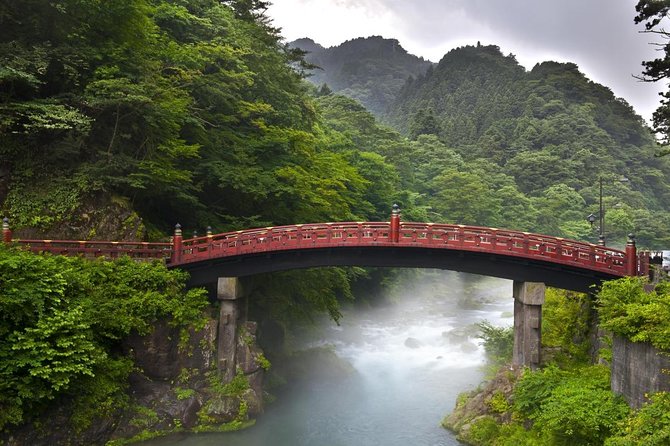
Your first stop is Shinkyo Bridge, a vermilion-colored bridge with a graceful curve over the Daiya River, backed by mountain greenery. It’s one of those spots where you quickly understand why it’s famous: the color, the shape, and the river placement all work together.
This stop is about 30 minutes, and the admission ticket is not included. Because it’s relatively short, I’d keep your priorities tight: get your photos, then take a few minutes to just look. The view changes with the light and how water is moving, and 30 minutes can vanish fast if you’re off chasing the perfect angle.
A practical tip: if you’re sensitive to crowds, aim to arrive ready to move. You can always slow down after you see what the flow looks like, but don’t spend the first 10 minutes figuring out where to stand.
Toshogu Shrine: The See No Evil, Speak No Evil, Hear No Evil Moments
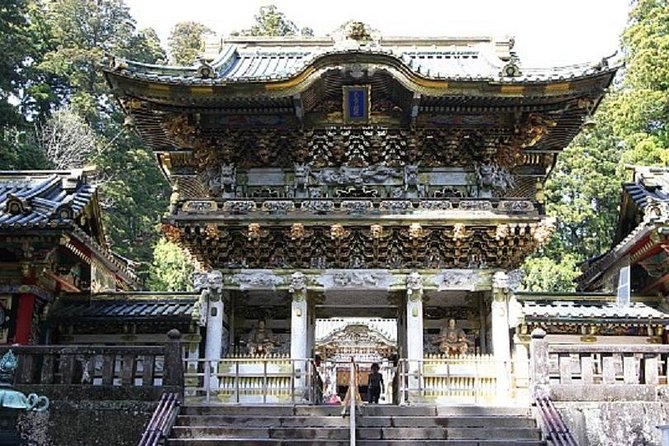
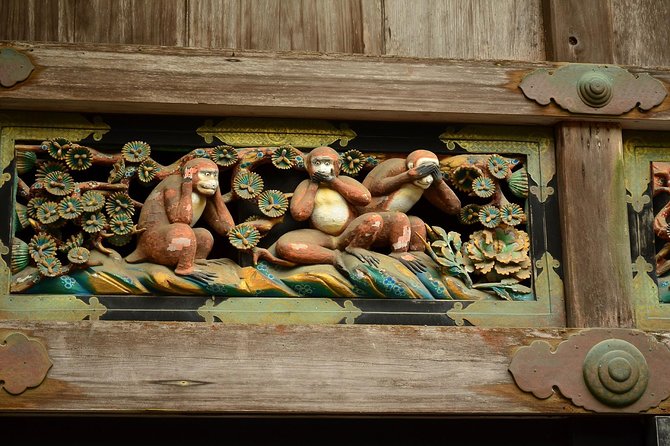
Next comes Nikko Tosho-gu, where you’ll spot the famous “see no evil, speak no evil, hear no evil” set of sculptures. It’s a strong anchor point for the day, because Toshogu is not just scenery—it’s a cultural experience with details you can’t rush.
You have about 1 hour here, and the admission ticket is not included. One hour is usually enough to walk the grounds at a comfortable pace and take in the main features. If you like ornamentation and symbolism, you’ll likely want to linger longer than the time allows—so use the guide’s pacing to avoid feeling frantic.
This is also where the UNESCO value becomes real. Nikko’s heritage isn’t only about what you see, but how the site is arranged and interpreted as you move through it. A guide can help you avoid spending that hour just trying to figure out what you’re looking at.
Akechidaira Observation Area: Ropeway Ride and the Kegon Overlook
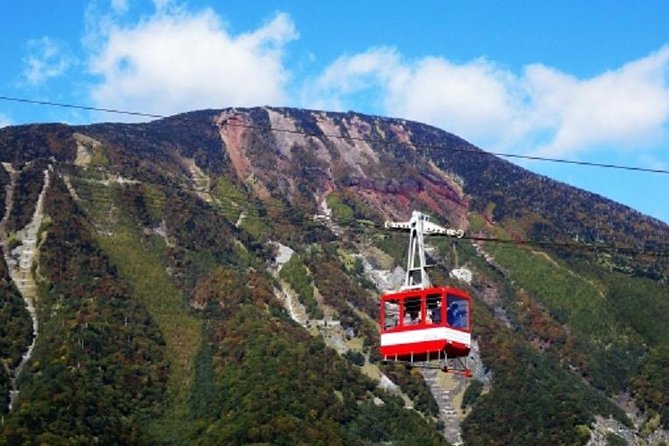
After Toshogu, you head to the Akechidaira Observation Area. Here, the ropeway carries visitors up to the observatory for views over Kegon Waterfall and Lake Chuzenjiko. The idea is simple: you’re buying a higher vantage point so the waterfall zone makes instant sense.
You get about 1 hour, and admission is listed as not included. The observation stop is more about perspective than wandering. Take time to locate the waterfall and lake in your mind—once you see how they relate, the later Kegon experience clicks better.
If the weather is hazy, you might not get the crispest panorama, but you’ll still benefit from the layout view. And if it’s clear, this is one of the best parts of the day for photos that feel like more than a postcard.
Kegon Falls: One of Japan’s Three Most Beautiful Falls
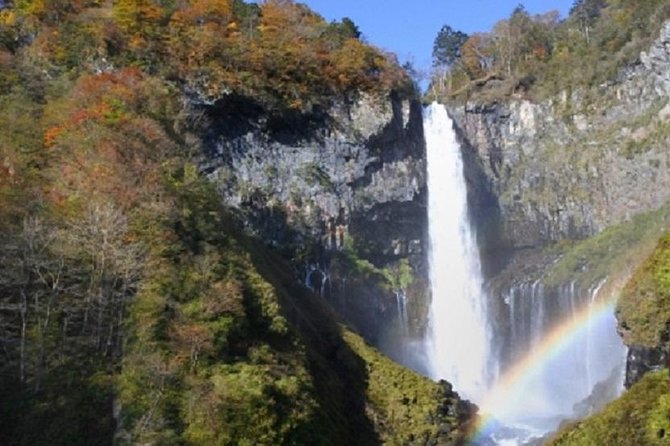
Then it’s time for Kegon Falls, listed as one of Japan’s three most beautiful falls. You’ll have about 1 hour at the falls area, and the Kegon Falls elevator fee is not included (¥550 per person).
This stop is your payoff for the earlier uphill viewpoints. Up close, the falls deliver that scale and movement that you can’t fully understand from afar. One hour gives you time to see the falls from a couple angles and still keep the day moving.
The main consideration here is cost and time inside the site. If you plan to use the elevator, remember the fee is separate. If you don’t, you’ll still see the falls, but you may sacrifice some of the closest viewpoints.
Private and Customizable, Yet Built Around Public Transport
This is a private tour—only your group participates. It’s also described as customizable, so you can ask the guide to adjust the pace a bit based on your interests.
Here’s the key practical reality: the day is built on train and bus travel with the guide’s help. That can be a deal-breaker for some people if they were expecting a company vehicle for every segment. One clear theme in how this type of tour can feel is that you’re riding scheduled public transport while your guide handles the navigation.
To make it work well, show up ready for:
- more time spent on schedules and transfers than you’d have with private car service
- a day where you’re moving between distinct geographic zones
- the need to keep your group together during transit segments
The upside is that you get a more local-feeling route out of Tokyo, and the guide’s job becomes coordination rather than just “driving you around.”
Lunch, Pace, and What You Should Plan For
The tour includes the guide’s lunch expense, but there’s no mention of your lunch being included. I’d plan to buy your own food and keep small snack supplies or cash handy in case timing gets tight.
Also, because you have a sequence of stops—bridge, shrine, ropeway overlook, then falls—you’ll want to conserve energy. Wear comfortable shoes. Bring something for changing conditions (cooler higher elevation can happen even if Tokyo is warm).
The schedule is long enough that it helps to travel light. If you’re stuck carrying a big bag all day, you’ll feel it more than you expect.
Who This Tour Fits Best (And Who Might Prefer Another Day)
This day trip is a good match if you:
- want UNESCO Nikko highlights in one go
- value a private guide for clarity and pacing
- like structured sightseeing more than self-planning
It’s less ideal if you:
- hate public transport transfers and want a fully chartered day
- want “tickets included” pricing with no add-ons
- plan to spend long hours at every stop without compressing the day
If you’re the type who likes to linger and read every plaque, you might feel the time limits. But if you’re aiming for the core experience—Shinkyo Bridge, Toshogu Shrine, and the Kegon area—this route is built for that.
Should You Book This Nikko World Heritage Day Trip?
I’d book it if you want a guided, private Nikko day that saves you from Tokyo-to-Nikko logistics and focuses on the main sights. The hotel pickup/drop-off is a big quality boost, and the combination of shrine culture plus waterfall-area views is the kind of mix that makes a one-day trip feel worth it.
I’d pause if you’re budget-sensitive to entrance fees, or if you strongly prefer a tour vehicle instead of scheduled trains and buses. In this case, make sure you’re comfortable with the reality that you’ll be paying site fees and moving mostly by public transit.
If you’re ready for a full day and you want maximum Nikko per hour, this one has the right shape.
FAQ
How long is the Nikko one-day tour?
It runs for about 12 hours.
What time does the tour start?
The start time is 7:30 am.
Is hotel pickup and drop-off included?
Yes. Tokyo hotel pickup and drop-off are included.
Is this tour private?
Yes. It’s private, and only your group will participate.
Are admission tickets included?
No. Shinkyo Bridge, Toshogu Shrine, and the Kegon Falls elevator are listed as not included.
Are transportation costs included for JR Pass holders?
JR Pass holders have a public transportation expense listed as ¥2,000 per person.
Is there a cancellation refund option?
No. The experience is non-refundable and cannot be changed for any reason.