REVIEW · MIAMI
Miami Cocaine Capital in the 80’s- History tour-
Book on Viator →Operated by Boatmiamiboat -Boat rental tours in Miami- · Bookable on Viator
80s Miami has a dark trail. On this 1-hour convertible Jeep ride, you’ll get skyline-and-history context fast, with turns through Coconut Grove that make the story feel close-up. I especially like how the drive helps you spot the connections between money, buildings, and backroom deals.
I also like that the tour points you to specific, recognizable places—especially Vizcaya Museum and Gardens and the Coconut Grove area tied to the Mutiny Hotel. The guide keeps the tone grounded and adds fun, concrete details instead of just vague name-dropping.
One possible drawback: it’s a tight one-hour loop, and there’s no bathroom stop listed—so plan before you meet up.
In This Review
- Key things to know before you go
- Convertible Jeep Views Over Miami and Coconut Grove
- Why the Tour Frames Money, Buildings, and the Drug War Together
- Vizcaya Museum and Gardens: European-Style Beauty With a 1971 Heist Story
- Coconut Grove Called The Grove: Marinas, Luxury Homes, and Peacocks
- Marinas and Speed: How Boats Fit the 80s Distribution Picture
- Miami City Hall’s Pan Am Flying-Boat Past
- The Mutiny Hotel at Sailboat Bay: The Headline Stop
- Price and Value: What $75 Gets Your Small Group
- Logistics That Actually Affect Your Day
- Who This Tour Fits Best
- Should You Book This Tour?
- FAQ
- How long is the Miami Cocaine Capital in the 80s History tour?
- How much does the tour cost?
- Is it a private tour?
- What vehicle do you ride in?
- What’s included?
- Is there a bathroom during the tour?
- Where do you meet, and where does it end?
- What happens if the weather is bad or you need to cancel?
Key things to know before you go
- Convertible Jeep ride in small groups (up to 4 per car) makes the history easier to follow and photograph
- Numbers get tied to place, including how real estate and drug money fed Miami’s local economy
- Vizcaya’s opulence comes with a real 1971 theft story, not just pretty architecture
- Marinas explain distribution by speed, including how fast boats mattered against Coast Guard pursuit
- Miami City Hall’s odd origin: a Pan Am flying-boat terminal turned into city government
- Mutiny Hotel at Sailboat Bay is the headline stop, tied to celebrities, cash runs, and Dom Pérignon
Convertible Jeep Views Over Miami and Coconut Grove
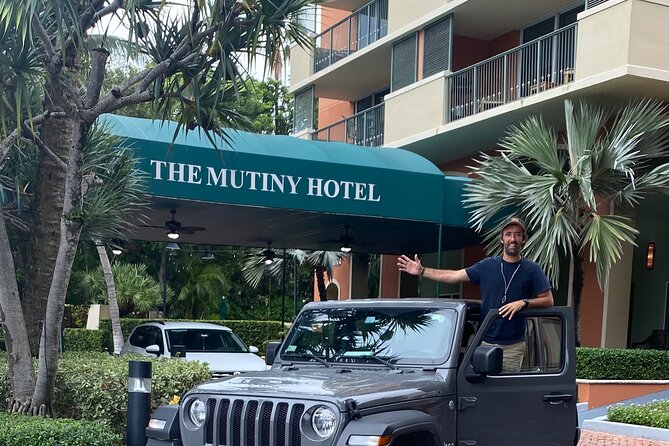
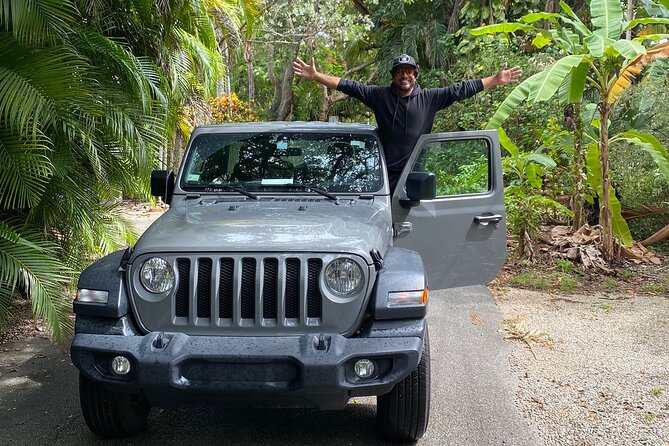
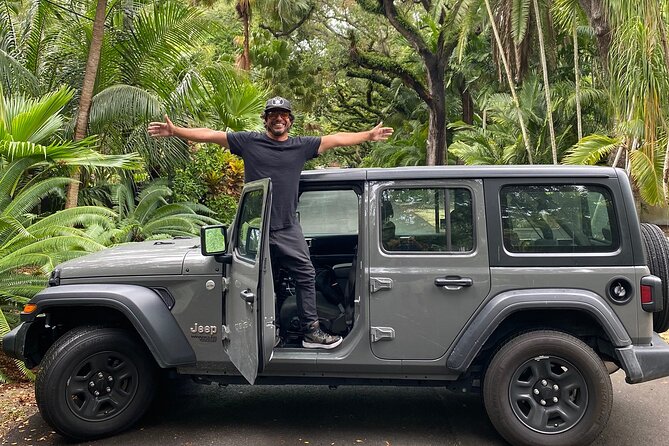
This tour is built for motion. You’ll start at David T. Kennedy Park (2400 S Bayshore Dr) and head out in a convertible Jeep with a driver-guide. Expect a calm “drive-and-learn” pace that still feels like sightseeing—short stops, fast orientation, and plenty of chances to look out across Miami.
The small-group setup matters here. Because it’s designed for groups up to 4 per car, you’re not swallowed by a crowd. You can hear the guide without shouting, and the route stays personal enough that the story doesn’t feel like a lecture from the back row.
Also, you get a small comfort boost that’s easy to overlook until you’re on the move: bottled water, plus Bluetooth so you can play your own music. It’s a nice touch for a tour that covers a heavy subject.
You can also read our reviews of more historical tours in Miami
Why the Tour Frames Money, Buildings, and the Drug War Together
The core idea is simple: Miami’s 1980s cocaine power didn’t float in a vacuum. It moved through a city that already had big-money industries—especially real estate.
Early in the ride, you’ll take in the Miami skyline and get the relationship between real estate and drug money explained through local numbers. Real estate was estimated to generate $9 billion a year, and the drug trade was estimated to bring in $12 billion a year into the local economy. That’s the tour’s baseline: money from the drug trade spread into the city’s most visible, money-making sector.
For me, that framing is what makes the ride more useful than a simple “crime landmarks” walk. You’re not only learning about people; you’re learning how money reshapes neighborhoods and priorities. When you later see Coconut Grove’s luxury feel, it clicks into place.
Vizcaya Museum and Gardens: European-Style Beauty With a 1971 Heist Story
On the way toward Coconut Grove, you’ll pass Vizcaya Museum and Gardens. It’s described as a lasting, gorgeous European-style structure overlooking Biscayne Bay, and the tour uses it for a specific reason: when money and prestige cluster, theft follows.
Here’s one of the most concrete stories you’ll hear. In 1971, three residents from New York raided Vizcaya and stole about $1.5 million in art, jewelry, and collectibles. The robbers were found and caught in New York City three days later, but only a small fraction of the stolen items was recovered.
That stop is a great reminder that Miami’s flash wasn’t only tied to the drug war. Luxury drew attention—criminal attention, too. You’ll look at the architecture differently after hearing how it was targeted, even if you’re only seeing it from the road.
Coconut Grove Called The Grove: Marinas, Luxury Homes, and Peacocks
Coconut Grove is the tour’s main neighborhood. Locals call it The Grove, and the tour leans into that vibe: it’s described as one of the most energetic and inviting parts of South Florida, with elegant hotels and the kind of waterfront setting that makes people want to linger.
You’ll drive through the luxury district and get a glimpse of why it became a hot spot during the 1980s. The story ties the area’s marinas and nearby properties to the people who wanted privacy, easy access, and high visibility at the same time—Miami style.
And yes, the peacocks are part of the experience. The tour mentions peacocks that roam freely in the area. If you’re lucky with timing, you might spot them as you pass along—those flashy tails become a weirdly perfect counterpoint to the darker themes of the tour.
Marinas and Speed: How Boats Fit the 80s Distribution Picture
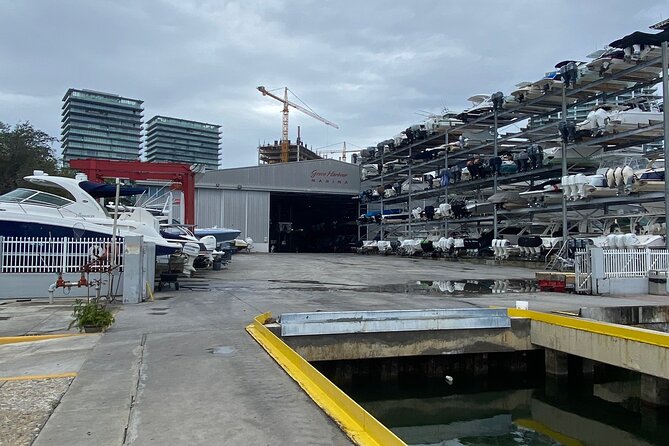
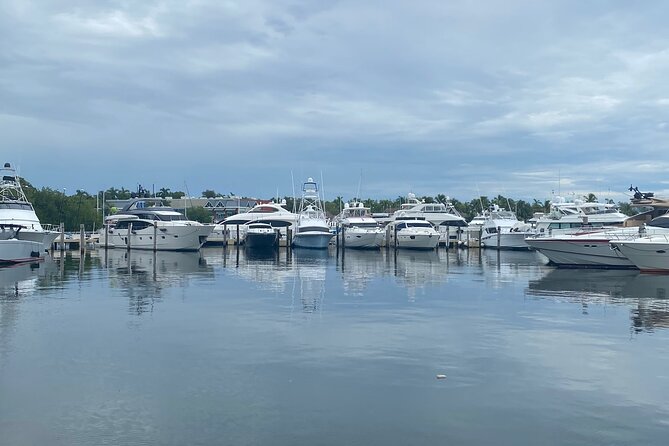
One of the most practical sections of the tour is the marina talk. You’ll pass by marinas around Coconut Grove and learn about distribution channels used by drug kingpins in the 1980s.
What I like here is that the explanation connects past tactics to this specific era. The tour frames the boat-running strategy as something with roots going back to Prohibition—using boats illegally—and then explains how drug dealers used faster craft to escape U.S. Coast Guard and DEA agents. The key detail is speed: typical patrol boats were unable to catch the higher-speed runners.
For you, this is more than a “boats were used” fact. It helps you understand how geography and technology shape crime. Miami’s waterfront isn’t just scenery; it changes what’s possible and what’s risky. If you’ve ever wondered why the waterfront matters so much in Miami stories, this is where it gets answered.
Miami City Hall’s Pan Am Flying-Boat Past
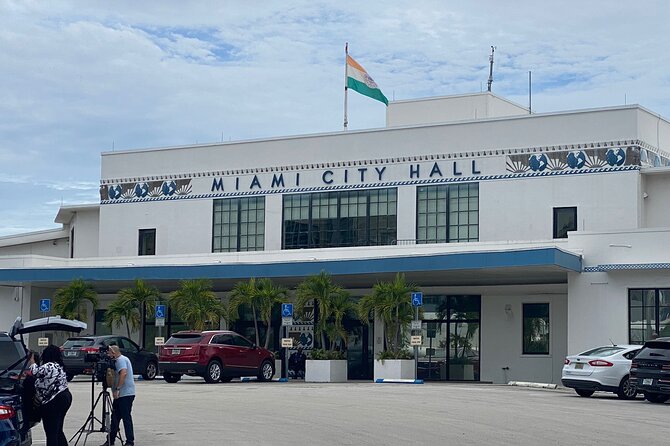
On the way to the Mutiny, you’ll pass by Miami City Hall, and that stop comes with a twist. The building we see today was originally built in 1934 by Pan American Airlines as a worldwide flying-boat terminal.
Then the timeline gets even more Miami. The air terminal was sold to the city in 1946. After a stint as Jackie Heller’s Dinner Key Terrace restaurant, the city converted it into City Hall in 1954.
This part of the tour works because it expands the frame. You’re not only hearing about the drug war; you’re seeing how Miami has repeatedly reinvented major structures. That matters in a tour like this because it shows the city’s pattern: businesses come and go, but the prime waterfront and prime traffic routes keep getting reused.
The Mutiny Hotel at Sailboat Bay: The Headline Stop
The last stop is the one the tour is known for: the Mutiny Hotel in Coconut Grove, tied to the cocaine heyday.
You’ll hear why it was described as a mecca for 1980s cocaine kingpins. The tour also emphasizes how lucrative the hotel was—perennially overbooked—and how cash moved. The description includes the idea of armored trucks leaving with sacks of profits.
That’s also where the tour spells out the cast size. It mentions celebs, crooked pols, spies, informants, and cops—good and bad—being part of the mix. The point isn’t to sensationalize every character; it’s to show how many different types of people can orbit the same high-money spot.
And the tour adds one of those striking commercial details that sticks: the Mutiny was selling more bottles of Dom Pérignon than any other establishment on the planet. In a short tour, that kind of specific comparison gives you something memorable to hold onto—something that turns the general idea of excess into a concrete image.
Price and Value: What $75 Gets Your Small Group
The price is $75 per group, up to 4 people. That’s important because you’re not paying per person for a public bus style ride. When you split $75 across a group, the cost per person gets much easier to digest.
The tour duration is about 1 hour, and it’s a private experience in the sense that only your group participates. You’ll also get a mobile ticket and bottled water, plus the Bluetooth option for your own soundtrack.
Is it “worth it” if you want deep, slow museum-style storytelling? Not really—that’s not the product. But if you want a tight, high-impact orientation to a specific era of Miami, this is good value. The guide isn’t trying to cover all of Miami; they’re focusing on how one neighborhood and a few key landmarks connect to a particular slice of the early 1980s.
Logistics That Actually Affect Your Day
This tour is typically booked about 16 days in advance, so it’s a good idea to grab your time slot rather than waiting. You’ll receive confirmation at booking, and the meeting point is David T. Kennedy Park.
It also runs near public transportation, which helps if you’re not driving. And the experience is described as suitable for most travelers, so it’s not presented as requiring special fitness.
The comfort issue is straightforward: the duration is short, but it’s open-air in a convertible Jeep. That means you’ll want to dress for sun or light breeze. If weather looks shaky, keep an eye on updates—this experience requires good weather, and if it’s canceled for poor weather you’ll be offered a different date or a full refund.
Who This Tour Fits Best
This is for you if you like:
- short, focused tours that still connect the dots
- Miami neighborhoods you can recognize afterward
- learning through place-based stories, not just facts on a screen
It may not be the best fit if you want a strictly family-friendly, lighthearted tour. This is built around the 1980s drug war and its impact on Miami, including serious criminal and corrupt elements.
Should You Book This Tour?
I think you should book if you’re curious about how Miami’s waterfront glamour and business money connected to the early 1980s cocaine boom. The convertible Jeep format makes the route easy to enjoy, and the specific landmark details—Vizcaya’s 1971 heist, the marina speed-run explanation, and City Hall’s Pan Am origins—give you more than just headlines.
If you’re sensitive to heavy crime themes or you hate the idea of a tight one-hour schedule with no bathroom stop, then you might want to choose a different style of tour.
FAQ
How long is the Miami Cocaine Capital in the 80s History tour?
The tour lasts about 1 hour.
How much does the tour cost?
It costs $75 per group (up to 4 people).
Is it a private tour?
Yes. It’s a private tour/activity, and only your group participates.
What vehicle do you ride in?
You ride in a convertible Jeep.
What’s included?
Included features are Bluetooth to play your own music, a driver guide, the convertible Jeep, bottled water, and a small group size (maximum 4 guests per car).
Is there a bathroom during the tour?
No bathroom is listed as included.
Where do you meet, and where does it end?
You meet at David T. Kennedy Park, 2400 S Bayshore Dr, Miami, FL 33133, and it ends back at the same meeting point.
What happens if the weather is bad or you need to cancel?
The experience requires good weather. If canceled due to poor weather, you’ll be offered a different date or a full refund. For cancellation, it offers free cancellation: cancel up to 24 hours in advance for a full refund.