REVIEW · NIMES
Nîmes – Spend a day like an ancient Roman
Book on GetYourGuide →Operated by DIDASKO · Bookable on GetYourGuide
Roman Nîmes in just 90 minutes.
If you like history that feels lived-in, this short walk hits the sweet spot. You’re guided from a 2,000-year-old watchtower down through sacred gardens, puzzling ruins, one of the best-preserved Roman temples, and an amphitheater that has seen centuries of daily life.
I love the optimized route and how quickly it builds a 1st-century AD feel. You’ll also like the passionate French guide style, with clear storytelling and plenty of small, memorable anecdotes.
One thing to consider: it’s a walking tour in strong Nîmes sun, so you’ll want to plan for heat and bring water—especially in summer.
In This Review
- Key things that make this Roman day work
- A 90-Minute Roman Walk from Tour Magne to the Arènes
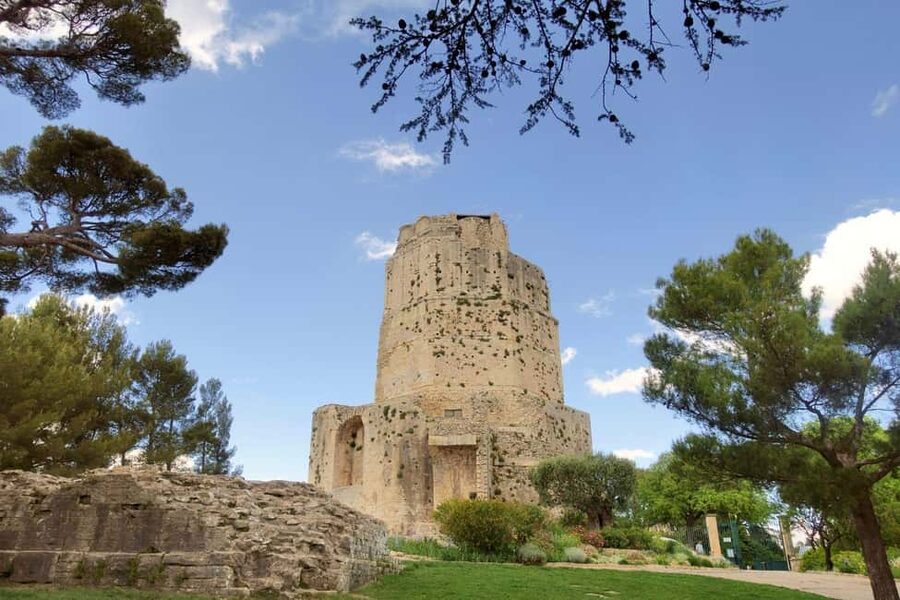
- Tour Magne: the 2,000-year-old watchtower that sets the tone
- Jardin de la Fontaine: a peaceful break with a sacred past
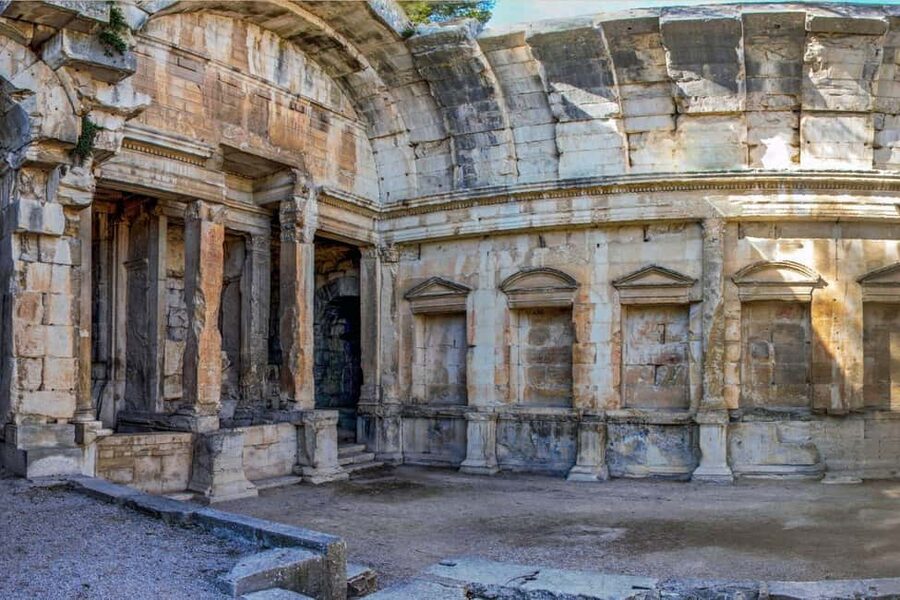
- Temple of Diana: ruins with unanswered questions
- Maison Carrée: Augustus’ sons and a photo spot you’ll actually use
- Arènes de Nîmes: the amphitheater finale without the fear-factor
- Price and value: is $17 worth 90 minutes of Roman stops?
- Guide style: why the stories stick
- Who should book this tour
- A few practical tips so your day feels easy
- Should you book Spend a day like an ancient Roman?
- FAQ
- How long is the tour?
- Where do I meet the guide?
- What sites are included in the route?
- Is the tour in French?
- What should I bring?
- How much does it cost?
- Is there free cancellation?
- Can I reserve without paying right away?
Key things that make this Roman day work
- Tour Magne first: start with the ancient watchtower overlooking the city, so the rest of the walk makes sense fast
- Jardin de la Fontaine’s sacred mood: you’ll hear how locals once prayed to Nemausus, even though the rituals are gone
- Temple of Diana mystery: historians disagree on what it was, and your guide turns that uncertainty into a fun story
- Maison Carrée stop built for photos: a famous, well-preserved temple you can frame instantly
- Arènes de Nîmes finale: no wild animals, just an amphitheater that explains centuries of fighting and everyday events
- Tight 90-minute pacing: a short tour that still feels like you earned your Roman knowledge
A 90-Minute Roman Walk from Tour Magne to the Arènes
This is the kind of tour you do when you want Roman Nîmes without losing an entire day. At 90 minutes, the pace is brisk—but not frantic. The route is organized so each stop answers a question the one before it raised. You don’t just look at stones. You get a sense of what a Nemausus resident might have done day to day in the 1st century AD.
The value is also real. For about $17 per person, you’re paying for a local guide who can connect the dots between sites that can look separate on your own. If your schedule is tight, that guided structure is the difference between seeing monuments and understanding a city.
There’s a big practical tip here: bring water. Nîmes sun can be generous, and you’ll spend part of the day in open areas. Even in winter, it’s smart to be prepared so you can stay focused instead of rushing to cool off.
You can also read our reviews of more tours and experiences in Nimes.
Tour Magne: the 2,000-year-old watchtower that sets the tone
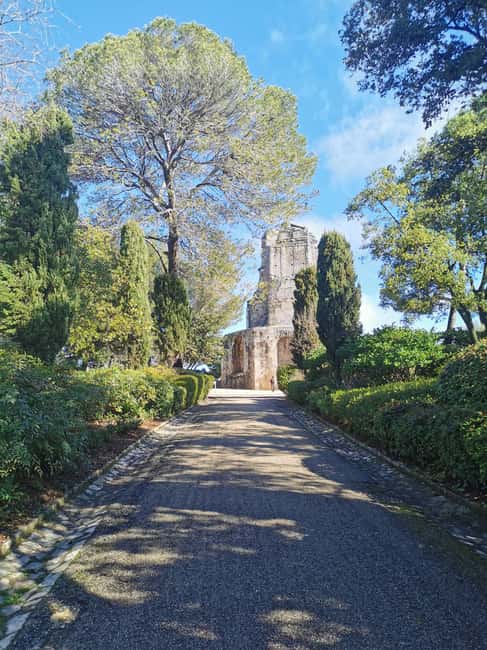
The tour starts at the foot of Tour Magne, the ancient watchtower that has overlooked the city for over 2,000 years. Starting here matters more than it sounds. You get the skyline context early, so when you later walk down toward the monuments, you understand the direction and the relationship between places.
Tour Magne is also a natural “memory anchor.” Once you’ve seen the tower, you’ll mentally tag the rest of Nîmes as part of the same Roman system—watch, control, worship, civic life. Your guide builds that sense of a functioning city, not just a collection of ruins.
Practical note: access can involve more effort than you expect. One past participant even joked about the funiculaire for reaching the tower area, which is a hint that there’s an alternate way up for people who want to reduce the strain. If you’re not sure what route you’ll take on the day, ask your guide at the start so you can plan comfortably.
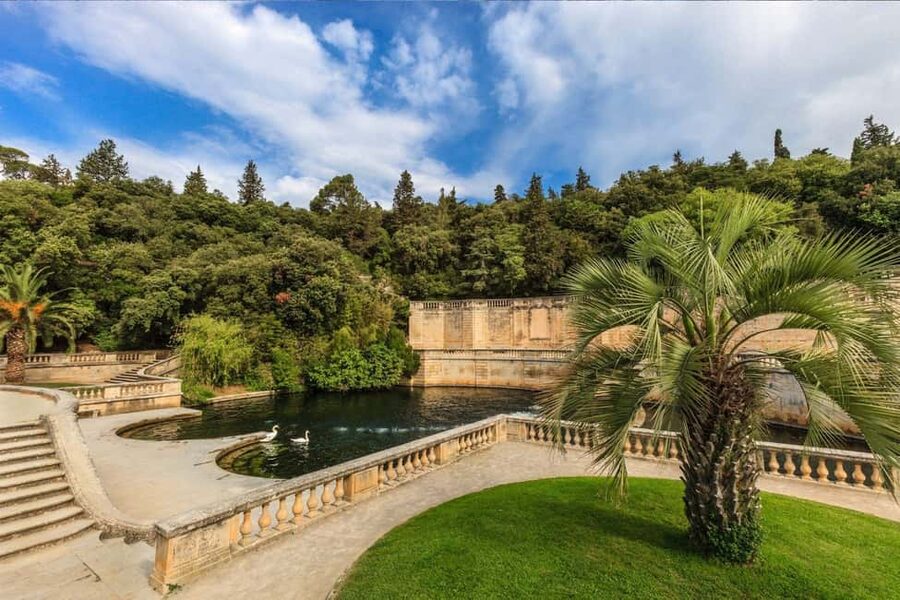
Jardin de la Fontaine: a peaceful break with a sacred past
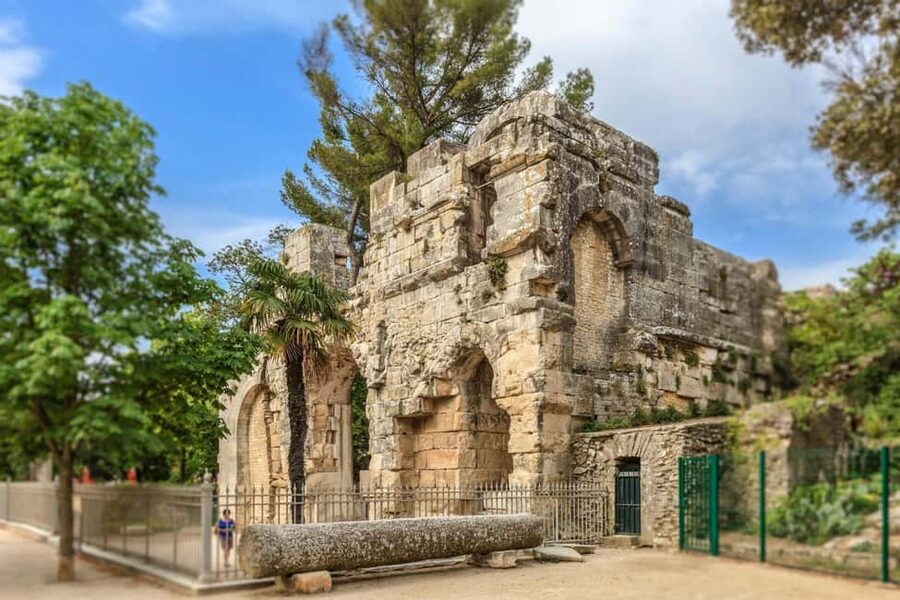
After Tour Magne, you move to the Jardin de la Fontaine—a real pause in the middle of a city day. This stop works because it changes the mood. You’re no longer in a “look at the big structure” mode. You’re in a garden space where the air feels calmer, and that matters when you’re trying to imagine everyday Roman life.
This is where you get the story of worship. The gardens were a place where locals once came to pray to the god Nemausus. Today, you won’t see animal sacrifices, but the atmosphere still feels tied to something older than the modern park. The tour even gives you a moment to make a wish. It’s a small, human touch—exactly the kind of detail that keeps a tour from becoming a history lecture.
What I like about this segment is the pacing. It’s not just another stop. It’s a mental reset. If you’re the type who gets bored when tours jump site to site, this garden stop is the relief valve that keeps the rest of the walk enjoyable.
Temple of Diana: ruins with unanswered questions
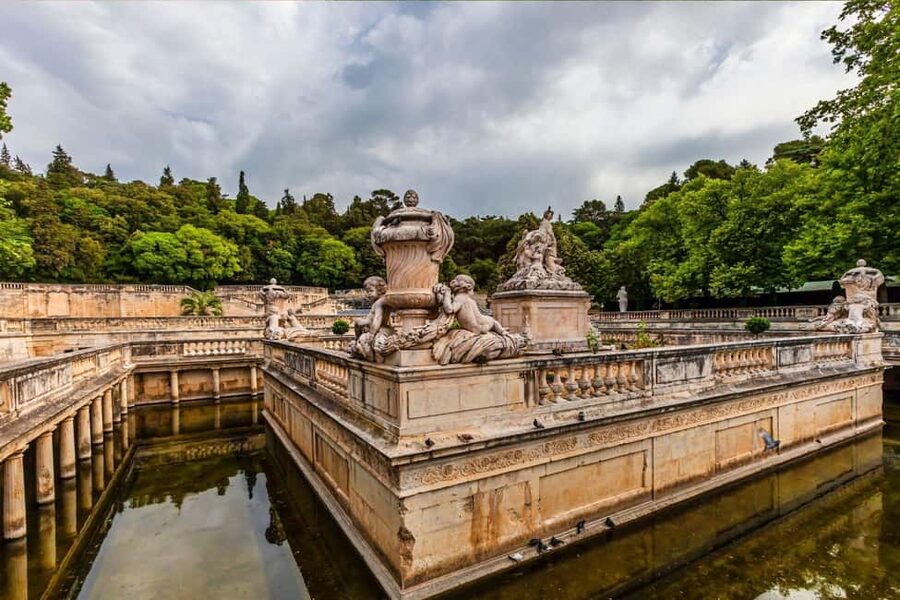
Next comes the Temple of Diana, a stop that’s interesting because it doesn’t give you one neat, closed story. Even historians can’t agree on what this place really was. Was it a temple, a library, something used by a group? Your guide will walk you through the uncertainty in a way that feels like solving a puzzle instead of memorizing facts.
That ambiguity is useful for you. When you travel independently, ruins can be frustrating. You stare and think: ok, but what exactly am I looking at? Here, your guide gives you context and different theories, so the ruins feel alive with debate rather than empty with confusion.
Also, ruins like this tend to be visually quiet. The tour adds the noise of imagination—what people might have done here, how the space may have functioned, and why it’s still discussed. It’s a smart use of a short tour: it adds depth without requiring a long museum visit.
Maison Carrée: Augustus’ sons and a photo spot you’ll actually use
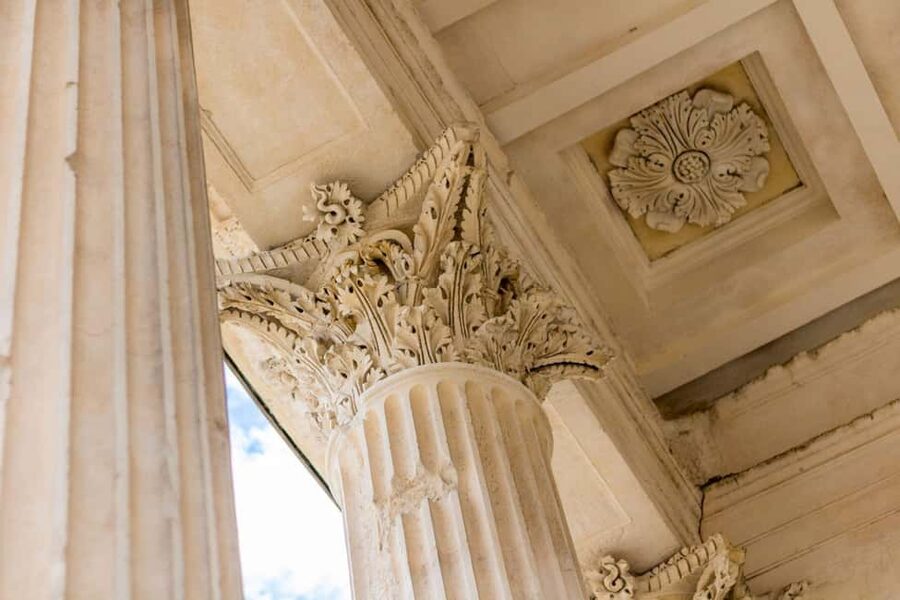
Then you get to Maison Carrée, one of the best-preserved Roman temples. The tour doesn’t treat it like a textbook artifact. It connects the monument to its purpose: it was dedicated to the sons of Augustus. That detail gives the building a personal angle. It stops being only architecture and becomes a message from power to people.
And yes, it’s also a practical photo stop. The tour frames it as the kind of place where you’ll naturally want that front-and-center shot. If you like travel photos that look sharp without a ton of effort, this is one of the few Roman sites where the composition is almost instant.
This is also a turning point in the walk. By the time you reach Maison Carrée, you’ve already heard about worship spaces and civic meaning. So when you see this well-preserved temple, you can feel how Roman Nîmes was built to represent authority, faith, and public identity in stone.
If you’re picky about photos, bring a steady stance—because you’ll want a clean front view. And if the sun is strong, timing matters. Even with a short tour, the light can change fast.
Arènes de Nîmes: the amphitheater finale without the fear-factor

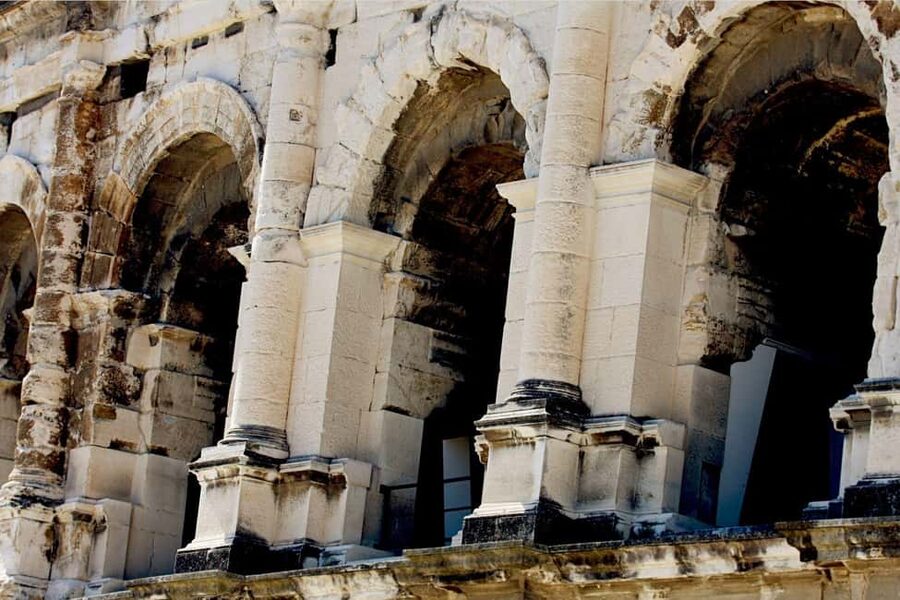
The grand finale is Arènes de Nîmes. This is where the tour brings it all together: worship and civic space earlier, then a public stage here.
One big reassurance: you won’t be facing gladiators or hungry lions. The amphitheater is presented as a historical arena, not a live spectacle. What you get instead is a sense of how this place shaped public life. It has seen centuries of fighting, markets, and even families settled in the stands.
That mix is what makes the Arènes stop land. An amphitheater is easy to reduce to violence if you only think about the famous stories. But the tour approach gives you a fuller picture: a place where commerce happened, where crowds gathered, and where everyday people felt at home even while dramatic events unfolded.
It’s also the perfect ending for a short route. After 90 minutes, you may not remember every theory. But you’ll remember the big circular shape, the scale, and the feeling that this is where Roman Nîmes turned public life into a shared experience.
Price and value: is $17 worth 90 minutes of Roman stops?
At $17 per person for 90 minutes, the price looks simple on paper. The real question is value: are you paying for a “one site” visit, or for guidance that connects several major monuments?
Here’s how it adds up for you:
- You get a guided walk across multiple iconic locations, not just one photo stop.
- You’re paying for interpretation—how each site fits the bigger story of Nemausus and 1st-century life.
- You avoid the most common DIY frustration: standing in front of ruins that don’t explain themselves.
You also get planning convenience. The format is tight, so you can fit it into a busy itinerary without sacrificing major highlights. If you only have a morning or afternoon window and you want your Roman day to be coherent, this price point makes a lot of sense.
Guide style: why the stories stick
The experience leans hard on a live guide, and that matters. The tour’s tone is described as passionate, engaging, and packed with anecdotes. That combination is what helps you remember details after the walk ends.
One guide name you may see in the tour’s French-language experience is Cassidy. Cassidy is praised for communicating enthusiasm, mixing clear explanations with humor, and delivering stories in a way that feels personal. There’s also an example of flexibility in lower season—when only a couple people book, the tour can still be run, which is a nice reassurance if you’re traveling off-peak.
If you prefer learning through conversation instead of a rigid script, this style should suit you. And if you’re someone who worries that 90 minutes might feel too short, the guide’s storytelling approach is designed to make that time feel packed with meaning.
Who should book this tour
This tour is ideal for you if:
- You want a Roman overview without committing to a full day
- You like outdoor walking tours where the guide builds atmosphere
- You’re traveling with limited time but still want the major Nîmes Roman hits
- You enjoy stories and theories, not just dates and facts
You might skip it if:
- You don’t handle heat well and can’t bring water or take breaks
- You’re expecting a long, slow museum-style visit
- You want information only through reading signs rather than a live guide (since the guide is French)
A few practical tips so your day feels easy
Bring water. It’s the single most repeated piece of practical advice for a reason. Even when the pace is steady, the city sun adds up.
Wear shoes you’re comfortable walking in for the full 90 minutes. This is a walking route, and the charm comes from moving between sites rather than staying put.
If you’re concerned about getting to the Tour Magne area, ask about options at the start. A past participant mentioned the funiculaire, which suggests it’s part of the real-world experience for reaching the tower.
Finally, let the guide set the rhythm. This tour works because you follow the optimized sequence. If you wander off for long photo pauses, you’ll slow the story.
Should you book Spend a day like an ancient Roman?
I’d book it if you’re in Nîmes for a short visit and want the Roman core in one clean, guided route. The combination of Tour Magne, Jardin de la Fontaine, the mystery of Temple of Diana, the photo-friendly Maison Carrée, and the big emotional finale at Arènes de Nîmes gives you a full Roman arc without the time cost of a longer tour.
It’s also a strong pick for first-timers because it teaches you how to look. You’ll finish with a sense of how Roman Nîmes functioned—watch and power, worship and wish-making, debate in the ruins, public messages in temple form, and crowd life in the amphitheater.
If you’re careful with heat and you like guided storytelling, this is a smart value at $17.
FAQ
How long is the tour?
The tour lasts 90 minutes.
Where do I meet the guide?
Meet your guide at the foot of Tour Magne.
What sites are included in the route?
You’ll visit Tour Magne, Jardin de la Fontaine, the Temple of Diana, Maison Carrée, and finish at Arènes de Nîmes.
Is the tour in French?
Yes. The live tour guide speaks French.
What should I bring?
Bring water. Nîmes sun can be very strong, especially in summer.
How much does it cost?
The price is listed as $17 per person.
Is there free cancellation?
Yes. You can cancel up to 24 hours in advance for a full refund.
Can I reserve without paying right away?
Yes. There is a reserve now & pay later option so you can book your spot and pay nothing today.