REVIEW · WARSAW
Warsaw: Jewish Heritage 4-Hour Private Tour
Book on GetYourGuide →Operated by PT Team · Bookable on GetYourGuide
Warsaw’s Jewish story hits hard, then lingers. This private 4-hour walk connects city landmarks to real people, and I particularly love the stop at Umschlagplatz and the time spent at Warsaw’s Jewish Cemetery. It’s the kind of tour where the facts are important, but so is the geography—how the city still carries memory in stone, iron, and names.
One consideration: the theme is heavy. You’ll be looking at deportation and Holocaust memorial sites, and four hours moves quickly if you want extra time to sit, read, and reflect (plus any museum stops like POLIN are optional and not included in admissions).
In This Review
- Quick highlights
- A private 4-hour route with real city geography
- Before the ghetto: why Warsaw mattered to Jewish culture
- The Trail of Jewish Monuments: walking memory, not just history
- Ghetto Heroes and the Monument Route of Martyrdom and Struggle
- Umschlagplatz: the deportation site, the memorial, and the names
- Across the ghetto boundary: Próżna Street atmosphere and what survived
- Chłodna Street and the Footbridge of Remembrance
- Ghetto wall fragments and boundary markers in the pavement
- Okopowa Street Jewish Cemetery: one of the largest kirkuts in Europe
- Janusz Korczak’s symbolic grave: a focused, human moment
- Nożyk Synagogue: surviving architecture you can still see
- POLIN Museum option: finishing the story if you have extra time
- Price and value: $42 for a private, guided, moving route
- Who this tour fits best (and who might want something else)
- Should you book this Warsaw Jewish Heritage tour?
- FAQ
- How long is the Warsaw Jewish Heritage private tour?
- Is this a private tour or a group tour?
- Do I get hotel pickup?
- What’s included in the price?
- Which languages are available for the live guide?
- What are the main stops on the itinerary?
- Is free cancellation available?
Quick highlights
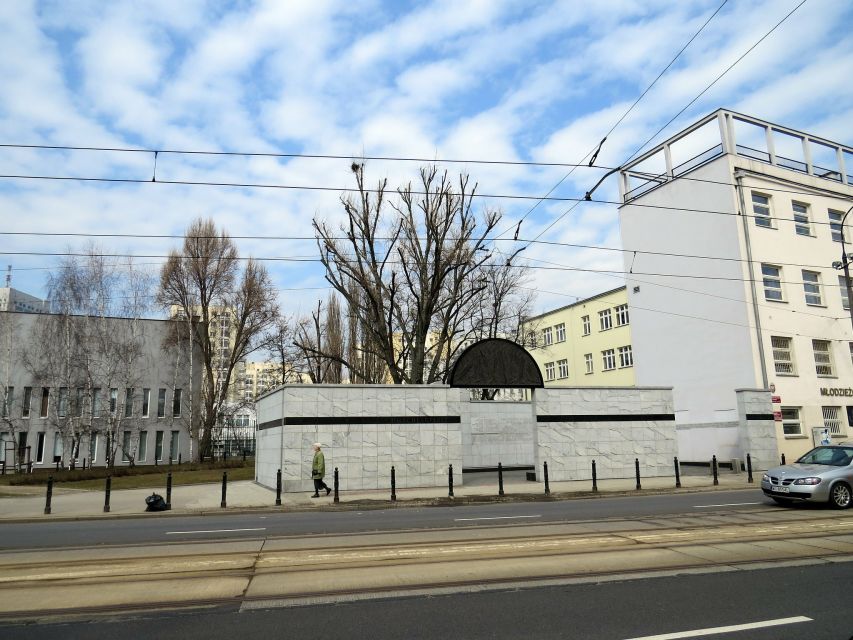
- Umschlagplatz names on the walls with a memorial design that echoes ghetto boundaries and a railway wagon shape
- Ghetto Uprising context (1943) explained along the route honoring those who fought back
- Jewish Cemetery on Okopowa Street with notable burials like Ludwik Zamenhof and Ischok Leib Perec
- Janusz Korczak’s symbolic grave as a focused moment for children’s history during WWII
- Footbridge of Remembrance over Chłodna Street linking the small and large ghetto, with multimedia reminders
- Nożyk Synagogue and surviving architecture seen as a real, intact piece of prewar Jewish Warsaw
A private 4-hour route with real city geography
This tour is built like a guided walk with sharp stops and short context—rather than a bus tour of “see-and-go” points. You get pickup from your hotel lobby and then move through Warsaw’s Jewish Heritage landscape with a guide, plus included transportation so you’re not stuck solving the transit puzzle.
What I like is that the time feels targeted. You’re not just collecting sights; you’re building a timeline in your head, from the long arc of Jewish community life in Warsaw to the ghetto’s creation, the uprising, deportations, and then the survival and commemoration that followed.
If you want a guide who can set the tone and adapt to your pace, you may be in good hands. In past bookings, guides such as Wojciech have been praised for tailoring the tour to interests and comfort level. Another guide, Ziggy, has been noted for presenting the story with sensitivity and clarity—helpful when the material is emotionally intense.
You can also read our reviews of more private tours in Warsaw

Before the ghetto: why Warsaw mattered to Jewish culture
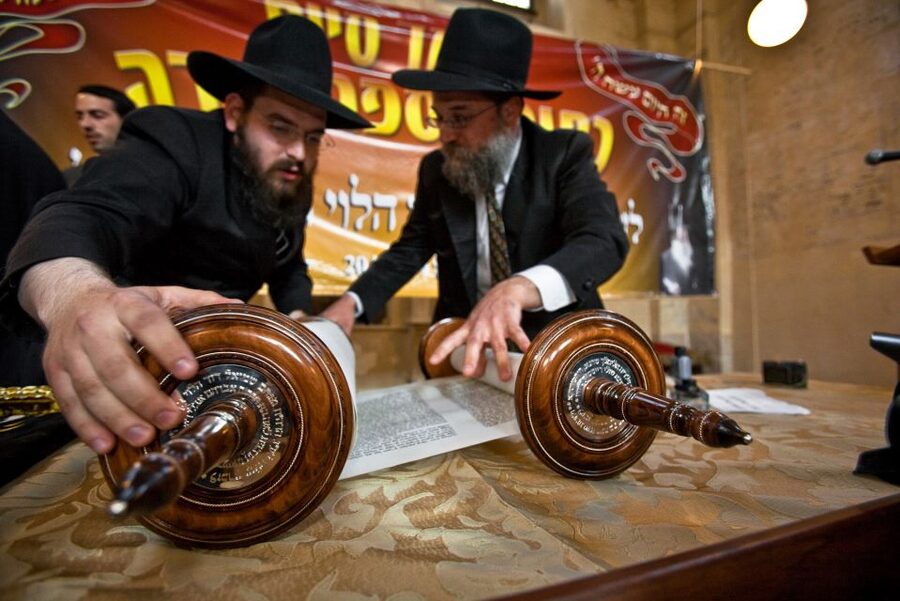
The tour frames Warsaw as more than a site of tragedy. Before WWII, Warsaw was among the biggest centers of Jewish culture in Europe, with only New York having a larger Jewish population worldwide. That matters because it prevents the story from starting and ending at Auschwitz-era horrors. You’re taught to see the community as something living, not only something destroyed.
Expect your guide to point out how Jewish traditions showed up in everyday life and in the city’s built environment—architecture, arts, literature, and public culture. Even if you only catch a few details in passing, it gives you a better lens for the later stops. When you reach the ghetto area, you’ll understand it as a forced rupture, not an inevitable fate.
This first stage is also a practical gift: it helps you read Warsaw like a map. You start linking later memorials to what used to be around them, so the route doesn’t feel random.
The Trail of Jewish Monuments: walking memory, not just history
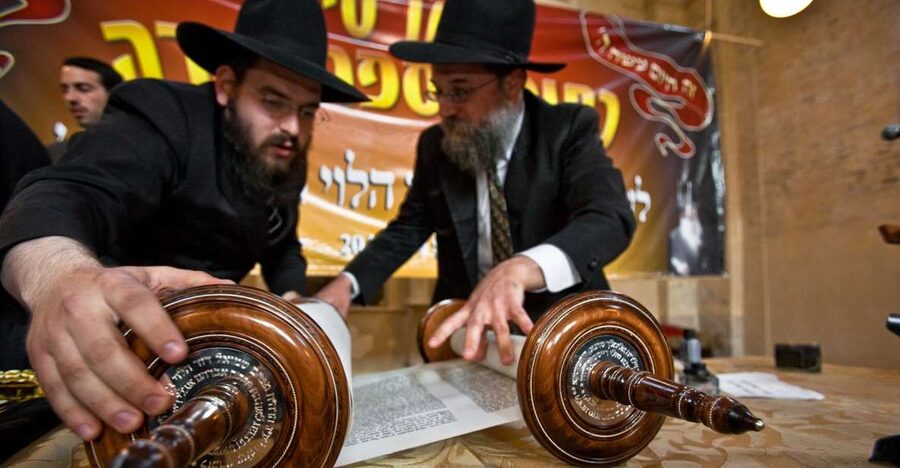
The heart of the experience is a trail of Jewish monuments that guides you through different layers of the community’s story. As you move, you’ll learn about the lives of Warsaw Jews and how the city changed under Nazi occupation and the creation of the ghetto.
A small but useful detail: the tour keeps returning to the idea of boundaries—where the ghetto was, what happened there, and how memory is anchored along the route. That becomes especially clear around the ghetto wall fragments and embedded boundary markers later on.
There’s also a sensitive rhythm to how the guide presents events. Instead of throwing every fact at once, you get scene-by-scene context that helps the story land without becoming a blur.
Ghetto Heroes and the Monument Route of Martyrdom and Struggle
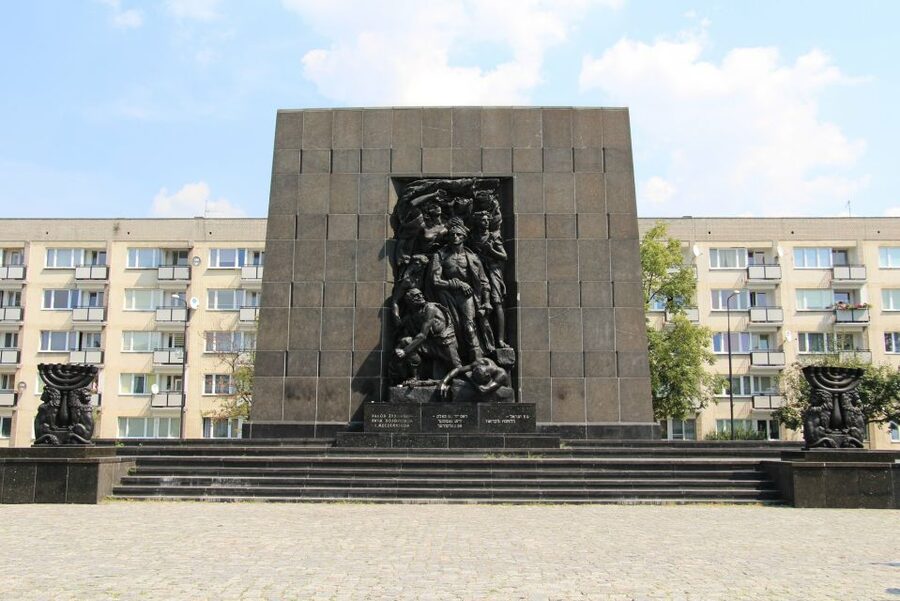
One of the most striking segments is the walk that leads you toward the Monument to the Ghetto Heroes. Along the way, you’ll follow the Memorial Route of the Martyrdom and Struggle of Jews, with attention drawn to commemorative stones marking key figures connected to the Warsaw ghetto.
This is where the tour shifts from “what happened” to “how people resisted.” You’ll hear the story of the Warsaw Ghetto Uprising in 1943, described in terms of bravery against overwhelming force—deployed artillery and even dive bombers from Nazi forces. The point isn’t to simplify; it’s to show the scale of the fight.
If you’re the type who likes facts you can remember later, this part gives you a narrative you can hold onto: the monument is not just symbolic. It’s tied to specific historical events and the people behind them.
Umschlagplatz: the deportation site, the memorial, and the names
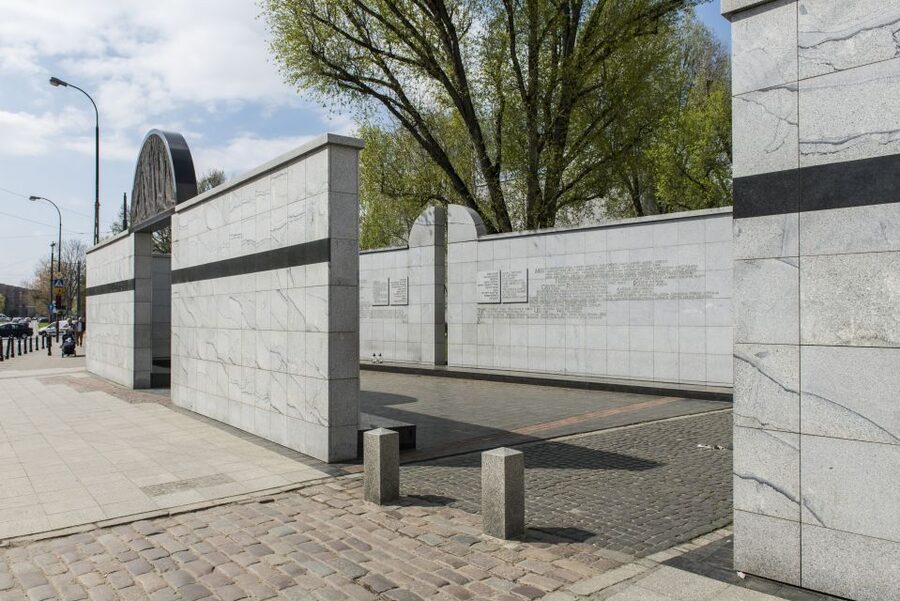
Umschlagplatz is one of the most important stops on the route. You’ll visit the Umschlagplatz monument, where the memorial invites visitors to pay tribute to those sent to extermination camps who never returned.
The design details matter here. The shape is meant to resemble both the ghetto walls and a railway wagon, which turns a single viewpoint into a whole historical scene. It’s not abstract. You can almost picture the logistics of deportation in the way the memorial echoes those surroundings.
Even more sobering is the reference that more than four hundred names of victims are engraved on the walls. If you read slowly, you’ll notice the memorial supports a personal kind of remembrance—less like an exhibit and more like a place to stand with names.
Practical note: this is a stop where you may want a minute of silence even if you don’t normally do that on tours. If you rush, you miss the point.
You can also read our reviews of more historical tours in Warsaw


Across the ghetto boundary: Próżna Street atmosphere and what survived
After the core memorial sites, the tour points you toward the atmosphere of Jewish Warsaw that still feels preserved in certain streets. One called out on this itinerary is Próżna street, where the vibe of older Jewish life remains part of the urban experience.
This is where the tour becomes more than a history lesson. You’ll start noticing how Warsaw works as a city that layered multiple eras on top of each other. Some buildings and streets survived the destruction; others changed. Seeing that contrast while you’re still emotionally close to the memorial stops helps the story feel coherent.
It’s also a good mental transition: after heavy, you’re given something to watch—street life, architecture, and the sense of place. You don’t leave with denial, but you do leave with context for continuity.
Chłodna Street and the Footbridge of Remembrance
Over Chłodna Street, the tour includes the Footbridge of Remembrance, connecting what’s described as the small and large ghetto. That detail alone helps you visualize how the ghetto wasn’t one single area—it had divisions.
The bridge also has a multimedia art installation that reminds visitors of the tragic events of that period. Even if you’re not into multimedia displays, it’s worth paying attention because it changes the tone from static memorial to something you experience in motion, literally as you cross.
I like that this stop teaches the value of “micro-transitions.” The route doesn’t just jump between sites. It guides your body from one memory zone to another, and that makes the boundaries feel more real.
Ghetto wall fragments and boundary markers in the pavement
You’ll also stop by fragments of the Jewish ghetto wall, including iron slabs set into the pavements that mark the former ghetto boundaries. This is the kind of detail that can be easy to miss if you’re sightseeing on your own, but a guide makes it meaningful.
Instead of treating the ghetto as a map fact, you get the feeling of how boundaries were enforced in daily life—visible underfoot, anchored in the ground you’re standing on. It’s also a reminder that the past isn’t only in museums. Sometimes it’s in the street where you step.
Okopowa Street Jewish Cemetery: one of the largest kirkuts in Europe
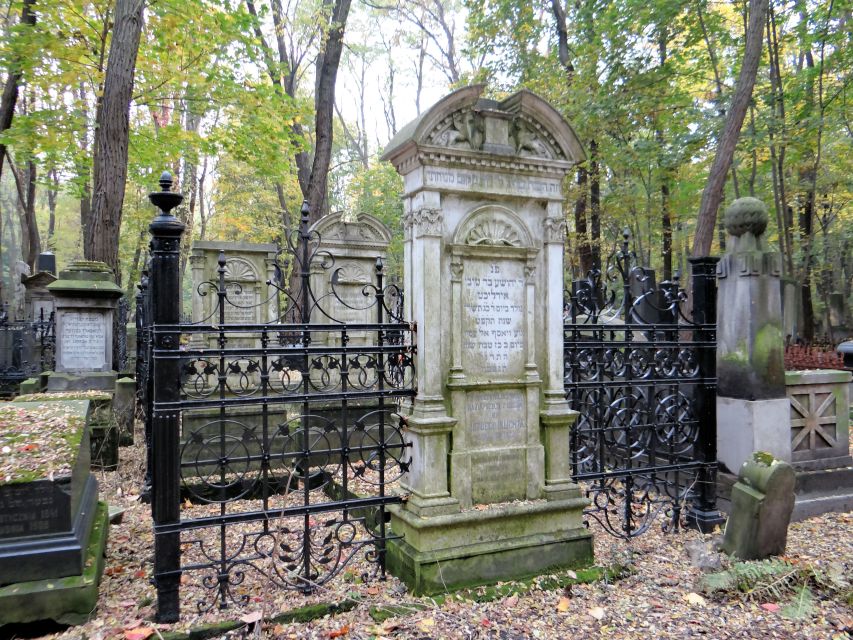
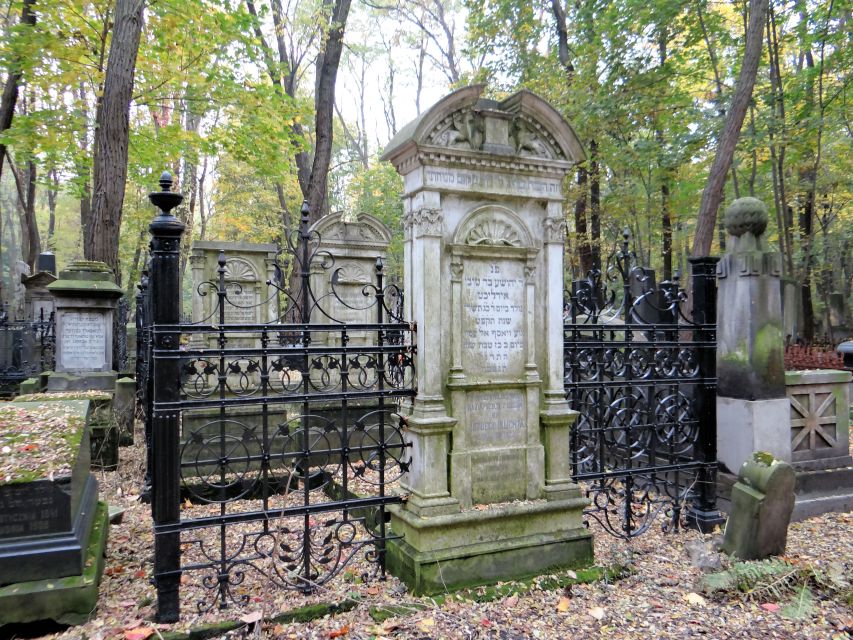
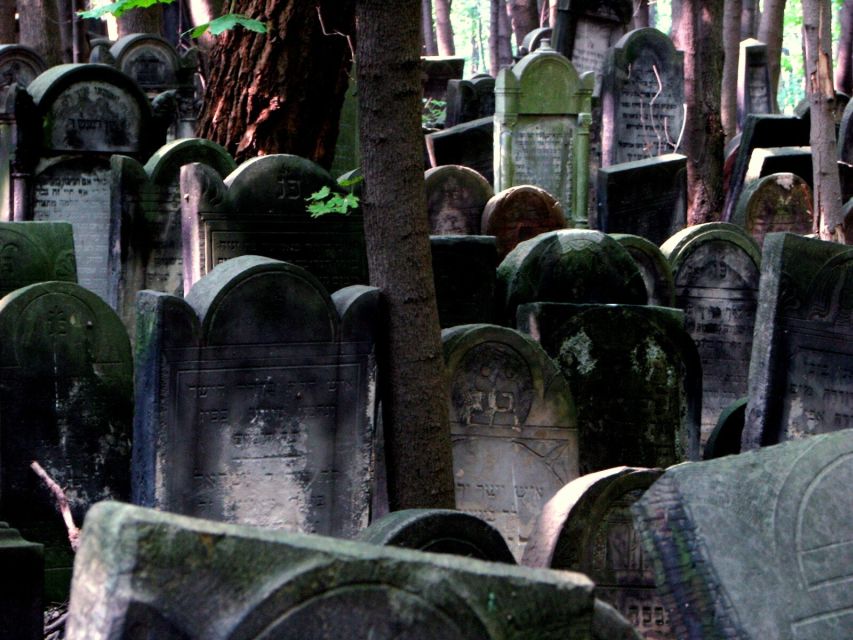
Then comes a different kind of gravity: the Jewish Cemetery on Okopowa Street. This is described as one of the largest kirkuts in Europe. Walking through a cemetery like this can feel like reading a long text written in stone—names, dates, and community memory laid out across generations.
The tour highlights eminent people buried here, including Ludwik Zamenhof, the founder of Esperanto, and writer Ischok Leib Perec. Those names do more than add trivia. They connect Warsaw’s Jewish life to global culture, which helps you remember that this community shaped ideas far beyond Poland.
If you’re someone who wants respectful pacing, this segment can work well. It’s quieter than some memorial points, and it invites a slower, more careful way of looking.
Janusz Korczak’s symbolic grave: a focused, human moment
A standout stop is the symbolic grave of Janusz Korczak, described as a protector of children who was murdered in Treblinka, along with the children in his care, in a gas chamber.
This moment is intentionally specific. It narrows the story into one person and one responsibility—care for children—before expanding back out into broader historical events elsewhere on the route.
What I appreciate about this approach is that it avoids vague suffering. It gives you a concrete human story to hold.
Nożyk Synagogue: surviving architecture you can still see
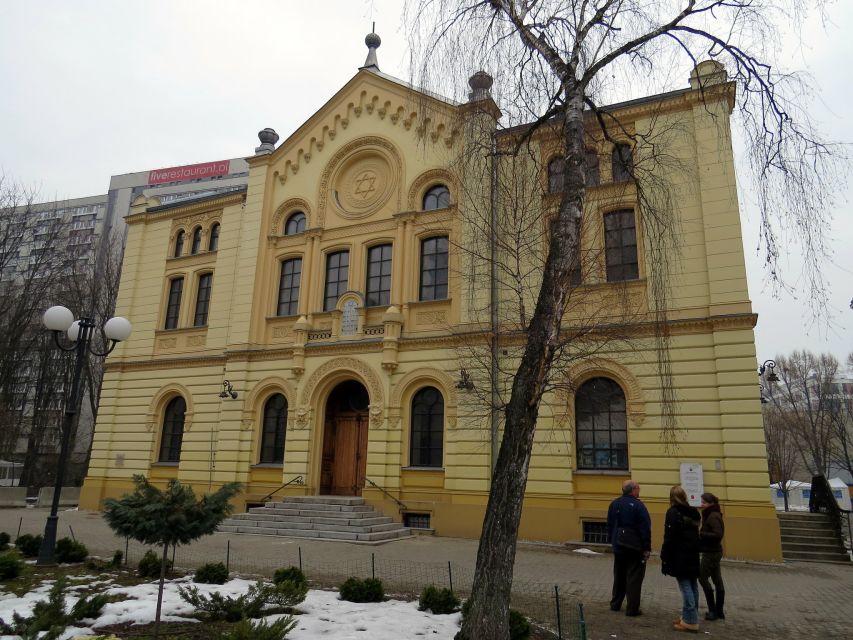
No tour like this is complete without some look at what endured. Here, you’ll stop at Nożyk synagogue, noted for its Neo-Romanesque style and for surviving the Holocaust period.
Seeing a place of worship that made it through is powerful for a practical reason: it gives you something physical to point at in your own mind when the rest of the story becomes too heavy. It also helps you remember that the story wasn’t only about destruction; it was also about survival, continuity, and what communities managed to keep intact.
POLIN Museum option: finishing the story if you have extra time
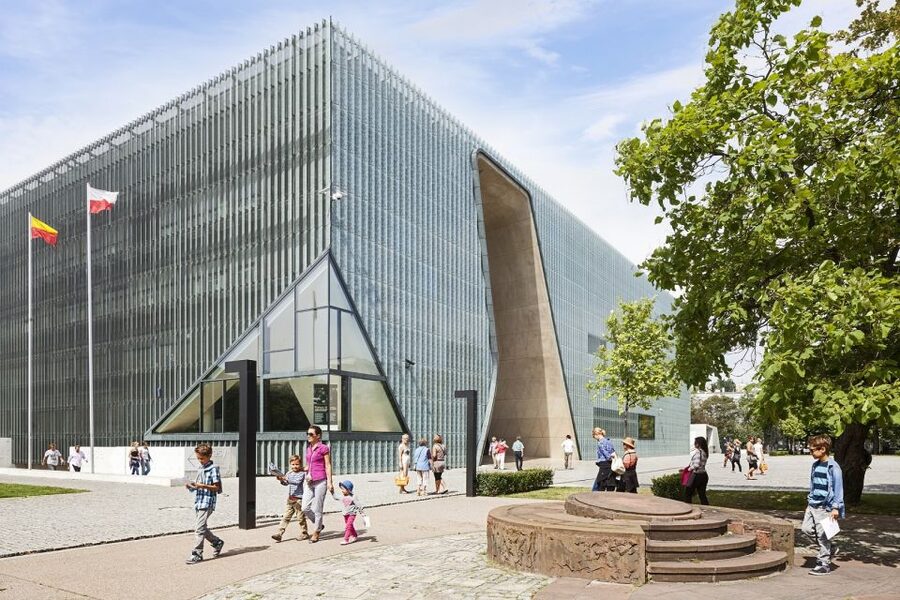
If you have more time after the four hours, your guide can help you connect the route to further learning at POLIN Museum of the History of Polish Jews. The tour notes that POLIN is an option for extending your understanding on your own.
I like this setup because it respects different energy levels. Some people want to keep walking and exploring; others want to sit in a museum environment. Either way, the tour gives you names, locations, and context you can carry into POLIN so you’re not starting from zero.
Price and value: $42 for a private, guided, moving route
At $42 per person for 4 hours with a local guide and transportation included, this is one of those deals that makes sense if you want structure. You’re paying for someone to connect sites and keep the story clear, not just for the right photos.
Two value notes that matter:
- Private group means the pace can be adjusted. That’s especially important for memorial-heavy itineraries.
- Admissions aren’t included, so if you plan to add extra indoor sites later (like POLIN), you’ll want to budget separately.
Is it expensive? Compared to self-guided walking, yes. Compared to the time cost of getting it right on your own, it often feels fair—especially if you care about the difference between knowing facts and understanding how they connect.
Who this tour fits best (and who might want something else)
This is a strong match if you want:
- A focused route through key Warsaw Jewish sites in a short time
- A guide who can explain historical context while keeping the experience respectful
- A mix of major memorial stops and places where Jewish culture’s presence still registers in the city
It may be less ideal if you:
- Want a “lighter” sightseeing day with minimal emotional content
- Need long reading pauses everywhere (four hours is tight)
- Prefer museum-only experiences rather than street-level memorials and monuments
Should you book this Warsaw Jewish Heritage tour?
Yes, if you want a private, well-paced walk through the places that define Warsaw’s Jewish story—from community life to ghetto memory—without forcing you to piece everything together alone. The emotional weight is real, but the route is built to help you understand it in a way that doesn’t feel confusing.
If you do book, do yourself a favor: plan for a quiet evening afterward, and bring enough energy to slow down at the moments that matter most, like Umschlagplatz and the cemetery.
FAQ
How long is the Warsaw Jewish Heritage private tour?
The tour lasts 4 hours.
Is this a private tour or a group tour?
It’s a private group experience.
Do I get hotel pickup?
Yes. The guide will meet you at your hotel lobby with your name.
What’s included in the price?
You get a local guide for the full 4 hours and transportation. Entry or admission fees are not included.
Which languages are available for the live guide?
The tour offers live guidance in Spanish, English, German, Russian, Polish, French, Italian, and Portuguese.
What are the main stops on the itinerary?
Key stops include the ghetto area and related monuments, Umschlagplatz, the Jewish Cemetery on Okopowa Street, the Footbridge of Remembrance on Chłodna Street, fragments of the ghetto wall with boundary markers, and Nożyk synagogue, plus time to see Próżna street.
Is free cancellation available?
Yes. You can cancel up to 24 hours in advance for a full refund.