REVIEW · ATHENS
Athens: Acropolis and Ancient Agora Guided Walking Tour
Book on GetYourGuide →Operated by Athens Walks Tour Company · Bookable on GetYourGuide
Athens looks best when you move through it. This guided walk strings together the Acropolis and Ancient Agora with clear storytelling from a licensed guide. I like the way the tour starts with the south slopes route, so you get city views before the big monuments. I also like that you’re not just looking at ruins—you’re learning how they connected to daily life and Greek civic culture.
Acropolis and Agora are both included with tickets and skip-the-line entry, and the wireless devices help you actually hear the guide without craning your neck.
One consideration: this is a real walking tour with an upward climb and uneven ancient surfaces, so plan on comfortable shoes and pace yourself. If you’re sensitive to heat or walking distances, you’ll want to think about timing and water before you go.
You may even end up with a guide like Anastasia or Yanis/John, who are praised for staying organized and keeping the facts easy to follow. It’s a smart setup when you have limited time in Athens and want the highlights tied together instead of doing sites one by one.
In This Review
- Key points I’d plan around
- Starting at Porinou 5: how the tour keeps you oriented
- South Slopes of the Acropolis: a scenic warm-up before the icons
- Theatre of Dionysus to the Propylaea: setting the stage for what you’ll see
- Parthenon time: how the tour makes democracy feel tangible
- Erechtheion and Athena Nike: stop for the details, not the checklist
- Ancient Agora of Athens: where politics, business, and philosophy met
- What makes the $102 price feel fair
- Who should book, and who should plan a different day
- Should you book the Acropolis and Ancient Agora guided walking tour?
- FAQ
- How long is the Athens Acropolis and Ancient Agora guided walking tour?
- Where do I meet for the tour?
- What’s included in the ticket price?
- Are skip-the-line entries included?
- What language is the tour guide?
- What should I bring?
- Is flash photography allowed?
- Is this tour suitable for people with mobility impairments or young children?
Key points I’d plan around
- Skip-the-line entry at both sites saves time at the Acropolis and Ancient Agora with a separate entrance.
- Wireless hearing devices included so the licensed English guide stays clear throughout the walk.
- South Slopes route starts scenic and calmer before you reach the Parthenon and main sacred area.
- The itinerary connects monuments to public life via the Theatre area and the Agora’s political and commercial roles.
- Practical pacing with short guided stops and a break gives you time to rest before moving on.
Starting at Porinou 5: how the tour keeps you oriented
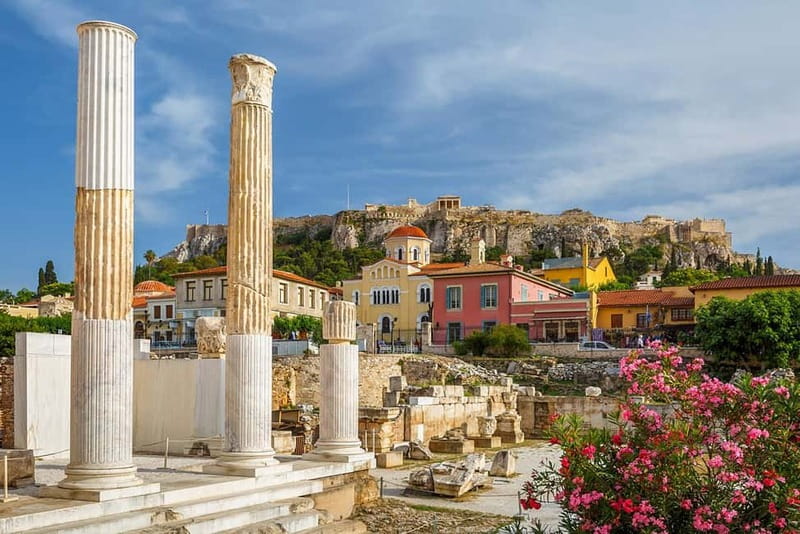
Most Athens walking tours fall apart when everyone meets late and the group wanders. This one starts with a clean plan: you meet at the Office of Athens Walks on Porinou 5. It’s also an easy hand-off if you’re using the metro, since the meeting point is about a two-minute walk from the Acropolis metro station.
From there, you’ll get a quick overview before you begin. That matters because the day covers several distinct zones: the lower areas of the Acropolis complex, the main temples up top, and then a shift down into the Ancient Agora. With a guide mapping the flow for you, you’ll spend more time looking at the right things—and less time figuring out where you are.
The tour is scheduled for about 4 hours. Within that window, the pace is brisk but not random. You’ll have guided time at the major monuments and shorter walks between them, so you don’t feel trapped in long speeches the whole way.
If you want an easy win in Athens, this is it: you get structure, skip-line access, and a guide who can tie the parts together so the Acropolis isn’t just a photo backdrop and the Agora isn’t just scattered stones.
You can also read our reviews of more walking tours in Athens


South Slopes of the Acropolis: a scenic warm-up before the icons
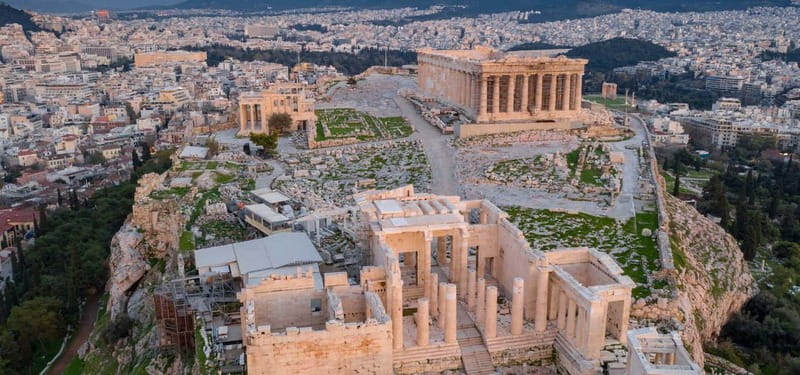
Instead of starting right at the busiest approach, the tour takes you up the South Slopes with a less crowded, scenic entry route. That’s more than a comfort perk. It changes how the Acropolis feels. You climb gradually, so the scale lands in steps.
As you ascend, your licensed guide points out plants and archaeological details along the slopes. You’ll also get context about the kinds of ancient rituals and activities that once belonged in this area. That background helps because later, when you stand in front of the Parthenon and nearby temples, you’ll understand that you’re looking at a religious and civic center, not a single isolated building.
Then the best part arrives: views. The climb offers photo opportunities across Athens, and you’ll often catch the city framed against the hills. It’s the moment where most first-time visitors finally feel the geography of Athens—where the old center sat, how wide the city spread, and why the Acropolis was such an unbeatable location.
Practical tip: this is the part of the day where you’ll feel the walking most. Bring a hat and sunscreen, and start hydrating before you’re thirsty.
Theatre of Dionysus to the Propylaea: setting the stage for what you’ll see
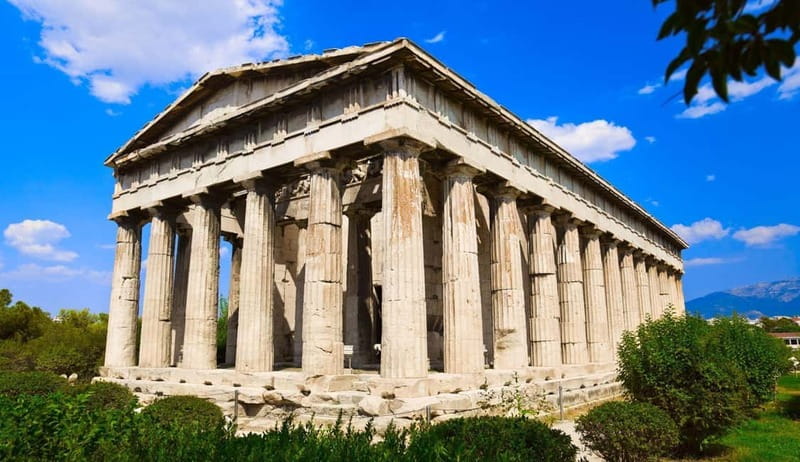
Before you hit the main temple zone, the itinerary slides you through the earlier landmarks that connect to Greek culture. You’ll stop at the Theatre of Dionysus for about 15 minutes with guided time. Even if you don’t know theatre history, the guide’s explanations help you understand why this matters in an Athens context. Drama and civic life weren’t separate things back then.
You also walk by the Odeon of Herodes Atticus area (about 15 minutes). These stretches function like an introduction corridor: you’re not just climbing—you’re learning what kind of city Athens was.
From there, you’ll reach the Temple of Athena Nike (a short walk, around 5 minutes). It’s smaller than the Parthenon, but it’s famously detailed, and your guide explains why the scale doesn’t mean less importance. The stop works well for people who like “look closer” moments.
Next comes the Propylaea (about 10 minutes guided). Think of it as the dramatic entry point into the sacred area. When you understand that gateway purpose, the experience of reaching the main temples feels more intentional rather than like you accidentally wandered into a ruin field.
This section is also where the wireless audio earns its keep. The guide is moving between explanation points while you shift your position, and the devices help you stay with the story even when the terrain forces you to adjust your stance.
Parthenon time: how the tour makes democracy feel tangible
The centerpiece is the Parthenon, with about 30 minutes of guided focus. This is the longest guided block of the day on the Acropolis side, and it makes sense: if you’re spending only a few hours here, you need time to understand what you’re looking at.
Your guide explains the temple’s construction and why it became tied to Greek democracy and culture as a symbol. That’s the key idea: you’re not learning trivia about columns. You’re learning why a building could carry political and cultural meaning across centuries.
If you like architecture, you’ll appreciate how the tour frames details in human terms. The Parthenon doesn’t feel like an abstract “big famous ruin.” It becomes a statement Athens made about identity—what kind of community it wanted to be.
Also, you’ll get photo chances in this area, but remember: flash photography isn’t allowed. Plan for natural light and steady shots.
After the Parthenon visit, there’s a 15-minute break on the Acropolis. I’d treat that like part of the plan, not downtime. Use it to drink water, take a few photos without rushing, and reset before you move down to the Ancient Agora.
Erechtheion and Athena Nike: stop for the details, not the checklist
If the Parthenon is the headline, the Erechtheion is the character actor. You’ll spend about 15 minutes guided at the Erechtheion, which is known for its unique architecture and the famous Caryatids. These sculpted female figures help you see why guides matter: without explanation, they’re just impressive statues. With context, they become part of how the site communicates meaning.
The guide’s job here is to slow you down just enough. That’s important because the Acropolis can tempt you into a fast “I saw it all” mode. You’ll get much more out of the day if you let the details land.
Then you’ve already touched Temple of Athena Nike earlier, but the tour’s structure keeps you from feeling like you’re bouncing around too much. It’s a short stop, but the guide gives you enough to connect it back to the theme of Athena’s importance across multiple structures.
This pairing—Erechtheion for artistry and Caryatids, plus Athena Nike for symbolic victory—helps you understand the Acropolis as a complex of ideas, not just one monument.
You can also read our reviews of more guided tours in Athens


Ancient Agora of Athens: where politics, business, and philosophy met
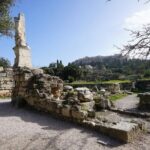
After the Acropolis, the day shifts into the Ancient Agora, the heart of public life in ancient Athens. You’ll get about 30 minutes guided here, and the tour’s value is how it connects ruins to what people did every day.
Your guide walks you through the political, social, and commercial activity that once flourished in the Agora. That framing makes a huge difference. When you know the Agora was a place where citizens gathered, debated, and negotiated, the stones stop feeling random.
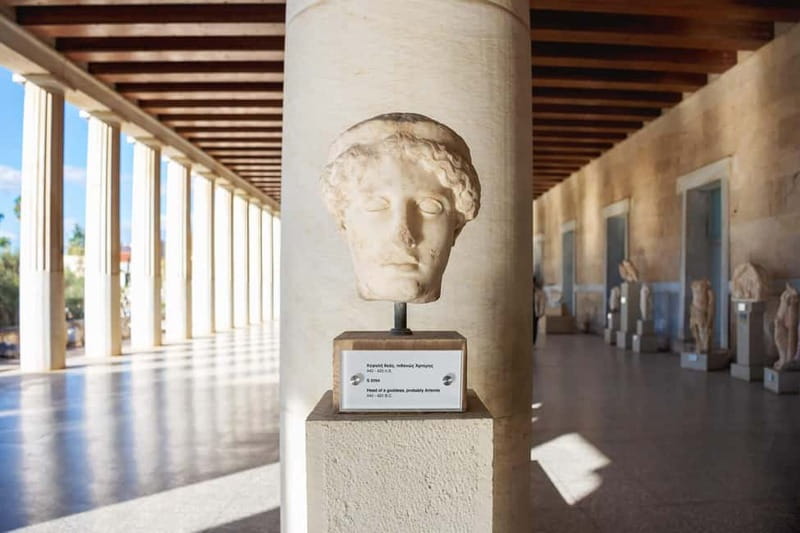
One highlight is the Stoa of Attalos, which is well preserved and now functions as a museum space showcasing artifacts from the site. Even if you’re not a museum person, it’s a strong stop because it gives the ruins a clearer “then vs now” bridge.
You’ll also see the Temple of Hephaestus (walk time about 10 minutes). It’s one of the best-preserved ancient temples, and the tour explains that it was dedicated to Hephaestus, the god of craftsmanship. That dedication theme fits nicely with the rest of the Agora focus—trade, skills, and the everyday workings of the city.
This is also where the tour’s pacing helps. The Acropolis is steep and high-energy. The Agora is more about attention and context. You’ll likely find it easier to absorb what you’re hearing here because the ground is less punishing.
What makes the $102 price feel fair
At $102 per person for about 4 hours, the cost is less about “a seat on a walk” and more about what’s bundled.
You’re getting:
- a tour with an expert licensed guide
- wireless hearing devices
- entry tickets for both the Acropolis and the Ancient Agora
- skip-the-line entry at both sites
- a convenient meeting point (and a start that’s close to the metro)
Do the math in your head: if you were to book a guide separately and pay tickets separately, the total usually climbs fast—plus you still deal with lines. Here, you’re paying for time you don’t waste and explanations you wouldn’t get on your own.
Also, the tour is in English, which is a practical detail if you’re relying on the guide for interpretation rather than reading alone. If you like structured learning with minimal friction, this pricing model makes sense.
Who should book, and who should plan a different day
This walking tour is built for people who want a curated Athens highlights route without losing the plot. It’s great for first-timers who want the Acropolis and Agora connected by story, and for repeat visitors who want better context than a self-guided sprint.
It’s not suitable for children under 6, and it isn’t designed for wheelchair users or people with mobility impairments. The itinerary includes a climb to the Acropolis and walking between multiple stops on ancient surfaces. That’s not a “maybe”—it matters.
If you’re traveling as a couple, you’ll likely enjoy the focused pace because you’ll get plenty of time at the big monuments without your whole day turning into a group logistics problem. If you’re traveling solo, it’s also a good choice because the guide keeps you oriented and the wireless devices help you stay locked in even when others move around you.
Should you book the Acropolis and Ancient Agora guided walking tour?
Yes, if you want to see the big Athens hits in one half-day and you prefer learning with a licensed guide over wandering with just a map. The best reasons to book are the skip-the-line entry to both sites, the wireless hearing devices, and the way the itinerary ties monuments to civic life instead of listing sights.
Skip it only if walking and uphill climbs will be a strain for you, or if you’d rather spend your day at a slower rhythm with no guided structure at all.
If your goal is simple—Acropolis plus Agora, explained well, with your time respected—this tour fits that mission.
FAQ
How long is the Athens Acropolis and Ancient Agora guided walking tour?
It runs for about 4 hours.
Where do I meet for the tour?
You meet at the Office of Athens Walks on Porinou 5. The meeting point is about a two-minute walk from the Acropolis metro station.
What’s included in the ticket price?
The tour includes a licensed English guide, wireless hearing devices, entry tickets to both the Acropolis and the Ancient Agora, and skip-the-line access at both sites.
Are skip-the-line entries included?
Yes. The tour includes skip the long lines through a separate entrance at both the Acropolis and the Agora.
What language is the tour guide?
The live tour guide speaks English.
What should I bring?
Bring comfortable walking shoes, a hat, camera, sunscreen, and a water bottle.
Is flash photography allowed?
No, flash photography isn’t allowed.
Is this tour suitable for people with mobility impairments or young children?
No. It isn’t suitable for people with mobility impairments, wheelchair users, or children under 6 years.