Stone cities start making sense fast. A private guide makes Polonnaruwa feel like a story you can follow, not a pile of monuments. I also like the mix of royal sites, sacred architecture, and scenic breaks, so you’re not stuck doing the same kind of photo stop all day.
My second big win is the sheer range of places on the route, from the Royal Palace of King Parakramabahu and the Vatadage to the rock-cut wonder of Gal Vihara. One thing to plan for: the base tour price is only part of your spend, since site entry/admission fees and lunch are not included.
In This Review
- Key things I’d bookmark before you go
- Polonnaruwa Private Day Tour: why the format works
- Entering with the Archaeological Museum (and why 30 minutes is enough)
- King Parakramabahu’s Palace: the free stop that sets the tone
- Vatadage: the circular relic house people remember
- Shiva Devalaya No. 2 and the multicultural thread
- Stupa sequence: Pabalu Vehera and Rankoth Vehera in 30 minutes
- Alahana Pirivena: monastic and educational life beyond the statues
- Gal Vihara: rock-cut Buddhas that earn their reputation
- Thivanka Image House: scale and detail, even in a short stop
- Priyamali Gedara Road rice and curry: a needed break (with a real budget)
- Statue of Parakramabahu I: a straightforward way to remember the person
- Deepa Uyana (King Nissankamalla’s Pleasure Garden): when the ruins cool off
- Sunset at Parakrama Samudraya Viewpoint
- Price and logistics: the real cost picture before you commit
- The guide factor: why people keep praising Tharindu and Tarry
- Who this tour fits best
- Should you book this Polonnaruwa private day tour?
- FAQ
- How long is the Polonnaruwa Ancient City Private Day Tour?
- Where does the tour start?
- Is this a private tour?
- What’s included in the price?
- Are site admission fees included?
- Is lunch included?
- What tickets do I receive?
- Is transportation included?
- How does confirmation work?
- What is the cancellation policy?
Key things I’d bookmark before you go
- Private, just-your-group pacing: You move at your speed, not on a conveyor belt.
- UNESCO-style highlights plus lesser-known stops: You get the big names and the supporting cast.
- A route built for variety: palaces, relic houses, Hindu and Buddhist shrines, gardens, and a sunset viewpoint.
- Short orientation at the museum: A half hour at the Archaeological Museum helps everything else click.
- Rice and curry stop on the way: A built-in break on Priyamali Gedara Road (budget for lunch since it’s not listed as included).
- Guide quality matters here: Reviews specifically praised guides like Tharindu and Tarry for clear English and strong explanations.
Polonnaruwa Private Day Tour: why the format works
Polonnaruwa is one of Sri Lanka’s most important ancient capitals, and the site can feel confusing if you show up alone. This private setup fixes that with a dedicated guide who can connect what you see—stone carvings, stupas, and palace remnants—to the people who built them.
I also like the length. A 6–7 hour day gives you time to see standout places like Gal Vihara without rushing so hard that you’re only scanning rocks. And because it’s private, you can ask questions as you go instead of saving them for the end.
One more practical note: the tour uses a mobile ticket, and it starts and ends back near the Archaeological Museum in Polonnaruwa.
Entering with the Archaeological Museum (and why 30 minutes is enough)
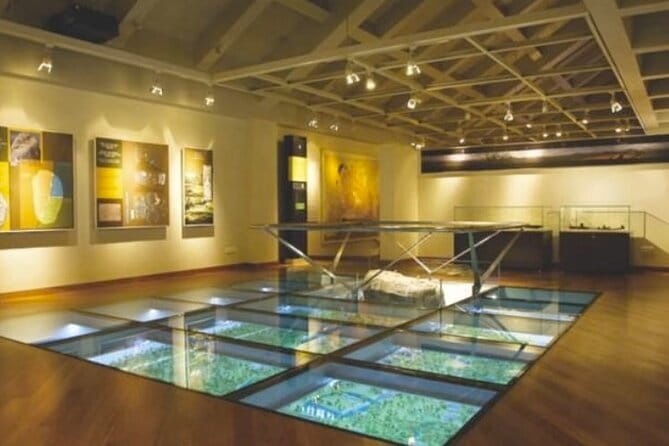
Your day starts at the Archaeological Museum near the main entrance to the Polonnaruwa heritage area. It’s a compact stop—about 30 minutes—but it’s worth treating like your “decoder ring” for the ruins.
You’ll get artifacts and context that help you recognize what you’re looking at later: religious objects, historical material, and the basic timeline of the city. When you arrive at the sacred buildings afterward, the shapes and functions make more sense.
Admission for the museum is not included, so factor that into your total cost. Still, this first stop can save you a lot of guesswork.
King Parakramabahu’s Palace: the free stop that sets the tone
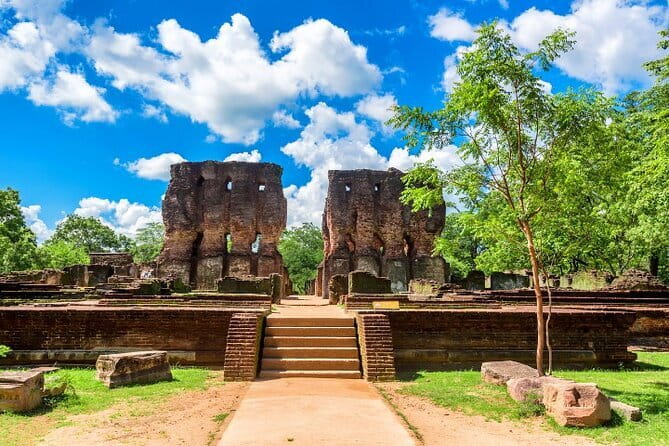
Next up is the Palace of King Parakramabahu, about 30 minutes and marked as free for admission. Even in ruins, it’s easy to see why a king’s residence had to signal power. The remains hint at grandeur, and the guide’s storytelling is what turns the outlines into a real mental picture.
This is also a good timing stop. Midday heat builds fast in Sri Lanka, and a palace site gives you a strong start before the more walking-heavy religious complex areas.
Vatadage: the circular relic house people remember

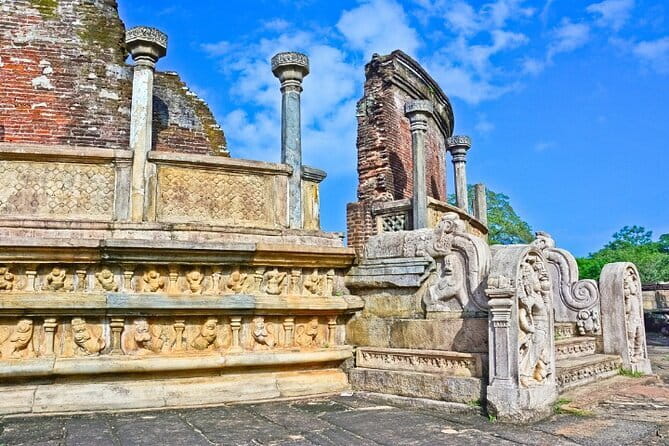
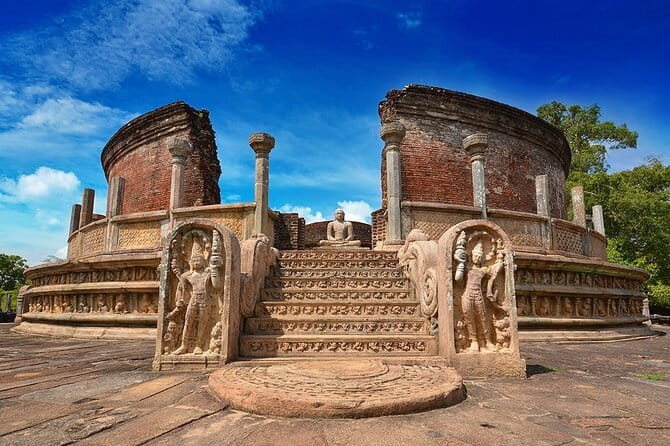
The Vatadage sits in the Sacred Quadrangle and is one of the “stop and stare” buildings of Polonnaruwa. Plan about 45 minutes here, and note that admission is not included.
The key feature is the circular relic-house design built to protect a sacred stupa. On your visit, the guide’s explanations matter because the architecture isn’t random: it’s about guarding something considered holy. You’ll also see the decorative elements and carvings that reflect the craftsmanship of the period.
If you like symbolism in architecture, this is a highlight. If you’re more focused on the biggest statues, you’ll still want to spend the extra time—Vatadage is where the site’s “rules of sacred space” become obvious.
Shiva Devalaya No. 2 and the multicultural thread
Polonnaruwa wasn’t one-faith-only, and the tour doesn’t pretend it was. The Hindu Temple stop is Shiva Devalaya No. 2, scheduled for about 15 minutes.
This shrine is dedicated to Lord Shiva, and it’s a clear reminder of cultural connections—South Indian Dravidia influence is part of the story. It’s a short stop, so don’t expect a long lecture, but it does add an important layer to the Buddhist-heavy circuit.
If you’re hoping to understand how different communities shared and shaped the same ancient capital, this is one of the best “small time, big meaning” moments on the list.
Stupa sequence: Pabalu Vehera and Rankoth Vehera in 30 minutes
After the temple, you’ll move to two stupas that help you see how Polonnaruwa expressed religion through design.
- Pabalu Vehera: about 15 minutes; admission is not included. It’s known for its unique design and historical significance, linked to the reign of King Parakramabahu I.
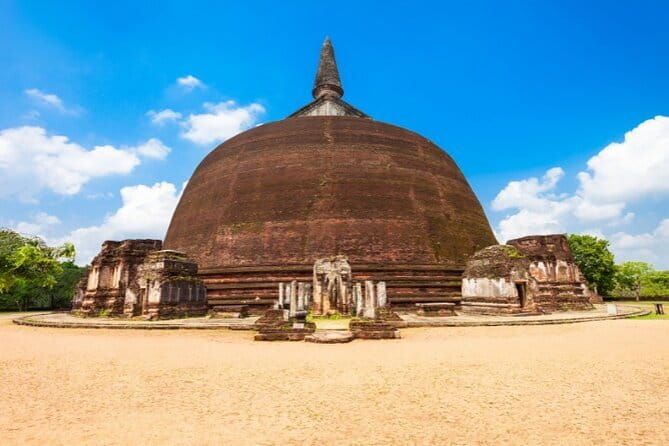
- Rankoth Vehera: about 15 minutes; admission is not included. This one is especially notable because it’s the largest stupa in Polonnaruwa, associated with King Nissanka Malla.
This is a smart pair because the contrast is easy to spot. Even if you’re not a stupa specialist, you can compare scale, form, and what the site is trying to communicate.
Alahana Pirivena: monastic and educational life beyond the statues
Next comes Alahana Pirivena Complex, about 30 minutes. Admission is listed as not included.
Here the focus shifts from royal power to monastic life and learning. The complex is associated with King Parakramabahu I and is often described as showing religious and educational strength during Polonnaruwa’s medieval period. You’ll get a different kind of context than you do at the palaces and image houses.
If you only care about the most famous Buddha statues, this can feel more “background” than “main event.” But if you’re the type who wants to understand how ancient communities worked day to day—this is where the city starts feeling human.
Gal Vihara: rock-cut Buddhas that earn their reputation

Then you get the big visual payoff: Gal Vihara, about 30 minutes. Admission is not included.
Gal Vihara is famous for its rock-cut Buddha statues dating to the 12th century. The real value here isn’t just seeing the figures; it’s understanding why rock-cut images mattered, and how the larger monastic complex fits together.
Plan to slow down. This is the kind of place where one extra minute lets you notice posture details and how the space guides your gaze. You’ll appreciate it more with a guide who can explain what you’re looking at.
Thivanka Image House: scale and detail, even in a short stop
The Thivanka Image House is next for about 15 minutes, with admission not included.
This structure is known for the size of the image house and for detailed artwork. It’s tied to the reign of Parakramabahu I, and while your time there is short, it’s an effective “art + meaning” stop—just enough to anchor what you’ve learned earlier in the day.
If you’re traveling with someone who loves architecture but hates long museum-style stops, this time-friendly segment is a good compromise.
Priyamali Gedara Road rice and curry: a needed break (with a real budget)
At about 1 hour 30 minutes, the tour includes a stop on Priyamali Gedara Road for Sri Lankan traditional rice and curry. It’s listed as admission free, but the overall tour’s “not included” list states that lunch is not included, so you should treat this as a place to buy your meal.
Why this matters: after multiple religious and palace sites, your energy drops. Having a longer lunch window—rather than a quick snack—can keep the afternoon from turning into a shuffle through ruins.
I suggest you use this stop strategically:
- Try to eat a proper lunch, not just a small bite.
- Ask what’s mild versus spicy if you have a low tolerance for heat.
- Drink water steadily through the day (bottled water is included).
Statue of Parakramabahu I: a straightforward way to remember the person
Next is the Statue of Parakramabahu I, about 30 minutes, admission not included.
This isn’t an image house or a stupa—it’s a monument built to represent the king. The statue is about 12 feet tall, depicting Parakramabahu I in regal attire. It’s an easy pause to reset your brain, especially after walking between more intricate religious structures.
You’ll get more out of this if your guide ties Parakramabahu’s reign back to the buildings you saw earlier, so the statue doesn’t feel like a random photo spot.
Deepa Uyana (King Nissankamalla’s Pleasure Garden): when the ruins cool off
Then you shift into green space at Deepa Uyana, also called King Nissankamalla’s Pleasure Garden. The stop is about 30 minutes, and admission is not included.
This garden is landscaped and historically significant, designed as a retreat—so it works as a mental breather. The value here is that your eyes get a change of scenery, and you stop thinking only about stone.
If you want the day to end feeling like more than a checklist, this garden moment is a great hinge into the final viewpoint.
Sunset at Parakrama Samudraya Viewpoint
Your last major stop is the Parakrama Samudraya View Point, around 30 minutes, and it’s listed as free.
Here you watch the sunset over the reservoir also known as the Sea of Parakrama. It’s one of those moments that makes Polonnaruwa feel connected to everyday life—water management, city power, and the landscape’s role in feeding and sustaining people.
Even if your phone camera is already packed with ruins shots, this ending helps your day land in your body, not just in your photos.
Price and logistics: the real cost picture before you commit
The tour price is listed at $30 per person, with a typical booking window far in advance. The big thing to understand is what that price covers versus what you pay separately.
From the provided info:
- Bottled water is included.
- Entry/admission fees for sites are not included, and the listed figure is USD 30 per person for site access.
- Lunch and snacks are not included.
- Private transportation and an air-conditioned vehicle are also listed as not included.
In other words, expect the day’s total to be higher than the headline $30 once entry fees and your meal choice are added.
Also remember you’re covering a lot of ground across sun-exposed ruins. If you’re sensitive to heat, build in your own cushion: arrive with sunscreen, a hat, and plan to slow down if you feel lightheaded.
The guide factor: why people keep praising Tharindu and Tarry
The strongest theme from the feedback is simple: the tour quality rises or falls with the guide. Guides like Tharindu and Tarry are repeatedly described as patient, clear, and able to answer questions—so the sites don’t become a blur.
One standout reported moment was a Hindu blessing included during a temple stop. I can’t promise any specific ritual every time, but it tells you the guide is attentive to cultural moments, not just monuments.
So when you book, think about your own travel style:
- If you like history told in plain language, a strong guide turns Polonnaruwa into a living place.
- If you want only photos with zero talking, you might spend too much time listening.
Who this tour fits best
This is a strong match if you:
- Want a private day without sharing attention with strangers.
- Like mixing Buddhist sites with Hindu elements so the city feels complete.
- Prefer a paced circuit that includes time for questions, not just a rapid march.
It can be less ideal if you’re exhausted by long days. Even though each stop is relatively short, the full route is still a full-day commitment, and the site is outdoors. In the heat, that can wear you down.
Should you book this Polonnaruwa private day tour?
Yes, if you want Polonnaruwa to make sense and you’re ready for a structured, full day of major sites plus a few smaller ones. The value is strongest when you add up what matters most in ruins: interpretation, pacing, and time to ask questions.
Before you book, do two quick reality checks:
- Budget for site admission on top of the tour price.
- Plan lunch at the Priyamali Gedara Road stop since lunch isn’t listed as included.
If that fits your style, this private day is a very practical way to see Polonnaruwa without feeling lost.
FAQ
How long is the Polonnaruwa Ancient City Private Day Tour?
It runs about 6 to 7 hours.
Where does the tour start?
The tour starts at WXRX+PHC Archaeological Museum, Polonnaruwa, Sri Lanka.
Is this a private tour?
Yes. It’s a private activity, so only your group participates.
What’s included in the price?
Bottled water is included.
Are site admission fees included?
No. Entry/admission fees are not included (listed as USD 30 per person).
Is lunch included?
No. Breakfast and lunch are listed as not included. The route includes a rice-and-curry stop on Priyamali Gedara Road.
What tickets do I receive?
The tour uses a mobile ticket.
Is transportation included?
The listing says private transportation is not included.
How does confirmation work?
Confirmation is received at the time of booking.
What is the cancellation policy?
There is free cancellation up to 24 hours in advance for a full refund.