REVIEW · MATERA
Discover Matera, the ancient city – English tour
Book on Viator →Operated by Renato Favilli - Guida Turistica Matera · Bookable on Viator
Matera can feel like science fiction, if you let it. This small-group English walking tour guides you through the Sassi with context you won’t get from wandering alone, so you understand what you’re seeing as you see it. I really like the Sasso Caveoso to Sasso Barisano route, because it keeps you moving through the heart of Matera without getting swallowed by the alley maze.
What I like most is the focus on people and everyday life in the caves, not just photo-stops. Guides like Renato Favilli and Gaetano bring the story into focus with clear pacing, family-level details, and a sense of humor that makes the timeline stick.
One consideration: if you prefer quicker highlights and less talking, you might feel the tour leans very information-heavy at times. If that’s you, plan to balance the head knowledge with your own wandering after the tour.
In This Review
- Key points to know before you go
- Why Matera’s Sassi hit harder than a postcard
- What you’ll walk: Sasso Caveoso to part of Sasso Barisano
- Rupestrian churches and cave homes: the story behind the stones
- How the Shame of Italy to UNESCO timeline makes sense on the street
- Stops that feel personal: family caves, water systems, and small details
- Small-group pacing and guide energy (Renato and Gaetano patterns)
- Practical tips for walking Matera for 2–3 hours
- Price and value: what $36.28 buys you here
- Who should book this Matera cave-city tour
- Should you book? My quick call
- FAQ
- How long is the English tour of Matera?
- Is the tour offered in English?
- Which parts of Matera does the tour cover?
- How large is the group?
- Will I see rupestrian churches and cave homes?
- Is this tour suitable for most travelers?
- What’s the cancellation and refund rule?
- What if the weather is bad?
- Are service animals allowed?
Key points to know before you go
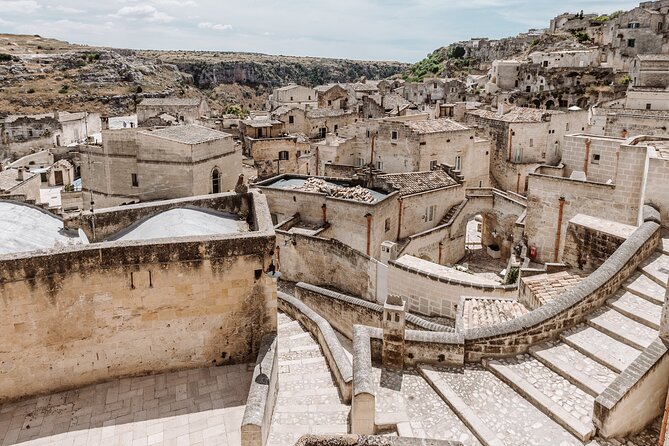
- Small group (max 20): easier questions, less crowd pressure in tight streets.
- Sassi route logic: you move through Sasso Caveoso and part of Sasso Barisano without playing map roulette.
- Rupestrian churches + cave homes: you learn how worship and living worked in the same carved world.
- Views over the valley: pauses for perspective, so Matera stops looking random.
- A story arc with meaning: how the city went from the Shame of Italy narrative to UNESCO status.
- Bring sensible shoes: the walking is manageable, but you’ll want grip on uneven stone.
Why Matera’s Sassi hit harder than a postcard
Matera is one of those places where the buildings make the lesson. The caves, the stairways, the weird turns—none of it is accidental. With a guide, you start seeing patterns fast: where people gathered, where water mattered, where privacy shaped home layouts, and why the city developed the way it did.
I especially like that this tour treats Matera as a living system, not a museum display. You’re not just hearing facts. You’re watching how the city’s physical design supports human routines. That’s how the “wow” becomes understanding, and understanding makes the photos better.
And yes, you get the valley views too. That helps you connect the ground-level alleys to the bigger picture. Matera stops being a maze and starts looking planned.
You can also read our reviews of more tours and experiences in Matera.
What you’ll walk: Sasso Caveoso to part of Sasso Barisano
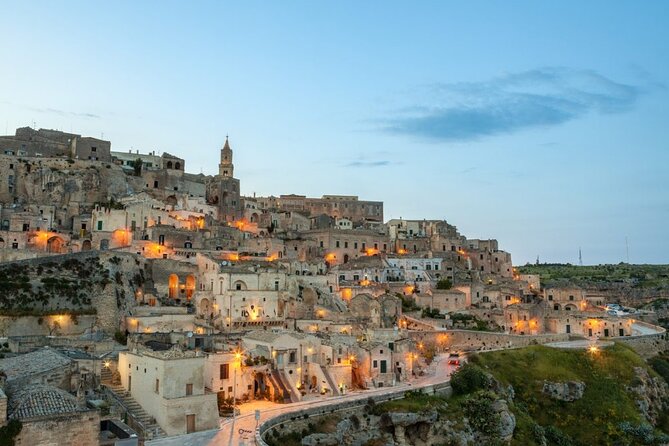
The route runs through two sides of the Sassi world. You’ll spend time in Sasso Caveoso, then continue into part of Sasso Barisano. That matters because these areas don’t feel the same when you’re actually walking them.
Instead of a checklist of churches, the tour follows the city’s “meanders.” In practice, that means you’ll shift from narrow cave passages to open sight lines, then back into the dense alley web. It’s a smart way to keep you oriented: the guide points out what you’re looking at so you don’t have to guess where you are.
A nice benefit of this approach is momentum. Matera can make your legs—and your brain—feel busy. With a guide’s structure, you can relax into the walk. You’ll still discover corners you might miss on your own, but you won’t feel lost.
Rupestrian churches and cave homes: the story behind the stones
This tour isn’t the classic route where the main event is a big church interior. You will see rupestrian churches and cave homes, but the emphasis stays on how those spaces functioned for the people who lived here.
Here’s what makes these stops worth it: the caves aren’t just dramatic exteriors. They’re answers to real questions like shelter, light, airflow, and community life. When you learn those “why” details, the buildings stop feeling like set pieces and start feeling practical—yet still extraordinary.
You’ll also get the kind of explanation that helps you connect what you see to what you’re told. When a guide points out features tied to daily routines, it clicks. You start noticing door shapes, passage placement, and how people likely moved through the neighborhood.
One small caution: if your goal is mainly grand cathedral-style interiors, you may feel this is the wrong match. The focus is on the cave-city way of life, which includes religious spaces, but not in the traditional “tour church to church” mode.
How the Shame of Italy to UNESCO timeline makes sense on the street
Matera’s story has sharp turns. The tour’s narrative arc aims to explain how the city shifted from a stigmatized past—often summarized as the Shame of Italy—to World Heritage recognition.
What I like about this structure is that it doesn’t treat history like a separate chapter. It connects the timeline to the city’s physical shape. You learn why the Sassi were seen the way they were, and how attitudes and conditions changed over time.
There’s also something human in the pacing. The guide’s style (stories, personal touches, and local-rooted context) makes you feel less like you’re studying and more like you’re understanding a community’s choices under pressure. Even if you don’t remember every date, you’ll remember the logic of the transformation.
If you like stories that blend art, anthropology, and architecture into one coherent picture, this is the right format. Matera isn’t easy to decode. A guide helps you read the place like a text.
Stops that feel personal: family caves, water systems, and small details
The most memorable tours are often built from small, specific stops. This one leans that way.
For example, some departures include a stop at a cave house connected to the guide’s family, which turns the history from abstract to personal fast. You also may encounter explanations of traditional bakeries and water collection systems—both the public kind and the private kind. Those details matter because they show what people actually depended on day after day.
Then there’s the film-world connection. This experience has been described as visiting a James Bond filming site tied to No Time to Die. If you’re a film fan, it’s a fun moment. But the best part is when the guide uses it as a bridge back to the real place: how Matera’s look comes from its function and geography.
Bottom line: these aren’t random side quests. They’re the kind of stops that help you understand how a cave city works, not just how it looks.
Small-group pacing and guide energy (Renato and Gaetano patterns)
You’re capped at 20 travelers, and that affects the whole vibe. In a place with tight lanes and sudden stairways, small groups mean fewer bottlenecks and fewer people talking over the guide at the exact moment you need to hear the explanation.
The guide experience is also a big deal. Names you might hear include Renato Favilli and Gaetano. Many guests love the way these guides blend facts with humor and stories. That combination keeps the walking tour from turning into a lecture you only half follow.
You’ll also have time to ask questions, which helps a lot when you’re trying to connect what you see to what you’ll want to explore later. A good guide will recommend what to revisit on your own and where to eat depending on your mood—casual or sit-down.
One more practical note: the pace is described as relaxed enough for a 2 to 3 hour window. It’s not presented as a grueling trek, but you still need to move consistently.
Practical tips for walking Matera for 2–3 hours
Matera rewards sensible planning. Here’s what I’d do if you want the best experience with the least fuss:
- Wear grippy shoes. The “sensible shoes” advice is real. Stone can be uneven, and you’ll want stable footing.
- Expect uphill-and-downhill rhythm. Even when it’s not framed as strenuous, your legs will feel the change in elevation.
- Bring water. The tour is a few hours, and you’ll be walking and listening—both use energy.
- Use the valley breaks to reset. When the guide pauses for views, treat it as a breathing checkpoint, not just a photo moment.
- Have your phone charged. You may use a mobile ticket, and you’ll want photos and maps for after the tour.
- Come ready to listen. If you’re the type who prefers quiet wandering, this may feel like a nonstop talk. If you like context, it’s a plus.
Also, timing matters. Matera can be weather-sensitive. This experience is described as requiring good weather, so you’re better off going on a day with stable conditions.
Price and value: what $36.28 buys you here
At $36.28 per person for about 2 to 3 hours, you’re paying for something more than movement. You’re paying for orientation and interpretation.
That’s the difference. If you wander the Sassi alone, you’ll see the caves and alleys, sure. But you’ll have to piece together meaning yourself. With a guide, you get:
- a structured route through Caveoso and part of Barisano
- explanations of how life worked in the caves
- the storyline behind the UNESCO transformation
- small-group attention for questions
And with a maximum of 20 travelers, you’re less likely to feel like you’re trapped behind the herd while trying to hear the details.
So yes, it costs money. But it’s not priced like a long, all-day excursion. It’s priced like an efficient way to make the city click fast.
Who should book this Matera cave-city tour
This tour is a great match if you want:
- history with real-world context, tied to how people lived in the Sassi
- a guide who can explain the city’s timeline in a way you can actually remember
- a walk that helps you avoid getting lost in the alley network
It’s also ideal for first-timers. Matera can be hard to self-orient because the streets feel like a puzzle that never shows the picture on the box. A guided route gives you a mental map so your solo time afterward is easier.
It may be less ideal if you:
- want a classic church-hopping itinerary focused on big interiors
- dislike tours that carry a lot of narration
- plan a very laid-back day with minimal walking and minimal talking
Should you book? My quick call
If you want Matera to feel understandable—not just beautiful—this is the booking that pays off quickly. The small-group size, the Sassi-focused route, and the way the guide frames the shift from Shame of Italy to World Heritage give you a strong foundation for the rest of your day.
I’d book it early in your Matera trip. Do it soon enough that your questions help you choose what to explore next. Then use the rest of your time to wander with confidence, because you’ll know what you’re looking at.
FAQ
How long is the English tour of Matera?
It runs about 2 to 3 hours.
Is the tour offered in English?
Yes. The tour is offered in English.
Which parts of Matera does the tour cover?
The route focuses on Sasso Caveoso and part of Sasso Barisano.
How large is the group?
The maximum group size is 20 travelers, keeping it small and manageable.
Will I see rupestrian churches and cave homes?
Yes. The tour includes rupestrian churches and homes, and it’s more about the cave city and how people lived than a classic church-only itinerary.
Is this tour suitable for most travelers?
The activity is listed as suitable for most travelers. It is a walking tour, so comfortable mobility and sensible shoes matter.
What’s the cancellation and refund rule?
You can cancel for a full refund up to 24 hours before the experience starts. If you cancel within 24 hours of the start time, the amount paid is not refunded.
What if the weather is bad?
This experience requires good weather. If it’s canceled due to poor weather, you’ll be offered a different date or a full refund.
Are service animals allowed?
Yes, service animals are allowed.