REVIEW · LUXOR
Private guided tour King Tut tomb Historical Tour in Luxor
Book on Viator →Operated by Luxor Travels · Bookable on Viator
Eight hours in Luxor, and Tut’s story feels close. This is a private full-day route that pairs the Valley of the Kings with Karnak’s huge temple world, guided by an Egyptologist.
I especially like the way the day is structured: you get hotel pickup plus air-conditioned rides between sites, and you’re not stuck figuring out routes or timing. I also like the focus on Tutankhamun’s setting, including the chance to stand in front of the mummy-related highlights tied to his tomb discovery in 1922.
The main thing to double-check is entrance fees. The overview says entrance fees are included, but the detailed stop list marks several admissions as not included, and the pricing section says total entrance fees aren’t included—so budget a bit and confirm before you go.
In This Review
- Key highlights you’ll actually feel during the day
- A private 8-hour Tut and Karnak day you can plan around
- King Tutankhamun’s tomb: what you’re really paying for
- The Valley of the Kings beyond Tut: Ramses, Merenptah, and Haper-harps trivia
- Deir el-Bahari and the Colossi: Hatshepsut’s temple connection to Tut
- Karnak Temple: where your guide’s story will matter most
- Lunch and comfort: how the day stays manageable
- Price and entrance fees: the one part to confirm before you pay
- Who should book this tour (and who might want a different style)
- Should you book Private guided tour King Tut tomb Historical Tour in Luxor?
- FAQ
- What time does the tour start?
- How long is the tour?
- Is the tour private?
- What’s included in the price?
- Are entrance fees included?
- Is there a vegetarian lunch option?
Key highlights you’ll actually feel during the day
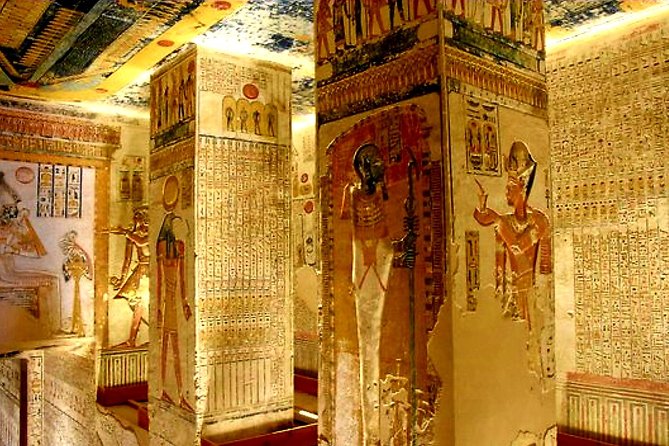
- King Tutankhamun’s tomb visit in the Valley of the Kings, with an Egyptologist to explain the story
- A packed Valley of the Kings circuit that goes beyond Tut to other royal tombs
- Deir el-Bahari and Hatshepsut’s temple as a smart dynasty connection to Tutankhamun
- Karnak’s core sights like the Hypostyle Hall and the Sacred Lake area
- Private-guide flexibility (when the group is small, you tend to get more attention and better photos)
A private 8-hour Tut and Karnak day you can plan around
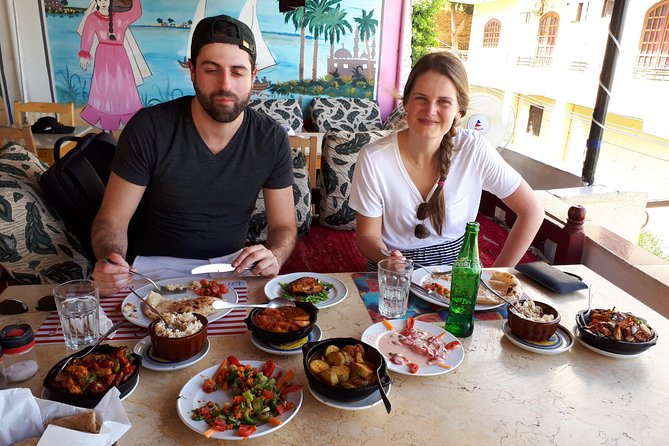
This tour is built as a full-day knockout in Luxor: about 8 hours, starting around 8:00 am, with pick-up from central Luxor hotels or the harbor by an air-conditioned minivan. For a first visit, that kind of structure matters. It means you spend your morning where the timeline started (Tut’s world) and your afternoon in the place that still dwarfs everyone with temple scale (Karnak).
You also get the format that makes Egypt so much easier to enjoy: a private Egyptologist guide. The guide’s job isn’t to “just translate labels.” It’s to connect what you’re seeing—kings, gods, symbols, and tomb layouts—so you don’t walk away with only “I saw a wall painting.” This is exactly the kind of tour where the guide’s explanations turn quiet rooms into history that clicks.
For $65 per person, it’s not trying to be a budget-only option. You’re paying for the guide, the transport, and the day plan that strings together multiple major sites without you wrestling with logistics. And because it’s private, you only share the experience with your group.
You can also read our reviews of more tours and experiences in Luxor.
King Tutankhamun’s tomb: what you’re really paying for
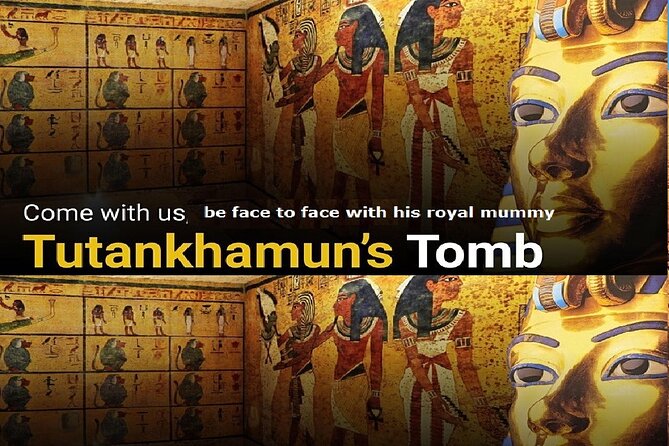
The headline is, of course, the Tomb of King Tutankhamun in the Valley of the Kings. Tutankhamun is known worldwide as the boy king, and the day frames his life in simple, memorable milestones: he rose to the throne at about age 10 and died around age 19. The tomb itself is tied to one key modern fact you’ll hear repeated with good reason: it was discovered in 1922—the moment the world’s attention locked onto Tut.
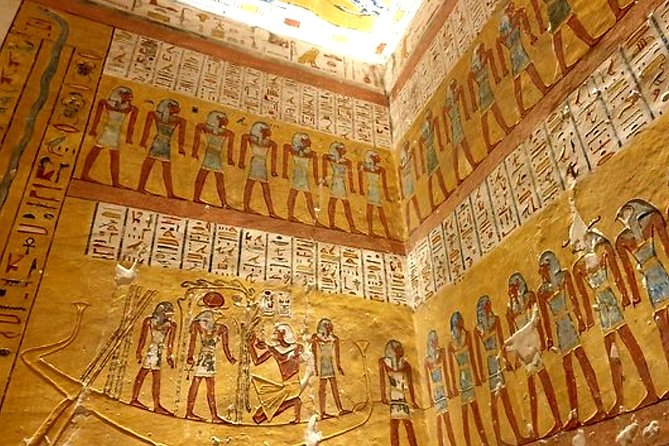
When you visit, you’re not touring a museum case. You’re entering the Valley of the Kings tomb environment, where the atmosphere is part of the experience: tight corridors, careful preservation, and that surreal feeling that you’ve reached the space where royal burial was prepared and sealed for centuries. The tour description also promises a face-to-face encounter with the mummy and Tut’s royal context in his tomb area.
One practical note: the itinerary lists the Tut stop as short—around 10 minutes. That doesn’t mean it’s rushed if your guide is doing their job well. In tombs, the “right” amount of time is often the difference between seeing details and letting the heat and crowds (if any) sap your focus. Here, the value is that your guide is present to point out what matters inside that limited window.
The Valley of the Kings beyond Tut: Ramses, Merenptah, and Haper-harps trivia
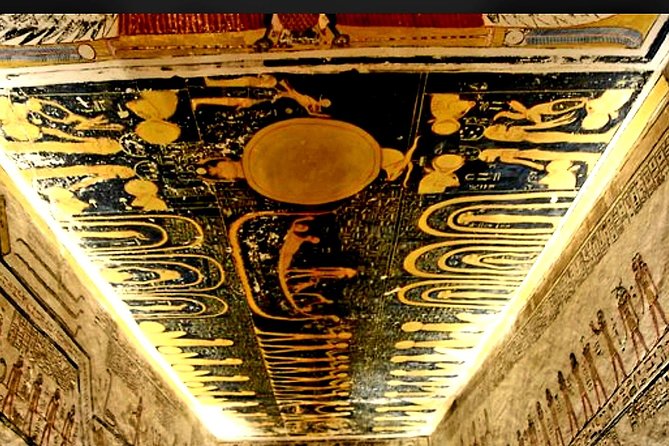
Tut is the star, but the Valley of the Kings gets a lot more interesting when your guide widens the lens. After Tut, the plan includes multiple royal tomb stops—some brief, some longer—so you can compare how different reigns shaped tomb design, decoration, and burial priorities.
You’ll get time in the Valley of the Kings overall (listed at about 2 hours). That broader chunk is helpful because it puts Tut into a bigger map of royal burials rather than treating him like a one-off “greatest hits” stop.
Then the itinerary adds specific tombs:
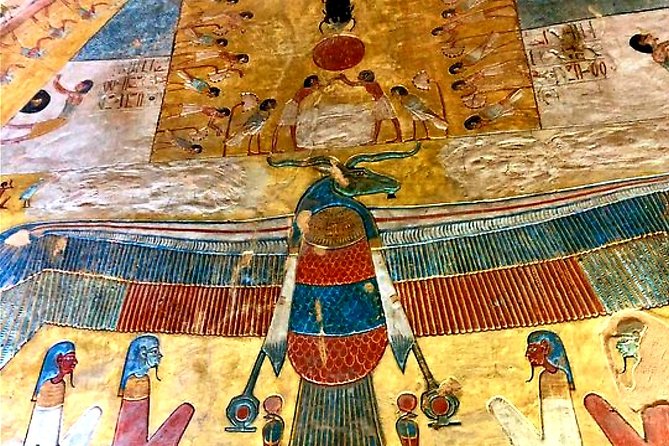
- Tomb of Ramses III (KV 11): This one stands out because it’s described as a complex system with colorful painted sunken reliefs and ritual texts (like the Litany of Ra and the Book of Gates). You also get secular scenes in side rooms, including foreign tributes—such as pottery imported from the Aegean—plus royal armoury items and boats. There’s also a famous nickname tied to a detail: the blind harpists, which is why it’s sometimes linked to the Tomb of the Harpers.
- Tomb of Merenptah (Tomb 8): Here, the focus is on dynasty context and the tomb’s place in royal patterns. The description notes Howard Carter’s discovery in 1903 and mentions a shift in tomb design—less lateral rooms and taller corridors. Even if your time inside each tomb is limited, hearing why the layout changes helps you notice the differences instead of just seeing more carvings.
A key drawback to plan for: several of the tomb stops are listed in short bursts (often 10–15 minutes). If you’re the type who wants to read every wall carefully, you’ll likely wish you had more time per chamber. The trade-off is that you get a broader set of tombs in one day, and your guide’s explanations can keep the comparisons meaningful.
Deir el-Bahari and the Colossi: Hatshepsut’s temple connection to Tut
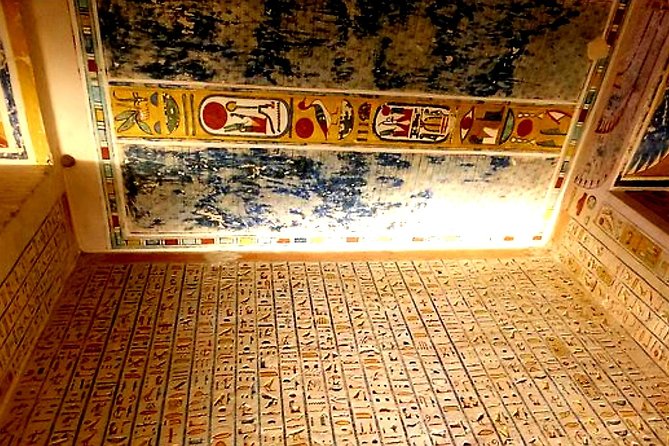
After the Valley stops, you move to Temple of Hatshepsut at Deir el Bahari, listed at about 1 hour. This is an excellent pairing with Tutankhamun, and not only because they’re famous in their own right. The tour frames Hatshepsut as the only woman who reigned as Pharaoh and—more importantly—notes that she belongs to the same dynasty and is an ancestor of Tutankhamun.
That makes the site more than a pretty landmark. You’re essentially walking through a “family tree” of rulership and legitimacy, and your guide should help you connect the visual language of power to the dynasty period that produced Tut.
Then you’ll see the Colossi of Memnon—two huge statues dating back to the era of King Amenhotep III. They’re listed as about 10 minutes, which is enough time to appreciate scale, snap a few photos, and understand why these statues became a famous stop for travelers long before Tut’s story became global pop culture.
If you’re worried about getting tired, this part of the day is also a good reset. It’s outdoors and spaced apart from the tight tomb interior experience.
Karnak Temple: where your guide’s story will matter most
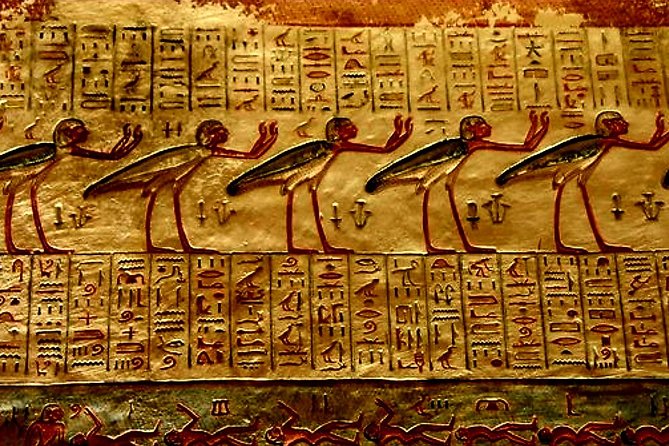
Karnak is where Luxor stops being “a bunch of monuments” and starts becoming an idea of how the ancient Egyptians built their world.
The itinerary includes Temple of Karnak with about 1 hour, plus additional Karnak-related stops like the Obelisk of Thutmoses I and the Obelisk of Queen Hatshepsut. There’s also a stop listed as Temple of Amun (described as part of the Karnak complex) at about 2 hours, plus a short stop for Temple of Ramesses III.
What makes Karnak worth doing with a guide is that the site is layered. It’s not one building. It’s a complex of temples built across different reigns. The tour’s description spells out the main “great hits” that a good Egyptologist can connect for you:
- Avenue of Sphinxes
- Hypostyle Hall with its 134 gigantic columns
- Obelisks associated with Queen Hatshepsut and Tutmosis I
- Temple of Amon, with lotus and papyrus decorative motifs
- Sacred Lake (part of the temple complex layout)
- A mention of the Granite Scarabeus of Amenophis III
In plain terms, Karnak is an information test. Without guidance, you can easily walk past the most meaningful parts because your eye doesn’t know what to focus on. With a guide, you’ll know what the sacred lake was for, why the column forest matters, and what the obelisks symbolized in the temple’s political-religious story.
Drawback to keep in mind: this is a long day with multiple steps. Karnak can be hot and tiring, and the itinerary includes several short “micro-stops” (10 minutes each). If you’re hoping for unhurried time in one single hall, you might feel the schedule pressure. Still, if you want the big Karnak moments covered efficiently, this route is built for that.
Lunch and comfort: how the day stays manageable
This tour includes lunch (and notes a vegetarian option is available). The itinerary says the lunch happens at an Africa Restaurant in Luxor, and the lunch window listed is about 30 minutes.
A 30-minute lunch on a packed tour can feel short, but it usually works best for two reasons: you’re not wasting time finding food, and you’re not sitting long enough to cool down or lose momentum. In Luxor heat, that matters. I like included lunch on these days because it prevents the classic trap: skipping a meal too long, then grabbing whatever is close and paying for it later in fatigue.
For comfort, the big win is transportation. You’ll be driven in an air-conditioned minivan with hotel pickup and drop-off. That’s especially helpful because your day includes several areas of Luxor and the route can take time even when you’re not sightseeing every step.
One more small benefit from the private format: when the day is quiet or you’re traveling solo, you can often get more attention from your guide. In at least one 5-star experience, the guide even took photos so the traveler got in the pictures—a simple detail, but it makes the day feel more personal.
Price and entrance fees: the one part to confirm before you pay
The tour price is listed as $65 per person, and it’s a private full-day plan including a qualified Egyptologist guide, hotel pickup and drop-off, and lunch. That’s the straightforward value story.
But entrance fees are where you’ll want to slow down and check.
- The tour overview says entrance fees are included.
- The stop list repeatedly marks admission as not included.
- The inclusions section lists lunch and guide, and the “not included” section says total entrance fees are not included.
That contradiction doesn’t mean the experience is bad. It means you should confirm what you’ll actually pay on top of the tour price before you arrive. If entrance fees are handled by the operator at the meeting point, great. If they’re separate, you’ll want to budget so you don’t scramble when you’re already in the flow of the day.
Practical tip: when you confirm, ask what the entrance fees cover for each site in your itinerary. That’s the fastest way to remove the uncertainty.
Also note the booking behavior: this tour is typically reserved about 73 days in advance on average. If you’re traveling at a busy time, earlier booking usually helps lock in the private schedule.
Who should book this tour (and who might want a different style)
This is a strong fit if:
- You want a single-day plan that covers Tut + multiple Valley of the Kings tombs + Karnak
- You like understanding what you’re seeing, not just snapping photos
- You prefer private guidance so you can ask questions and keep your pace
- You’re okay with a packed schedule where some stops are intentionally brief
You might consider a slower or more specialized option if:
- You want long, quiet time inside one tomb to study details without any time pressure
- You’re sensitive to heat and want fewer transitions in one day
Overall, it’s a very “first-timer plus” tour. It covers the essentials while still adding enough variety to avoid the feeling of repeating the same type of sight.
Should you book Private guided tour King Tut tomb Historical Tour in Luxor?
If your goal is to maximize value from a limited Luxor window, I’d book it—with one condition: confirm the entrance-fee situation in writing (since the description and the stop notes don’t match perfectly). Assuming fees are handled clearly, you’ll get a well-paced, Egyptologist-led route that makes Tutankhamun feel like part of a larger royal world.
You’re paying for more than the tomb. You’re paying for the connections: Tut’s story, the Valley’s design variety, Hatshepsut’s dynastic link, and Karnak’s temple logic. That combination is hard to replicate on your own in a single day without either confusion or a lot of luck.
FAQ
What time does the tour start?
The tour start time is listed as 8:00 am.
How long is the tour?
The duration is listed as approximately 8 hours.
Is the tour private?
Yes. It’s described as a private tour/activity, with only your group participating.
What’s included in the price?
Included items are a qualified Egyptologist guide, hotel pickup and drop-off, and lunch.
Are entrance fees included?
Entrance fees are not consistently shown. The overview says entrance fees are included, but the stop details and the “not included” section say total entrance fees are not included—so you should confirm what you’ll need to pay for admissions.
Is there a vegetarian lunch option?
Yes, a vegetarian option is available.