REVIEW · LUXOR
Valley of the Kings & Hatchepsut temple and Back into Egypt’s ancient history
Book on Viator →Operated by Luxortourguide · Bookable on Viator
Ancient Egypt hits different on the West Bank. This 5-hour, private Luxor tour lines up the big names—Valley of the Kings tombs, Temple of Hatshepsut at Deir el-Bahari, and the Colossi of Memnon—so you leave with clear stories, not just monuments.
I particularly like the qualified Egyptologist approach. With a guide (Khaled is mentioned by name in the reviews), you get explanations you can carry inside the tombs and on the temple terraces, including what to look for while you’re standing there. I also like the “stress less” logistics: hotel pickup and drop-off plus an air-conditioned vehicle means you spend the day seeing, not figuring out.
One thing to consider: entrance fees are not included, and the Tutankhamen burial chamber requires an additional ticket. So it’s worth budgeting a bit extra beyond the tour price if Tutankhamen is on your must-see list.
In This Review
- Key takeaways before you go
- West Bank pickup and the easy ride into Luxor’s past
- Valley of the Kings: crossing the Nile and picking the right tombs
- Tip on timing inside the valley
- Tutankhamen and the ticket reality
- Temple of Hatshepsut at Deir el-Bahari: terraces, power, and story
- What to expect on the ground
- Colossi of Memnon: the quick stop that still makes sense
- Why the Egyptologist guide matters (even when you think you know the basics)
- Price and value: $50 works best when you plan for tickets
- Who should book this Luxor West Bank day?
- Should you book this tour?
- FAQ
- What sites are included in this tour?
- How long is the tour?
- Is hotel pickup and drop-off included?
- Are entrance tickets included in the tour price?
- Is food included?
- Is this tour private?
- Is the Colossi of Memnon stop ticket-free?
Key takeaways before you go
- Private, Egyptologist-led visits that help you understand what you’re seeing, on-site and at your pace.
- Valley of the Kings time for three tombs, with Tutankhamen called out as an extra ticket option.
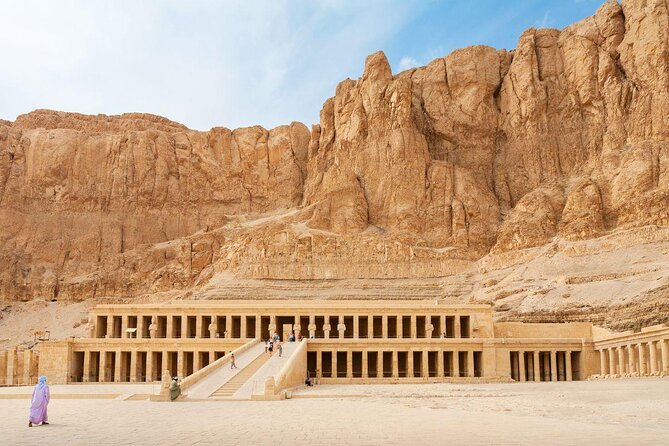
- Hatshepsut at Deir el-Bahari brings the story of Egypt’s only ever female ruler to life through the temple setting.
- Punt trade mission + divine birth stories are part of the guide’s walkthrough at the Hatshepsut temple.
- Colossi of Memnon is quick and free, so it slots neatly into a 5-hour schedule.
- Hotel pickup/drop-off makes the day smoother—especially if you’re not staying near the West Bank sites.
West Bank pickup and the easy ride into Luxor’s past
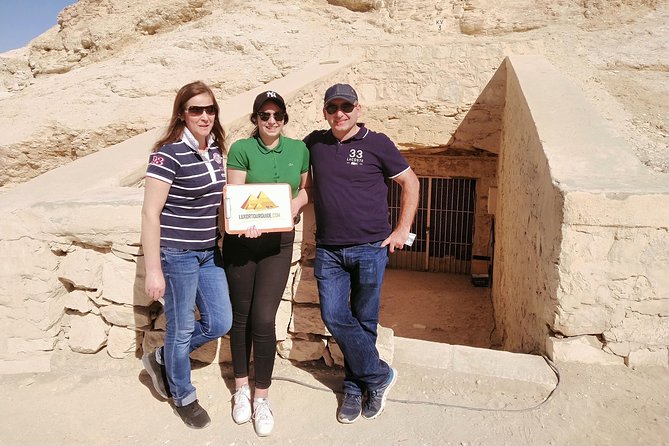
This tour is built around one simple goal: get you across the Nile and into the history fast, without turning your day into a mini project. You start with hotel pickup, then move to the West Bank in an air-conditioned vehicle. Even if you don’t love long drives, the schedule stays tight and efficient.
The West Bank itself sets the mood. You’re heading toward tombs and mortuary temples—spaces that were designed for eternity, not crowds. Having a guide with you matters here, because it’s easy to look at carvings and just… admire them. The better payoff is when you know what you’re looking at and why it mattered.
Also, since this is a private tour, you’re not stuck with the “everyone move together” energy. Your group has the space to ask questions and adjust your pace inside the tombs and on the terraces.
Valley of the Kings: crossing the Nile and picking the right tombs
Stop 1 is the Valley of the Kings, the burial place of 64 ancient Egyptian rulers. You’ll cross the Nile to reach the West Bank, where the valley sits like a dramatic wall of rock and secrets. Your time here is about 2 hours, which is long enough to see more than one tomb without feeling rushed.
The plan is to visit three tombs of the most famous pharaohs ruled from Luxor. The tour includes multiple tomb stops, but it specifically notes that the burial chamber of Tutankhamen is an additional ticket. If Tutankhamen is your top draw, plan your budgeting early so the main request doesn’t turn into a last-minute surprise.
Why the three-tomb approach works: one tomb gives you the atmosphere, two gives you patterns, and three helps you start comparing. You’ll likely notice differences in layout and the way scenes are presented—exactly the kind of moment where an Egyptologist guide earns their fee. In the reviews, the guide style gets praised for explaining what to focus on before entering the tombs, so you don’t end up wandering visually.
There’s also a practical benefit: tombs can be visually busy. Even if you love history, you’ll enjoy the day more when someone tells you what’s most meaningful to look for first. That’s where this format feels “stress-free” in a real way—less confusion, more understanding.
Tip on timing inside the valley
Since you’re going to multiple tombs, it helps to keep your energy steady. Take a breath, listen to the guide’s briefing, then step into the tomb with a clear goal. That’s how the visit clicks instead of blending into one long stone corridor.
Tutankhamen and the ticket reality
Tutankhamen is one of those names that travels across time and pop culture. Here, that famous status shows up in a very practical way: the Tutankhamen burial chamber has an additional ticket. That means your tour price covers the guided experience and the core visits, but not every single “headline room.”
If you’re the type who wants the certainty of seeing Tutankhamen, treat that extra ticket as part of the plan rather than a bonus. It’s also the kind of decision that changes your expectations for the valley. With a clear head about what’s included and what’s not, you can enjoy the tombs you do visit even if you choose not to add the Tutankhamen ticket.
The takeaway: don’t let the ticket detail slow your enthusiasm. It’s normal here, and the tour is designed so the day still feels complete even if you only add Tutankhamen if it fits your priorities.
Temple of Hatshepsut at Deir el-Bahari: terraces, power, and story
Next you head to Stop 2: the Temple of Hatshepsut at Deir el-Bahari. This is one of Luxor’s most memorable “set pieces” because the temple rises from the desert plain in a series of terraces. Even before you start learning, the structure does half the storytelling—layer by layer, it feels built to impress.
You’ll spend about 1 hour here, and your guide focuses on the big reasons Hatshepsut matters. This includes the fact that she was Egypt’s only ever female ruler. But you’re not just hearing the headline—you’re getting the narrative threads that make her rule feel understandable in context.
A standout part of the temple visit is what the guide covers about Hatshepsut’s story:
- her divine birth, and
- how she convinced the Egyptians she is the daughter of the god Amon, the principal god of Luxor, and
- the trading mission to the land of Punt (Somalia).
That combination matters. When you link “who she was” with “how she justified her rule” and “what she sent out into the wider world,” the temple stops being only stone. It becomes a message system.
What to expect on the ground
Inside a place like Deir el-Bahari, your senses do a lot. The terraces give you natural stops where the guide can point and explain. Then the stories land in a physical space that was meant to be seen—by people moving through those same levels.
In the reviews, this is exactly where the guidance style gets praised: guides are credited with making it easy to know where to look and what details to care about. That’s the difference between taking photos and actually getting meaning from the carvings.
Colossi of Memnon: the quick stop that still makes sense
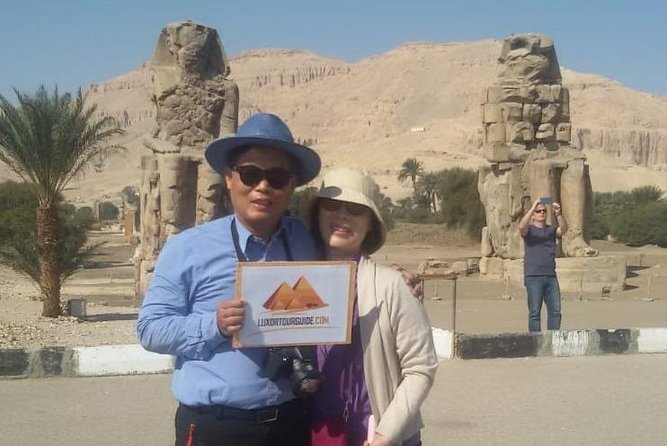
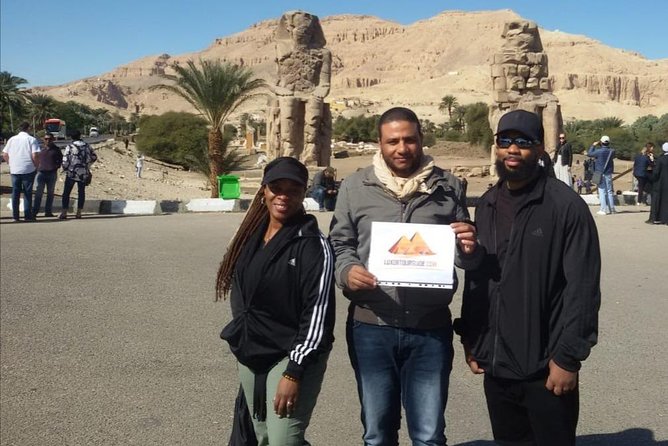
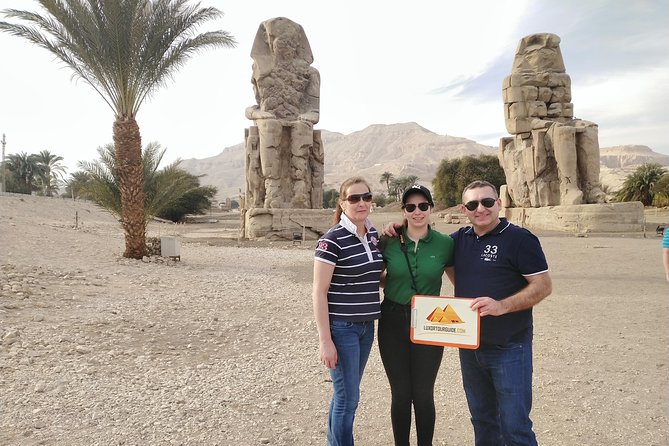
Stop 3 is the Colossi of Memnon, and it’s a short one—about 20 minutes. These two giant statues mark the site of the funerary temple of Amenhotep III. Today, what you’re seeing is what remains: the monumental pair stands on the West Bank while the larger complex is gone.
Admission here is free, and that’s a nice bonus for anyone managing time or budget. The short duration also helps the whole itinerary feel balanced. After the valley tombs and the Hatshepsut temple, you get a final “visual punctuation mark” without draining the day.
The Colossi are also ideal if you like atmosphere. You can stand back, take in scale, and then feel how ancient Egypt used sheer size to communicate importance. Even with the quick timing, your guide can still frame what you’re looking at so it doesn’t feel like a drive-by.
Why the Egyptologist guide matters (even when you think you know the basics)
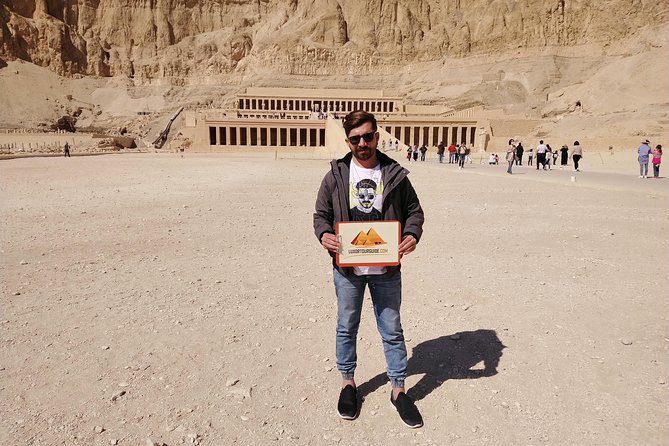
This tour is built around a private qualified Egyptologist guide, and that’s not just a marketing line. The practical payoff shows up in three places.
First, you get briefings that set your expectations before you enter tombs. Multiple reviews call out guides being informative and explaining what to look for. That matters because tombs can feel like a blur if you don’t have a simple mental map.
Second, you get help connecting the dots between sites. The Valley of the Kings is about royal burial; Deir el-Bahari is about royal authority and legacy; Colossi of Memnon relates to a funerary temple site. When you see all three in a single day, your brain starts making links naturally.
Third, you get room for questions. Reviews highlight guides answering questions and being patient and flexible. In a private setting, you can ask the “Wait, how does that work?” questions that you’d normally hold back in a big group.
If you like history but don’t want a lecture, this format is a good middle ground. It guides your attention without turning your day into homework.
Price and value: $50 works best when you plan for tickets
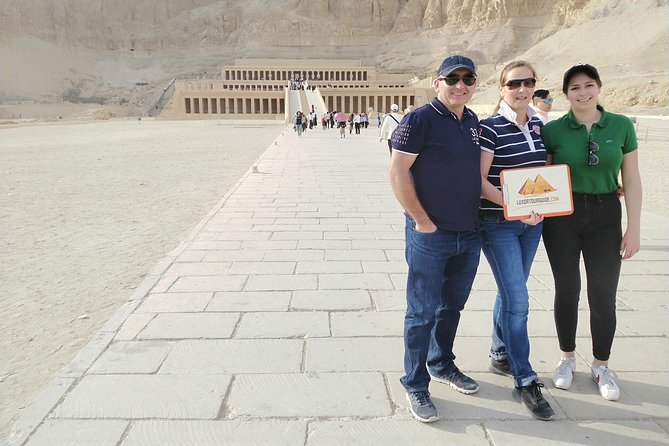
The tour price is listed as $50.00 per person for about 5 hours. That’s a strong value point in Luxor because you’re paying for more than transportation: you’re paying for a qualified Egyptologist plus hotel pickup and drop-off.
The main “value caveat” is that entrance fees are not included. Also, the Tutankhamen burial chamber specifically needs an additional ticket. So the real cost is the tour price plus site admissions.
That said, the itinerary still makes financial sense because:
- You’re seeing multiple major stops in one day (Valley of the Kings + Hatshepsut temple + Colossi).
- Colossi of Memnon is noted as free admission, which helps offset the paid sites.
- With a private guide, you get more time meaningfully spent inside the sites rather than lost to confusion.
If you’re trying to keep the day efficient and you’re okay budgeting separately for entry fees, this feels like a solid deal.
Who should book this Luxor West Bank day?
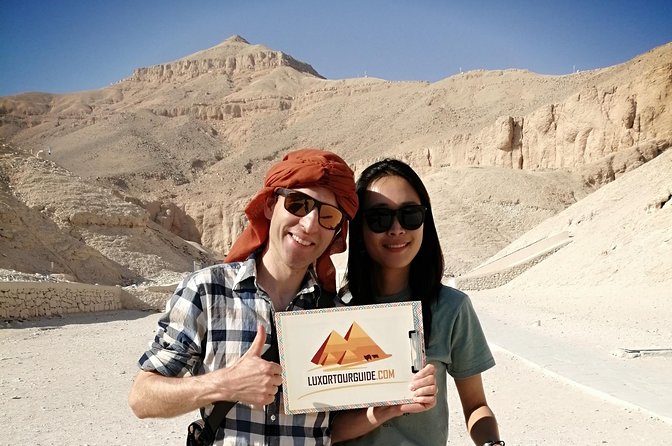
This is a great fit if you want a high-impact day without building your own route from scratch. You’ll enjoy it most if you like:
- royal tombs and temple storytelling,
- learning from an Egyptologist style guide, and
- a schedule that’s active but not chaotic.
It’s also a smart choice for solo travelers who want companionship and clarity. In the reviews, solo visitors describe being glad to have the guide along to explain what to know about the kings. That’s exactly the kind of advantage a private guide gives you—your questions don’t get brushed aside.
If you’re traveling as a family or group with a tight schedule, the private setup can be a lifesaver. Reviews mention efficient transportation and fit-everything-in timing, which is often the difference between a “cool day” and an “exhausting day.”
If you’re the kind of traveler who hates paying extra for top-ticket highlights, factor that into your decision early because the Tutankhamen chamber is specifically called out as an additional ticket.
Should you book this tour?
Yes, I think you should book it if your priorities are clear: Valley of the Kings tomb access, Hatshepsut at Deir el-Bahari with real context, and a guide who helps you look smarter at the monuments you came for.
Choose it if you want a day that stays organized—pickup, transport, and a structured flow from tombs to temple terraces to a final statue stop. The private Egyptologist element is the multiplier here. Without that, it’s easy to see a lot and understand very little. With the right guide, the day becomes coherent.
Before you commit, do one quick thing: plan for entrance fees and decide early whether the Tutankhamen burial chamber is worth the additional ticket for you. If you handle that upfront, the rest of the day feels smooth, focused, and genuinely memorable.
FAQ
What sites are included in this tour?
You’ll visit the Valley of the Kings, the Temple of Hatshepsut at Deir el-Bahari, and the Colossi of Memnon.
How long is the tour?
The tour lasts about 5 hours (approx.).
Is hotel pickup and drop-off included?
Yes. Hotel pickup and drop-off are included.
Are entrance tickets included in the tour price?
No. Entrance fees to all sites are not included. The itinerary notes that the Tutankhamen burial chamber requires an additional ticket.
Is food included?
No. Food and drinks are not included unless specified.
Is this tour private?
Yes. It’s described as a private tour/activity, with only your group participating.
Is the Colossi of Memnon stop ticket-free?
The tour notes Colossi of Memnon admission is free.