REVIEW · SHANGHAI
Private Qibao Ancient Town Walking Tour with Tea Tasting and Calligraphy Experience
Book on Viator →Operated by Sunny Private Tours · Bookable on Viator
Qibao turns Shanghai into a slow stroll. I really like the private, English-speaking guide and the tea tasting + calligraphy combo that gives you something to take home beyond photos. The main thing to plan for is walking time on uneven old-street surfaces, so bring comfortable shoes and pace yourself.
This is a 5 to 6 hour private experience with a morning or afternoon start, built around an easy, low-stress flow: hotel pickup, short ride to Qibao, then guided wandering through ancient alleys and riverside architecture. You also get an outdoor cultural walk plus an indoor-style break at a teahouse, so it works even when the weather feels less friendly.
If you want a culturally focused day outside the big Shanghai sights, this is a strong value. At about $100 per person, you’re not just paying for transit—you’re paying for guided context, tea time, and a calligraphy experience that actually teaches you something.
In This Review
- Key highlights worth getting excited about
- Why Qibao Ancient Town feels like the real Shanghai story
- Price and logistics: what $100 per person really includes
- Morning vs afternoon departures: how to pick the best timing
- Hotel pickup to Qibao: getting there without the headache
- Stop 1: Shanghai Qibao Town walk—alleys, riverside architecture, and snacks
- Stop 2: Tea tasting at the teahouse—culture you can actually taste
- The Chinese calligraphy experience: why it works even for beginners
- Timing inside the 5 to 6 hours: how to pace yourself
- What to ask your guide so you get more from the day
- Who should book this private Qibao tour—and who might not love it
- Should you book this tour?
- FAQ
- How long is the Qibao Ancient Town walking tour with tea tasting and calligraphy?
- Is hotel pickup included?
- How does transportation to Qibao work?
- What’s included in the tea tasting and calligraphy portion?
- Do I need to buy tickets for the walking portion in Qibao?
- Does the tour run in bad weather?
Key highlights worth getting excited about
- Private Qibao outing in a group sized to your party, not a big bus crowd
- Tea tasting at a local teahouse with snacks, so you get a real cultural pause
- Chinese calligraphy lesson focused on calming attention and hands-on practice
- Two departure options (morning or afternoon) so you can choose your vibe
- Hotel pickup plus local transport (Uber/Didi style) to keep logistics simple
- Small-group flexibility with different transfer plans for groups of five or more
Why Qibao Ancient Town feels like the real Shanghai story
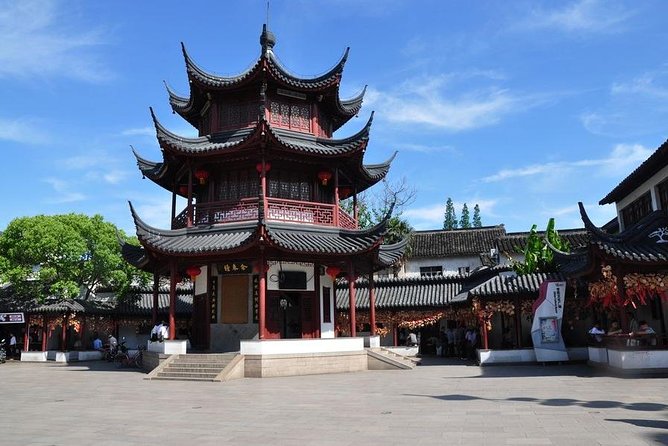
Qibao Ancient Town is one of those places where you can see how everyday life used to work: narrow lanes, old architecture, and the pull of the water nearby. In a few hours, you get far more than a scenic stroll—you get cultural framing from your English-speaking guide while you’re actually walking through the places people describe in stories.
What makes Qibao especially satisfying is the balance of sightseeing and hands-on culture. You’re not stuck in a lecture. You’re moving through old alley streets and then stepping into a teahouse environment where tea and calligraphy slow everything down. That mix is why it’s easier to remember than a checklist tour.
You can also read our reviews of more tours and experiences in Shanghai.



Price and logistics: what $100 per person really includes
At $100 per person for a private tour that runs about 5 to 6 hours, you’re paying for three things that add up quickly if you try to DIY:
- A guide who can explain what you’re seeing in plain English
- Local transport support (your ride from Shanghai is handled using Uber/Didi style options, with a private transfer plan for larger groups)
- Tea tasting and calligraphy as included activities
You don’t just get a place name and a map. You get someone who can connect the architecture and customs you see on the walk to why they mattered.
A practical note: since this is a private tour, the timing stays under your control more than with group bus tours. You’re also given a mobile ticket, and confirmation is received at booking. If you’re traveling with kids, children must be accompanied by an adult.
Morning vs afternoon departures: how to pick the best timing

You can choose a morning or afternoon departure, and that choice matters because Qibao is the kind of place where crowd levels change your experience fast.
One moment that stuck with me from the people who did this on a Sunday morning is how the town felt calmer while walking by the water and temple area. If you want a quieter mood for photos and conversation with your guide, morning is the safer bet.
If you’re more of a “sleep in, then go” traveler, afternoon still works. Just plan on more ambient activity in popular walking areas and keep your pace steady so you don’t feel rushed when you reach the teahouse and then the calligraphy session.
Hotel pickup to Qibao: getting there without the headache
The tour starts with your guide meeting you at your downtown Shanghai hotel. From there, the trip to Qibao is handled by local transport—think Uber or Didi style—so you’re not trying to figure out routes while you’re already thinking about where to eat or what to see.
There’s also a group-size rule that keeps things sensible:
- For a group of one to four people, you travel by the local ride option with your guide
- For five people or more, the plan is a private transfer during the tour
This matters because it prevents that awkward middle ground where small groups are stuck waiting or squeezed. You’re moving fairly directly, and the guide stays with you throughout the experience.
Stop 1: Shanghai Qibao Town walk—alleys, riverside architecture, and snacks
The first stop focuses on the walking part: about 1 hour 30 minutes in Shanghai Qibao Town, with the guiding and sightseeing driving most of the value here. Admission is listed as free for this portion.
You’ll spend time moving through ancient alleys that feel like they’re designed for wandering—tight lanes, small storefronts, and local flavors you can smell before you even spot the source. Your guide brings in history and customs while you’re looking at the architecture, including ancient buildings along the riverside.
If you like food, you’ll probably enjoy this segment. The walk is set up so you can try local street snacks and other local delicacies if you’re feeling adventurous. If you’re cautious about street food, you can still enjoy the vibe—just pick one or two bites and keep your energy for the tea and calligraphy later.
One detail I’d keep in mind: Qibao has a temple context in the overall day, and your guide’s explanations can make that feel much clearer as you pass by key spots. In one version of this tour, guide Jun’s storytelling about temples and details helped people feel oriented fast.



Stop 2: Tea tasting at the teahouse—culture you can actually taste
After the walking segment, you head to a local teahouse for tea tasting. This is about 1 hour 20 minutes, and it’s an included portion.
Tea tasting here isn’t just a single drink and done. It’s structured as a relaxing break with snacks, guided in a way that helps you understand what you’re experiencing. People especially liked how the guide could chat during the tasting—Jun came up in the feedback as someone warm and conversational, and that friendly tone matters because tea tasting is easier to enjoy when you’re not rushing or guessing.
The teahouse stop also acts like a reset button. You’ve been walking through old streets; now you get a calmer environment with time to sit, taste, and listen. It’s one of those moments that turns a “sightseeing day” into a “memory day.”
The Chinese calligraphy experience: why it works even for beginners
The calligraphy portion is the other major reason this tour feels worth it. It’s designed as a hands-on cultural experience, with the point being more than just watching someone write.
You’ll learn to appreciate calligraphy as one of the finest arts in Chinese history, and the session is also framed as a moment to slow down and focus. That’s why it pairs so well with tea: both are about attention and rhythm, not just background culture.
Some people found it fun but a little hard at first—which is exactly what you should expect. Calligraphy requires patience and control, and beginners will need to follow the instructor closely. The payoff is a personal result you can look at later and remember the day.
One detail from the calligraphy feedback really stood out: in at least one booking, the calligrapher beautifully wrote a baby’s name in Chinese. So if you’re traveling with family or you’ve got a meaningful character in mind, this kind of personal touch can make the lesson feel special.
Your guide also plays a role during this portion. In one account, Annie helped with Qibao context while tea experts handled tea and calligraphy teaching. That split—context from the guide, skill from the tea/calligraphy teachers—keeps the day organized and avoids turning it into one long speech.
Timing inside the 5 to 6 hours: how to pace yourself
The day is planned as a smooth sequence:
- You travel from Shanghai to Qibao
- You walk for about 1 hour 30 minutes
- You switch to teahouse tea tasting and calligraphy for about 1 hour 20 minutes
- You return back to downtown Shanghai afterward
What’s not spelled out, but you should assume in real life: transit time and short breaks add up. That’s why the tour works best when you treat it like a half-day commitment, not an “I’ll just squeeze this in for an hour” add-on.
Also plan for weather. The tour operates in all weather conditions, so you’ll want to dress appropriately and keep your layers ready. Comfortable walking shoes are specifically recommended for a reason.
What to ask your guide so you get more from the day
This tour includes a guide who explains history and custom as you walk. To get the most value, you can ask questions that connect directly to what you’re seeing. A few practical ones:
- Which places along the riverside are most important, and why
- How temple details fit into daily life in Qibao
- What the tea tasting is trying to teach you (flavor, style, or ceremony)
If your guide is Jun, you might benefit from her storytelling and extra picture-taking—one group was grateful she captured moments without them needing to ask. If your guide is Annie, she’s been noted for teaching a lot about Qibao itself, which helps the whole day feel like more than random sightseeing.
Who should book this private Qibao tour—and who might not love it
This tour is a great match if you want:
- A private guide and a more personal pacing than group bus tours
- Real cultural stops, not only photos
- A day that blends walking with a calm indoor cultural activity
- Tea and calligraphy as a “learn something” experience
It’s also a good option if you’re the type of traveler who enjoys food and details, since you may sample street snacks during the walking segment.
You might want to reconsider if you:
- Don’t like walking for extended periods on old uneven streets
- Want purely large-scale landmarks and museum-style time blocks
- Are hoping for a rapid in-and-out photo mission with minimal seated experiences
Families can work well too since children can participate, with the note that children must be accompanied by an adult.
Should you book this tour?
Yes, if you want a structured but flexible cultural day in Qibao with tea tasting and a calligraphy lesson that you can bring home as a tangible experience. The $100 price makes sense because the tour isn’t only transport plus sightseeing—it includes guided interpretation and two built-in activities that would cost you time (and often money) to arrange yourself.
Book this if you’re visiting Shanghai and you want something different from the usual skyline-and-museums rhythm. It’s a calm counterpoint: old-water-town walking, then a teahouse reset, then calligraphy practice.
If you’re choosing between “see Qibao on your own” and this private format, the best reason to pay is the guiding context and the fact that the day is planned so you don’t have to figure out what to do after you’ve already arrived.
FAQ
How long is the Qibao Ancient Town walking tour with tea tasting and calligraphy?
The tour lasts about 5 to 6 hours.
Is hotel pickup included?
Yes. Your guide meets you at your downtown Shanghai hotel, and pickup is offered.
How does transportation to Qibao work?
Your group travels using a local ride option (Uber or Didi). For groups of five or more, a private transfer is used during the tour.
What’s included in the tea tasting and calligraphy portion?
Tea tasting is included, and the tour also includes a calligraphy experience as part of the teahouse visit.
Do I need to buy tickets for the walking portion in Qibao?
The first walking stop lists admission as free.
Does the tour run in bad weather?
It operates in all weather conditions, so you should dress appropriately and wear comfortable walking shoes.