REVIEW · UDAIPUR
Udaipur Heritage City and Local Market Walking tour
Book on Viator →Operated by Countryside Excursion · Bookable on Viator
Market aromas beat museum selfies. On this Udaipur Heritage City walk, guide Manish links temple lanes, Lake Pichola ghats, and old-city neighborhood corners to the real work people do, including handmade metal and clay crafts.
I also love the masala chai and sweets tastings that turn the bazaars into something you can taste, not just photograph. Do note the route is outdoors and on narrow lanes, so expect sun, dust, and uneven pavement.
It runs about 2–3 hours starting near Jagdish Temple at 10:00 am, with bottled water and an English-speaking guide, and the group is kept small (max 10).
In This Review
- Key Highlights You’ll Actually Feel
- Why This Walking Tour Works in Udaipur
- Start Near Jagdish Temple: A Perfect First Landmark
- Lake Pichola Ghats: Views Plus Neighborhood Meaning
- Old City Lanes and Havelis: Learning to Read the Architecture
- Markets You Can Smell: Vegetables, Grocery, and Spices
- Watching Craft Instead of Just Buying Souvenirs
- Masala Chai Making and Tasting: A Small Pause That Changes Everything
- Traditional Local Snacks and Sweets: Learn, Taste, Move On
- The Wedding Market Walk: Specific, Cultural, and Surprisingly Practical
- Price and What You’re Really Paying For (It’s More Than $25)
- Logistics That Matter: Small Group, Good Weather, No Dead Weight
- Who Should Book This Walk (and Who Might Skip It)
- My Booking Decision Checklist
- FAQ
- How much does the Udaipur Heritage City and Local Market Walking tour cost?
- How long is the tour?
- Where does the tour start and what time does it begin?
- Where does the tour end?
- What’s included in the price?
- What are the main market and food experiences during the walk?
- Are temple or lake stop admissions included?
- What craft or workshop stops are part of the tour?
- Is transportation included?
- Is the tour affected by weather and what about cancellation?
Key Highlights You’ll Actually Feel
- Jagdish Temple stop (free entry): a quick but meaningful look at the Lord Vishnu temple
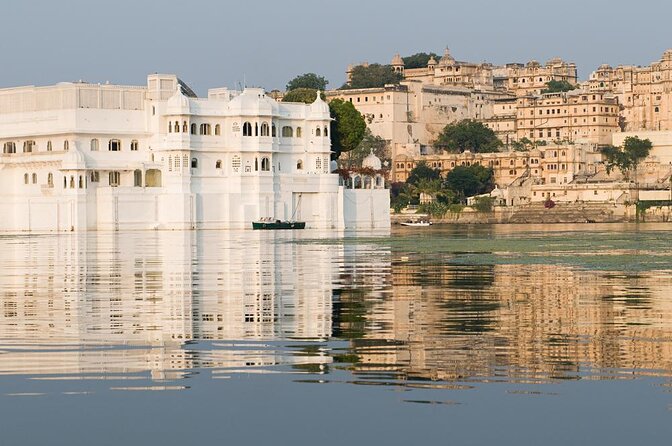
- Lake Pichola ghats views (free): you get the photo moments plus the neighborhood context
- Havelis and wall paintings explained: you learn what you’re looking at and why it mattered
- Vegetable, grocery, and spice markets: you’ll see how daily shopping runs on spices and fresh produce
- Clay pot makers and metal utensil work: watching hands make everyday items
- Leaf plates, bamboo baskets, and snack-making processes: small crafts, big “how does this work?” energy
Why This Walking Tour Works in Udaipur
Udaipur’s famous sights can be impressive from a distance. This tour is different because it walks you into the city’s everyday rhythm: temples, lake edges, and the markets where locals buy, trade, and cook. Instead of treating heritage like something behind glass, you see it as something people still use.
I like that the pacing is built for attention. The walk is only about 2–3 hours, and it’s structured around a string of short stops—enough time to understand each place without dragging you into an all-day marathon.
The big value for me is the mix: scenery (Lake Pichola), architecture (havelis and painted home walls), and working crafts (clay pots, metal utensils, bamboo baskets). It helps you connect the dots between what you see and how the city functions.
You can also read our reviews of more walking tours in Udaipur



Start Near Jagdish Temple: A Perfect First Landmark
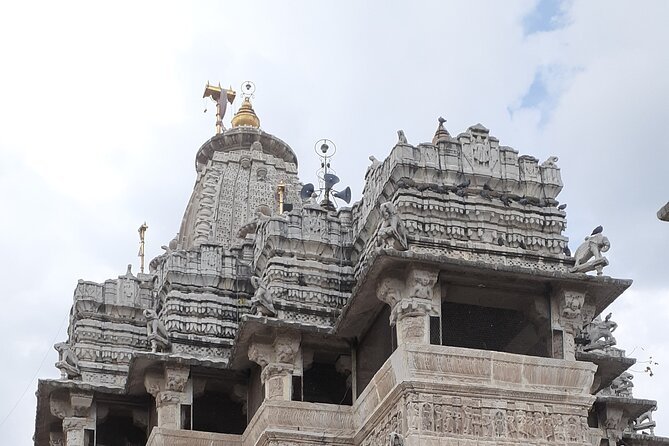
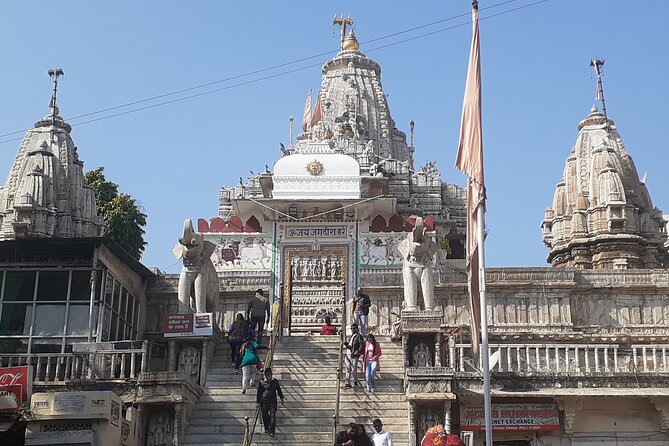
You begin near Jagdish Temple, one of the most recognizable temple areas in town. The visit is about 15 minutes, and admission is free. The guide frames it as more than a quick photo stop—this is where you get your bearings and a sense of the city’s spiritual “gravity.”
Practical note: temples mean active foot traffic. If you like calm photos, arrive ready to be flexible. If you’re short on time on your overall Udaipur schedule, this is still a strong start because it gives you context before the walk turns into neighborhood lanes.
Lake Pichola Ghats: Views Plus Neighborhood Meaning
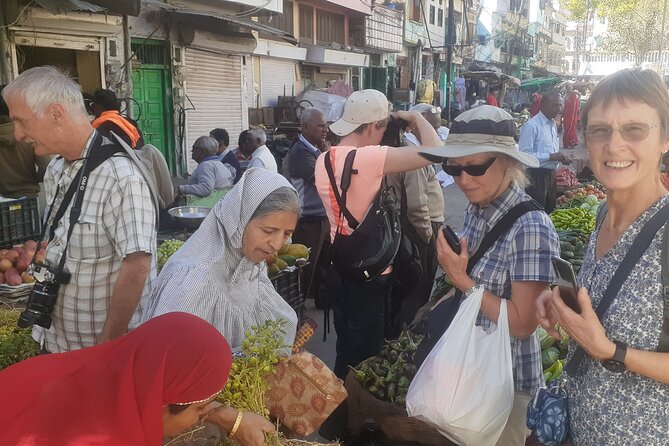
Next you shift toward Lake Pichola ghats for around 10 minutes. Admission is also free here, so you’re paying for the guided understanding, not entry fees.
The key advantage of this stop is how it sets the tone for the rest of the walk. The lake is more than scenery in Udaipur—it’s part of how people historically lived, moved, and gathered. Even if your main goal is photos, the guide’s commentary helps you look past the postcard angle and notice the everyday edges of the city.
Also, ghats can be uneven. Keep your steps careful, and don’t get so locked into the view that you forget your footing.
Old City Lanes and Havelis: Learning to Read the Architecture
From the temple lanes, you head into older residential areas. This is where the tour turns from “seeing Udaipur” into “understanding Udaipur.”
You’ll spot havelis (traditional mansions) from the outside and get explanations for how they were used and why they mattered in earlier time. That matters because when you only look at the facades, you miss the point: these buildings weren’t designed just to look nice. They were tied to family life, social standing, and how people organized space and privacy in dense neighborhoods.
If you like architecture that comes with real-life function, this is one of the best segments. You’ll also learn to notice wall paintings on home exteriors—what they depict, and how they fit into local identity. It’s the difference between walking past art and understanding it as part of daily storytelling.
Markets You Can Smell: Vegetables, Grocery, and Spices
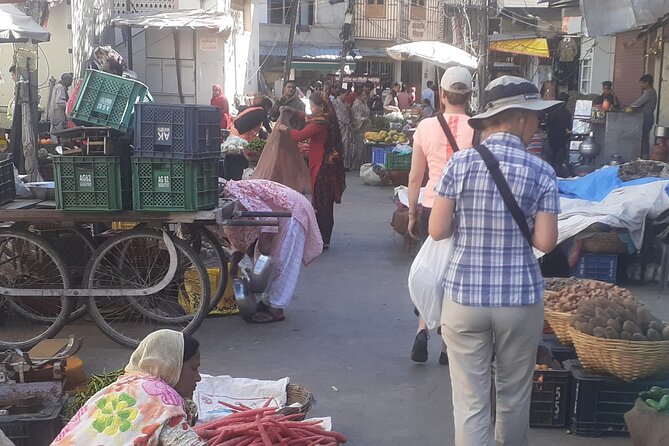
A major highlight is the visit through local markets focused on vegetables, groceries, and spices. This isn’t a generic shopping stop where you walk past stalls like a spectator. You’re guided through what each market specializes in and how people actually shop and talk about ingredients.
This matters for two reasons:
- You learn how Udaipur’s food culture is built on fresh produce and spice availability.
- You get a sharper sense of what you’re seeing later when you try sweets or chai.
One of the best tactics here is to keep your questions simple. Ask what a spice is used for, what’s seasonal, or how locals pick ingredients. The guide’s explanations make markets feel less like a blur and more like a practical system.
You can also read our reviews of more city tours in Udaipur

Watching Craft Instead of Just Buying Souvenirs
If you’ve ever bought a souvenir and wondered how it’s made, this tour is for you. Several craft stops are built around the actual production process:
- Clay pot makers community: You can see how water storage and everyday kitchen needs connect to craft work.
- Traditional plates and bowls using tree leaves: You’ll learn how these leaf-based items are made and why they’re useful.
- Metal pot and utensil making by hand: This is one of the most satisfying stops because you see the effort behind everyday objects—no machine magic, just skill.
- Bamboo baskets making process: Another hands-on feel-good moment because it’s lightweight, practical, and clearly designed for real use.
Even if you don’t buy anything, watching how items are made changes how you look at the city. You stop thinking of crafts as decor and start thinking of them as solved problems: how to carry, cook, store, and serve.
Masala Chai Making and Tasting: A Small Pause That Changes Everything
You get to experience masala chai making and tasting as part of the walk. Bottled water and masala tea are included, so you’re not scrambling mid-tour.
This stop is more than a drink break. Chai is a social lubricant in India, and the process helps you see that food here is both routine and hospitality. The guide also helps you understand what makes masala tea taste like masala tea—so you don’t just sip, you learn.
If you’re sensitive to spice or strong flavor, you can ask the guide to guide you gently on what to expect. Tastings are usually flexible in a guided setting.
Traditional Local Snacks and Sweets: Learn, Taste, Move On
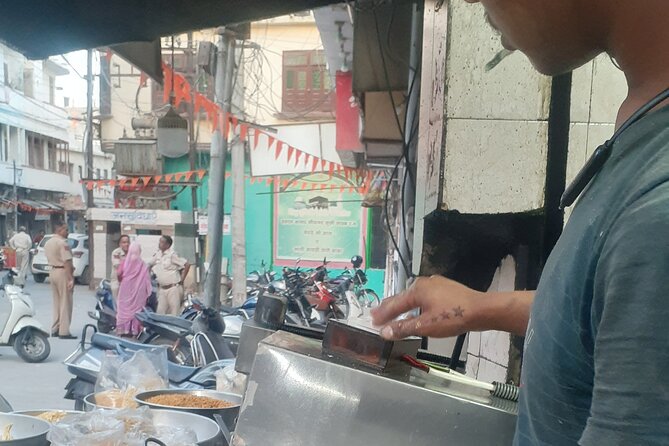
Food is sprinkled through the tour in a way that feels like a guided food walk, not a “food tour” that ignores everything else. You’ll see the traditional local snacks making process and also get famous sweets tasting.
This combo works well because sweets and snacks are often where local ingredients show up in concentrated form. When you taste, you connect earlier stops (spices, markets) with what’s on your tongue.
A practical tip: go slowly with sweets. The tour is compact, and you’ll likely taste more than one item. It’s easy to overdo sugar if you’re treating it like a buffet.
The Wedding Market Walk: Specific, Cultural, and Surprisingly Practical
One of the more interesting segments is a traditional wedding market walk. Even if you’re not planning a wedding, this is a useful way to understand how local commerce ties to major life events.
The value here is perspective. You’ll see that markets aren’t only about daily groceries. They also supply the timeline of traditions—items that families need when something big is happening.
If you like photography, this area can give you varied scenes: people focused on needs, not just sightseeing. Just remember to be respectful—this is not a costume set. It’s a working market.
Price and What You’re Really Paying For (It’s More Than $25)
At $25 for about 2–3 hours, this tour is priced like a budget-friendly guided walk. The reason it still feels fair is the mix of value:
- An English-speaking guide
- Bottled water and masala tea included
- Multiple stops covering temples, lake ghats, residential architecture
- Market time focused on vegetables, groceries, and spices
- Craft observations (clay, metal, bamboo, leaf plates/bowls)
- Chai making and tasting
- Sweets tasting
- Snacks making process
You’re not just paying for someone to point at things. You’re paying for interpretation plus guided “seeing” through daily life. That’s where the money goes, and that’s why it’s worth it if your goal is authentic Udaipur rather than only landmarks.
Logistics That Matter: Small Group, Good Weather, No Dead Weight
A few details make a difference to your day:
- Group size is capped at max 10 travelers, so you’re more likely to get questions answered rather than rushed.
- The tour is designed around a short walking window (about 2–3 hours).
- It requires good weather, so if the day looks rough, expect the operator to adjust (or offer alternatives).
Also, transportation is not included. This is a walking tour, so plan to meet near Jagdish Temple and handle your own way back if you’re not already in the old center.
Who Should Book This Walk (and Who Might Skip It)
This tour fits you best if:
- you like street-level Udaipur: markets, crafts, and neighborhoods
- you enjoy food stops that come with context (chai, sweets, snacks)
- you’d rather understand how things are made than only buy finished items
- you want a guide to help you read havelis and wall paintings correctly
You might want to choose a different format if:
- you’re not comfortable with outdoor walking in warm or dusty conditions
- you prefer quiet sightseeing over markets and active streets
My Booking Decision Checklist
Book this tour if you want Udaipur to feel like a living city. The craftsmanship stops and tastings give you a stronger sense of place than a landmark-only route. At $25 with water/tea included and a small group size, it also offers good value for a guided experience.
Skip it if you’re looking for a low-movement, all-indoor day. This is outdoor, active, and sensory—by design.
If you want, tell me your travel dates and whether you’re more into food, architecture, or crafts. I can suggest a good way to pair this walk with the rest of your Udaipur day so you don’t burn time backtracking.
FAQ
How much does the Udaipur Heritage City and Local Market Walking tour cost?
The price is $25.
How long is the tour?
It lasts about 2 to 3 hours.
Where does the tour start and what time does it begin?
It starts near Jagdish Temple, Udaipur, Rajasthan 313001, India, and it begins at 10:00 am.
Where does the tour end?
The tour ends back at the meeting point near Jagdish Temple.
What’s included in the price?
Bottled water and masala tea are included, along with an English-speaking guide.
What are the main market and food experiences during the walk?
You visit a vegetable market and also a grocery and spice market. You’ll also have masala chai making and tasting, plus sweets tasting, and you’ll see traditional local snacks making process.
Are temple or lake stop admissions included?
At the temple stop (Jagdish Temple) and the lake ghats stop (Lake Pichola), admission tickets are free.
What craft or workshop stops are part of the tour?
The walk includes stops related to clay pot makers, leaf-based plate and bowl making, metal pot and utensil making by hand, and bamboo baskets making.
Is transportation included?
No, transportation is not included.
Is the tour affected by weather and what about cancellation?
The experience requires good weather. If it’s canceled due to poor weather, you’ll be offered a different date or a full refund. Free cancellation is available up to 24 hours in advance for a full refund.