REVIEW · SIBIU
SB02-Half day Surroundings of Sibiu:Saxon Heritage &Villages
Book on GetYourGuide →Operated by Carpathian Travel Center · Bookable on GetYourGuide
Four hours, mountain views and Saxon walls. This Sibiu-area half-day ties together one of Romania’s most famous drives with two medieval fortified churches that explain how communities in Transylvania kept both faith and safety close.
I like how the Transfăgărășan Road segment gives you a big “wow” moment fast, especially with the stop around Bâlea Lake. I also like that the churches aren’t just pretty buildings—they’re about defense, daily life, and the Saxon heritage that shaped this part of Sibiu County.
The main thing to plan for is weather. Even in the operating months, Bâlea can feel cold and wintry, and the tour is short—so it’s not built for long hikes or lingering over meals.
In This Review
- Key things you’ll notice on this tour
- Why this half-day mix works so well from Sibiu
- The 09:00 start: how the day flows (and what it means for you)
- Transfăgărășan Road (DN7C) and Bâlea Lake: the big scenic hit, done right
- Cisnădie Fortified Church: worship plus defense, in one compact stop
- Cisnădioara Fortified Church (Michelsberg Fortress): a calmer hilltop lesson
- What the guide adds: beyond stones and dates
- Price and value: what you’re really paying for
- Practical tips that make the morning easier
- Who should book this and who might skip it
- Should you book this Saxon Heritage + Fortified Villages half-day?
- FAQ
- What’s the duration of this tour?
- Where does the tour start in Sibiu?
- What days does it operate from June to October?
- What’s the main route and order of stops?
- What are the key highlights?
- Is transport included?
- Is food included?
- Are entrance fees included?
- What language is the guide?
- What do I need to bring, and are there any restrictions?
Key things you’ll notice on this tour
- Transfăgărășan Road (DN7C) in a short, efficient loop from Sibiu
- Bâlea Waterfall views plus free time at Bâlea Lake
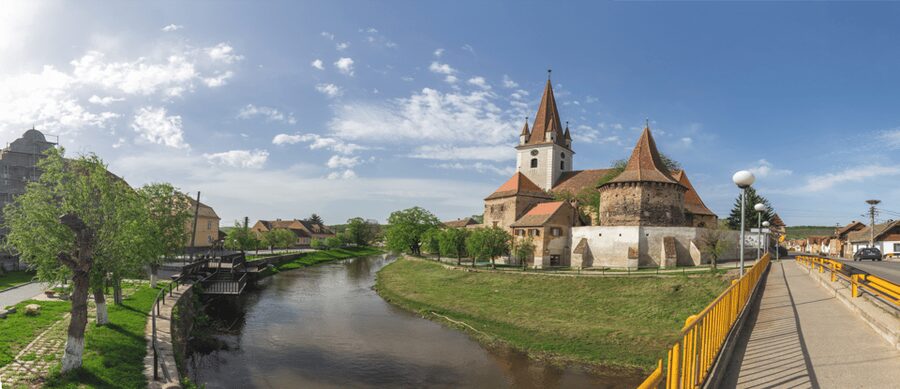
- Cisnădie Fortified Church with a 14th-century mechanical clock
- Cisnădioara Fortified Church (Michelsberg Fortress) on a hilltop
- English-speaking guides who connect monuments to real Romanian life
- A 4-hour format that saves you the hassle of driving and timing
Why this half-day mix works so well from Sibiu
This tour hits a sweet spot for people who want variety without burning a full day. In one morning window, you go from a famous high-mountain road experience into two fortified churches that help you understand how Saxon communities in the region lived, worshiped, and protected themselves.
The value isn’t only in the places—it’s in the pacing. You’re not trying to do everything independently with long drives, uncertain timing, and no context. Instead, you get transport, an English-speaking guide, and a route that moves steadily between the three major “anchors” of the trip: Transfăgărășan, Cisnădie, and Cisnădioara.
It’s also a good fit for travelers who already love Sibiu Old Town and want one step deeper: not just streets and towers in town, but the rural Saxon architecture around it—plus a look at how this part of Romania thinks about environment, history, and daily life.
The 09:00 start: how the day flows (and what it means for you)
You’ll depart at 09:00 from the Sala Thalia Hall parking area. The tour runs for about 4 hours, which means you’ll be on a tight schedule but not rushed in a frantic way. The timing is built around getting you to the scenic road segment first, then the two church stops, and back to Sibiu.
This is a private group experience, and a minimum of 2 participants is needed for guaranteed departure. That matters if you’re traveling solo: you’ll want to check availability, but solo travelers are encouraged to contact for options.
Transport is in a modern air-conditioned car or van, with a specialized guide and driver in English. That’s practical in mountain areas where weather shifts quickly and roads can feel long even when you’re technically only doing a half-day.
Transfăgărășan Road (DN7C) and Bâlea Lake: the big scenic hit, done right
The tour includes a guided sightseeing stretch along Transfăgărășan Road (DN7C), the famed mountain route through the Făgăraș Mountains. One detail I think you’ll appreciate: this road was built as a strategic military route in the 1970s under Nicolae Ceaușescu, and it’s hard to forget that when you see how direct and engineered the route feels.
You’ll have time for two key stops in the Bâlea area:
- Bâlea Waterfall (you’ll see it as part of the drive)
- Bâlea Lake, where you get time to enjoy the setting
The schedule places this portion roughly in the late morning window (about 11:00 to 12:30). That’s enough time to take photos, walk around at lake level, and soak in the mountain feel without turning the trip into an all-day hike.
One practical note: weather. An October experience can still turn “cold and wintry,” especially up near Bâlea. If you’re sensitive to temperature changes, dress like you’re moving between layers—warm outer layer, hat, and gloves can genuinely help.
Also, this part of the experience is about views and timing. If you’re the type who wants a long trail walk or a long meal with a view, you may feel the time compression. The tour is designed for people who want to see the highlight fast and then switch gears to culture.
Cisnădie Fortified Church: worship plus defense, in one compact stop
After the mountain segment, the tour heads to Cisnădie for a guided visit of about 1 hour at the Cisnădie Fortified Church.
Here’s what makes this stop more interesting than a typical church visit: it was designed to do two jobs. The church’s origin goes back to the 12th century as a Romanesque basilica, then it was fortified in the 15th century to protect the community from invasions. In other words, you’re looking at a building that literally reflects fear, survival planning, and faith in the same stone.
Two specific details you should look for:
- Defensive towers and the fortified structure, which help you see why these places were more than spiritual landmarks.
- The clock tower that houses one of the first mechanical clocks in Transylvania, installed in the 14th century.
That clock detail is the kind of thing you’ll remember because it’s so specific. A mechanical clock is a tangible way to connect daily life—work, prayer schedules, community rhythm—to the medieval world.
Time-wise, the hour is enough for a guided explanation and a careful look around. The only potential drawback is that Cisnădie is not a “wander forever” stop. If you love ultra-slow museum-style pacing, you might want more time in each corner. But for most people, this duration hits the right pace for a half-day tour.
Cisnădioara Fortified Church (Michelsberg Fortress): a calmer hilltop lesson
Next comes Cisnădioara, visited for about 30 minutes. This is a shorter stop, but it’s not a throwaway. The Fortified Church of Cisnădioara, also associated with Michelsberg Fortress, is one of the older Romanesque-style churches in Transylvania.
What I like about this stop is the combination of age and setting. It’s built of stone with Romanesque features—simple, sturdy walls that feel timeless. And because it sits on a hilltop, you also get a sense of how the Saxon community used terrain as part of its defense and daily life.
Cultural takeaway: over time, this church became a symbol of the Saxon community that once inhabited the region. Even if you don’t know the medieval specifics before you arrive, the guide’s explanation helps you connect what you see—architecture, location, fortification—to why the Saxons left such a physical imprint.
The short visit is the main consideration. If you’re the type who wants 45–60 minutes just to take photos and read every placard (or who plans to take extra time climbing for views), you may wish the stop were longer. Still, as a second fortified church in a half-day format, it works.
What the guide adds: beyond stones and dates
This tour lives or dies by the guide’s ability to turn facts into something you can feel. The strongest experiences here come from guides who explain not only monuments, but also the surrounding context—how people lived, how the environment is managed, and how Romanian society works today.
From past guiding styles you might encounter, you can expect conversations that go beyond church architecture into topics like environmental protection and Romanian history. Some guides have even tackled big practical questions—like hydropower and how it fits into Romania’s energy story—plus how rural life works and how the country’s current economic situation connects to local decisions.
Names you may hear from previous groups include Mihail, Ilie, Alex, and Marius. That’s a useful clue that the guiding is personal, not robotic. The best guides also adapt when weather gets tricky. In at least one instance, the guide was flexible enough to keep the experience enjoyable despite wintry conditions.
If you want a tour that answers the why behind the what, this format usually delivers. If you only care about photo stops, you may still enjoy it—but you’ll miss the extra layers.
Price and value: what you’re really paying for
At $88 per person for about 4 hours, this isn’t the cheapest way to do a Sibiu-area morning. But you’re paying for a clean package of three things that are hard to assemble yourself:
- Transport in an air-conditioned car or van
- An English-speaking specialized guide & driver
- The hassle-free route planning, including parking and road taxes
Entrance fees are not included, and you’ll also want to budget for anything personal like drinks or souvenirs. Photo fees aren’t included either, if those come up at specific stops.
So the real question is: do you value time saved and context provided? For most people doing this for the first time, the answer is yes. The Transfăgărășan segment is the type of route that feels like a “must” once you see it, and the fortified churches are exactly the sort of sites where a guide makes the difference between looking at stone and understanding why it was built that way.
If you already know the region’s medieval Saxon story and you’re comfortable driving mountain roads on your own, you could DIY it. But if you want a smooth, guided half-day with reliable timing, the price starts to look fair.
Practical tips that make the morning easier
Here’s how to set yourself up for a better experience with what’s explicitly required and what’s implied by the route.
Bring: your passport or ID card. That’s required.
Wear: plan for cold changes near Bâlea, especially if you’re visiting late in the operating window. Even if you don’t expect snow, the mountain air can cut through quickly.
Respect the vehicle rules: no smoking in the car and no alcohol or drugs. Keep it simple and you won’t have surprises.
Entrances and fees: entrance fees are not included, so you should expect to pay if any sites charge on arrival.
Expect a compact timeline: the whole thing is designed to fit into a 4-hour window, so you’ll want to keep your phone and camera charged and ready. This is a “see it, learn it, move on” style of tour.
Age consideration: it’s not suitable for people over 95 years, so plan accordingly if you’re with older family members.
Who should book this and who might skip it
This tour is a good match if you:
- Want a fast, guided taste of Saxon fortified churches around Sibiu
- Like famous drives and don’t want the logistics of going solo to Bâlea
- Prefer learning with a guide who connects sites to broader Romanian context
You might think twice if you:
- Want lots of free time for long hiking or long meals
- Hate cold weather walking near mountain viewpoints
- Are traveling with a very tight schedule where you can’t handle winter-like conditions near Bâlea
Should you book this Saxon Heritage + Fortified Villages half-day?
If you’re in Sibiu County during the operating months (June to October), I’d book this if your goal is variety without wasted hours. The best reason is the pairing: Transfăgărășan Road plus fortified churches gives you two different ways to understand the region—one through geography and engineering, the other through community defense and medieval architecture.
I’d also book it if you like tours that explain the why. The strongest versions of this experience come from guides who bring Romanian history and modern life into the conversation, not only the stonework.
Book with a realistic expectation: it’s a half-day. You’ll get the highlights and key explanations, not a full-day deep dive. If that fits your travel style, you’ll leave feeling like you’ve earned a story worth telling.
FAQ
What’s the duration of this tour?
It lasts about 4 hours.
Where does the tour start in Sibiu?
The meeting point is Sala Thalia Hall parking, with departure at 09:00.
What days does it operate from June to October?
It runs Monday, Wednesday, Friday, and Saturday.
What’s the main route and order of stops?
The route follows Sibiu to Transfăgărășan Road, then Bâlea Lake, then Cisnădie, then Cisnădioara, and back to Sibiu.
What are the key highlights?
The highlights are Cisnădioara Fortified Church, Cisnădie Fortified Church, and the Transfăgărășan Road area including Bâlea Lake.
Is transport included?
Yes. You’ll travel by modern air-conditioned car or van, with parking and road taxes included.
Is food included?
No. Food and drinks are not included.
Are entrance fees included?
No. Entrance fees are not included.
What language is the guide?
The tour includes an English live guide.
What do I need to bring, and are there any restrictions?
Bring a passport or ID card. Smoking is not allowed in the vehicle, and alcohol or drugs aren’t allowed. The tour isn’t suitable for people over 95 years.