REVIEW · LISBON
Lisbon: Jewish History Tour of Lisbon
Book on GetYourGuide →Operated by Lisbon Walker · Bookable on GetYourGuide
Lisbon’s Jewish story is written into streets, not stones. This 3-hour guided tour connects big medieval turning points—segregation, forced conversion, and a 1506 Pessah massacre—with the modern layer that includes WWII-era refugees moving through Lisbon. I especially like how the guide experience matters here (names like Jose and Filipa come up again and again), and how you get oriented fast in a city that otherwise feels like it’s all hills and tiles.
Your main consideration: physical evidence is limited. Lisbon’s Jewish past is often told through locations and context rather than preserved artifacts, so it’s more about reading the city than museum hunting. If you want to see intact synagogues or lots of original objects, you may feel a little short-changed—but if you like history explained clearly in the streets, this works.
In This Review
- Key things that make this tour worth your time
- Lisbon’s Jewish past: why this walk hits harder than a museum
- Starting at Praça do Comércio under the triumph arch: get your bearings fast
- Praça do Município, Rua do Comércio, Casa dos Bicos: the city’s “administration mode”
- Resistance Museum area and Mouraria: the modern layer with a human timeline
- Rossio and the 1506 Pessah massacre: standing in a square with a specific wound
- Alfama Jewish quarter: medieval segregation, lived geography, and hard choices
- Baixa and forced conversions: when the city becomes a record of policy
- What you won’t see (and why the tour still works)
- Pacing, walking, and what to bring for comfort
- Price and value: is $106 fair for 3 hours?
- Should you book this Lisbon Jewish History Tour?
- FAQ
- Where do I meet the guide?
- How long is the tour?
- How much does it cost?
- What’s included in the price?
- Is food or drinks included?
- What languages are offered?
- Is the tour private?
- Does it include ticket skipping?
- What should I bring?
- What’s the cancellation policy?
- Can I reserve and pay later?
Key things that make this tour worth your time
- Praça do Comércio as the starting point: the tour anchors the narrative right where Lisbon’s story widened outward.
- Alfama and medieval segregation: you’ll connect geography to control and daily life.
- Baixa forced conversions: the route shows how power changed religious identity in ordinary city blocks.
- Rossio and the 1506 Pessah massacre: you’ll stand in the square tied to a specific, painful event.
- WWII refugee passage in the 1940s: the tour threads the medieval story into a more recent chapter of movement and survival.
Lisbon’s Jewish past: why this walk hits harder than a museum
Lisbon does not hand you a neat timeline. It gives you layers: waterfront trade areas, labyrinth-like Alfama lanes, and grand squares that feel celebratory until you remember what happened underneath. That’s why I like this kind of guided street tour—you’re not just memorizing dates. You’re learning why certain streets and neighborhoods mattered to Jewish life and, later, to the community’s forced transformation.
This tour also has a practical advantage: it’s built around the Lisbon you can actually walk. You cover the castle-area streets, Alfama, and the Baixa, hitting the key “where” points tied to Jewish presence across medieval and modern eras. With a private group setup and English/Portuguese guidance, you’re more likely to ask your own follow-up questions instead of losing them to the group shuffle.
One more thing: even when there aren’t many visible artifacts, the tour still feels purposeful because the guide uses the city like a map with missing legends. That’s not a flaw—it’s the honest way to experience Lisbon’s story.
You can also read our reviews of more historical tours in Lisbon

Starting at Praça do Comércio under the triumph arch: get your bearings fast
The tour begins at Praça do Comércio, where you look for the guide under the big triumph arch. The guide is wearing an orange backpack or a Lisbon Walker tote, so it’s easy to spot once you’re there.
This matters because Praça do Comércio is Lisbon’s emotional reset button. It’s the waterfront-facing grand square that tells you the city was built for connection—movement of goods, people, and ideas. The tour frames the area with a link to the Exodus origin theme, then starts tying that outward-facing Lisbon to the later Jewish presence that spread through Portuguese society.
If you like tours that help you orient, you’ll appreciate this start. It gives you a mental north before you move into tighter neighborhoods.
Praça do Município, Rua do Comércio, Casa dos Bicos: the city’s “administration mode”
After Praça do Comércio, you’ll pass through Praça do Município and along Rua do Comércio. This is the kind of Lisbon that looks polished from the outside, with buildings and streets that suggest official life—where rules, paperwork, and authority lived.
Then you’ll move past Casa dos Bicos and toward Ribeira. Casa dos Bicos is one of those visual landmarks you instantly remember—lots of character in the façade—so it works well as a mental marker during a history-heavy walk. Ribeira brings you back toward the river mood, where trade and contact would have felt more immediate.
Why these stops matter: this part of the route helps you understand that Jewish life wasn’t separate from mainstream Lisbon. It was part of the city’s economy and city life—until politics, fear, and policy changed the rules of belonging.
Resistance Museum area and Mouraria: the modern layer with a human timeline
From Ribeira, the tour includes the Resistance museum area and then heads toward Mouraria and Praça da Figueira.
This is one of the smarter parts of the itinerary because it shifts the story forward. The tour is explicit about the WWII refugee passage in the 1940s, tying Lisbon’s location to real movement of people during danger. Even if you don’t know much Portuguese Jewish history yet, this “then and now” thread helps you feel what continuity means when the century changes.
Mouraria is especially important for the mood of Lisbon: smaller streets, changing neighborhoods, and a sense of everyday life that sits under the city’s big-card squares. You’ll get the sense that history here is not only medieval. It’s also 20th-century decisions, border realities, and refuge.
Rossio and the 1506 Pessah massacre: standing in a square with a specific wound
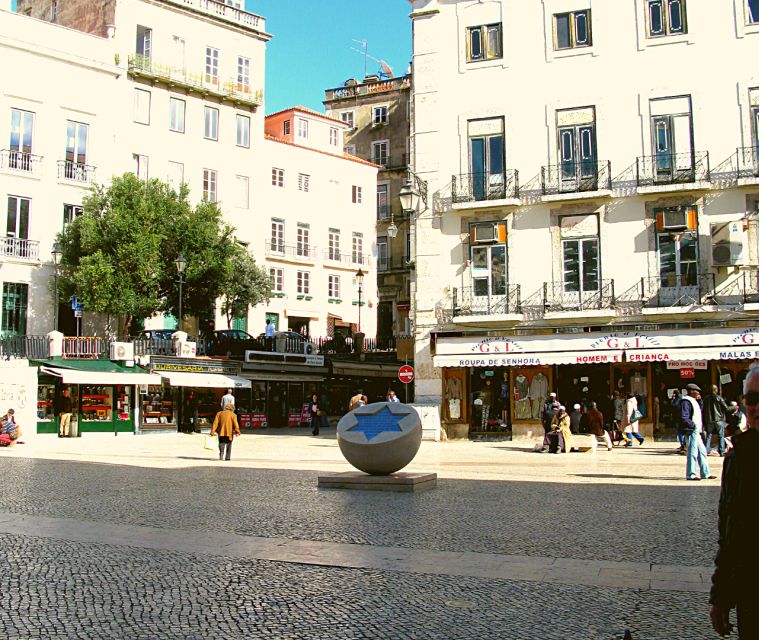
Next you’ll reach Rossio, a key square in the route, and the tour links it to the 1506 Pessah massacre.
Rossio is big and busy in the usual way squares are in Lisbon. But with the context the guide provides, it stops being just a place to pass through. It becomes a marker for how violence and accusation played out in public space—how power used communal moments as flashpoints.
This is also where the guide’s storytelling quality really shows. People who’ve done this tour emphasize that the guide keeps the pace engaging for the full walking time, and that they can answer questions instead of rattling a script. If you’re the kind of person who likes to ask why something happened, this is the segment where that tends to pay off.
Practical note: Rossio is open and bright, so bring sunglasses or a hat if you’re doing it on a sunny day.


Alfama Jewish quarter: medieval segregation, lived geography, and hard choices
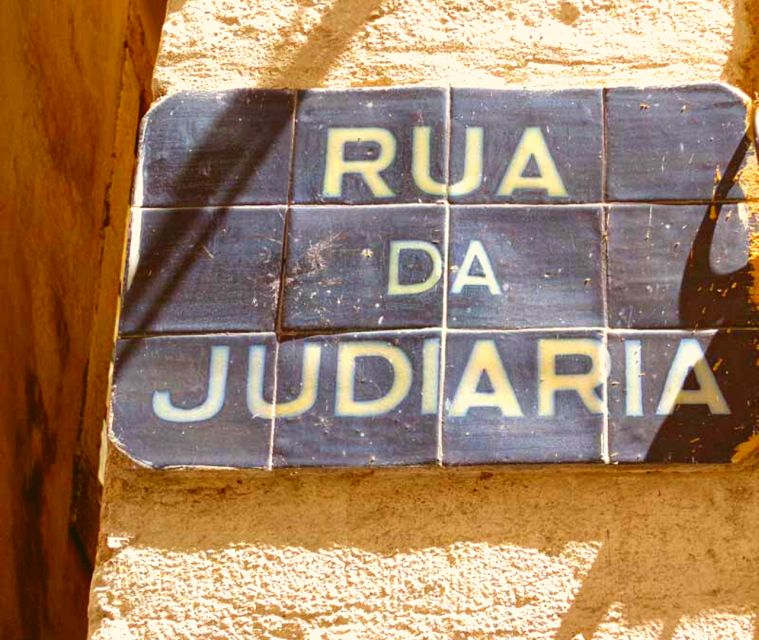
One of the headline highlights is the Alfama Jewish quarter and the medieval segregation story. You’ll connect the streets of Alfama with how communities were controlled—sometimes by law, sometimes by social pressure, and always by the way cities shape daily movement.
Alfama also makes the history feel more tangible because it’s old Lisbon in structure and street feel. Tight lanes, the sense of being watched from above, and the way neighborhoods cluster—it all supports the guide’s explanation of segregation. Even if you can’t point to a preserved synagogue foundation, the city form helps you understand the constraints.
This is the tour’s emotional core for many people, especially those who want the story of Jewish Lisbon told through neighborhood identity, not just dates.
Baixa and forced conversions: when the city becomes a record of policy
Another key highlight is the Baixa District and forced conversions. The Baixa part of Lisbon tends to feel grand and orderly—especially compared with Alfama’s winding complexity. That contrast helps. Forced conversion is not just a private story. It becomes part of how the city functions, how people navigate status, and how identity is enforced.
In this segment you’ll also revisit some of the core central Lisbon walking blocks you passed earlier, including parts that keep the story grounded in the city’s middle. The effect is that you see the same Lisbon angles from different historical angles: commerce and civic authority early on, and then the social and religious pressure that came later.
If you want a clear “how did it change?” arc, this is where the tour delivers. It’s easier to follow the shift from coexistence to coercion when you’re physically walking from one Lisbon style to another.
What you won’t see (and why the tour still works)
Let’s be honest: the tour doesn’t pretend Lisbon has a lot of surviving Jewish artifacts. Multiple guides have been described as doing excellent work with a reality that can feel frustrating at first: there are few or no physical remains that let you stand in front of original Jewish objects.
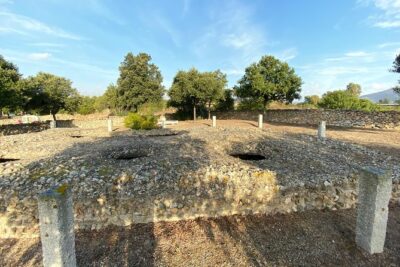
So what do you get instead? You get context and a guided “read” of the city. One account notes that the guide showed hidden Roman remains and churches, and that the tour leaned on oral history because there’s little preserved Jewish material to point at.
For you, that means the success of the tour depends on how you like history presented. If you enjoy narrative explanation—links between places, political shifts, and everyday consequences—you’ll likely leave satisfied and with a clearer mental map of Lisbon’s past. If you only want hands-on artifacts, you may feel the pinch.
Pacing, walking, and what to bring for comfort
This is a walking-focused day with a 3-hour guided tour window. The tour covers multiple districts—castle-area streets, Alfama, and the Baixa—so comfortable shoes are non-negotiable.
The good news: several descriptions mention the walking is manageable in practice, with time to rest when needed. The not-so-fun news: Lisbon hills exist, and the route includes older streets that aren’t designed for strollers.
What I recommend:
- Wear shoes you trust on uneven stone.
- Plan your water like a pro, since it’s a full city-walk experience and you’re not getting food/drinks included.
- If you’re sensitive to hills, bring a slower mindset. This is still a history tour, and it’s better when you take small pauses to let the stories land.
Price and value: is $106 fair for 3 hours?
At $106 per person for a 3-hour guided tour, the value depends on your priorities. You’re paying for more than “someone with a map.” You’re paying for guided interpretation—especially important when the city’s Jewish legacy is harder to see in physical form.
What justifies the price here:
- You get an organized route that connects major Jewish-related locations across medieval and modern Lisbon.
- The guide is the product. People highlight that guides like Jose and Filipa are engaging and able to answer questions.
- You avoid the confusion of self-guiding through neighborhoods without a historical lens.
What might feel steep:
- No food/drinks are included, so you’ll still be paying for your own breaks.
- If you came expecting lots of surviving Jewish artifacts, you won’t get that.
In my view, this is a strong “pay for clarity” tour. You’re buying the guide’s ability to connect places into a story.
Should you book this Lisbon Jewish History Tour?
Book it if you want a clear, street-level understanding of Jewish life in Lisbon and how it changed over centuries. This works best for you if you like history tied to geography—how squares and neighborhoods reflect power, religion, and survival.
Skip it (or adjust expectations) if you need preserved artifacts and physical evidence as the main thrill. This tour is honest about what Lisbon can’t show you. But it compensates with strong storytelling and a route that makes the Jewish past feel present through the city itself.
If you’re choosing just one “Jewish Lisbon” experience and you’re comfortable walking, this is a solid pick. You’ll leave with a better map in your head and a lot more context for the Lisbon you’ll see afterward—especially in Alfama and the central squares.
FAQ
Where do I meet the guide?
Meet at Praça do Comércio, looking for the guide under the big triumph arch. The guide wears an orange backpack or a tote bag with the Lisbon Walker logo.
How long is the tour?
The tour is a 3-hour guided experience.
How much does it cost?
It costs $106 per person.
What’s included in the price?
The price includes the 3-hour guided tour.
Is food or drinks included?
No. Food and drinks are not included.
What languages are offered?
The live tour guide is available in English and Portuguese.
Is the tour private?
Yes. It’s listed as a private group.
Does it include ticket skipping?
Yes, it includes skipping the ticket line.
What should I bring?
Bring comfortable shoes for walking.
What’s the cancellation policy?
Free cancellation is available up to 24 hours in advance for a full refund.
Can I reserve and pay later?
Yes. You can reserve now and pay later.