REVIEW · NAGOYA
Shirakawago & Takayama Bus Tour from Nagoya w/Optional Lunch
Book on Viator →Operated by VIP Japan Tours · Bookable on Viator
UNESCO scenery in one packed day. This Nagoya-area bus tour stitches together Takayama and the Gassho-style mountain village of Shirakawa-go, with optional lunch in the village itself and a smart winter plan if roads close. It’s the kind of day trip that feels big on views and light on planning.
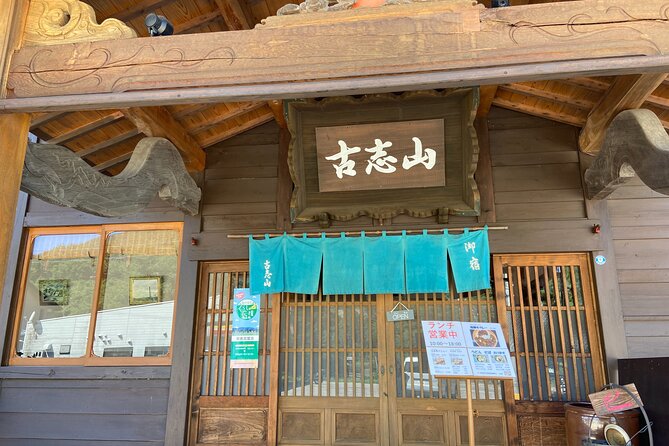
I especially like the optional meal at Koshiyama: you can get a Japanese-style teppanyaki set featuring Hida beef (Hida gyu), and if you choose the meal plan you’ll also get an Oden set. I also like the way the day is handled with an English-or-Chinese-speaking conductor plus on-bus guidance—some departures have stood out thanks to guides such as Bara-san, Liu, and Miss Guo, who helped the bus time feel productive instead of just “driving.”
One possible drawback: this is a long day, and weather can tighten the schedule. Rain can cut down what you feel like you can do, and snowfall in winter can lead to road changes and a substitute route—so you’ll want to show up ready for flexibility.
In This Review
- Key points at a glance
- From Nagoya to the Mountains: what this day trip is really for
- Takayama in 90 minutes: gateway town, Edo-era flavor, and fast choices
- Koshiyama lunch in Shirakawa-go: Hida beef teppanyaki and Oden if you select the plan
- Shirakawa-go on foot: gassho houses, the Encounter Bridge, and the view deck choice
- Timing, weather, and the winter swap to Gujo Hachiman
- Meeting point, luggage, and how to avoid losing time
- Price and value: what you’re paying for at about $66
- Should you book this tour? My decision guide
- FAQ
- What time does the tour depart from Nagoya?
- Is lunch included?
- How long is the tour?
- What happens in winter if roads to Shirakawa-go close?
- Do they pick you up at your hotel?
- What’s the luggage limit?
Key points at a glance
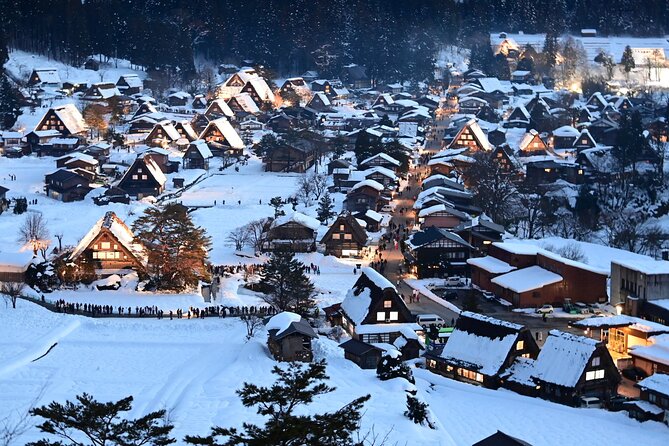
- One ride, two classic stops: Takayama + Shirakawa-go without the hassle of transfers
- Optional Hida beef lunch in Shirakawa-go: teppanyaki set, plus Oden if you pick the meal plan
- Small thrills on the way in: the narrow, swaying Encounter Bridge adds a real dose of nerves-and-smiles
- You can choose your pace in Shirakawa-go: valley views from an observation deck (300 yen shuttle one way, or a 10-minute walk)
- Guides can make the ride: people have praised clear bus explanations from names like Bara-san, Liu, Alberto/Alberro, and Miss Guo
- Winter plan if roads close: you may be rerouted to Gujo Hachiman, nicknamed Little Kyoto of Gifu
From Nagoya to the Mountains: what this day trip is really for
If you’re using Nagoya as your base, this tour is basically a shortcut to Gifu’s most famous old-town and mountain-village vibe. The big draw is that you don’t spend your time figuring out trains or buses. You leave Nagoya at 8:00 am, ride out to Takayama first, then head into Shirakawa-go for the UNESCO scenery.
What makes it feel “worth it” for many people is the balance of structure and freedom. You get a conductor and scheduled time at each place, but once you’re walking the streets, it’s still your decision how long to linger near shops, viewpoints, or quieter lanes. That matters because Shirakawa-go isn’t the kind of place you rush through without losing the point.
The trade-off is that you’ll be spending a lot of the day in transit. Even when everything runs smoothly, you’re trading hours for convenience. And if the weather turns, it can affect what you can comfortably do on foot—especially in winter when surfaces can get slippery and visibility drops.
Also, this tour uses a mobile ticket, and the group can be up to 90 travelers. That usually means you’ll get helpful guidance on the bus, but it also means the walking areas can feel crowded at peak times—so come with realistic expectations and a flexible attitude.
Takayama in 90 minutes: gateway town, Edo-era flavor, and fast choices
Takayama is a smart first stop because it sets the tone for what you’re about to see in Shirakawa-go. You’ll have about 1 hour 30 minutes, which is just enough time to get your bearings and enjoy a few key lanes—without turning it into a marathon.
This short window is a good match for highlights: you can enjoy the old streets feel, then spend your time on what you care about most—food, photos, or a quick look at the vibe of the town. One review specifically called out how Takayama is more commercial than Shirakawa-go, with walking streets and lots of places to eat and drink. That’s exactly what you want at the start of the day: something lively enough to wake you up, then a shift into calmer scenery later.
What to watch for: the stop is short. If rain hits hard (or if you get delayed trying to find the best spot to duck into), you may feel like Takayama passes quickly. One thing I’d recommend: decide in advance what you want. If you’re food-focused, you can look for local specialties during your free time. For example, Hida beef dishes and popular treats like Purin no Ie have a reputation in the area, and Takayama is the place where you’re most likely to run into them.
In practical terms, wear shoes you don’t mind getting a bit wet. Takayama itself isn’t “hard hiking,” but the time compression means you’ll walk more than you expect.
Koshiyama lunch in Shirakawa-go: Hida beef teppanyaki and Oden if you select the plan
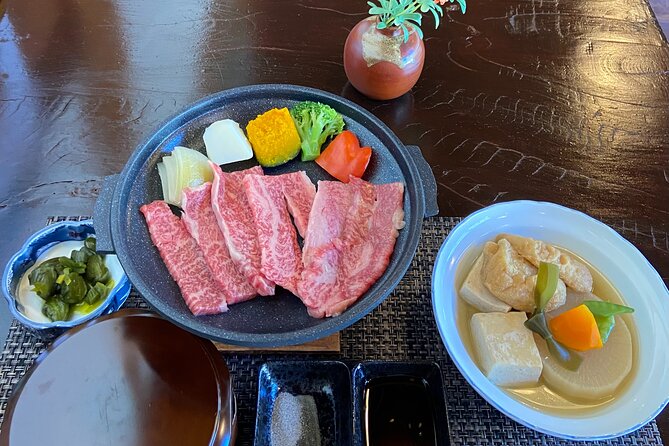
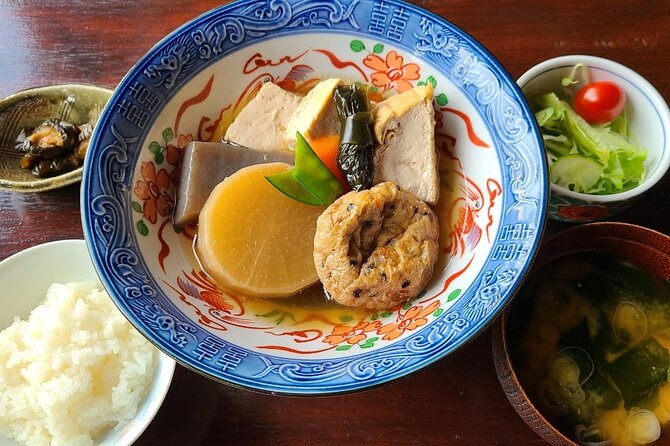
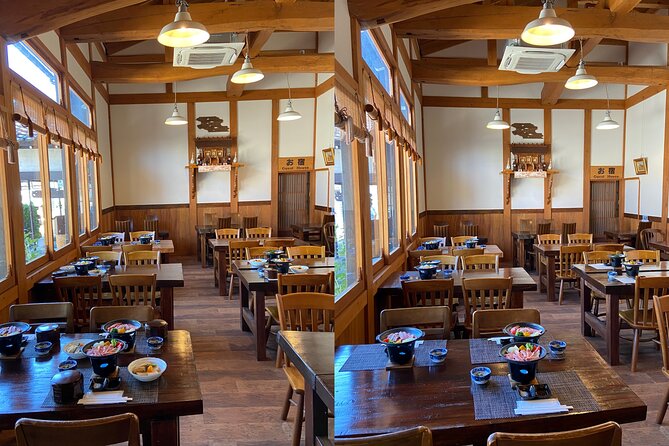
The lunch at Koshiyama is the moment where this tour can feel like more than just “two stops for photos.” If you choose the meal plan, you’ll eat a Japanese-style teppanyaki set featuring Hida beef (Hida gyu), plus an Oden set included with that option.
Why I like this setup for value: you’re eating in the area you’re visiting, not racing back to somewhere else to find food. And you’re not stuck with the usual “grab-and-go” problem on day trips. In a place like Shirakawa-go, where good meals aren’t always convenient the way they are in big cities, the tour’s lunch plan removes a headache.
The time is short—about 45 minutes—so don’t plan on a long sit-down experience. This lunch is built for getting you fueled and moving again. Still, the reviews that rate the food highly mention it as delicious and satisfying, and one review also highlighted a tofu option as a solid vegan alternative when someone didn’t want meat.
Quick tip: if you’re the kind of person who likes to browse before you eat, you’ll probably want to treat lunch as your “planned break.” That way you won’t spend the rest of the village time thinking about what you missed while you were hungry.
Shirakawa-go on foot: gassho houses, the Encounter Bridge, and the view deck choice
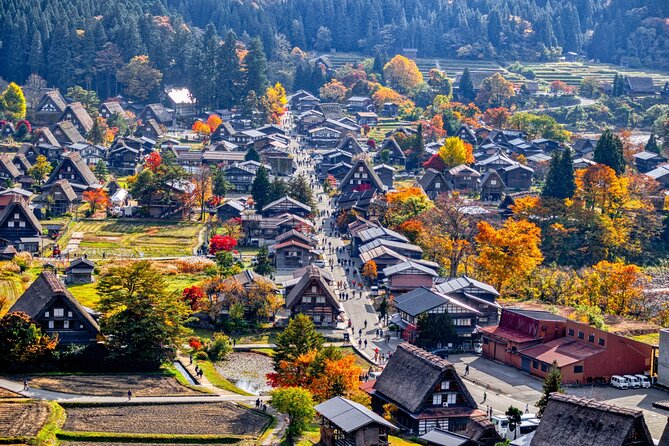
Once you reach Shirakawa-go, the experience shifts from town pace to mountain-quiet pace. You’ll have about 1 hour 30 minutes to explore the village and surrounding points of interest.
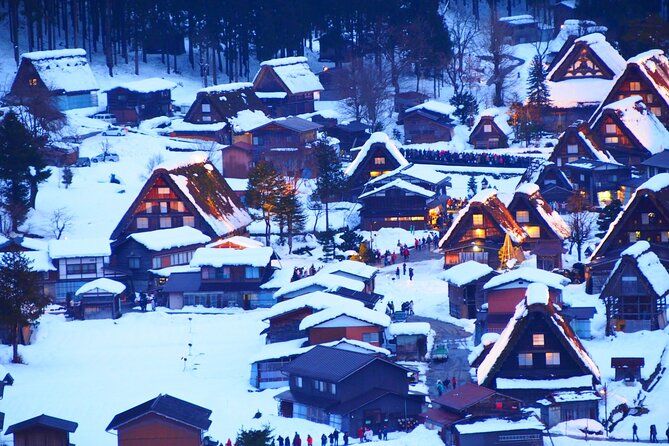
Start with the core reason Shirakawa-go exists in most people’s Japan plans: the old gassho-zukuri thatched-roof houses. This village is UNESCO-listed, and walking among the rice paddies and farm scenery makes it feel like you’ve stepped into an older rhythm of life.
What I find helpful is knowing what’s worth your attention inside that time. Here are the standouts:
- The Encounter Bridge
It’s described as concrete, narrow, and swaying. That’s the sort of detail that turns a normal crossing into a little “am I doing this?” moment. It’s also a practical connector between the parking area and Shirakawa-go—so you’ll likely pass it anyway. If you’re afraid of heights or shaky footing, take it slow and keep your balance.
- Observation deck view option
The view is the real headline: forest-covered hills, rice fields, and village farms stretching out below. You have two ways to get there: a 300 yen one-way shuttle bus or about a 10-minute walk. In rain, the shuttle can be the smarter move; in clear weather, the walk can be pleasant if your shoes are stable.
- Sericulture history
There’s a place where you can learn about the history of silk farming (raising silkworms). It adds context that photos don’t. If you only look at roofs, you miss part of the story for how people lived in a harsh mountain setting.
- Preserved gassho area from the late 1800s
You’ll see wooden houses in the gassho style preserved from the late 19th century. That historical framing helps you understand that these aren’t just pretty buildings; they’re specific adaptations to life in the region.
- A shrine stop
There’s also a shrine experience that can feel powerful and present. It’s not the kind of thing you plan around, but if you pause and look at the details, it gives the village a quieter emotional texture.
Main drawback here: Shirakawa-go can be crowded. Even if the village feels calm once you’re inside, popular viewpoints can have lineups. The best strategy is to keep moving slightly—hit the most “must-see” pieces early, then slow down if conditions are good.
Timing, weather, and the winter swap to Gujo Hachiman
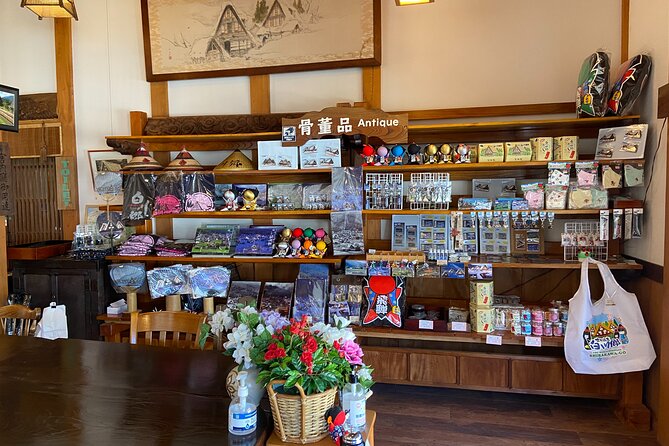
This is a seasonal route, even when it’s not advertised that way. The tour runs in a region where weather can shut roads down, and the operator specifically notes that snowfall can occasionally lead to road closures to Shirakawa-go. If that happens, you’ll be transitioned to a substitute journey to Gujo Hachiman, known as the Little Kyoto of Gifu.
What’s useful about knowing this upfront: you won’t be stuck staring at a sign all day. You’ll still get old-street atmosphere—historic streets with traditional buildings in Gujo Hachiman. It’s not “exactly Shirakawa-go,” but it keeps the day anchored in heritage rather than turning it into a long drive with disappointment.
If you’re going in winter, plan for real conditions. Reviews call out slippery ground and the need for warm clothes with rain gear. Even in non-winter months, rain can make walking less fun and shorten how much you can comfortably do in Takayama and Shirakawa-go.
Also keep in mind that if severe traffic happens on holidays or due to adverse weather, the schedule may reduce planned attractions without refunds. That’s the nature of a day trip that depends on roads, not a single indoor museum that never changes.
My practical advice: pack for the worst case, not the perfect case. Bring a waterproof layer, water-resistant shoes, and a small umbrella or rain shell. Your feet—and your patience—will thank you.
Meeting point, luggage, and how to avoid losing time
This tour starts at a specific bus stop: VIPLINER Nagoya bus stop, at 20-20 Tsubakichō, Nakamura Ward. Departure is 8:00 am, and you’ll want to be there early because the bus won’t wait for late arrivals.
Two small things that can save your day:
- Give yourself time to find the meeting point. Even if you’re good at trains, bus stops can be easy to miss if you’re rushing.
- Keep valuables with you. You can bring one piece of luggage per person, but anything stored in the trunk won’t be accessible between stops. In practice, that means phone, camera gear, meds, and anything you don’t want jostled should stay with you.
The luggage size guideline is that it should fit comfortably in the vehicle trunk, with a combined dimension limit of 155 cm (height + width + depth). The point isn’t to make you stress; it’s to keep things moving when people are boarding and getting off quickly.
One more detail: the bus route can include English or Chinese commentary through a conductor, and commentary could be mixed depending on participation. In most cases, that works fine—but a few reviews describe instances where the English experience felt limited. If English is a non-negotiable for you, it’s worth double-checking what language support you can expect when you book.
Finally, remember that this is a full day: you’ll likely return to Nagoya Station area at the end.
Price and value: what you’re paying for at about $66
At around $65.78 per person, you’re paying mainly for two things: round-trip transportation from Nagoya and the tour’s on-the-ground coordination. The fact that it includes “other fees” and an English/Chinese conductor usually means you’re not piecing together multiple tickets and timing issues.
If you add the optional lunch plan, value goes up—because you get a meal structured into the day rather than losing time to hunting for food. The lunch is where you can get Hida beef plus Oden, and multiple reviews describe the lunch as delicious and worth it. Even if you’re not a foodie, it can still be a win because it solves a common day-trip problem: hunger at the wrong time.
How to decide if it’s good value for you:
- If you want maximum sightseeing with minimum planning, the bus convenience is the value.
- If you’re planning to spend a full day in the car anyway, consider what you’d pay for a comparable schedule using public transport plus the hassle.
- If you hate crowds and tight timing, value will feel lower, because Takayama and Shirakawa-go time slots are limited.
For most first-timers in Gifu, though, this is a clean way to check both boxes—Takayama’s heritage streets and Shirakawa-go’s iconic roofs—without turning your day into a logistics puzzle.
Should you book this tour? My decision guide
Book it if you want a straightforward, organized route from Nagoya to two of Gifu’s biggest cultural hits, and you’re okay with a long travel day. This works especially well if you like the idea of having lunch handled, you want the gassho houses experience without train transfers, and you don’t mind that your time in each place is timed.
Skip it or reconsider if you’re very sensitive to weather-based changes. Rain and winter conditions can make walking less comfortable, and the winter road-closure plan means your day could shift to Gujo Hachiman instead of Shirakawa-go. Also think twice if you need consistently strong English narration; most departures have supportive guides, but the language experience has been mixed on a few occasions.
If you do book, prepare like a pro: bring rain gear, wear stable shoes, and decide what you’d like to prioritize in Takayama so you don’t spend your limited time second-guessing.
FAQ
What time does the tour depart from Nagoya?
The tour starts at 8:00 am from the VIPLINER Nagoya bus stop.
Is lunch included?
Lunch is included only if you select the meal option. The meal includes a set lunch at Koshiyama, and Oden is included with the meal plan.
How long is the tour?
It runs about 9 to 10 hours.
What happens in winter if roads to Shirakawa-go close?
If snowfall leads to road closures, the tour will switch to a substitute route that visits Gujo Hachiman, known as the Little Kyoto of Gifu.
Do they pick you up at your hotel?
No hotel pickup or drop-off is included.
What’s the luggage limit?
You can bring one piece of luggage per person. The size guideline for trunk storage is up to 155 cm combined (height + width + depth), and items stored in the trunk won’t be accessible between stops.