REVIEW · BUDAPEST
Jewish Heritage in Hungary with a Historian
Book on Viator →Operated by Budapest Explorers · Bookable on Viator
Budapest’s Jewish story is written on streets. This 2.5-hour walk with a historian stitches together synagogues, memorials, and everyday life in Pest, and I love the small group size (up to 10) plus the historian-led storytelling that keeps context from getting lost. The one catch: some synagogue interiors aren’t included, and the Great/Central Synagogue is viewed from outside.
I like that the route uses real, walkable landmarks you can revisit later: Erzsébet tér, Raoul Wallenberg’s statue, and Szimpla Kert, the first ruin bar in Budapest and the world. The stop at Solinfo Café includes the local Jewish cake, Flódni, so the tour feeds your head and your stomach.
You should consider this tour if you want more than Holocaust-era facts. The approach connects centuries of Jewish life in Hungary to what you can still see today, and the pace stays friendly enough for lots of questions.
In This Review
- Key things you should notice on this tour
- A 2.5-hour route that connects Jewish landmarks to real Budapest
- Where you start at Kempinski Corvinus, then walk to Dohány Street
- Erzsébet tér: the market square that anchors Pest
- Raoul Wallenberg’s statue: a reminder that one person can change outcomes
- Szimpla Kert ruin bar: how a forgotten building became a cultural signpost
- Gozsdu Udvar: a street that shows Budapest’s international pull
- Kazinczy Street Synagogue: understanding an Orthodox community focus
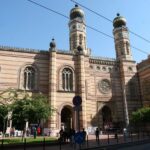
- Great and Central Synagogue (Nagy Zsinagóga): big exterior views and smart expectations
- Solinfo Café and Flódni: the included snack that keeps the story human
- What the historian focus actually means on the street
- Price and value: why $64.71 can make sense here
- Who this tour suits best (and who should plan something else)
- Should you book Jewish Heritage in Hungary with a Historian?
- FAQ
- How long is the tour?
- Is the tour in English, and do I get a ticket on my phone?
- How many people are in the group?
- Do we go inside the synagogues?
- Is food included?
- Where does the tour meet, and where does it end?
- Are service animals allowed, and is it near public transportation?
Key things you should notice on this tour
- Small group pace (up to 10) means more back-and-forth and fewer rushing moments.
- Historian-led context covers Jewish life in Hungary across many centuries, not only the 1940s.
- Synagogue stops with clear ticket reality: you’ll learn at Kazinczy Street, and you’ll see the Great/Central Synagogue from outside.
- Szimpla Kert story: you’ll hit the origin point of Budapest’s ruin bar scene.
- Flódni at Solinfo Café is included, so you don’t have to plan a food stop.
A 2.5-hour route that connects Jewish landmarks to real Budapest
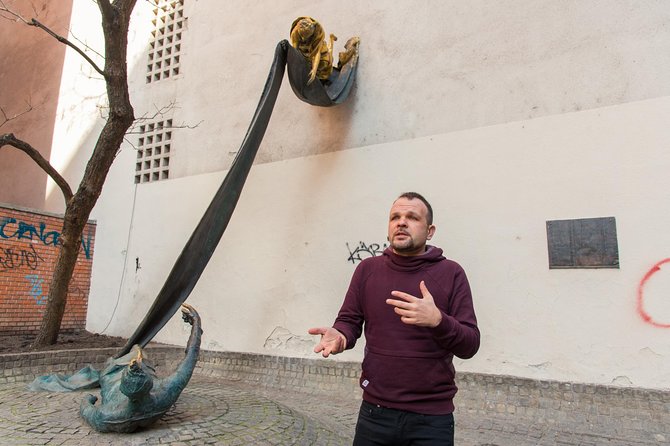
This tour is built for people who like their history in the real world, not locked inside a museum room. You move through Pest with a historian guide, passing major Jewish landmarks and stopping where the story changes.
The schedule is tight but not rushed. You’ll cover seven stops in about two and a half hours, with a mix of memorial moments, street-level culture, and synagogue-area context.
And because it’s a small group, the guide can slow down when someone has a specific question. That matters with topics that are emotionally heavy and fact-sensitive.
You can also read our reviews of more historical tours in Budapest

Where you start at Kempinski Corvinus, then walk to Dohány Street
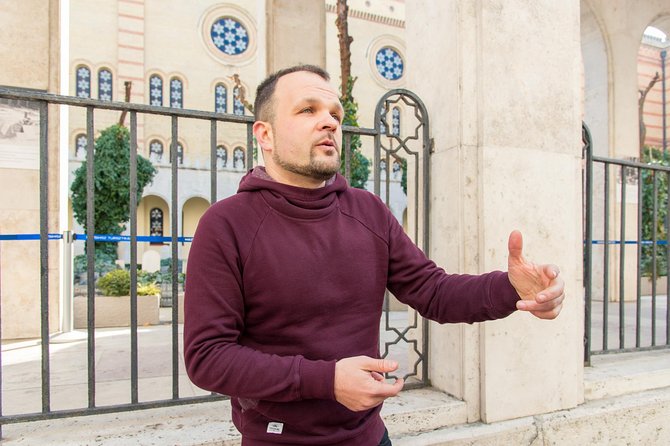
You meet at Kempinski Hotel Corvinus Budapest on Erzsébet tér 7-8 (1051). The tour begins at 10:00 am, and you end outside along Wesselényi utca 1 (1077), finishing near Dohány Street Synagogue.
This start/end plan is practical: you begin in a big public square and end near one of the city’s most recognizable Jewish sites. If you’re also doing other Budapest sights the same day, you’ll probably find this route easy to stitch into your plan.
The guide gives you a mobile ticket, and the tour is offered in English. It’s also set up near public transportation, which helps if you want a low-stress arrival.
Erzsébet tér: the market square that anchors Pest
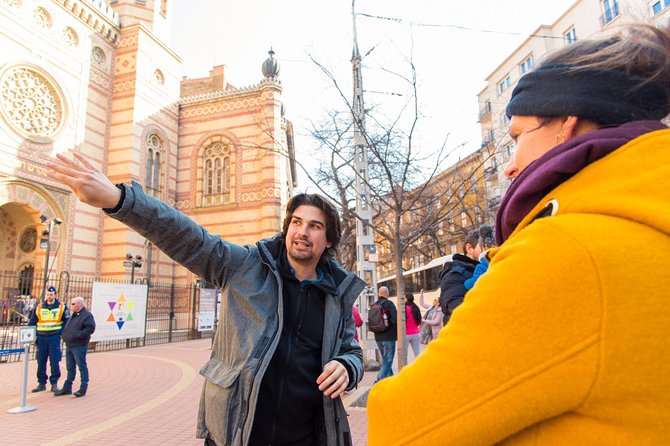
Your first stop is Erzsebet ter, a medieval market square that has become one of Pest’s main squares. Even before you hit the synagogues, this sets the tone: you’re standing where everyday city life has always mattered.
I like this start because it helps you get your bearings fast. You can picture the neighborhood as more than a list of monuments. It’s a place where people shopped, talked, waited, and lived.
You get about 20 minutes here, which is enough time to understand why this square matters before the tour moves into more specific Jewish-history landmarks.
Raoul Wallenberg’s statue: a reminder that one person can change outcomes
Next up is Raoul Wallenberg’s statue. This stop is short (about 10 minutes), but it’s not filler.
Wallenberg is presented as one of the most important diplomats saving Jewish lives. Even if you know the name already, you’ll likely get a clearer picture of why Budapest and this era are linked in many people’s minds.
If your goal is understanding the human impact behind the big historical events, this is a good early moment. It also sets emotional context before you move into synagogue-area learning.
Szimpla Kert ruin bar: how a forgotten building became a cultural signpost
Then you reach Szimpla Kert, and yes, the tour treats it as more than just a fun bar. This is the first ruin bar in Budapest, and it also has the distinction of being the first ruin bar in the world.
You’ll spend around 20 minutes here. The value is in connecting the building’s repurposed life to the broader story of how cities rebuild and reimagine spaces after major social change.
This stop is also handy if you want a tour that doesn’t stay solemn the entire time. It gives your brain a break while still tying back to place.
Tip for timing: if you’re planning nightlife afterward, you’ll already know you’re in the right neighborhood. Just remember this stop is about context, not a long drinking break.


Gozsdu Udvar: a street that shows Budapest’s international pull
After Szimpla Kert, you’ll walk toward Gozsdu Udvar. You’ll spend about 10 minutes here.
The focus is on the street’s international feel. It’s a quick stop, but it helps you see a side of the Jewish quarter area that isn’t only about synagogues and solemn dates. You’re seeing a living city with modern layers.
This is the kind of contrast that makes a history tour feel grounded. Instead of treating the past like a separate country, you see how today’s Budapest sits next to the story.
Kazinczy Street Synagogue: understanding an Orthodox community focus
Kazinczy Street Synagogue is one of the tour’s main learning stops, with about 20 minutes scheduled. Here the emphasis is on the Orthodox Jewish community and what that means in the neighborhood’s historical pattern.
Important practical detail: admission for Kazinczy Street Synagogue is not included. The tour gives you the learning context, but if you want to go inside, you’ll need to arrange that separately.
Even if you do not enter, this stop still works well because it’s about understanding a specific community identity, not just checking a famous address.
A good way to get the most: ask your guide how religious practice shaped community life in the area, then look at the building with those answers in mind.
Great and Central Synagogue (Nagy Zsinagóga): big exterior views and smart expectations
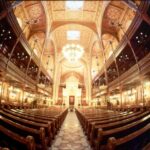
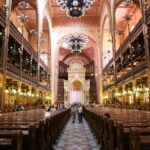
You’ll spend about 45 minutes in the area of the Great/Central Synagogue (Nagy Zsinagóga). The key expectation is clear: you do not visit the Great Synagogue inside.
This matters. The building is described as Europe’s largest synagogue, with historical connotations from roughly the last 200 years. So you’re there for architecture, scale, and meaning—just not an interior tour.
Admission for the synagogue inside is not included, so if interior access is your must-do, you may need a different activity planned for another time.
That said, a long exterior stop can be surprisingly useful. You can study how the building sits in the street, then use the guide’s framing to understand why it became such a powerful symbol for the community across generations.
Solinfo Café and Flódni: the included snack that keeps the story human
The final stop is Solinfo Café, where you spend about 20 minutes. Here you get something practical and memorable: a local Jewish cake, Flódni, and it’s included.
This is a smart move by the tour operator. Food is one of the fastest ways to make history feel real. Flódni isn’t just a snack you eat and forget. It’s a taste that carries identity.
I also like that the tour gives this stop time. You’re not grabbing a quick bite while the guide keeps walking. You can actually sit, eat, and digest what you’ve been learning.
If you’re even mildly curious about Jewish life beyond the headlines, this stop can become the part you remember most later.
What the historian focus actually means on the street
A title like Jewish Heritage in Hungary with a Historian is easy marketing. The real question is: what does the historian do differently while you’re walking?
Here, the approach is about telling the full shape of the story, including both painful and hopeful elements. The emphasis isn’t limited to the grim chapter of the 1940s. You’ll get coverage that spans centuries, with attention to how Jewish life in Hungary changed over time.
From what’s been shared about how different guides handle this tour, the tone stays patient and question-friendly. You’ll also notice a habit of being honest about both good and bad in Hungary’s history, instead of smoothing everything into a single mood.
If you’re the kind of person who likes to connect dates to what you see outside, this tour fits your style. It’s not just about looking. It’s about interpreting what you’re looking at.
You may also find the guide draws parallels to the present in a careful way. That keeps the past from feeling like a sealed glass case.
Price and value: why $64.71 can make sense here
At $64.71 per person for about 2 hours 30 minutes, the price is in the “serious city-walk” category. What helps it feel worth it is the combination of a historian guide, a structured route through key Jewish landmarks, and an included food stop.
The other detail that affects value is what’s not included. Synagogue admission for Kazinczy Street and the Great/Central Synagogue inside is not included. So your final spend might rise if you add interior tickets.
Still, you’re not paying just for standing outside buildings. You’re paying for context: why these places matter, how the community shaped the neighborhood, and how modern Budapest grew around the layers.
Also note that this tour is commonly booked about 42 days in advance. That tells me it’s popular enough that you shouldn’t wait until the last minute.
Who this tour suits best (and who should plan something else)
This is a strong fit if you:
- want a small-group tour where you can ask questions without feeling cut off
- like history that connects to streets, buildings, and daily city life
- want Jewish heritage in Hungary explained across a long time span
- enjoy food stops that are actually tied to local identity (Flódni at Solinfo Café)
It may be less ideal if you:
- only want synagogue interior access, because the Great/Central Synagogue inside is not visited and Kazinczy Street admission is not included
- hate walking short distances between stops, since you’ll be moving around the Pest area the whole time
Should you book Jewish Heritage in Hungary with a Historian?
I’d book it if you want a first-rate way to understand Budapest’s Jewish story in a single morning block. The blend of Erzsébet tér, Wallenberg, Szimpla Kert, Kazinczy Street context, and a Flódni stop is a practical mix. You get history, yes, but you also get the city’s real texture.
Skip it and look for another option if interior synagogue visits are your top priority. This tour gives you strong exterior views and guided learning, not a full “walk into every building” experience.
If you’re already planning time near Dohány Street Synagogue that day, this tour is a clean way to add meaning to the sights you’ll see afterward.
FAQ
How long is the tour?
It runs for about 2 hours 30 minutes.
Is the tour in English, and do I get a ticket on my phone?
Yes. The tour is offered in English, and you receive a mobile ticket.
How many people are in the group?
The tour has a maximum of 10 travelers, which keeps it fairly intimate.
Do we go inside the synagogues?
Kazinczy Street Synagogue is a learning stop with admission not included, and the Great/Central Synagogue (Nagy Zsinagóga) is not visited inside. You’ll view it from outside.
Is food included?
Yes. You’ll have the local Jewish cake, Flódni, at Solinfo Café, and it’s included.
Where does the tour meet, and where does it end?
You meet at Kempinski Hotel Corvinus Budapest on Erzsébet tér 7-8, and the tour ends outside at Wesselényi utca 1, near Dohány Street Synagogue.
Are service animals allowed, and is it near public transportation?
Service animals are allowed, and the tour is near public transportation. Most travelers can participate.