REVIEW · KATAKOLO
Katakolon Shore Ex: Skip-the-Lines Ancient Olympia & Olive market
Book on Viator →Operated by The Travel Insiders · Bookable on Viator
Olympia hits different when you’re not stuck in lines. From Katakolon port, this small-group excursion pairs skip-the-line access with time on the original Olympic grounds. You’ll also get plenty of food-and-flavor time with an olive oil tasting stop that’s perfect for a cruise day.
Two things I really like: first, you get a focused run-through of Olympia with walking time that still leaves room for photos (not just a quick stamp-and-go). Second, the olive market sampling is built into the schedule, so you’re not left hunting for snacks after the ruins. One drawback to consider: it’s a full shore-day effort in heat, so comfortable shoes and sun protection matter a lot.
In This Review
- Key Highlights I’d Target on This Shore Day
- Katakolon Port Pickup: Getting There Without the Chaos
- Skip-the-Line Olympia: Walking the Track Where the Games Began
- Time on the ruins (and what can affect it)
- Olympia Museum: Originals Up Close, Not Just Reconstructed Copies
- A practical tip for museum time
- Padelina Market Stop: Olive Oil Tasting That Actually Feels Greek
- If you’re wondering what to buy
- The Guides and Onboard Commentary: Why It Feels More Than a Bus Ride
- A small-group size that matters
- Price and Value: Is $131.81 Worth a Half-Day?
- What Might Feel Different: Options, Museum Mentions, and Tour Flow
- Should You Book This Katakolon Shore Excursion?
- FAQ
- How long is the Katakolon Olympia and olive market excursion?
- Does the tour include tickets for Olympia and the museum?
- Where is the pickup point in Katakolon port?
- Is this tour in English?
- What’s included in the olive market stop?
- What should I know about weather cancellations?
Key Highlights I’d Target on This Shore Day
- Port pickup right inside Katakolon means you’re not wandering the pier looking for the group
- Skip-the-lines entry into the main Olympia area keeps your time where it counts
- Walking or even running the Olympic track makes the history physical, not abstract
- Olympia Museum close by lets you see original finds without adding major transit time
- Padelina indoor market tastings include olives, olive oil, blends, and balsamic-style specialties
- Small group (max 25) with live English commentary keeps the day organized
Katakolon Port Pickup: Getting There Without the Chaos
This is the kind of excursion that makes sense the moment you dock at Katakolon. Instead of playing pier-survival—dodging souvenir sellers and guessing which bus is yours—you start with pickup within the port area at the central gate, marked by a Blue sign board (Port of Katakolon, John Latsis). Your exact pickup time comes by message, which helps you avoid the awkward half-hour of standing around with everyone else.
The other practical win is that you’re not stuck coordinating entry tickets and directions on your own. The day is set up as a guided, timed loop: you get transported to Olympia, visit the major sites, and return to the port when you still have time to enjoy the rest of your ship day.
Also, the itinerary runs about 4 to 5 hours, which fits well if you want one big anchor stop instead of cramming in two or three half-days.
You can also read our reviews of more tours and experiences in Katakolo.

Skip-the-Line Olympia: Walking the Track Where the Games Began
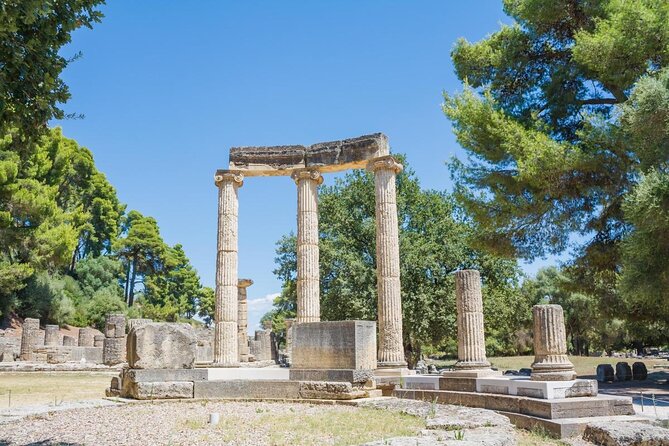
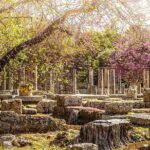
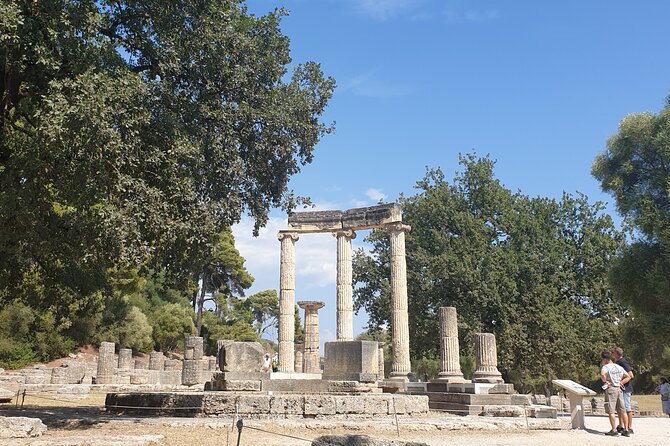
The heart of the experience is the Archaeological Site of Olympia—birthplace of the Olympic Games. This isn’t just sightseeing from a distance. You’ll spend real time among the ruins, including time near the Temple of Zeus (the one tied to the story of one of the Seven Wonders of the Ancient World).
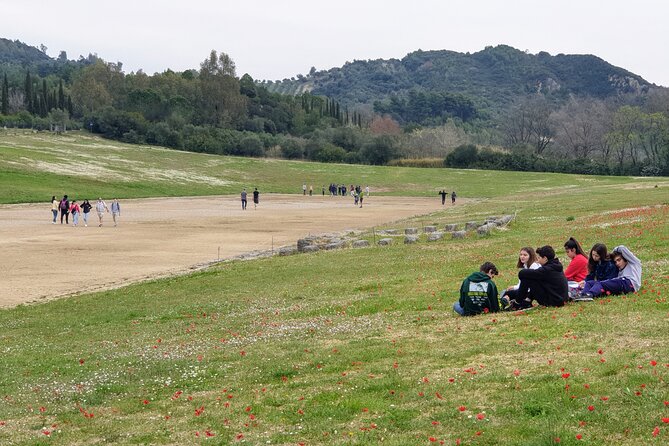
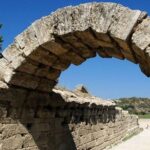
One of the standout moments is the chance to walk—some people even run—on the original Olympic track. That turns the site from “cool ruins” into a lived-feeling place. You can imagine athletes moving through the same spaces, and your photos look better too because you’re not rushing through the best angles.
You’ll also get connections to modern Olympics tradition. Part of the on-site experience includes seeing the spot where the Olympic torch is lit for the Games. Even if you’re not a sports superfan, that’s a nice bridge between ancient ritual and modern spectacle.
Time on the ruins (and what can affect it)
You’re scheduled for about 1 hour 10 minutes at the site, with entry included. That’s enough time to cover the main highlights while still having a moment to breathe, take pictures, and get oriented.
That said, Olympia can be brutally hot in the summer. In one account, the day included major heat and a strike, and the guide adjusted the flow so the group still made it into the ruins efficiently. Translation: if things shift (heat, local disruptions, opening times), your guide may reorder parts of the visit to protect your time.
Olympia Museum: Originals Up Close, Not Just Reconstructed Copies
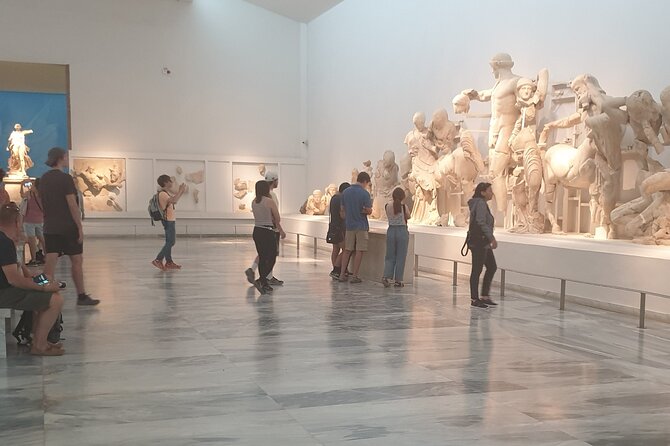
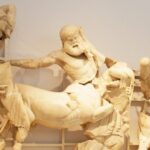
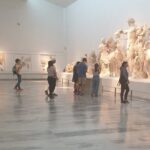
Right near the ruins is the Archaeological Museum of Olympia, about a short walk away. The museum stop is scheduled for about 40 minutes, and it’s a big deal because it’s where the finds from the site show up in a more complete, understandable way.
The museum is especially useful if you like to connect what you see outdoors with what archaeologists actually recovered. You’ll get the “why this matters” context without needing to read a dozen signs.
A strong point from people who’ve done this: the museum experience feels like a revelation because many objects are the real artifacts from excavations, presented in a way that helps you visualize the original site better than the ruins alone.
A practical tip for museum time
In a short museum window, you’ll get more out of it if you pick a few targets before you go—like the objects connected to the stadium and Zeus’s area. Your onboard commentary and on-site explanations usually point you toward what to look for, which helps the museum time feel focused instead of like information overload.
Padelina Market Stop: Olive Oil Tasting That Actually Feels Greek
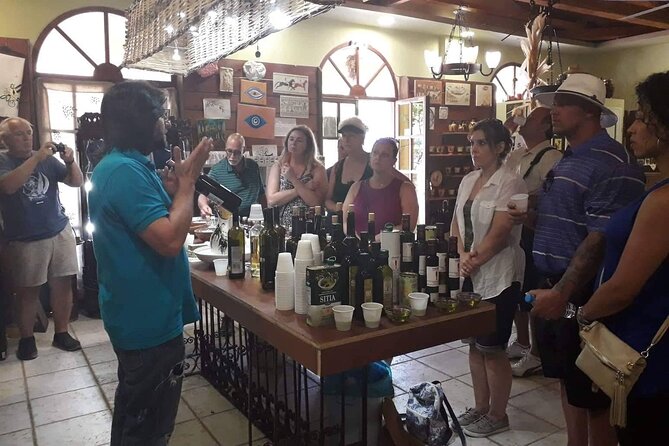
After the ruins and museum, the schedule shifts to a food-and-flavor stop at Padelina Shopping Center. This is the part many shore excursions forget—then you end up paying too much for a snack and rushing back to the ship.
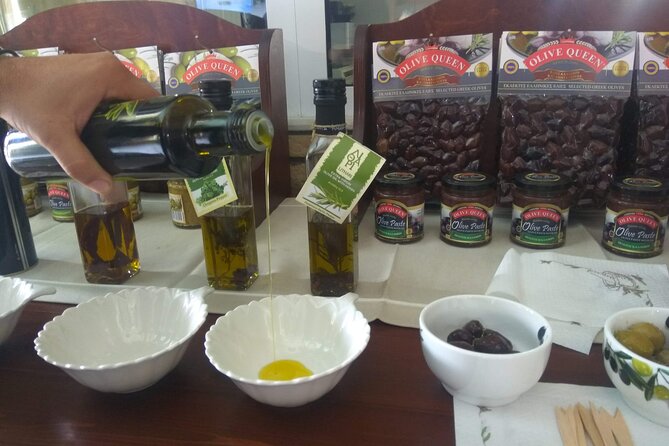
Here, you get roughly 40 minutes to visit an indoor market-style space where local products are featured. The tasting is the main event: you’ll sample olives, olive oil, different blends, balsamic-style vinegars, and other local delicacies.
One of the most memorable aspects is the human side. You’re not just handed a tiny cup and sent away. People describe the experience as including the owners’ stories about the production and secrets of what Greeks call liquid gold—extra virgin olive oil. That kind of detail sticks because it connects taste to place.
If you’re wondering what to buy
During a tasting stop like this, your best strategy is simple:
- try a couple styles (mild vs. stronger if offered)
- buy the one you’d actually want at home
- don’t overthink it—this is a chance to shop while your taste buds are still engaged
If you’re traveling light, you might also want to ask about packaging before you buy, but exact details like shipping or sealed packaging aren’t specified in the information provided.
The Guides and Onboard Commentary: Why It Feels More Than a Bus Ride
A big portion of the value here is the guidance quality—especially the way the day is explained as you move between stops. You get live commentary on board in English, plus on-site narration that connects the grounds to stories you can picture.
Names that came up repeatedly include Despina, Elana, Eleni, Natalia, and Elias (plus the driver Kostia in one account). One account even notes that Elana is certified by the Greek Ministry of Tourism, which helps confirm that the explanations aren’t just generic.
What I’d look for in a guide like this is the ability to make the site feel coherent. When someone ties together the track, the temple area, and the museum artifacts, you don’t leave with random facts—you leave with understanding.
A small-group size that matters
The tour caps at 25 people. That’s not huge, and it usually means you can hear instructions, ask questions, and keep the group together without constant waiting. For a busy port day, that’s a real quality-of-life upgrade.
Price and Value: Is $131.81 Worth a Half-Day?
At $131.81 per person for 4 to 5 hours, it’s not the cheapest option on a Greek island port. But it’s priced like a shore excursion that protects your time.
Here’s where the value shows up:
- skip-the-lines reduces time wasted in queues
- port pickup and drop-off saves stress (and often stress costs you time)
- admission tickets included for the museum and the Olympia site
- olive market sampling is included, so you’re not budgeting extra for tastings during the day
For a cruise day, time is money. If you’re trying to see Olympia without losing half your day to logistics, this format is usually the sweet spot.
Also, the tour tends to be booked well in advance (around 104 days on average). That’s a hint that the timing works for many ships and many people want the same mix: one major ancient site plus a food stop.
What Might Feel Different: Options, Museum Mentions, and Tour Flow
A few things can affect your experience depending on timing and how the day unfolds:
- There is an option for an official tourist guide within the ruins, and it’s not included by default.
- The scheduled outline includes the museum and the olive market, but on-the-ground flow can still shift if there are disruptions, extreme heat, or opening-time issues.
- In one account, a person felt the museum didn’t get the full attention they expected. That’s a good reminder to be clear with your guide about what you most want to see if there’s any tightness in time.
If you care most about archaeology details, museum objects, and explanations on site, this tour is built for that style of travel.
If you prefer a quiet, self-paced stroll with zero narration, a guided format may feel a bit structured.
Should You Book This Katakolon Shore Excursion?
Book it if:
- you want Olympia + museum without turning the day into a logistics puzzle
- you like guided explanations and want help understanding what you’re seeing
- you want an olive oil tasting stop that feels tied to Greek production, not just shopping
Skip or rethink if:
- you’re looking for a mostly self-guided, minimalist day
- you dislike guided pacing (even if it’s not rushed)
- you’re traveling with someone who struggles with heat and standing/walking for a few hours
One more decision tip: if your ship schedule is tight, the port pickup and skip-the-lines approach becomes even more valuable. This is the kind of excursion where the “how” matters as much as the “what.”
FAQ
How long is the Katakolon Olympia and olive market excursion?
The tour runs about 4 to 5 hours.
Does the tour include tickets for Olympia and the museum?
Yes. Admission to the Olympia site and the Archaeological Museum of Olympia is included.
Where is the pickup point in Katakolon port?
Pickup happens within the port area at the central gate, by the Blue sign board that reads Port of Katakolon, John Latsis.
Is this tour in English?
Yes, it’s offered in English, and there is live onboard commentary.
What’s included in the olive market stop?
You’ll visit Padelina Shopping Center and sample olives, olive oil, blends, balsamic vinegar, and other local delicacies. Olive market sampling is included.
What should I know about weather cancellations?
This experience requires good weather. If it’s canceled due to poor weather, you’ll be offered a different date or a full refund.