REVIEW · SRINAGAR
Srinagar Old City Heritage Walking Tour with Kahwa Tea
Book on GetYourGuide →Operated by Wildfloc Adventures · Bookable on GetYourGuide
Old Srinagar turns street corners into stories. This 3-hour Heritage Walk with Kahwa Tea from Wildfloc Adventures sends you from Pather Masjid to Jamia Masjid Srinagar, with a local historian guiding you through shrines, Mughal-era architecture, markets, and quiet courtyards. Along the way, you also get a real break for traditional Kashmiri kahwa and conversations that make the old city feel human, not just historic.
Two things I’d pick as the best value: the tour runs as a small group (max 10), so your guide can actually answer questions, and it’s anchored by storytelling from guides like Syed and Mr. Furqan, who know the legends and architecture behind the landmarks. One consideration: this is walking-through-winding-alleys territory, so if your fitness is low or you’re dealing with mobility limits, it may feel like more work than sightseeing, even with a 3-hour time box.
In This Review
- Why Srinagar’s Old City Walk Beats a Bus Tour
- From Pather Masjid to Jamia Masjid Srinagar: What the 3 Hours Looks Like
- The Kahwa Break: Why Tea Belongs in This Story
- Shrines, Mosques, and Mughal-Era Details You’ll Understand After Walking Them
- Markets and Artisans: Buying Without Feeling Like You’re Being Sold
- Guide Power: English, Hindi, Urdu, and Kashmiri, Plus Real Storytelling
- Price and Time: Is $32 Worth It for a 3-Hour Heritage Walk?
- Practical Notes: Shoes, Sun Hat, and When This Walk Feels Tough
- Should You Book This Srinagar Old City Heritage Walk?
- FAQ
- How long is the Srinagar Old City Heritage Walking Tour with Kahwa Tea?
- What does the tour cost?
- Where does the tour start and where does it end?
- Is kahwa tea included?
- What languages can the guide speak?
- How large is the group?
- What should I bring for the tour?
- Who is the tour not suitable for?
Why Srinagar’s Old City Walk Beats a Bus Tour
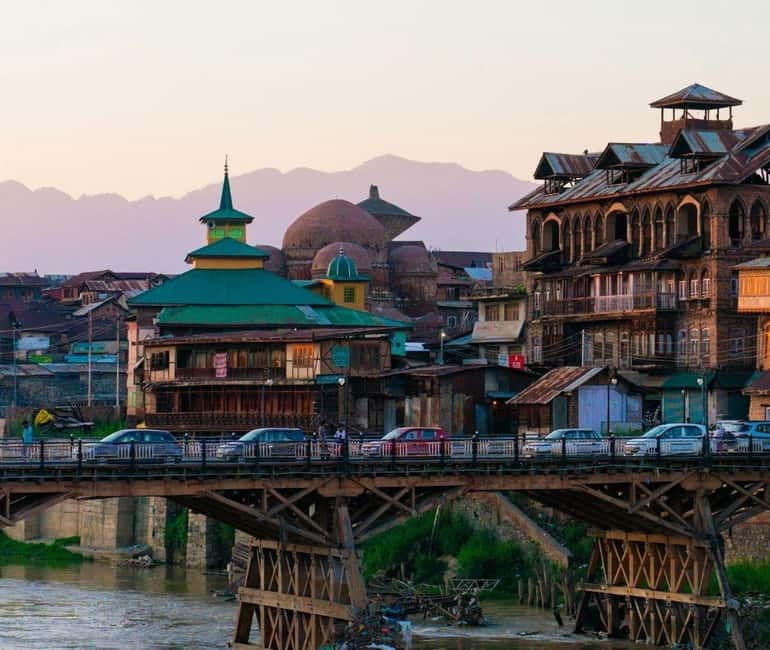
Srinagar’s old lanes can feel maze-like at first, but that’s exactly why a guided walk matters. You’re not just ticking off buildings. You’re learning how different eras left their fingerprints on the same street view: Persian influence, layered religious history, and the Mughal touch on how spaces are designed.
I especially like the way the tour blends practical place facts with story. When a guide connects a shrine or mosque to the beliefs, legends, and community life around it, the whole area starts to make sense. And since you end at Jamia Masjid Srinagar after multiple guided stops, you get a satisfying arc instead of a stop-and-run checklist.
The kahwa tea moment is another smart piece of design. It’s not stuck on at the end as an afterthought. It’s placed where you pause, warm up, and talk with locals, so the experience shifts from walking to listening.
From Pather Masjid to Jamia Masjid Srinagar: What the 3 Hours Looks Like
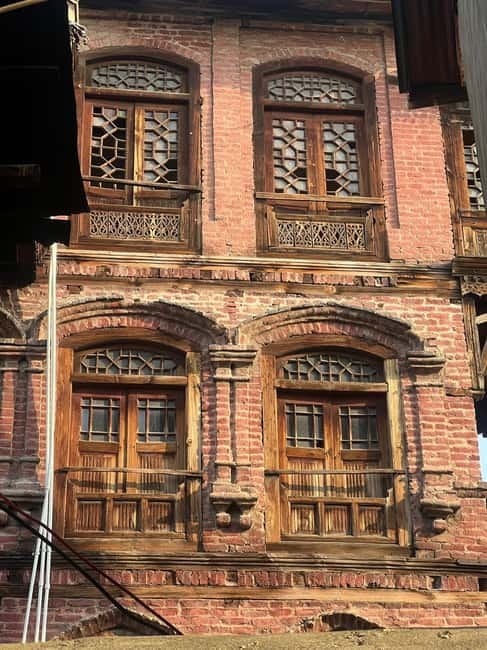
This walk follows a clear route with a rhythm: short transfers, then blocks of guided time, then a short shopping window, and finally a wrap-up at Jamia Masjid Srinagar. The pacing keeps you from feeling rushed, but it still moves enough that you’ll want good shoes.
You start at Pather Masjid. The first stretch is a guided introduction (about 30 minutes) that helps you get oriented. This matters more than it sounds. In old city areas, signage can be limited, so understanding what you’re seeing early makes the later stops click.
After that, you do a brief walk segment (around 10 minutes) and then settle into longer guided sections (45 minutes, plus additional 30-minute blocks). This is where the tour’s core themes show up:
- Ancient shrines and older sacred sites
- Forgotten temples (the kind that you’d usually miss without context)
- Mughal-era architecture and the design choices that go with it
- Quiet courtyards where the pace slows and you can absorb details
One landmark that stands out in this experience is the Khanqah-e-Budshah tomb area, tied to Khanqah Moala in the way guides explain the story. If you enjoy architecture and legend in the same package, that’s one of the moments you’ll remember.
There’s also a shopping stop (about 15 minutes). It’s time-bounded, so you’re not wandering for an hour. Use that window for small, thoughtful buys rather than big decisions.
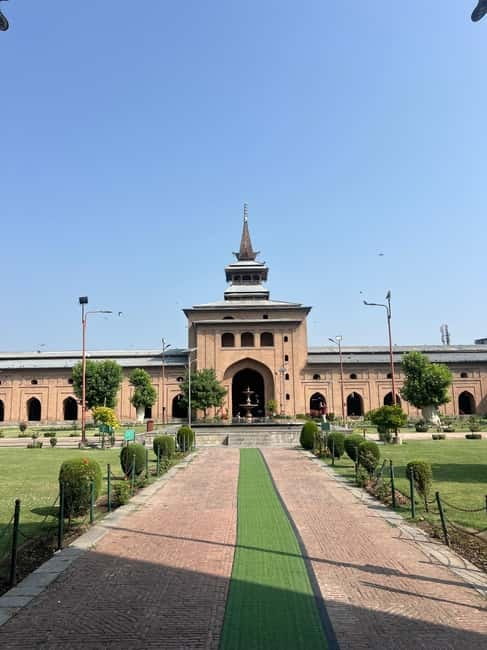
Finally, you return to Jamia Masjid Srinagar for a guided wrap-up (around 30 minutes). This is where the tour’s narrative lands—by the time you’re at the finish point, you’ve already seen enough to understand why Jamia Masjid matters in the old city’s daily life and historical layers.
The Kahwa Break: Why Tea Belongs in This Story
The tour includes kahwa—traditional Kashmiri tea—served at a local spot. Tea here isn’t just a drink. It’s part of hospitality and everyday conversation, and it’s often where you learn how locals talk about their home in plain language.
I like that the kahwa moment is built into the tour experience rather than separated from it. You get a natural pause while you’re still in the old city setting, and that helps you reset before the last guided portion.
You should also expect conversations with locals as part of the overall experience. Even when the exact topics vary, the format stays practical: you ask, your guide frames context, and you walk away with impressions you won’t get from a photo alone.
Shrines, Mosques, and Mughal-Era Details You’ll Understand After Walking Them
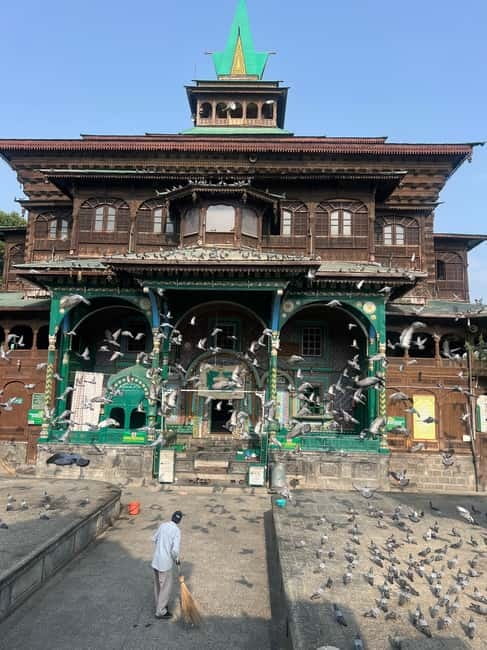
What makes this tour genuinely different is the way you learn to read the buildings. Many heritage tours point and move on. This one guides you toward noticing things like:
- How religious spaces shape community movement and memory
- How architecture reflects an era’s priorities—light, access, symmetry, and craftsmanship
- How older sites connect to legends you’ll hear directly from your guide
The itinerary is designed to cover a mix of lively market streets and quieter courtyard-like spaces. That balance matters. When you only see the busy parts, you miss the calmer rhythms that are just as important to how Srinagar functions.
It also helps that the tour includes meeting local artisans. You’re not just watching from a distance. You get to learn about age-old crafts and traditions while you still have the local setting fresh in your mind.
Markets and Artisans: Buying Without Feeling Like You’re Being Sold
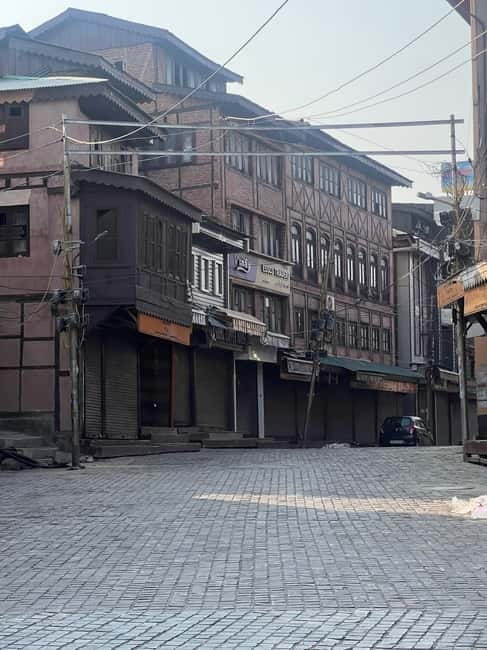
The tour includes bust markets—you’ll spend time in busy commercial areas—plus a short shopping window. The idea is to let you see daily life, not to pressure you into purchases.
If you like buying locally, use the shopping time to focus on small items that match what you’ve learned. For example, if you’ve been talking about craft traditions and craftsmanship while meeting artisans, you’ll be able to choose more confidently when you see related goods.
If you’re not shopping, that’s fine too. You can treat the market segment like a cultural “listening station.” Watch how people move, notice how shopfronts and signage relate to the buildings around them, and lean on your guide to explain what you’re seeing.
Guide Power: English, Hindi, Urdu, and Kashmiri, Plus Real Storytelling
A major strength here is that the guide can work in English, Hindi, Urdu, and Kashmiri. That flexibility is practical. It helps if you want deeper answers rather than only surface-level explanations.
Names that have shown up in the experience include Syed (from Wildfloc Adventures) and Mr. Furqan. What you can reasonably expect from guides like these is detailed storytelling tied to architecture and landmarks, including legends and facts connected to the shrines and mosques visited.
Because the group is limited to 10, you’re more likely to get personal questions answered. That’s the difference between a lecture and a guided walk that feels interactive.
Price and Time: Is $32 Worth It for a 3-Hour Heritage Walk?
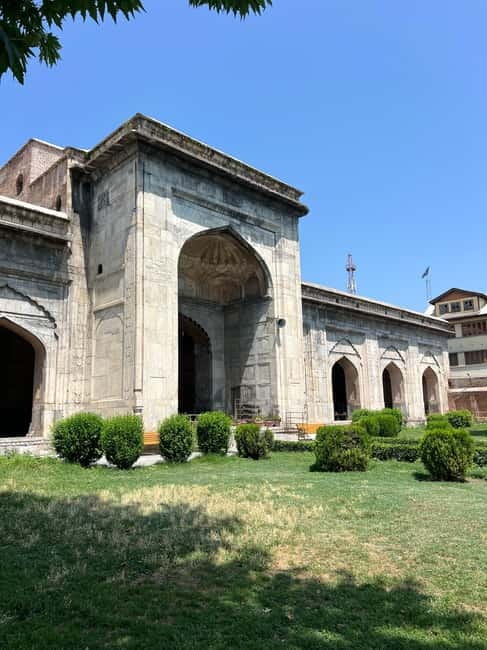
At $32 per person for a 3-hour guided experience, the value comes from what’s actually included. You’re paying for:
- Guided heritage walking
- Visits to ancient shrines and forgotten temples
- Exploration of Mughal-era architecture
- Market time plus quiet courtyard stops
- Meeting local artisans
- Kahwa tea
- Conversations with locals
Transport isn’t included, and food other than the kahwa isn’t included either. Photography and videography permits are also not included, so if you’re planning serious shooting, plan ahead.
Still, for a heritage-focused walking tour, the structure is the value. You’re not spending half the day getting between scattered sights. You’re walking a compact old-city route, with guided context stacked on top of it.
Practical Notes: Shoes, Sun Hat, and When This Walk Feels Tough
This is a walking tour through winding alleys. That means you should come prepared for uneven surfaces and frequent turns. The tour asks you to bring comfortable shoes, sunglasses, sunscreen, and a sun hat—good advice in a place where daylight can be intense.
There are also clear “not for everyone” limits:
- Not suitable for children under 10
- Not suitable for pregnant women
- Not suitable for wheelchair users
- Not suitable for people with low fitness
- Not suitable for visually impaired people
If any of those apply, it’s better to choose an experience with fewer movement demands. Also note: the tour includes quiet courtyards and stop-and-listen moments, but the overall flow stays active.
On the rules side, expect a standard respectful-tour vibe: no pets, no alcohol or drugs, and no intoxication. There are also restrictions around clothing, and the walk doesn’t allow bare feet. If you like to plan smoothly, just dress for comfort and modesty.
Should You Book This Srinagar Old City Heritage Walk?
Book it if you want more than photos—if you like architecture, legends, shrines, and local craft stories delivered by a guide you can actually talk to in your preferred language. The small group size and the kahwa tea break make it feel like a thoughtful afternoon rather than a rushed route.
Pass or look for another option if walking 3 hours through winding alleys sounds unpleasant, or if you need accessibility support that this format can’t offer. For everyone else, this is one of the better ways to understand Srinagar’s old city: by walking it with context, then sharing tea in the middle of it.
FAQ
How long is the Srinagar Old City Heritage Walking Tour with Kahwa Tea?
It lasts 3 hours.
What does the tour cost?
The price is $32 per person.
Where does the tour start and where does it end?
It starts at Pather Masjid and finishes at Jamia Masjid Srinagar.
Is kahwa tea included?
Yes. Traditional Kashmiri kahwa tea is included at a local spot.
What languages can the guide speak?
The live tour guide speaks English, Hindi, Urdu, and Kashmiri.
How large is the group?
The group is small, limited to 10 participants.
What should I bring for the tour?
Bring comfortable shoes, sunglasses, a sun hat, and sunscreen.
Who is the tour not suitable for?
It isn’t suitable for children under 10, pregnant women, wheelchair users, visually impaired people, or anyone with low fitness.