REVIEW · KATHMANDU
Kathmandu Heritage Walk | Heritage Walk of Kathmandu
Book on GetYourGuide →Operated by Breakfree Adventures Pvt. Ltd. · Bookable on GetYourGuide
Kathmandu rewards curiosity more than a checklist. This 3.5-hour heritage walk is a smart mix of streets, temples, and markets, with a local guide steering you through the city’s everyday sacred places. It’s also designed so you don’t feel like you’re racing a clock.
I especially like the way this route balances quiet stops (like Shanti Bihar Stupa) with lively shopping streets in and around Thamel. I also like that you get a government certified guide and a private group setup, which makes it easier to ask practical questions while you walk.
One consideration: this is still a walking route through older streets, so it’s not suitable for wheelchair users or people over 70, and it likely won’t work for anyone who needs frequent, long breaks.
In This Review
- Key things to know before you go
- What a 3.5-hour Kathmandu Heritage Walk actually gives you
- Meet-up in Thamel: easy start, clear direction
- Thamel and Tahiti: street energy plus a calmer change of scenery
- Shanti Bihar Stupa: the pause stop that earns its place
- Indrachowk’s Akash Bhairab Temple: sacred space in a busy square
- Gold Souq and craftsmanship: shopping with context
- Sankata Temple, Mahankal Bhairab, and the feel of lived-in devotion
- Bhotahiti and Annapurna Temple: city life plus major symbolism
- How the walking pace works (and why guides matter)
- Price and value: is $40 a fair deal?
- What to bring so you’re comfortable the whole time
- Who should book this Kathmandu Heritage Walk (and who should skip)
- Should you book this Kathmandu Heritage Walk of Kathmandu?
- FAQ
- Where is the meeting point?
- How long is the tour?
- Is this a private tour?
- What language is the tour guide?
- Does the tour include UNESCO World Heritage sites?
- What’s included in the price?
- What isn’t included?
- Do I need to bring anything?
- What’s the cancellation policy?
Key things to know before you go
- Private group pace: You won’t be stuck with a random crowd tempo.
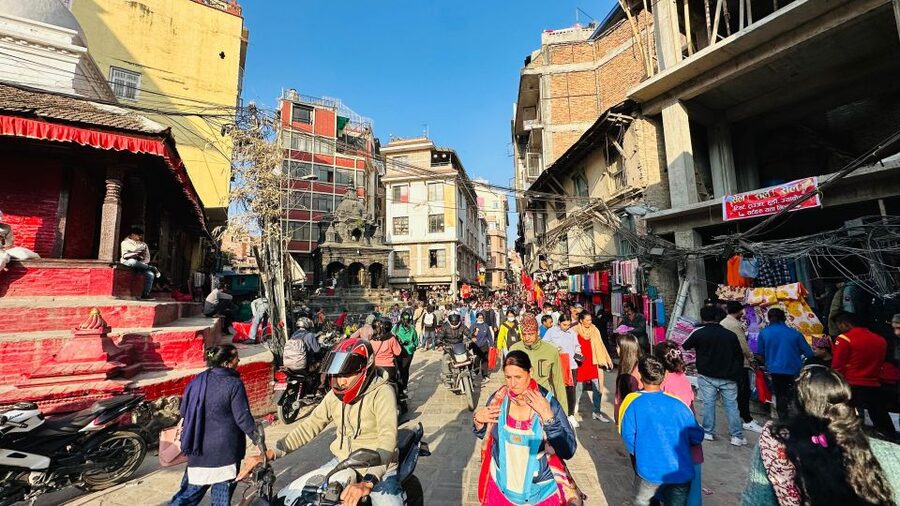
- Temple-and-market mix: You’ll see devotion and daily commerce in the same loop.
- UNESCO sites skipped: You’ll focus on places outside the main UNESCO cluster.
- Thamel start and finish: Easy meetup at Breakfree Adventures in Thamel.
- Comfort matters: Good shoes, sun/rain cover, and a mask if you want one.
What a 3.5-hour Kathmandu Heritage Walk actually gives you
If you’ve only got a day in Kathmandu, I like tours that do two jobs at once: help you find your bearings fast and point you toward the kind of sites you’d miss on your own. This walk aims for exactly that.
You’re covering multiple neighborhoods close enough to stay efficient, but different enough to feel like you’re moving through Kathmandu’s layers. Expect a mix of Hindu and Buddhist landmarks, plus market time that’s meant for observing and shopping—not just taking photos.
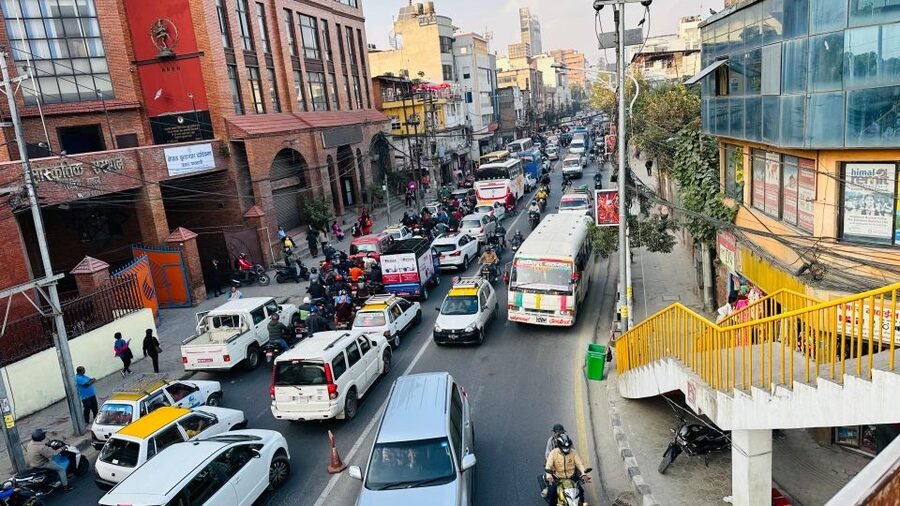
This is not a “sit and listen” experience. It’s street-level Kathmandu: names on storefronts, small courtyards, and temples where everyday routines continue alongside religious practice.
You can also read our reviews of more tours and experiences in Kathmandu.


Meet-up in Thamel: easy start, clear direction
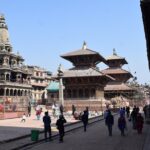
The tour starts at the Breakfree Adventures entrance in Thamel, located in front of Everest Bank Limited. That’s helpful, because Thamel can be confusing at first—many tours start near a hotel, but bank landmarks are usually easier to spot.
You’ll also end back in Thamel. That matters if you want to keep the rest of your evening flexible, whether that’s a late snack run or a second round in the shops.
I’d treat this as your first-or-second day activity. If it’s your first day, you’ll learn the names of places quickly and understand how the city’s sacred sites are interwoven with normal life.
Thamel and Tahiti: street energy plus a calmer change of scenery
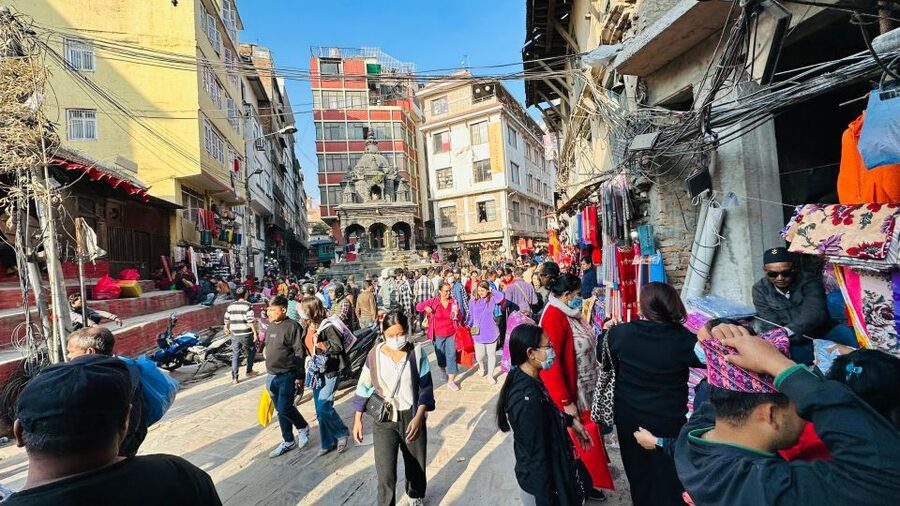
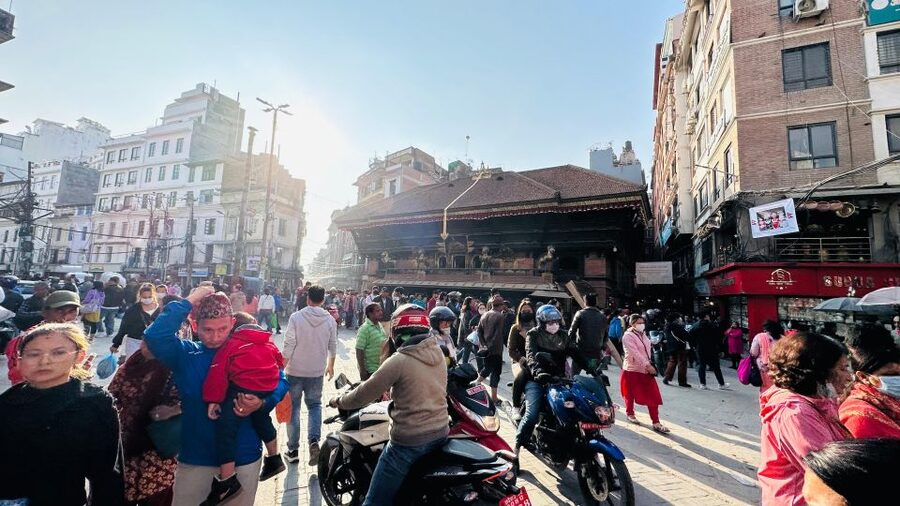
You’ll begin by walking through Thamel, the area most people first land in—full of shops, eateries, and quick stop-in-and-out browsing. I like Thamel at the start of a tour because you get your coffee, you loosen up your legs, and you see how the city’s street flow works.
Then the route continues to Tahiti, a smaller neighborhood area where you can spot a different feel in the architecture and street layout. It’s a good shift, especially if you’re coming straight from a hotel room into the city’s noise.
Practical tip: keep your pace easy here. Thamel is where you’ll be tempted to wander. Let your guide keep you on track while you take note of things you want to come back for later.
Shanti Bihar Stupa: the pause stop that earns its place
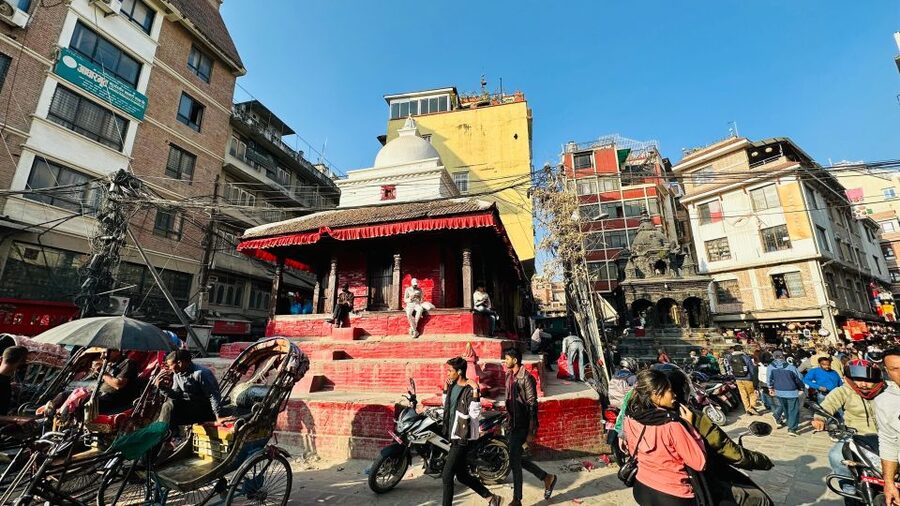
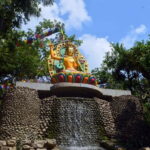
After the busier street sections, you reach the Shanti Bihar Stupa, a calm counterweight to Kathmandu traffic and shop noise. This kind of stop is more than pretty scenery—it gives your brain a reset. You’ll often notice the sound level drop, and that alone changes how you experience the rest of the day.
A stupa stop also helps you understand Kathmandu beyond “temples as attractions.” These places are part of how people practice and gather, not just where tourists point their cameras.
If you’re the kind of person who rushes, slow down here. Give yourself a minute to look, breathe, and watch what locals do. That’s usually where the city clicks.
Indrachowk’s Akash Bhairab Temple: sacred space in a busy square
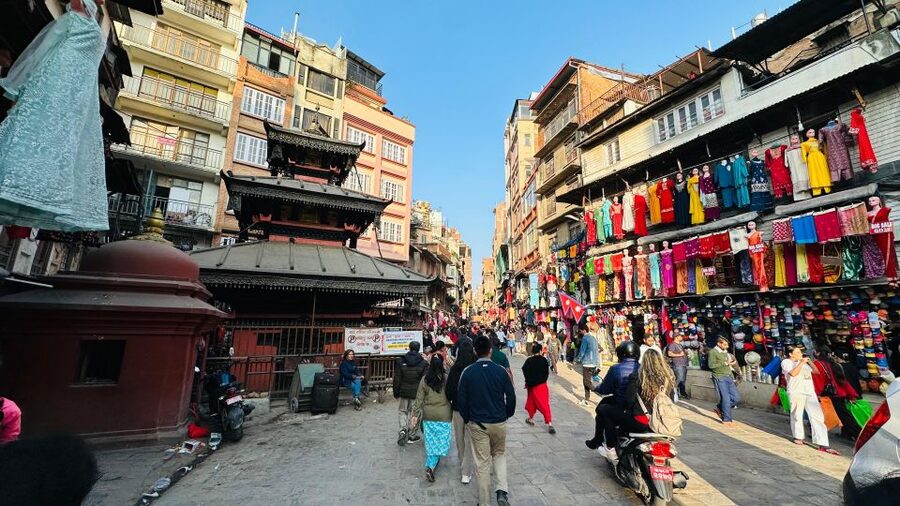
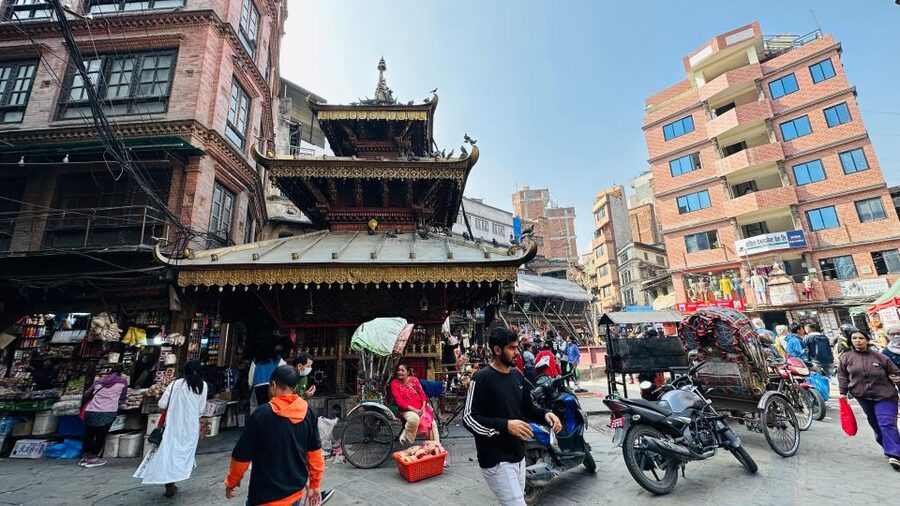
Next up is Akash Bhairab Temple in Indrachowk, a historic sacred site where devotion is visible right in the public sphere. This is the type of temple stop I like on heritage walks because it shows religion as part of daily city life.
Indrachowk is the kind of area where you’ll see people move with purpose—some coming for observance, others passing through. Your guide’s job here is to help you read the place instead of just walking past it.
Practical consideration: temples can mean crowds. Plan to go slow at the threshold and keep your camera ready, but not intrusive.
You can also read our reviews of more historical tours in Kathmandu
Gold Souq and craftsmanship: shopping with context
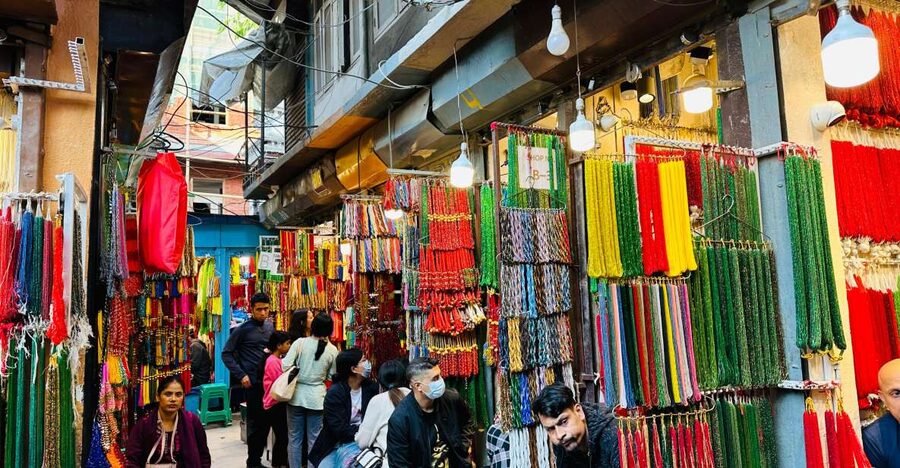
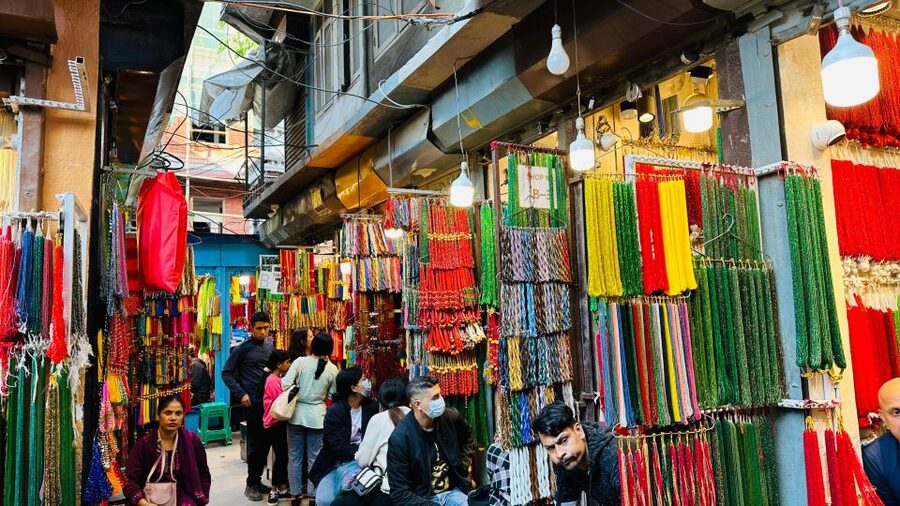
The route includes Gold Souq, which is a strong pairing with temple stops because it shifts you from spiritual symbols to cultural skill—design, metalwork, and craftsmanship you can’t fully appreciate without context.
I recommend you treat this section like a “look first, decide later” experience. In busy market areas, it’s easy to feel rushed or overwhelmed. With a guide, you can ask basic questions about what you’re seeing and how things are commonly made or sold.
Even if you don’t buy anything, this stop is worth it. It gives you a sense of Kathmandu’s craft economy and why so many visitors leave with ornaments, textiles, or small gifts.
Sankata Temple, Mahankal Bhairab, and the feel of lived-in devotion
You’ll also visit Sankata Temple and Mahankal Bhairab, both rooted in cultural and religious significance. What I like about multiple temple stops is that they show different styles of reverence and different ways sacred life appears in public space.
This part of the walk tends to feel more intimate. The best moments aren’t the big “postcard” angles—they’re the small details: how people pause, how the space is used, and how the temple area shapes the street around it.
If you’re traveling with questions about Hindu practice or how different deities fit into city worship, this is the section where you’ll get the most value from your guide’s explanations.
Bhotahiti and Annapurna Temple: city life plus major symbolism
The tour continues through Bhotahiti, a locale with plenty of local flavor. Here, you’re not just seeing landmarks—you’re walking through a neighborhood rhythm. It’s a useful reminder that Kathmandu heritage isn’t only on monument boards; it’s also in everyday streets.
Then you reach Annapurna Temple, where the architectural presence in the city center becomes impossible to ignore. Annapurna is tied to major symbolism, and seeing the temple in the middle of regular life makes that meaning feel immediate.
This is also a good place to pull out your camera—just be mindful. You’ll get better photos when people aren’t in the exact frame and when you’re respectful about timing.
How the walking pace works (and why guides matter)
This is a walking tour with a set duration: 3.5 hours. That duration is long enough to feel like you did something substantial, but short enough that you’re unlikely to be totally wrecked by the end—if you wear the right shoes.
One of the best reasons to choose this walk is the way guides often handle pace and time efficiency. In client feedback, guides such as Martin and Madan are specifically praised for being organized, kind, and for adjusting the tempo—important if your group includes older adults.
So my advice is simple: if you have mobility limits or you’re traveling with seniors, tell your guide at the start. A good guide will steer you through without turning the walk into a slog.
Price and value: is $40 a fair deal?
At $40 per person for 3.5 hours, the value comes from what’s included and how the tour is structured. You get a government certified guide, 1000ml mineral water, and service charges. You’re also paying for private group time, which usually means fewer time-wasting stops and easier conversations.
The biggest “value check” is this: transportation isn’t included if you need it, and meals aren’t included. If you’re starting in Thamel and you can walk between areas comfortably, this price feels fair. If you need taxis or long uphill transfers, the real cost rises.
To make it worth it, plan this tour alongside meals you already planned anyway. Use the walk to get to sights first, then eat where you’re dropped back in Thamel.
What to bring so you’re comfortable the whole time
This walk is practical in a city that can shift weather quickly. Bring:
- Comfortable shoes (non-negotiable)
- Umbrella
- Camera
- Comfortable clothes
- Passport
- Face mask or protective covering (if you prefer to follow local norms)
I’d also keep a small day bag with water-ready access. You’ll get 1000ml mineral water, but you’ll still want easy access for the street sections.
Who should book this Kathmandu Heritage Walk (and who should skip)
This tour fits best if you:
- want temples + markets in one compact loop
- like guided context for places that look similar from the outside
- prefer a private group over matching random strangers’ pace
- are okay skipping UNESCO World Heritage sites in favor of lesser-covered streets and landmarks
It’s not suitable for:
- pregnant women
- wheelchair users
- babies under 1 year
- people over 95 years
- people over 70 years
If that’s you, don’t force it. Kathmandu walking can be uneven, and a short tour still adds up fast.
Also note: the tour is English with a live guide, so it’s a great option if you want explanations without language friction.
Should you book this Kathmandu Heritage Walk of Kathmandu?
I’d book it if you want a smart first-day plan that doesn’t get stuck only on the most famous names. Skipping UNESCO sites can be a plus, because it leaves room for places that feel more like real Kathmandu and less like an itinerary checklist.
I’d skip it if you need step-free access, if you’re outside the listed age suitability, or if you want long scenic stops and big “viewpoints.” This is about streets, sacred spaces, and everyday culture.
If you can do moderate walking and you like getting context as you go, this one offers strong value for the money and a good blend of quiet and busy moments.
FAQ
Where is the meeting point?
The tour meets at the Breakfree Adventures entrance in Thamel, in front of Everest Bank Limited.
How long is the tour?
The duration is 3.5 hours.
Is this a private tour?
Yes, it’s listed as a private group.
What language is the tour guide?
The live tour guide speaks English.
Does the tour include UNESCO World Heritage sites?
No. UNESCO World Heritage sites are not included on this tour.
What’s included in the price?
Included items are a government certified guide, 1000ml mineral water, and service charge.
What isn’t included?
Transportation (if needed), meals & drinks, and personal expenses are not included.
Do I need to bring anything?
Bring a passport, comfortable shoes, umbrella, camera, comfortable clothes, and a face mask or protective covering (if you want to follow that guidance).
What’s the cancellation policy?
You can cancel up to 24 hours in advance for a full refund.