REVIEW · BAEZA
Úbeda-Baeza historical tour with Water Synagogue
Book on Viator →Operated by SETURJA SL · Bookable on Viator
Renaissance Spain, with a surprise synagogue. This Úbeda-Baeza historic tour mixes Italian-flavored churches and palaces with the Sinagoga del Agua, then finishes with cathedral views and an oil tasting. You get a guided experience in both World Heritage cities, with enough flexibility to decide when to do each side.
What I like most is the way the Water Synagogue turns the tour into something you can’t easily DIY. You also get a strong hit of Renaissance architecture—churches, urban planning, and palaces—without feeling rushed through the highlights.
One thing to plan for: transportation between Úbeda and Baeza is not included, so you’ll want to handle getting from one city to the other on your own.
In This Review
- Key Highlights You Should Know
- Why Úbeda + Baeza Works So Well Together
- The Real Value: Water Synagogue + Big-Name Renaissance Stops
- Your Úbeda Start: The Sacred Chapel’s Italian-Style Impact
- Palaces and Power: Dean Ortega and the Vázquez de Molina Legacy
- The Parish Church That Blends Eras: Ironwork, Cloisters, and Styles
- Plaza Vázquez de Molina: Renaissance Urbanism in Plain View
- More Úbeda Architecture: Vela de los Cobos, San Pablo, and a Neorenaissance Church
- Saint John of the Cross Convent-Museum
- The Big Moment: Inside the Sinagoga del Agua
- Baeza Starts at Plaza del Pópulo: Power, Courts, and Romanesque Edges
- Cathedral Square Timing: The Cathedral of Baeza
- Iglesia de Santa Cruz: A Rare Romanesque Survival in Andalusia
- Elizabethan Gothic in Spain: Palacio de Jabalquinto and Antonio Machado’s World
- La Casa del Aceite: Oil Tasting to Close the Loop
- Medieval Views at the End: Torreón and Interpretation Center
- Price and Logistics: What You Pay For (and What You Handle)
- Who This Tour Suits Best
- Should You Book This Úbeda-Baeza Tour?
- FAQ
- How long is the Úbeda-Baeza historical tour?
- What does the tour cost?
- Is transportation between Úbeda and Baeza included?
- Does the tour include the Sinagoga del Agua (Water Synagogue)?
- What time do visits run?
- Can I visit Úbeda and Baeza on different days?
- Are entrance tickets included?
- What is the group size limit?
- What happens if the minimum number of travelers isn’t met?
- Are service animals allowed?
Key Highlights You Should Know
- Úbeda’s Sinagoga del Agua: including the ritual bath (Mikveh) and areas linked to ceremonial use
- Renaissance set-piece stops: palaces, plazas, and churches tied to Andrés de Vandelvira and Diego de Siloé
- Flexible city timing: you decide when to visit each city within the set daily schedules
- Ticketed monuments included: the synagogue, cathedral, and a couple of key finishing stops come with admission
- Small-group feel: maximum 20 travelers, plus radio guides for bigger group sizes
Why Úbeda + Baeza Works So Well Together
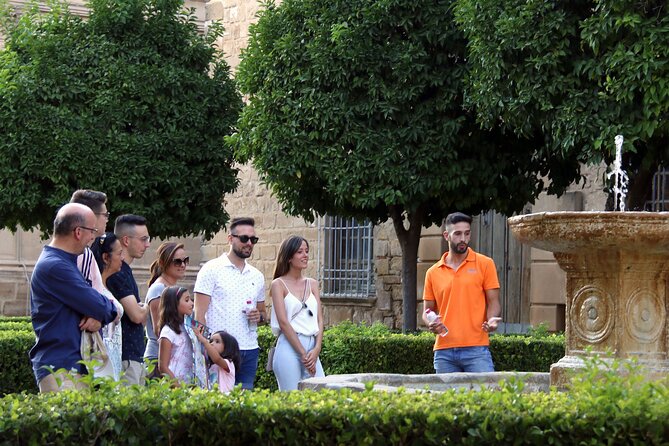
I love pairing cities that were built for the same ambition but show it in different ways. Úbeda and Baeza are both packed with Renaissance architecture, yet the mood shifts as you move from Úbeda’s monumental churches and palaces to Baeza’s cathedral square and academic history.
This tour helps you see that difference without having to stitch together multiple guides. You also get the rare bonus of a guided visit that specifically includes the Sinagoga del Agua in Úbeda—something the province has limited options for.
The Real Value: Water Synagogue + Big-Name Renaissance Stops
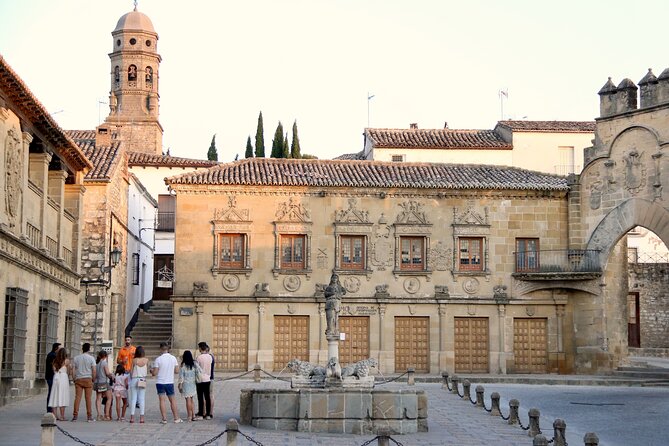
At $40.52 per person for about five hours, the value isn’t just the number of stops. It’s what’s on the list.
First, the Water Synagogue isn’t a quick hallway photo moment. You’re guided through distinct spaces, including the Mikveh (ritual purification bath room) and a women’s gallery area behind lattices. That’s the kind of detail that turns an architectural tour into real context for daily life and religious practice.
Second, the rest of the experience leans heavily into major Renaissance craftsmanship. You’ll see multiple sites shaped by major figures tied to Spanish Renaissance design, including Diego de Siloé (for the Sacred Chapel) and Andrés de Vandelvira (in several palaces and church works). If you care about how style gets built—stonework, layout, and urban planning—this tour feeds that interest.
Your Úbeda Start: The Sacred Chapel’s Italian-Style Impact
You begin in Úbeda with one of the strongest “wow” stops: the Holy Chapel of the Saviour (Sacred Chapel of El Salvador). The point here isn’t only that it looks impressive. It’s that it’s an architectural jewel throughout—inside and out—and it’s credited to Diego de Siloé’s design with execution by Andrés de Vandelvira, plus notable involvement from Andrés de Vandelvira in the sacristy work.
Expect a focused stop (about 30 minutes). This is a good place to get your bearings in the city’s Renaissance language—because later palaces and plazas start to feel like pieces of the same visual plan.
A quick consideration: chapels and churches can vary by crowding and lighting during the day. If you’re sensitive to sound levels or bright interiors, plan to take your time with photos without rushing the guide’s explanation.
Palaces and Power: Dean Ortega and the Vázquez de Molina Legacy
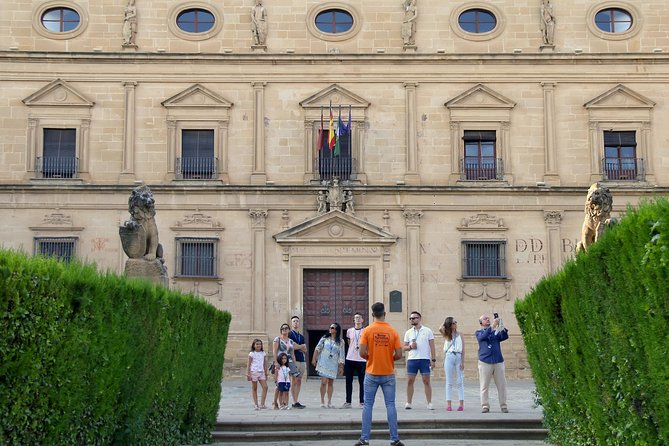
After the chapel, you move through Úbeda’s layer-cake of civic and noble power.
- Palace del Dean Ortega: This is one of the city’s most important Spanish-Renaissance palaces. It was declared an Asset of Cultural Interest and, since 1929, has operated as the current National Tourism Parador. Recently, it’s been musealized to make the historical visit easier to follow. The tour stop here is short (about 5 minutes), but it gives you the key story: this wasn’t just private wealth—it became part of Spain’s hospitality and preservation culture.
- Palacio Juan Vázquez de Molina (also known as de las Cadenas Palace): A 16th-century work by Andrés de Vandelvira, now the City Hall. It’s described as one of the most beautiful Renaissance palaces in Spain. You get a quick taste (around 10 minutes), but it matters because the building is still serving a civic function.
These palace stops are valuable because they explain the Renaissance mindset: architecture as status, but also architecture as public identity.
The Parish Church That Blends Eras: Ironwork, Cloisters, and Styles
Next comes Iglesia Parroquial Mayor de Úbeda, a site known for overlapping architectural styles. It includes a cloister from the 15th century and noble chapels from the 15th and 16th centuries. The tour also points you toward the building’s ironwork and paintings, which are presented as some of the most representative pieces in the city.
This stop is especially worth your time if you like older cities that didn’t get remodeled once and done. Here, you see how generations added layers instead of starting over.
Plaza Vázquez de Molina: Renaissance Urbanism in Plain View
You then step into Plaza Vázquez de Molina, one of Spain’s best examples of Renaissance urbanism. This part is only about 15 minutes, but it’s a highlight because it helps you see what Renaissance design tried to control: space, movement, and how buildings relate to public life.
A practical tip: use this plaza moment to look back at the streets you already walked through. If you’re quick with photos, this is also a good spot to frame buildings with the right perspective—plazas do that naturally.
More Úbeda Architecture: Vela de los Cobos, San Pablo, and a Neorenaissance Church
Your Úbeda route keeps stacking up major names and styles.
One stop focuses on a Renaissance noble palace in the historic center, ordered by Francisco Vela de los Cobos in the mid-16th century, with plans by Andrés de Vandelvira and execution credited to stonemason Jorge Leal. Even with the short tour time, this is a useful name to remember because it connects multiple buildings under the same Renaissance design culture.
Then you reach Iglesia de San Pablo, described as the second oldest and most important temple in Úbeda after Santa María de los Reales Alcázares. It was erected in the 13th century on the site of a neighborhood mosque, but the tour emphasizes its current Gothic morphology tied to restoration financed by Bishop Alonso Suárez de la Fuente del Sauce. Translation for your brain: this is another layering story—religion, conquest, and restoration all stamped onto one church.
You also visit a smaller church that’s framed as one of the city’s most impressive. It’s Neo-Renaissance and structured with three naves plus a transept, with half-barrel vaults and a half-orange dome topped by a prominent lantern. The outside uses bichromatic tiling, which is a great cue to look for detail even when the stop feels short.
If you like to photograph textures—stonework edges, dome lighting, and tile patterns—this cluster of churches is where your camera will earn its keep.
Saint John of the Cross Convent-Museum
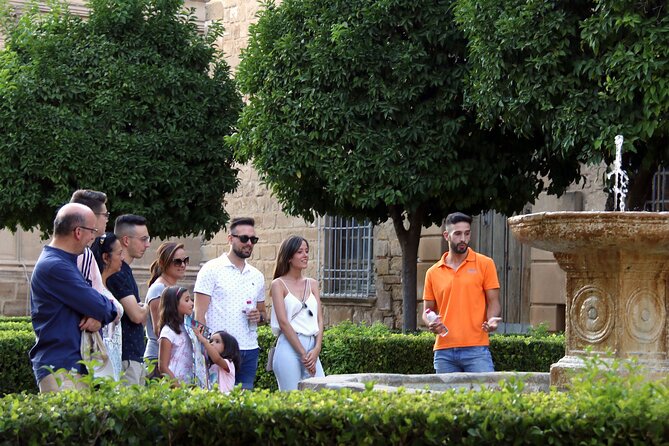
Another stop turns the architecture inward by focusing on spirituality and memory. The Convent-Museum contains the place where Saint John of the Cross died and was buried. The visit is also tied to relics and souvenirs connected to him.
This is a strong choice if you enjoy tours that mix art and belief without getting dry. It’s short on specifics for many monuments, but the emphasis is clear: this site anchors the city to Christian thought and spirituality in a very direct way.
The Big Moment: Inside the Sinagoga del Agua
This is the stop that makes this tour worth a special mention. The Sinagoga del Agua visit is about six unique spaces, and the tour highlights what each room was for.
Key areas you should look for (and ask the guide about):
- The Mikveh, a ritual purification bath room tied to Jewish customs
- The Gallery of Women, used during ceremonies and rites, hidden behind lattices
- The Del Inquisidor room, with a patio, cellar, and ovens—spaces connected to medieval-era dependencies that could have housed the rabbi
It takes about 30 minutes, and that’s a good amount of time to understand the layout instead of just walking through. If you care about architecture with a purpose—how space supports practice—this will be one of your best moments in Spain during this trip.
Baeza Starts at Plaza del Pópulo: Power, Courts, and Romanesque Edges
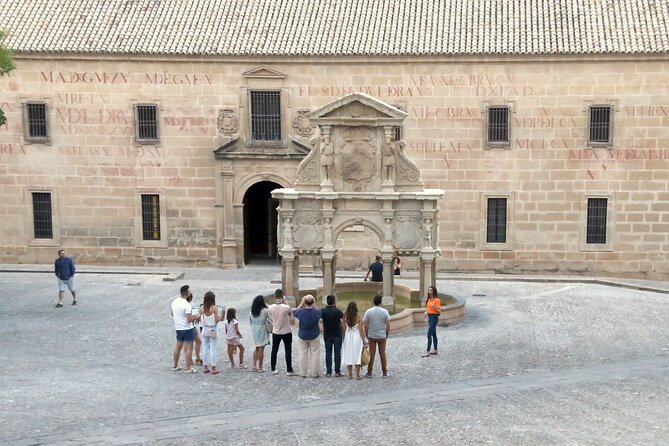
After Úbeda, you shift to Baeza. Your Baeza entry point is Plaza del Pópulo, one of the city’s emblematic squares in the World Heritage complex.
This square is a mini-map of Baeza’s history:
- The Old Butchers, now the Courts
- La Casa del Pópulo, currently a Plateresque building that houses the city’s Tourist Office
- A fountain called Fuente de los Leones
- The Puerta de Jaén and the Arco de Villalar
You get about 15 minutes here. It’s enough time to understand how plazas in these cities functioned as stages for civic life—law, markets, public design—long before modern tourism.
Cathedral Square Timing: The Cathedral of Baeza
Then you move to Fuente de Santa María and straight into Cathedral de Baeza.
- Fuente de Santa Maria is positioned between the cathedral and the Seminary of San Felipe Neri, close to the Church of the Holy Cross and the Old University. This stop is brief (about 5 minutes), but it’s strategically placed for a good break and an easy view of the square’s overall feel.
- Cathedral de Baeza (about 30 minutes) is part of the Plaza de Santa María monumental complex. The key point is that the cathedral has gone through transformations since it was built, leaving different architectural styles visible in the result.
If you only skim cathedrals, you’ll miss why this one is interesting. Focus on how changes show up. That’s the story the tour wants you to see.
Iglesia de Santa Cruz: A Rare Romanesque Survival in Andalusia
Next you visit Iglesia de Santa Cruz, described as the best preserved Romanesque temple in all of Andalusia—a serious claim, and one worth paying attention to.
This is a 10-minute stop. Short doesn’t mean unimportant here. It’s a reminder that while both cities are famous for Renaissance design, the region also carries older layers that survived in specific corners.
Elizabethan Gothic in Spain: Palacio de Jabalquinto and Antonio Machado’s World
Now your tour leans into literature and education through architecture.
- Palacio de Jabalquinto: currently the International Headquarters of the Antonio Machado University. It’s a late-15th-century building and an exponent of Elizabethan Gothic style. You’ll spend about 15 minutes here, and it’s a nice change of pace from churches and palaces of pure nobility.
- Antigua Universidade de Baeza: the old university started in the first half of the 16th century, and today it’s converted into an institute. Expect about 10 minutes.
- Aula de Antonio Machado: the classroom where Antonio Machado taught French Grammar. The facilities are described as very well preserved, and the institute is part of Spain’s network of Historical Institutes. You’ll spend about 10 minutes here.
I like this trio because it grounds the architecture in a real person and a real classroom function. It’s not just “a building.” It’s a place where language teaching happened, and you can feel that purpose even if the tour is time-limited.
La Casa del Aceite: Oil Tasting to Close the Loop
Near the end, you’ll hit La Casa Del Aceite for an oil tasting (about 15 minutes, admission included). The tour frames it as learning about the benefits of liquid gold.
Even if you’re not a foodie, I think this stop is good value because it gives you a sensory takeaway. You can stand in front of marble and then taste the thing the region turns into money and pride.
Medieval Views at the End: Torreón and Interpretation Center
The final stop is the Centro Interpretacion De La Baeza Medieval, where you learn about medieval times and get a view from the highest part of the Torreón de la Puerta de Úbeda.
It’s about 10 minutes and includes admission. This is a smart closing because it lets you connect everything you saw—church styles, palaces, civic plazas—to the medieval layout they grew from. It also gives you that last “okay, I get the city now” feeling.
Price and Logistics: What You Pay For (and What You Handle)
Here’s how to think about cost and value.
You’re paying $40.52 per person for a ~5-hour guided tour that includes multiple key admissions: the Holy Chapel of the Saviour, the Sinagoga del Agua, the Cathedral of Baeza, the oil tasting at La Casa del Aceite, and the interpretation center. Several other major sites are free to enter during the tour.
That included admission matters. In Spain, ticketed churches and special sites can add up fast, and you don’t want to arrive and then realize you’re paying twice.
Two practical notes to plan around:
- Transportation between Úbeda and Baeza isn’t included, so factor in how you’ll get between cities.
- The tour works with schedules where visits are held every day at 11:00 and 17:00, except Sunday afternoons in Baeza. You can choose when to visit the other city, and you can sometimes do both cities on the same day (morning one city, afternoon the other) depending on the schedules.
Group size is capped at 20 travelers, which is a sweet spot for asking questions without feeling lost in a crowd. The provider notes that radio guides are provided free of charge for groups over 20.
Who This Tour Suits Best
This one is ideal if you:
- Want Renaissance architecture but also crave a meaningful cultural detour—especially the Sinagoga del Agua
- Like guided context (why a building was made, not just what it looks like)
- Prefer a manageable group size for walking tours
It also fits well if you’re traveling with a mix of interests—architecture fans, history lovers, and people who enjoy literature. The Antonio Machado classroom stops make that connection feel natural rather than forced.
Should You Book This Úbeda-Baeza Tour?
I’d book it if you want a tight five-hour plan that covers two major World Heritage cities with real structure and included entry fees—especially for the Sinagoga del Agua. It’s the kind of tour where you leave with details you can’t easily copy from a map.
I’d think twice if getting between Úbeda and Baeza is hard for you, because the tour doesn’t provide transport. If you’re already handling that logistics, you’re in a great position to enjoy this one.
The strongest reason to choose it: the tour doesn’t treat the Water Synagogue as an add-on. It gives it time, layout, and purpose.
FAQ
How long is the Úbeda-Baeza historical tour?
The tour lasts about 5 hours.
What does the tour cost?
It costs $40.52 per person.
Is transportation between Úbeda and Baeza included?
No. Transportation between the two cities is not included.
Does the tour include the Sinagoga del Agua (Water Synagogue)?
Yes. The Water Synagogue visit in Úbeda is included, and the tour specifically notes that it includes this stop.
What time do visits run?
Visits are held every day at 11:00 and 17:00, except Sunday afternoons in Baeza.
Can I visit Úbeda and Baeza on different days?
Yes. You decide when you visit each city, and visits can be on different days or on the same day within the schedule.
Are entrance tickets included?
Admission tickets are included for several key stops, including the Holy Chapel of the Saviour, the Sinagoga del Agua, the Cathedral of Baeza, La Casa del Aceite (oil tasting), and the Centro Interpretacion de la Baeza Medieval.
What is the group size limit?
The tour has a maximum of 20 travelers.
What happens if the minimum number of travelers isn’t met?
If the minimum isn’t reached, you’ll be offered another date/experience or receive a full refund.
Are service animals allowed?
Yes, service animals are allowed. Most travelers can participate.