REVIEW · TANGIER
Walking Tangier Tour from ancient Kasba to Bustling Souks
Book on Viator →Operated by TANGIER EXPLORER · Bookable on Viator
Tangier’s alleys beat any map. This walking tour links the Kasbah and the Medina with story-rich stops, guided by people who know how to move you through the city without the usual guesswork. I especially like the way your pace stays flexible, so it feels less like a checklist and more like Tangier with a friendly interpreter.
I also like the route’s smart mix: you start at the Grand Socco for orientation, then move through the Kasbah palace museum and into smaller cultural sites. A possible drawback is language: the Kasbah museum exhibits are French and Arabic only, so you’ll rely more on your guide’s explanations than on reading every label yourself.
In This Review
- Key highlights you’ll feel right away
- Starting at Place du Grand 9 Avril 1947 (Grand Socco)
- Tangier Casbah: narrow streets, fortress energy, and museum time in Dar El Makhzen
- Medina of Tangier: where you smell the markets and hear the city’s rhythm
- Tangier American Legation Museum: an overlooked anchor for U.S.-Morocco ties
- Moshe Nahon Synagogue: a small museum stop with a quiet story
- How the private walking tour works: pickup, mobile tickets, and flexible pacing
- Price and value: what $48.50 buys you in actual time
- Who this tour suits best
- Should you book this Walking Tangier tour?
- FAQ
- How long is the Walking Tangier tour from Kasba to the Souks?
- How much does the tour cost?
- Are admission tickets included for the stops?
- Is pickup available?
- Is this tour private?
- What time does the tour run?
- Can I get a full refund if I cancel?
Key highlights you’ll feel right away
- Grand Socco as your orientation point between the old medina and the modern city
- Tangier Casbah’s fortress feel with narrow winding streets from the city’s highest point
- Musee de la Kasbah in Dar El Makhzen with standout pieces like the Venus mosaic and replica maps
- Medina walking that focuses on daily senses (markets, spices in the air, call to prayer)
- American Legation Museum: first U.S. property abroad (1821) and treaty-era ties (1786)
- Moshe Nahon Synagogue museum in the Beni Idir quarter, restored in 1994
Starting at Place du Grand 9 Avril 1947 (Grand Socco)
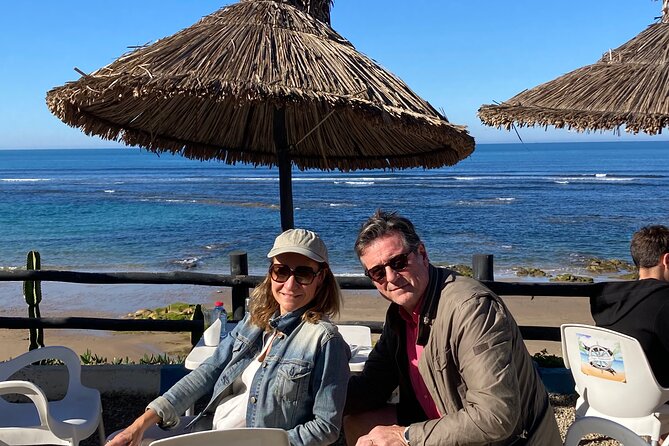
I like tours that begin where you can reset your sense of direction, and Place du Grand 9 Avril 1947 does exactly that. Known locally as Grand Socco, it’s a central square that has long served as a commercial and cultural meeting point, and it naturally acts like a gateway between the medina and the newer parts of Tangier.
You get a short, useful orientation here—only about 15 minutes—but it matters. The open space helps you see how crowds flow, and the mix of traditional and colonial-era architecture gives you a quick picture of Tangier’s “old + modern” personality. Even the name hint (Socco from the Arabic souk idea) is a neat clue that the city has always been about trade and conversation.
A practical note: because this is a busy junction where locals gather, it’s a good place to arrive with your guide. You’ll get your bearings fast, and you’ll avoid that awkward moment of standing still while everyone else moves.
Tangier Casbah: narrow streets, fortress energy, and museum time in Dar El Makhzen
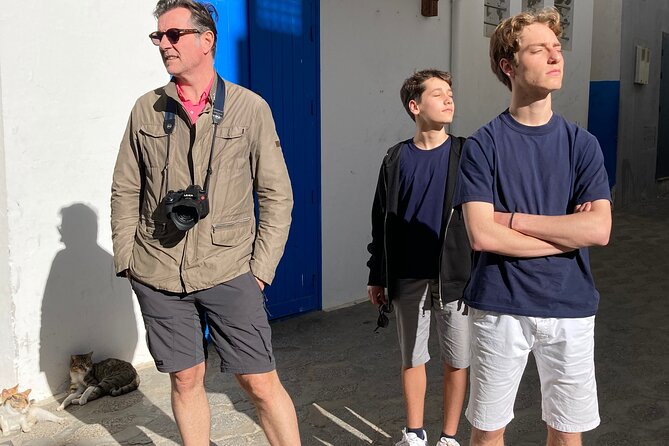
The Casbah section is where the tour’s walking starts to feel like a story. Tangier’s Casbah sits on the highest point of the city, and you’ll feel it in the route: steep stretches, tight turns, and the kind of old-stone street pattern that makes you walk more slowly just to take it in. The site’s whole purpose in earlier centuries was defense, and that fortress layout still shapes the experience today.
Plan on about 45 minutes for the Casbah itself, with time to absorb what makes it Tangier-specific: the winding lanes and the sense that multiple eras layered on top of each other. The area reflects influences across different civilizations—from Phoenician and Roman-era traces to Arab and Andalusian contributions.
Then you transition into the Musee de la Kasbah, set in the former sultan’s palace of Dar El Makhzen. I like this stop because it turns “old streets” into something you can understand, even if you’re not a total museum person. The museum covers the area’s history from prehistoric times through the 19th century, and it’s designed with clear movement through spaces like the first courtyard.
One thing to know before you go: the exhibits are French and Arabic only. If you read neither, don’t panic. This is where a great guide earns their fee. You’ll want their explanations for the big objects and the maps, and you’ll still get plenty out of the visual highlights.
Speaking of highlights, the museum’s featured pieces are the kind that stick in your memory:
- The mosaic of Venus from Volubilis
- Statuary that helps you picture daily life and artistic taste across eras
- Two impressive giant replica maps
Those maps are especially fun because they’re not just decorative. One tracks trade routes starting with Phoenician metal trading and then jumps forward all the way to 21st-century electronic goods. The other shows a known-world map made in Tangier in 1154—yes, and it’s intentionally upside down, which is exactly the sort of detail that turns a museum stop into a story you can repeat.
Also look out for the Andalusian garden walk after the exhibits. It’s a small reset between indoor history and outdoor atmosphere.
Medina of Tangier: where you smell the markets and hear the city’s rhythm
After the Kasbah museum, the tour drops into the Medina, and it changes tone fast. The old medina is a maze of narrow alleys and older-than-old walls, and it’s where Tangier’s everyday life becomes the main character. This stop is about 35 minutes, and you’re not just “seeing sights.” You’re experiencing how the city sounds and moves—spices in the air, busy street energy, and the call to prayer blending into normal street life.
I like that the Medina portion is described around senses and daily rhythm, not just architecture photos. If you’ve ever walked into a medina alone and spent the first hour trying to figure out where you even are, you’ll appreciate having a guide here. A local keeps you from wandering in circles and helps you focus on the parts that make the city make sense.
You should also expect physical reality. The alleys are narrow, the streets can feel uneven, and the walking is part of the experience. If you’re deciding whether to wear sneakers or sandals, choose based on grip and comfort, not fashion.
The payoff is a medina walk that feels like it belongs to Tangier—not a staged version for tourists.
Tangier American Legation Museum: an overlooked anchor for U.S.-Morocco ties
The American Legation Museum is one of those stops that changes how you see a place. It’s tied directly to early U.S.-Morocco relations, and you won’t just hear vague diplomacy. The museum is connected to major dates: the American Legation was established in 1821, and it’s recognized as the oldest American diplomatic property in the world. It also connects to the Moroccan-American Treaty of Friendship signed in 1786—predating the U.S. Constitution.
This matters because Tangier is often discussed as a crossroads of cultures, but it’s easy to miss the specific political and historical thread that includes the United States so early. Here, the museum gives that thread a physical home.
You get around 30 minutes, with admission included. For me, the value is in contrast. After walking through the Kasbah and Medina’s older street life, this museum turns Tangier into an international story you can understand in a single stop—especially if you like history that has names and dates instead of only general vibes.
If you like to connect dots, you’ll probably walk out thinking about how trade routes, diplomacy, and travel all feed into one another here.
Moshe Nahon Synagogue: a small museum stop with a quiet story
The Moshe Nahon Synagogue is brief—about 15 minutes—but it’s memorable for how tucked-in it feels. It sits on a dead end street off rue des Synagogues in the Beni Idir quarter of the Tangier medina.
This is a 19th-century synagogue built by Moïse Nahon, an educator and scholar from a prominent Jewish family in Tangier. Activity stopped in the second half of the 20th century, and afterward the synagogue fell into disrepair until it was restored in 1994. Today it functions as a museum.
I like stops like this because they slow the pace a little. After busier street scenes, you get a more reflective moment—one that also reinforces the idea that Tangier’s history isn’t one story. It’s multiple communities leaving traces in architecture and memory.
Be ready to be respectful and quiet while you’re inside. This kind of small site can feel powerful precisely because it isn’t trying to entertain you like a big attraction.
How the private walking tour works: pickup, mobile tickets, and flexible pacing
This is a private tour, meaning it’s only your group with your guide. That’s a big deal in a place like Tangier, where group schedules can cause problems fast. When you’re not sharing the experience with strangers, you can slow down for questions or speed up if you’re tired.
You’ll also have the option of pickup, plus mobile tickets. The tour is described as flexible and tailored to your interests, and that matches what you want on a walking route: you’re going to care more about the parts that connect to how you like to travel. Some guides on similar routes are rigid; the style here is more responsive.
From the guide names that come up—Anas, Bilal, and Rabab—you can also expect strong storytelling and a “feel at ease” approach. People specifically appreciated that the tour doesn’t pressure you to buy things. That’s useful in the medina, where commerce is everywhere and sales energy can be hard to escape.
Timing-wise, the tour runs within 10:00 AM to 1:00 PM (Monday through Sunday). The duration is listed as 2 to 4 hours, so it’s a good choice if you’re also doing other Tangier plans the same day.
One more small planning detail: this experience is often booked about 41 days in advance. If you’re traveling at a busy time or you want a specific day, don’t wait until the last week.
And yes, there’s free cancellation up to 24 hours in advance for a full refund, with local-time cutoffs. If your schedule might shift, you have some breathing room.
Price and value: what $48.50 buys you in actual time
The price is $48.50 per person, and I think the value comes from two things: guidance plus included admissions across multiple stops.
You’re not just walking and taking pictures. You’re getting entry included at every listed highlight: Grand Socco (15 minutes), Tangier Casbah (45 minutes), Musee de la Kasbah (35 minutes), the Medina stop (35 minutes), the American Legation Museum (30 minutes), and the Moshe Nahon Synagogue (15 minutes). That’s a lot of “ticketed value” bundled into a single half-day plan.
So the real question for you is simple: Do you plan to visit several of these key sites during your Tangier time? If yes, the bundled structure makes it easier to spend time efficiently. If you only want one museum and the rest is wandering, you might find a shorter option more aligned with your style. But for a first or condensed Tangier day, this is designed to get you from major landmarks into the textures that make Tangier feel like Tangier.
Also, because it’s a private tour, you’re paying for a guide’s attention rather than splitting that attention across a larger group.
Who this tour suits best
This walking route is a fit if you:
- Want to see Tangier beyond the obvious highlights
- Enjoy history that includes dates, places, and actual names (especially in the American Legation segment)
- Like architecture and map-based details, like the museum’s replica world maps
- Prefer a guide who adjusts to what you care about, instead of running the exact same script for everyone
It’s also a good pick if you’re short on time but still want a sequence that feels connected: Grand Socco orientation → Casbah → museum → Medina → American Legation → synagogue.
If your mobility is limited, do note that the Casbah area is at the highest point and involves narrow winding streets. The tour does say most travelers can participate, but you should still think about comfortable shoes and your stamina for 2 to 4 hours of walking.
Should you book this Walking Tangier tour?
If you want a guided Tangier day that links the Casbah, museums, and the Medina into one coherent story, I’d book it. The strongest reasons are practical: included admissions, a schedule that stays in a manageable morning window, and guides who focus on clear explanations without sales pressure.
Book it especially if you care about museum details like the Venus mosaic, the oversized replica maps, and the U.S.-Morocco story tied to 1786 and 1821. You’ll also appreciate the Medina approach, where the goal is to help you move through the lanes with understanding, not just motion.
The only strong “think twice” factor is museum language. If you rely heavily on reading labels yourself, you might want to spend extra attention on your guide’s explanations—because French and Arabic are the main languages used for exhibit text.
If you’re okay with that tradeoff, this is a well-structured way to experience Tangier on foot—and the kind of morning you’ll remember long after you leave the souks.
FAQ
How long is the Walking Tangier tour from Kasba to the Souks?
It lasts about 2 to 4 hours.
How much does the tour cost?
The price is $48.50 per person.
Are admission tickets included for the stops?
Yes. Admission tickets are included for the listed stops.
Is pickup available?
Pickup is offered.
Is this tour private?
Yes. It’s private, so only your group participates.
What time does the tour run?
It runs daily within the listed hours of 10:00 AM to 1:00 PM.
Can I get a full refund if I cancel?
Yes. You can cancel up to 24 hours in advance for a full refund.