REVIEW · MOUNT ASPIRING NATIONAL PARK
West Coast: Eco River Safari in UNESCO World Heritage Area
Book on GetYourGuide →Operated by Waiatoto River Safaris Ltd · Bookable on GetYourGuide
Jet boats move fast. The forest does not.
On the Waiatoto River Safari you’ll zip through the UNESCO World Heritage area with guides who were previously commercial pilots, then slow down at key spots for commentary, photos, and nature viewing. I love the mix of speed and stillness: one moment you’re skimming toward the Tasman Sea, the next you’re standing still in ancient rainforest. I also love that the tour feels practical, not just scenic—warm gear, safety briefings, and real info about what lives in the river system and how conservation efforts work.
The one possible drawback: since this is a jet boat ride with a speedy downriver section, it’s not the best pick if you get motion sick easily. If you’re sensitive, bring a jacket, take a steady breathing rhythm, and consider sitting where you feel most stable.
In This Review
- Quick hit highlights (what makes this tour worth your time)
- From Hannahs Clearing to the jet boat: the exact flow of your 2 hours
- The gear is part of the value (and it keeps the tour comfortable)
- Upstream in UNESCO territory: photo stops and real river talk
- Tip for photos
- The top-of-river moment: the optional walk (and why it’s worth it)
- Morning tea with the whole view: a short break that improves the ride
- Speed downriver to the Tasman Sea: the part you’ll feel in your legs
- Whitebait breeding grounds: why this stop sticks with you
- BBQ at the end: an optional treat, not the main event
- Price and value: is $166 for 2 hours fair?
- Who should book this jet boat eco safari?
- Should you book the West Coast: Eco River Safari?
- FAQ
- How long is the Waiatoto River Eco River Safari?
- Where do I meet for the tour?
- What is included in the ticket price?
- What should I bring?
- Is there an optional walk?
- Are pets allowed?
Quick hit highlights (what makes this tour worth your time)
- Pilot-style guiding: commentary plus photo stops, with guides who know how to read the river
- Ancient rainforest views: a brief optional walk at the top gives you a calmer pace
- Whitebait breeding grounds: you don’t just hear about the ecosystem, you go to where it matters
- Serious scenery, short duration: a full outing in about 2 hours without feeling rushed
- Warmth and footwear handled for you: woollen jacket and gum boots help you focus on the scenery
- BBQ upgrade for larger groups: whitebait, crayfish, venison, salads when group size is 6+
From Hannahs Clearing to the jet boat: the exact flow of your 2 hours
This tour runs out of the Waiatoto River Safari base near Hannahs Clearing. Plan to arrive 30 minutes early and check in at the office in the last building on the left in the village. You’ll also want to park along the main road by the open sign.
Once you meet your guide, the timing is straightforward: you start with a guided experience up at the river, then you head down toward the coast, with a special stop in a side stream tied to whitebait breeding. That structure matters because it keeps the story moving. You’re not only chasing photos—you’re learning how the river connects to the sea, and why the timing and habitats matter for wildlife.
The gear is part of the value (and it keeps the tour comfortable)
This tour is built for wet, cool, and changeable West Coast weather, so you’re not left scrambling for the right clothing. You get a life jacket, plus a woollen jacket and gum boots. Insect repellent is also provided on the boat.
On your end, you still should bring:
- a hat and sunscreen (sun can sneak in even when it’s cool)
- a jacket and long pants
- closed-toe shoes
Even though the tour provides gum boots, you’ll still appreciate closed-toe shoes for moving around before boarding and during stops. If you’re the type who hates being cold, you’ll likely feel cared for here because warmth is handled up front.
Upstream in UNESCO territory: photo stops and real river talk
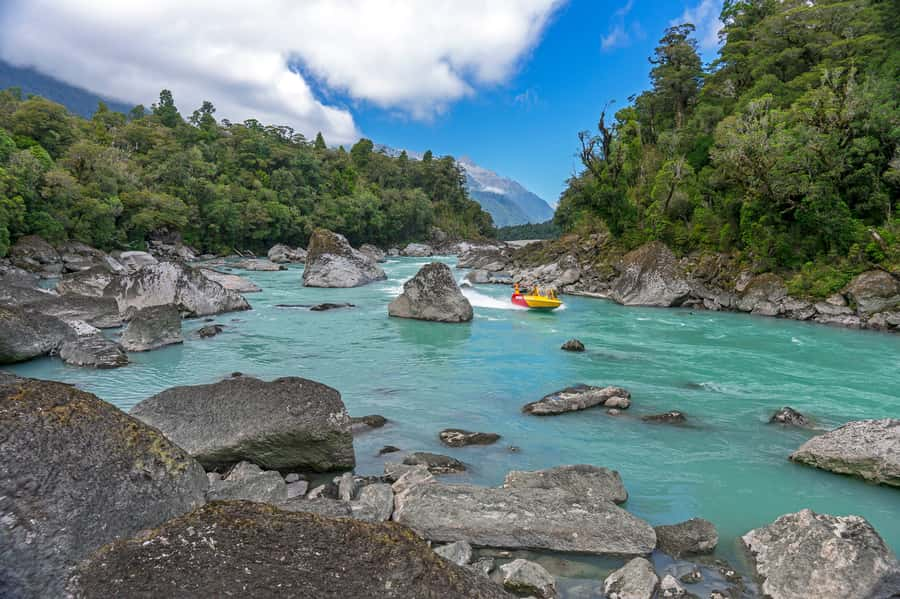
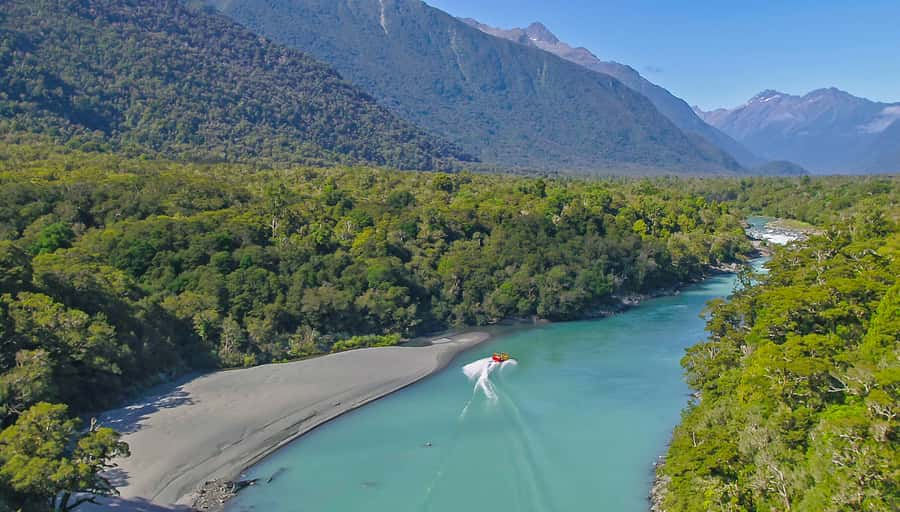
The heart of the experience is the journey into the UNESCO World Heritage area along the Waiatoto River. You’ll travel toward the top of the river and get guided commentary from local experts who previously worked as commercial pilots. That background shows up in how they talk about wind, water, and what you’re seeing on the way—because they’re describing the river like a living system, not just a backdrop.
The tour is designed with multiple photo stops. That’s not just for looks. It gives you time to:
- spot wildlife where it tends to appear (birds and fish activity come up in the commentary)
- notice plant life and river features you’d miss at speed
- ask questions while you’re not bouncing around
If you like learning while you travel, this is one of the strongest parts. People consistently highlight the guide’s ability to explain the area, daily life along the coast, and why conservation matters. You’ll also hear about kiwi repopulation efforts, which adds a human layer to the “nature show” and helps you understand why these habitats are protected.
Tip for photos
You’ll get the best shots when you’re ready during the stop, not hunting for your camera at the last second. Keep your phone or camera accessible, and don’t be afraid to aim for the small details—water texture, river edges, and bird movement often look more “real” than the big view alone.
The top-of-river moment: the optional walk (and why it’s worth it)
At the top of the river, you’ll pause and often have the option to take a walk. This is described as good for all ages, so you’re not signing up for a long hike. Think of it as a chance to reset your senses.
This walk is valuable because it slows the whole experience down. Jet boats are exciting, but they can make you feel like you’re only watching from the moving edge. Here, you get time to see the mountains and ancient rainforest scenery from a more grounded angle.
Also, you’re not just walking to stretch. You’re walking into the same ecosystem the jet boat is cutting through—so your brain connects the story. The guide’s commentary continues to make more sense once your feet are on the ground and your eyes aren’t only tracking water and speed.
Morning tea with the whole view: a short break that improves the ride
Between the upstream travel and the next leg downriver, you’ll have morning tea. It’s a small detail, but it changes the tour experience. With a 2-hour total time, it’s easy for tours to feel like constant motion. A tea stop helps you:
- warm up (especially if the weather is cool)
- rehydrate
- take photos without feeling rushed
This pause also gives you a “whole-area” moment—time to look around and take in what’s around you, not only what’s immediately in front of the boat. If you’re traveling with family or you just want a calmer break, this portion is a real win.
Speed downriver to the Tasman Sea: the part you’ll feel in your legs
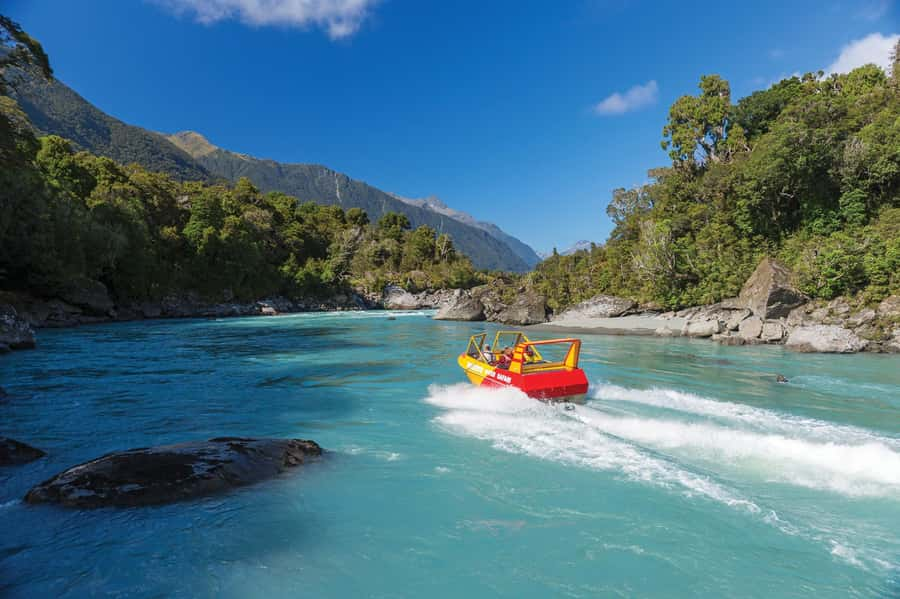
Then comes the speedy run down to the coast, heading toward the Tasman Sea. The jet boat section is where the tour earns its nickname as an adrenaline-friendly nature trip. You’ll see the river system widen and the feel of the water change as you move from “forest channel” to “coastal connection.”
Two things make this section work:
- The stops are planned, so you don’t spend the whole time looking at the same angle.
- The commentary helps you interpret what you’re passing, instead of just watching scenery go by.
If you’re sensitive to motion or noise, this is the segment to take seriously. Wear what they provide, keep your balance, and focus on breathing. The boat ride is fast by design, and it’s also the tour’s most “active” part.
Whitebait breeding grounds: why this stop sticks with you
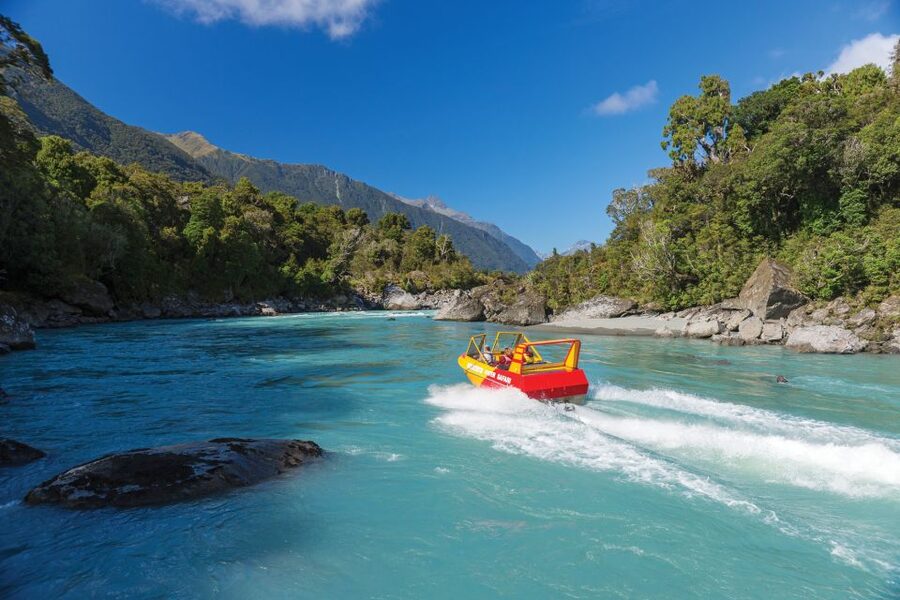
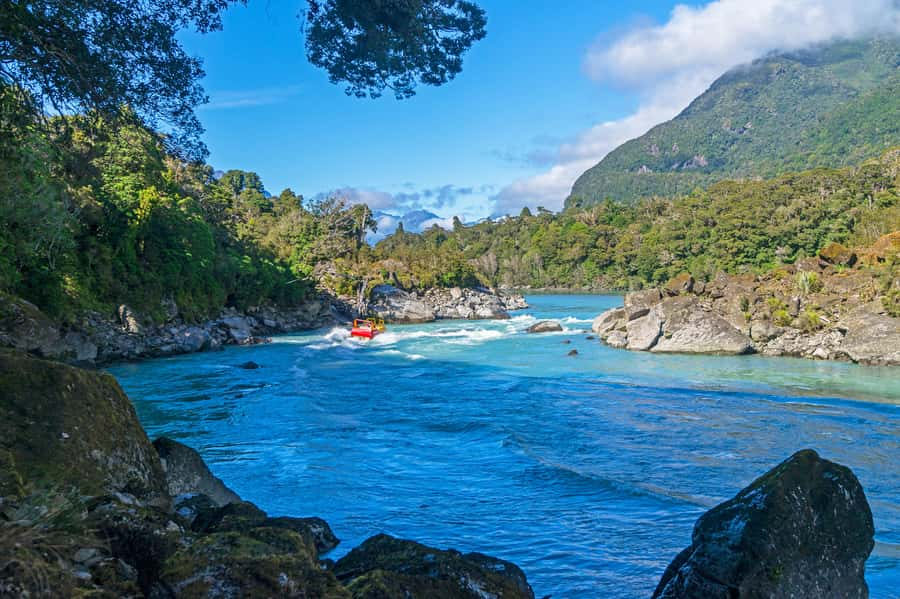
Near the end, the tour finishes in a side stream to visit whitebait breeding grounds. This is the tour’s standout “why it matters” moment. Instead of ending after the best views, you end at a specific ecological location tied to the life cycle of whitebait.
Even if you’re not a biology person, the guidance around this stop helps you connect:
- river conditions to fish life cycles
- the role of protected waterways
- how conservation affects what you can see
It’s also a clever pacing choice. You get the speed and views first, then you land the tour with a calmer, meaningful endpoint. That’s often when learning “clicks” for people—especially if you’re traveling to New Zealand to see the natural world and understand how it’s managed.
BBQ at the end: an optional treat, not the main event
If your group is 6 people or over, you’ll enjoy a BBQ meal at the end of the tour. The menu includes whitebait, crayfish, venison, salads, and refreshments.
Two honest notes about the value here:
- The BBQ is an added bonus that makes the end feel like a celebration, not a quick drop-off.
- But the tour is still worth it even if you don’t get the BBQ option—because the experience is the jet boat plus the river-and-forest interpretation.
If you’re traveling with friends and want a “good food + great scenery” pairing, the BBQ is a nice reason to choose this specific operator.
Price and value: is $166 for 2 hours fair?
At $166 per person for about 2 hours, this isn’t a budget activity. But the price makes more sense when you look at what’s included.
You’re getting:
- national park fees
- morning tea
- a whitebait taster
- life jacket, woollen jacket, and gum boots
- the jet boat experience and guided stops
- a postcard souvenir
In a lot of New Zealand tours, gear and park fees get added later in ways that feel annoying. Here, they’re built in. You’re also paying for time and expertise—guides who explain the river, the habitat, and conservation efforts while keeping the whole thing safe and on schedule.
So my take on the value: it’s worth considering if you want a short, high-impact nature outing that gives you both action and information. If you’d rather do a slower hike without a boat component, you might find better value elsewhere—but for a guided river-to-coast experience in a UNESCO World Heritage setting, the cost is easier to justify.
Who should book this jet boat eco safari?
This tour is a strong fit for:
- first-timers to the West Coast who want a big nature hit in a short window
- people who like learning on the go—especially those interested in conservation and river ecology
- families looking for a kid-friendly walk option without demanding a long hike
- travelers who appreciate practical gear provided for weather
It’s also likely a good choice if you enjoy guides with humor and energy, since friendly, witty guiding comes up often. You’re not stuck with a dry lecture.
You should think twice if:
- you know you get motion sick on boats
- you want a long walking or multi-hour trekking day
This is a 2-hour jet boat safari with stops—not an all-day hike.
Should you book the West Coast: Eco River Safari?
If you want a fast jet boat through a UNESCO-protected river system, with planned photo stops, a short walk, and a meaningful ending at whitebait breeding grounds, I’d book it. The strongest case is how the tour blends scenery with explanation—about nature, local life, and conservation efforts like kiwi repopulation—while still making the day feel comfortable thanks to included warm gear.
If motion sickness is a concern, you can still consider it, but pick this only if you’ve tolerated similar boat rides before.
FAQ
How long is the Waiatoto River Eco River Safari?
The tour lasts 2 hours.
Where do I meet for the tour?
You meet at Waiatoto River Safari in the village of Hannahs Clearing. Park on the main road by the open sign and go into the office in the last building on the left.
What is included in the ticket price?
Included are national park fees, morning tea, a whitebait taster, a postcard souvenir, a life jacket, the jet boat experience, a woollen jacket, and gum boots. If your group is 6 people or more, a BBQ meal is included.
What should I bring?
Bring a hat, sunscreen, a jacket, long pants, and closed-toe shoes.
Is there an optional walk?
Yes. At the top of the river, there’s an optional walk that’s described as good for all ages.
Are pets allowed?
Pets are not allowed, but assistance dogs are allowed.
If you want, tell me your travel month and whether anyone in your group has motion-sickness issues, and I’ll suggest the best practical plan for clothing and seating habits.