REVIEW · NEW DELHI
Old Delhi Heritage and Street Food Walk with a Local
Book on Viator →Operated by Akshay Jain · Bookable on Viator
Old Delhi tells its story through food. This walk is built around the sights in the lanes of Chandni Chowk and the bigger backstories behind them, with Akshay Jain turning history into something you can hear, smell, and remember. You get Red Fort, Jain temples, and Jama Masjid as anchors, while the rest of the route connects them through culture and everyday street life.
I especially liked how personal his telling feels—his childhood memories in Chandni Chowk help make the area’s layers of faith and power feel real.
One possible drawback: you’ll be on foot in tight, busy streets, so comfy shoes and patience for crowds matter.
If you’re a history fan and a food fan, this is a smart combo at a fair price. I like the stop-by-stop flow because it doesn’t treat the landmarks like museum props; it links them to questions people still ask—who ruled, who resisted, and what changed when empires shifted. The trade-off is that two major stops involve optional or extra admission tickets (Red Fort and Jama Masjid), so your final spend can be a bit higher depending on what you choose.
In This Review
- Quick highlights before you go
- Where the walk starts: Lal Mandir and the Red Fort ramparts
- Sri Digambar Jain Lal Mandir: when Jain and Mughal worlds sit side by side
- Begum Samru’s palace: power, politics, and a ruler you won’t forget
- Gurudwara Sis Ganj Sahib: the Mughal throne turns darker
- Central Baptist Church in Chandni Chowk: 1857 and a new empire’s shadow
- Jama Masjid: a peaceful finish and a choice to climb
- Street food time: where the snacks fit the story
- Price and logistics: what $28.80 buys you in real terms
- Who this walk suits best (and who might not love it)
- Should you book this Old Delhi heritage and street-food walk?
- FAQ
- How long is the Old Delhi Heritage and Street Food Walk?
- How much does the tour cost?
- What are the top historical stops included?
- Are admission tickets included?
- Where do I meet the guide?
- What is the group size?
Quick highlights before you go
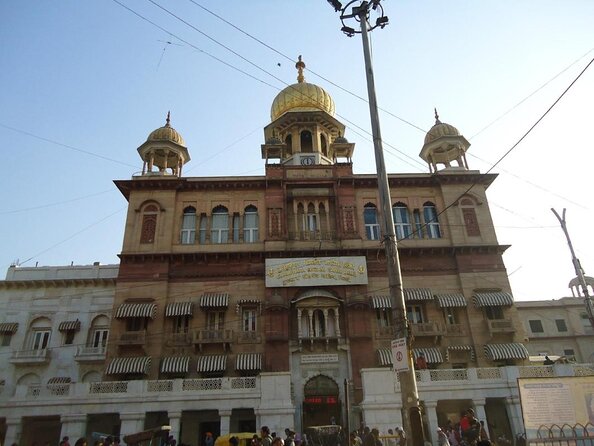
- A local guide with Chandni Chowk roots who explains how the city’s past shows up in daily life
- Stop-by-stop history across empires from the Mughals to the British
- Street-food time tied to the story, with favorites like malai sandwiches mentioned in the experience
- Small group size (max 12) so your questions don’t get lost in the shuffle
- Peaceful ending at Jama Masjid with optional minaret views if you want the challenge
Where the walk starts: Lal Mandir and the Red Fort ramparts
Your meeting point is at Shri Digambar Jain Atishay Kshetra Lal Mandir on Netaji Subhash Marg, right opposite the Red Fort area in Chandni Chowk. From the first moment, the location does some heavy lifting. You’re not just looking at a big name on a map—you’re seeing how religious life sits alongside imperial power, because the fort’s presence is right there in the neighborhood mood.
The first stop focuses on Red Fort’s Mughal-era story, including Shah Jahan’s move of the capital to Delhi and the fort’s link to the broader Mughal imagination. You’ll hear how Shah Jahan is remembered for monumental building—and how that same era shaped Delhi’s political center. It’s a solid way to get your bearings fast, because once you understand the Mughal “center,” the rest of the route clicks into place.
Practical note: there’s time allocated for this stop, and Red Fort admission isn’t included. So treat it like a viewing-and-story moment unless you decide you want to pay for entry on the spot.
You can also read our reviews of more walking tours in New Delhi



Sri Digambar Jain Lal Mandir: when Jain and Mughal worlds sit side by side
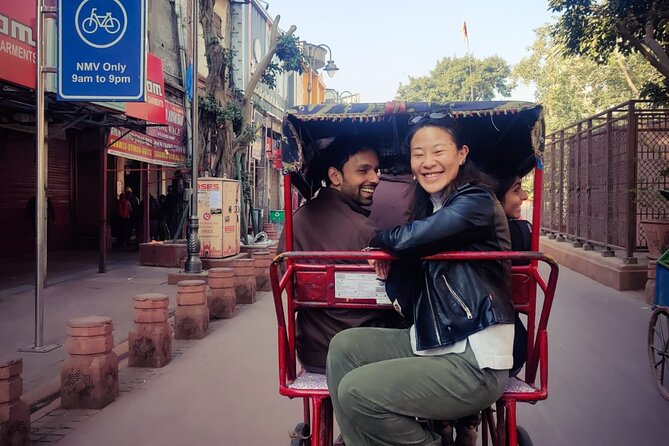
Right next, the walk turns to Sri Digambar Jain Lal Mandir, a reminder that Old Delhi isn’t one story—it’s overlapping stories. This stop is about how a Jain temple ended up beside a Mughal fort, with the added twist that it involved relationships across different faiths. You’ll get the context in plain language, not just dates and names.
This is also where the guide’s personal tone really helps. Because he’s Jain and grew up in the area, his explanation of Jainism isn’t delivered like a textbook lecture. Expect facts about Jainism as a way of life, plus some childhood memories that make the religious neighborhood feel normal rather than exotic.
The quick takeaway here: you start seeing how Chandni Chowk works. People don’t live in separate worlds. They live next to each other—and history records the compromises, the coexistence, and the occasional friction.
Ticket note: this stop is free, so you can stay focused on the explanation and the atmosphere.
Begum Samru’s palace: power, politics, and a ruler you won’t forget

Then the route shifts to an 18th-century figure with a storyline that’s way more dramatic than the usual “royal biography.” You’ll visit Begum Samru’s palace, tied to Begum Samru herself—a woman described as one of the most powerful figures in Northern India at the time. The story traces her path from entertainer beginnings to becoming a soldier and ruler, plus her role as a diplomat connected to the Mughal court.
What makes this stop stand out is that it changes the angle on who gets remembered. Instead of only looking at kings and conquest, you’re asked to notice negotiation, influence, and survival in a changing political environment. The mansion is a visible reminder that women could hold authority in complicated ways—even when later narratives try to flatten history into simpler male-centered versions.
Ticket note: entry here is free, which helps keep the walk flowing without turning it into a pay-stop-pay-stop rhythm.
Gurudwara Sis Ganj Sahib: the Mughal throne turns darker

After that, you’ll head to Gurudwara Sis Ganj Sahib, where the discussion becomes more intense. You’ll get the historical question that frames this stop: who succeeded Shah Jahan when the Mughal capital shifted, and why a Sikh guru was executed here along with his followers.
This isn’t told as a distant tragedy. The guide connects martyrdom to the larger timeline—how these events link to the beginnings of the Mughal Empire’s decline. That cause-and-effect matters because so many people treat Mughal history as a string of achievements. Here, you see the cost too.
The best part of this stop is tone control. The place is sacred, but the story doesn’t drift into gloom. It stays explanatory, helping you understand why these events still shape the cultural memory of Old Delhi.
Ticket note: this stop is free, so it stays easy to plan without surprises.
Central Baptist Church in Chandni Chowk: 1857 and a new empire’s shadow
The route then moves into the East India Company era with a stop at Central Baptist Church, Chandni Chowk. This is one of the more surprising moments of the walk, because it shows how political shifts can play out in religious spaces too.
You’ll hear how the year 1857 shook India—this was framed as the country’s first war of independence—and how the East India Company ultimately triumphed. From there, you connect the dots to India becoming a British colony under Queen Victoria.
This stop works well as a “history bridge.” You’re not jumping randomly from Mughal facts to British facts. You’re watching power change hands in ways people lived through, and you’re seeing how those changes still show up in the built environment.
Ticket note: this stop is free.
You can also read our reviews of more food & drink experiences in New Delhi





Jama Masjid: a peaceful finish and a choice to climb
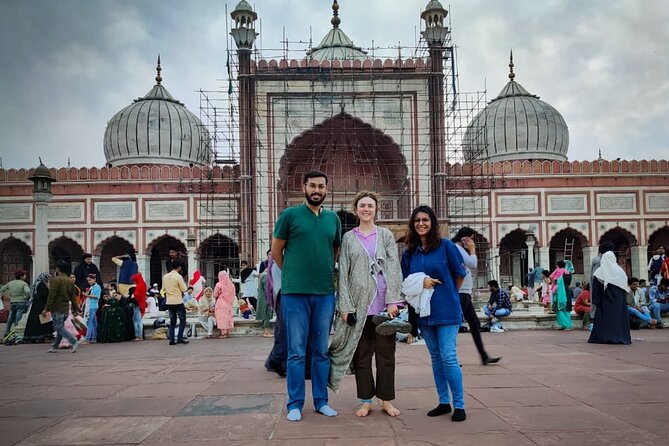
The walk ends at Jama Masjid, one of Old Delhi’s most recognizable landmarks—and, as a closing note, it’s also a calm place after the sharper edges of the streets. The tour wraps up with the chance to take in the structure and its atmosphere before you head off on your own.
You’ll also learn about the idea of height and perspective here. If you’re up for it, the adventurous option is to climb the minarets for Old City views. Even if you skip the climb, you’ll still get the benefit of ending in a place that feels open and grounded.
Practical note: Jama Masjid admission is not included, so decide in advance if you want to treat the minaret option as part of your experience.
Street food time: where the snacks fit the story
Old Delhi’s street food isn’t just “food tourism.” It’s a social system: trade routes, religious calendars, and daily rhythms all show up in what’s sold and eaten. That’s exactly how this walk approaches it. The street-food moments are woven into the stop explanations, so you’re not just tasting—you’re also learning why that food culture grew where it did.
I especially appreciated how the food fits naturally into the route, rather than hijacking the day into a single long snack break. The experience includes street-food tastings, and malai sandwiches are specifically called out by people who’ve done the walk. That’s a great clue for your planning: this isn’t a plan that assumes you’ll only want spicy street thrills.
Food practicals to keep in mind:
- Bring an open mind, but listen to your stomach.
- Stick close to the guide during tastings so you’re not forced to guess what’s happening next.
- If you’re sensitive to spice or strong flavors, you’ll still have options—just go with what you’re comfortable trying.
Price and logistics: what $28.80 buys you in real terms
At $28.80 per person, this is priced like a short, high-value city experience: about 2 hours 30 minutes, with a maximum group size of 12 and a mobile ticket. That small-group cap matters here, because tight Old Delhi streets can get hectic fast. A group that stays small makes the story feel more personal and keeps the walk from turning into a slow-moving pack.
The other value piece: your time is spent where most self-guided wandering goes wrong. Without a guide, it’s easy to see the big landmarks and miss the connecting logic—why certain temples sit near Mughal structures, why certain religious spaces hold specific political memories, and how the British period lands in the same neighborhood fabric.
One caution on cost: Red Fort and Jama Masjid admissions aren’t included. That means your total day spend depends on whether you choose to pay for entry. If you’re the type who likes photos and views more than ticketed interiors, you can keep costs controlled.
Cancellation is flexible, too, which helps if your Delhi plans wobble due to weather or fatigue. Just don’t leave it until the last minute.
Who this walk suits best (and who might not love it)
This walk is a great fit if you want Old Delhi to make sense. If you like walking tours that explain the why behind the landmarks, you’ll enjoy the flow from Mughal to Sikh to British-era connections.
It’s also ideal if you’re pairing history with food and you don’t want the food portion to feel random. The best part is how the street tastings feel like part of the same narrative, not an add-on.
If you dislike walking, crowds, or narrow streets, you might find the pacing less comfortable. The tour does say most people can participate, but “most” still means you’ll be on foot for a while and moving through active areas.
Should you book this Old Delhi heritage and street-food walk?
I’d book it if you want a guide-led day that teaches you how Old Delhi works: its faith layers, its political turning points, and its everyday street culture. The standout strength is the storytelling style—mixing big history with personal, local detail from growing up in Chandni Chowk—so you leave with more than photos.
I would skip or reconsider if you mainly want ticketed museum time, because two key sights (Red Fort and Jama Masjid) require separate admission. And if you’re not interested in street food at all, the main advantage of the experience shrinks.
FAQ
How long is the Old Delhi Heritage and Street Food Walk?
It lasts about 2 hours 30 minutes.
How much does the tour cost?
The price is $28.80 per person.
What are the top historical stops included?
The walk includes Red Fort, Sri Digambar Jain Lal Mandir, Begum Samru’s Palace, Gurudwara Sis Ganj Sahib, Central Baptist Church in Chandni Chowk, and it finishes at Jama Masjid.
Are admission tickets included?
Admission tickets are not included for Red Fort and Jama Masjid. The other listed stops are free.
Where do I meet the guide?
You start at Shri Digambar Jain Atishay Kshetra Lal Mandir, Netaji Subhash Marg, opposite Red Fort, Chandni Chowk, Delhi 110006.
What is the group size?
The tour has a maximum of 12 travelers.