REVIEW · ALCALA DE HENARES
Alcalá World Heritage Tour
Book on GetYourGuide →Operated by Descubre con David · Bookable on GetYourGuide
Alcalá de Henares is History you can walk into. This 1-day World Heritage tour links two millennia of story with real stops you’ll recognize fast: Cervantes locations, the historic university, and a very special chapel tied to his baptism record. I especially like how David Alba keeps the pace light and the explanations clear, and how the route starts quietly before it reaches the big-name sights. One thing to consider: the tour is officially Spanish, so if you want English you’ll need to contact David ahead of time.
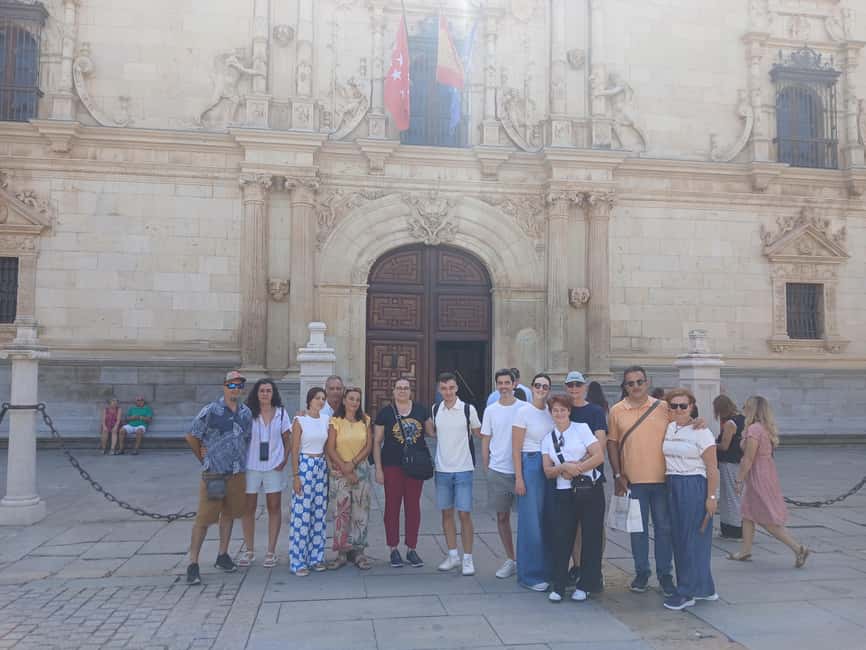
You’ll get a focused route through the Historic Quarter, moving from the Plaza de las Bernardas toward the Old University of Alcalá, with quick guided time at each landmark. Expect mostly exterior views, plus one interior moment that makes the whole tour feel personal. The tour also has a small game built in, which helps break up the walking and makes the facts stick without feeling like homework.
If you’re hoping for a long museum day with lots of inside time, this isn’t that kind of tour. It’s designed to be enjoyable and efficient—think of it as a guided “best-of” that also gives you context for what you’re seeing.
In This Review
- Key highlights you’ll care about
- Why Alcalá feels different from other day trips
- Meeting point at Plaza de las Bernardas (and how to not lose time)
- The walking route: Alcalá’s main streets in the order that makes sense
- Archbishop’s Palace and the Cathedral of the Holy Children
- Calle Mayor: the main street that connects scenes
- Cervantes Birthplace Museum and Cervantes Square: seeing the author’s city
- Corral de Comedias de Alcalá: theater history in a compact stop
- Old Hospital of Antezana: a quieter kind of history
- The University of Alcalá (and why Cisneros changes the whole story)
- Capilla del Oidor: the interior visit you’ll remember
- Finish at Plaza de San Diego: wrap-up like the last chapter
- What I’d call the real value of this $11 price
- Language and group pace: what to expect on the ground
- Practical tips for making the most of the day
- Should you book the Alcalá World Heritage Tour with David Alba?
Key highlights you’ll care about
- A very efficient route through Alcalá’s top World Heritage sights in about 1 day
- Exterior sights, with one key interior visit to the Capilla del Oidor (except the 6:00 pm group)
- Cervantes-focused stops that connect the author to the city in a concrete way
- The Old University of Alcalá as the most important finish-point for the story of the city
- A light, fun format with explanations, plus a game during the tour
- Excellent guide energy: David Alba is described as friendly, funny, and never dragging the pace
Why Alcalá feels different from other day trips
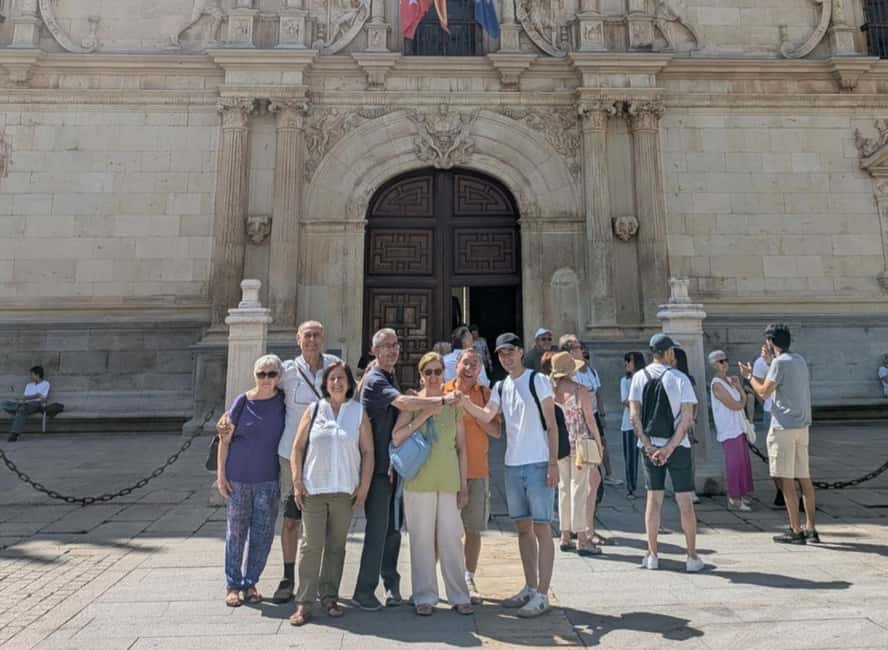
Alcalá de Henares is a rare case of a historic city that still feels lived-in, not staged. You’re in the Community of Madrid, but the Old Quarter has its own rhythm—stone streets, church facades, and university buildings that make the place feel academic and spiritual at the same time.
What makes this tour a smart choice is its goal: it helps you understand why Alcalá earned World Heritage status, without turning the day into a lecture. You’ll get the key threads—Cardinal Cisneros and the first University City idea, the idea of the Alcalá of the 3 Cultures, and the birthplace of Miguel de Cervantes Saavedra—while still seeing the main stops you’ll later want to revisit on your own.
Meeting point at Plaza de las Bernardas (and how to not lose time)
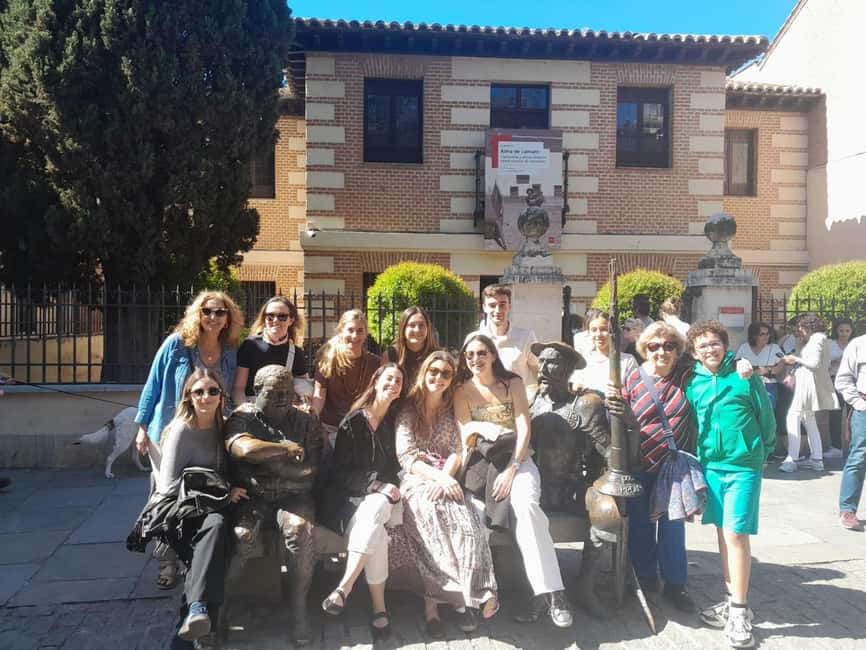
The tour starts at the Obelisk in Plaza de las Bernardas. That’s a good setup, because it gives you a simple landmark and a calmer beginning before the route gets busier.
When you arrive, look for the guide card around the neck that says Discover with David. Small detail, big payoff: you avoid the awkward “Is this the group?” scramble, and you get moving right away.
This first stretch matters more than you might think. Starting in Plaza de las Bernardas means you’re not jumping immediately into the densest tourist knot. David Alba uses this to set the historical frame before you start covering the checklist sights.
The walking route: Alcalá’s main streets in the order that makes sense
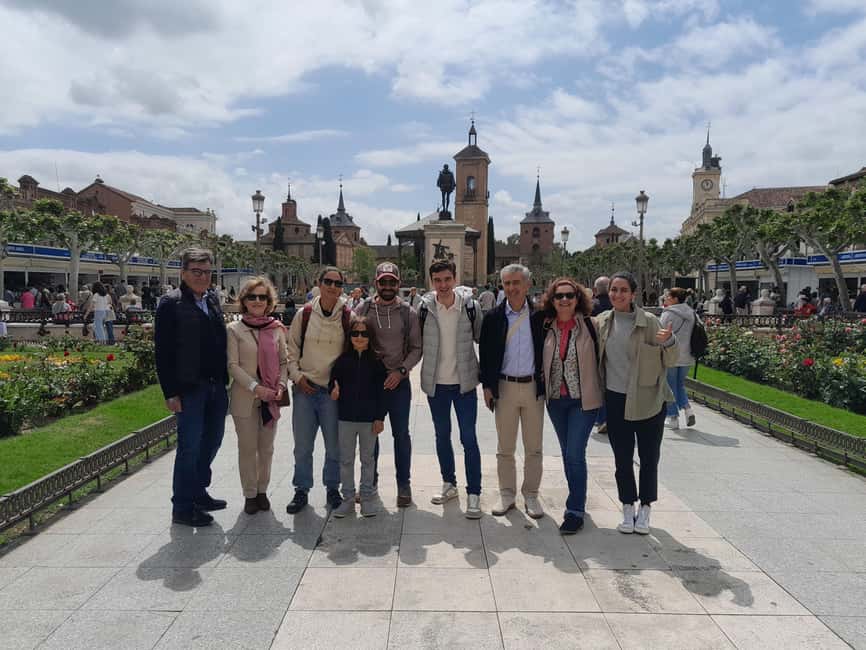
The tour is built like a story that gradually climbs toward the biggest ideas. It goes from prominent squares and monumental buildings, down main streets, then back into the cultural and academic heart.
You’ll spend guided time at major stops such as the Archbishop’s Palace, the Cathedral of the Holy Children, and Calle Mayor. The route is timed so you’re not stuck waiting at every corner, and the pacing stays “light and enjoyable,” not rushed.
Also, there’s a practical benefit to the ordering: by the time you reach the University of Alcalá, you’ll already understand why it matters. Instead of seeing buildings as isolated photos, you’ll know what to look for and what role each place played.
Archbishop’s Palace and the Cathedral of the Holy Children
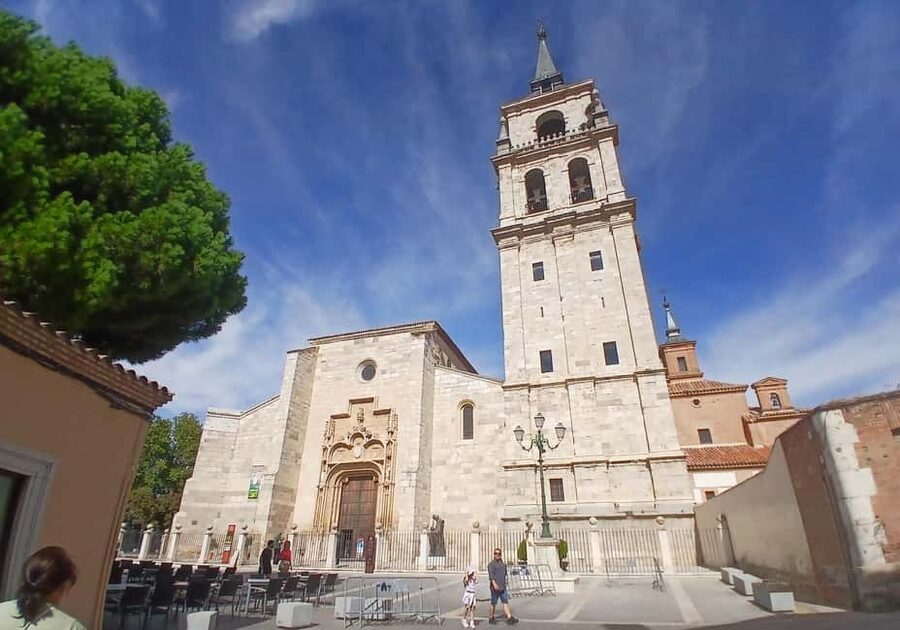
Early on, the Archbishop’s Palace gives you a sense of how power and faith shaped the city. Even if you only see parts from the outside, you’ll come away with a better idea of the role the church held in Alcalá’s development.
Then the tour moves to the Cathedral of the Holy Children. This is one of those sights where the architecture does a lot of talking. David Alba’s value here is making the time feel short: the stop is guided for about 10 minutes, which is enough to orient you and catch the main points without burning your energy.
If you’re the kind of traveler who likes to understand what you’re looking at, you’ll appreciate the steady flow of facts at each stop. If you prefer to mostly wander on your own with minimal explanation, you may find you want slightly more free time—but the tour length keeps it manageable.
Calle Mayor: the main street that connects scenes
Calle Mayor is where Alcalá starts to feel like a real city, not just a heritage site. This is one of the stops that makes the whole day feel walkable: you move from monument to monument with a sense of direction.
The guided time here is about 10 minutes, and that’s a sweet spot. It’s long enough to understand why Calle Mayor matters and short enough that you don’t lose the bigger “arc” of the tour.
If you’re combining this with other plans in the Madrid area, this kind of main street stop is also helpful. You’ll learn the layout and develop instincts for where to go next afterward.
Cervantes Birthplace Museum and Cervantes Square: seeing the author’s city
Cervantes is the headline for many people visiting Alcalá, and this tour treats that seriously. You’ll visit the Cervantes Birthplace Museum and also stop at Cervantes Square.
This combination matters. The birthplace museum connects Cervantes to Alcalá through the idea of origin, while Cervantes Square helps you feel how the city keeps his presence visible in daily space.
You’ll also hear context tied to Don Quixote de la Mancha. David Alba frames Cervantes as part of the city’s identity, not as a random literary detour. That makes the Cervantes stops feel more meaningful, especially if you’re a fan of the book and want to connect words on a page to real streets.
Corral de Comedias de Alcalá: theater history in a compact stop
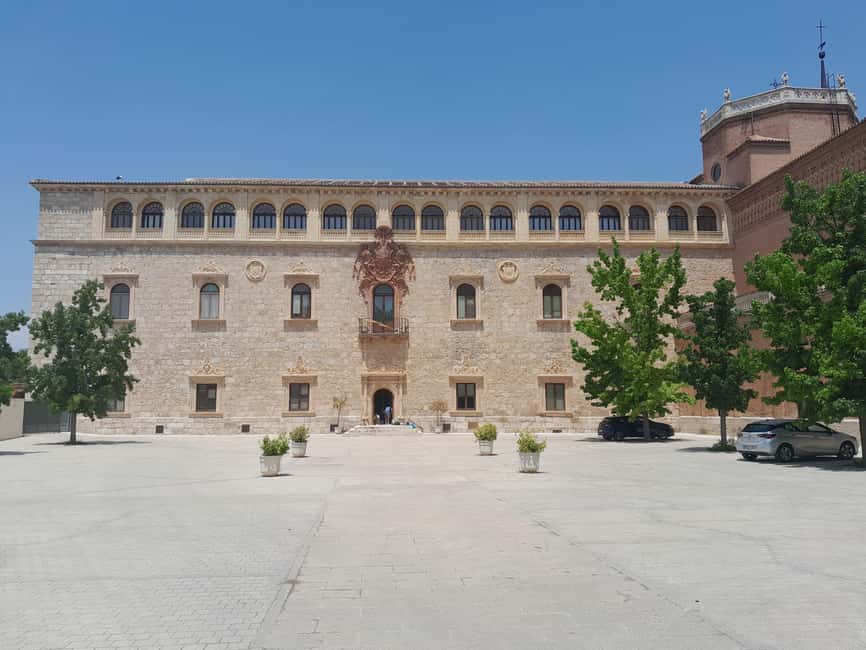
The tour includes the Corral de Comedias de Alcalá de Henares (about a 5-minute guided stop). Even in a short time, this is a big cultural moment.
A corral de comedias is a reminder that Spain’s entertainment history wasn’t only the big cities. Alcalá had its own stage culture, and seeing the building in the historic quarter helps you understand the city as a full cultural ecosystem—academic, religious, and artistic.
If you’re tempted to skip theater-related stops because they feel niche, this one can surprise you. The time is short, and the payoff is a more rounded sense of what Alcalá was like in everyday life.
Old Hospital of Antezana: a quieter kind of history
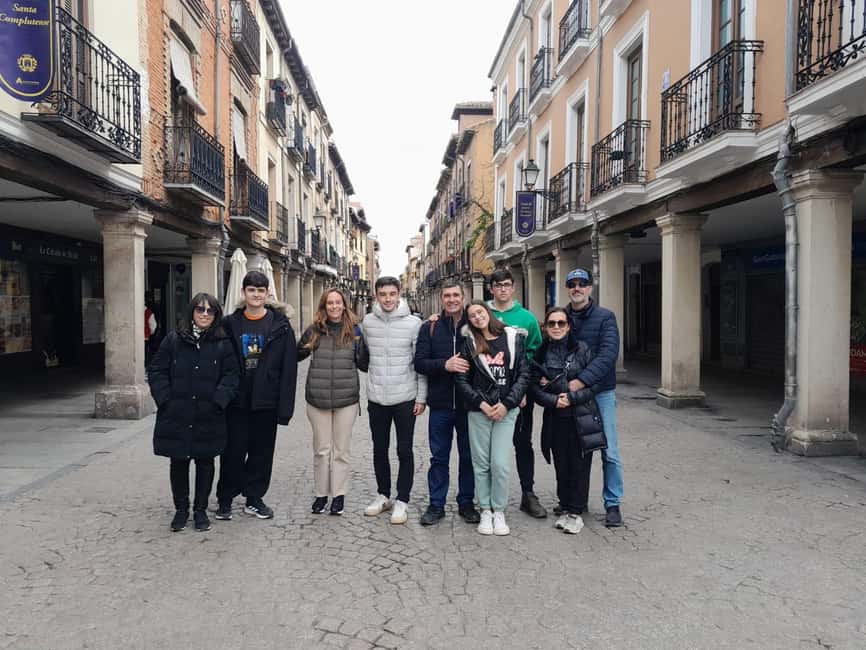
Next up is the Hospital de Antezana, guided for about 5 minutes. This stop adds contrast. Not every landmark is a church façade or a university wall—some places are about how a city cared for people.
Even with the short guided time, you’ll get enough context to recognize what the building represents and why it appears in the story of Alcalá’s development. It’s one of those stops that makes the tour feel balanced: you’re not only chasing the most obvious photogenic places.
The University of Alcalá (and why Cisneros changes the whole story)
By the time you reach the Old University of Alcalá de Henares (about 15 minutes guided time), the tour’s main idea finally comes into focus: Alcalá’s identity is tied to education at a global level, especially through Cardinal Cisneros.
This stop is positioned as the most important part of the tour for a reason. You’re not just looking at old buildings. You’re seeing the city’s claim to significance—why it became known as the first University City in the world in this historical narrative.
If you like learning how cities become centers of influence, this is the moment. You’ll walk away with a clearer mental picture: Alcalá wasn’t only a place where famous people were born or famous plays were staged. It was also a place where ideas were organized, taught, and spread.
Capilla del Oidor: the interior visit you’ll remember
This is the stop that turns a good tour into a standout one. The tour includes Capilla del Oidor with an interior visit, where Cervantes’ baptismal certificate is kept.
The details matter here:
- The tour is generally exterior-oriented.
- You enter the Capilla del Oidor interior for most groups.
- For the 6:00 pm group, the guide notes you won’t enter the chapel interior.
So if you want the full moment—the certificate context plus the chapel interior—aim for a time that isn’t the 6:00 pm start. It’s a small timing detail, but it changes the feel of the stop.
Even if you’re not a “documents and certificates” person, this is the kind of fact that makes the whole day click. It’s not abstract. It’s a tangible link between Cervantes and the city that goes beyond plaques and photos.
Finish at Plaza de San Diego: wrap-up like the last chapter
The tour ends at Plaza de San Diego. This is a good final choice because it lets you decompress after the densest historical cluster.
David Alba is also known (and it shows in the structure) for wrapping the day like a story—full of fun facts, explanations, and a sense of closure. The game included during the tour adds to that “end like a novel” feeling, because it gives you a moment to react and connect pieces you might have missed on first pass.
Practically, the finish point also helps you plan your next move. You’ll have a calmer place to regroup, decide on lunch, or continue exploring.
What I’d call the real value of this $11 price
Let’s talk money. At $11 per person, this is one of those prices that forces you to ask what you’re actually getting. Here, you’re getting something more valuable than a long list of random stops: a guided route that ties together Cervantes, education, religion, and cultural life in one coherent day.
You also get:
- A live guide
- Skip the ticket line
- A structured visit across the main points
- Exterior access across many landmarks, plus the key interior Capilla del Oidor moment
In other words, the price is low, but the tour design isn’t “light on value.” It’s built to deliver context fast, which is exactly what you want when you only have a limited day in the area.
Language and group pace: what to expect on the ground
This tour is listed as Spanish. That doesn’t automatically make it the wrong fit if you don’t speak Spanish, but it does change what you’ll absorb. The provided information also suggests the guide can offer an English tour if you contact him, so it’s worth reaching out if English is essential for you.
Group pace is another strength. The tour is described as not wasting time—meaning you’ll likely feel the schedule stays respectful and efficient. The guided stops are short by design, so you keep moving and don’t get stuck at any single location for too long.
Also good: the tour is listed as wheelchair accessible, which means the route is planned with accessibility in mind. That’s a deciding factor for many visitors when they’re choosing “doable” day plans.
Practical tips for making the most of the day
You’ll be walking a historic core, so wear shoes you trust. The tour is short enough that you can likely manage it comfortably, but the Old Quarter isn’t designed like a modern flat mall.
Since the tour focuses on major highlights, bring curiosity more than expectations of museum-heavy time. You’ll spend guided time at places like the Cervantes Birthplace Museum, but the information provided also says the tour is mainly exterior visits with the interior entry only at Capilla del Oidor. Plan your mindset around that.
Finally, if you care a lot about the chapel interior, check the start time. That 6:00 pm exception is the only clear “maybe not” inside detail.
Should you book the Alcalá World Heritage Tour with David Alba?
Book it if you want:
- A fast, guided introduction to Alcalá de Henares World Heritage without losing the story
- A strong focus on Cervantes plus the city’s educational and cultural background
- A guide-led day that stays fun, clear, and organized, with a small game to keep things lively
Skip it (or at least message first) if:
- You need the tour in English and don’t want to request it
- You’re looking for lots of inside museum time and longer stops at fewer places
If your goal is to understand Alcalá in a single day and walk away knowing why Cardinal Cisneros and the Old University matter, this is a smart pick—especially at $11.