REVIEW · OLYMPIA GREECE
Ancient Olympia Entry Ticket & Virtual Reality Audio Tour
Book on GetYourGuide →Operated by SIGHTS OF ATHENS-GRAY LINE · Bookable on GetYourGuide
Olympia can feel big and confusing. This VR-style audio tour helps you connect the dots fast, with phone-based VR and prebooked entry. You get a self-guided way to follow the story of the Olympic Games from 776 BC to 393 AD, plus a smoother start than walk-up lines.
I like that you choose your own pace at the archaeological site and you get a museum visit baked into the same experience. The audio is offered in 9 languages, so it’s easier for mixed groups. The main caution: it’s truly self-guided—so if you expect someone to meet you and steer you on-site, plan for a different setup.
You’ll also want to treat this like a phone battery test. You bring your own headphones, and one key detail is keeping the app experience running while you walk, because a few people had trouble when they closed the browser or didn’t match the visuals to their position.
In This Review
- Key moments that make this Olympia experience work
- Olympia with a phone VR-style audio tour: why it’s worth your time
- Your 4-hour visit plan and how the museum timing rules affect you
- Entering the sanctuary: the Temple of Hera and the Olympic Flame connection
- Temple of Zeus, the Seven Wonders statue, and why the audio matters here
- Stadium and Bouleuterion: making sense of the space you’re walking through
- The Archaeological Museum: your scheduled time slot is the key
- How the VR app experience works on-site (and what can go wrong)
- Price and value: paying for tickets plus a guided phone experience
- Who should book this Ancient Olympia VR + audio ticket?
- Should you book this Olympia package?
- FAQ
- How long is the Ancient Olympia entry ticket and virtual reality audio tour?
- Do I need a specific time for the archaeological museum?
- Can I enter the archaeological site anytime that day?
- What languages are included in the audio guide?
- What should I bring with me?
- Is transportation or a live guide included?
- Are pets allowed, and is it wheelchair accessible?
Key moments that make this Olympia experience work
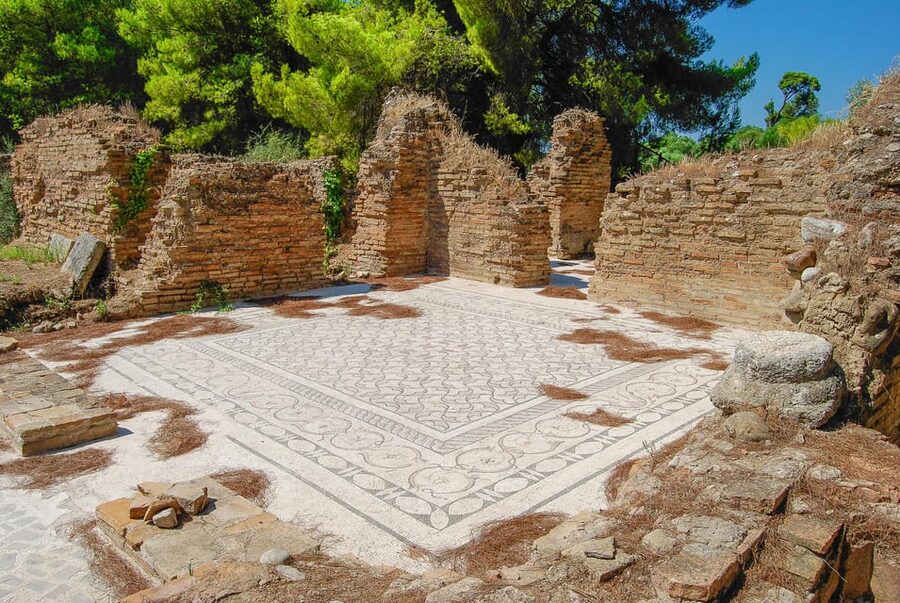
- VR app on your smartphone, designed to help you picture what the monuments looked like before
- 9-language audio guide, with instructions sent in your ticket voucher
- Prebooked museum time, which can save you stress and line time
- Express security check, so you’re moving sooner once you arrive
- Flexible site time on your booked date, so you’re not rushed through the ruins
- Watch your expectations about VR hardware, since some visitors expected VR glasses and only got an app
Olympia with a phone VR-style audio tour: why it’s worth your time
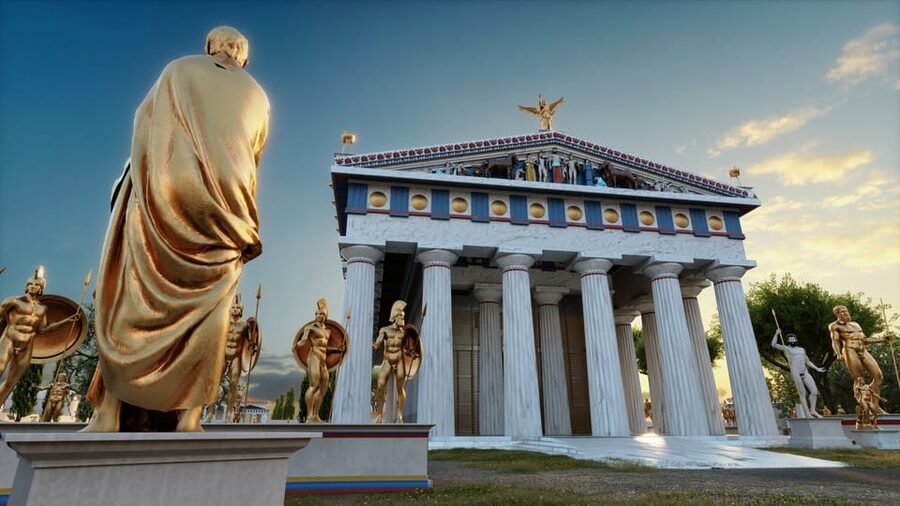
Ancient Olympia is one of those places where, without context, the stones can look like… stones. What I like about this experience is that it tries to solve that exact problem. You’re not just looking at ruins—you’re pairing what you see with a guided explanation and VR-style reconstructions on your phone.
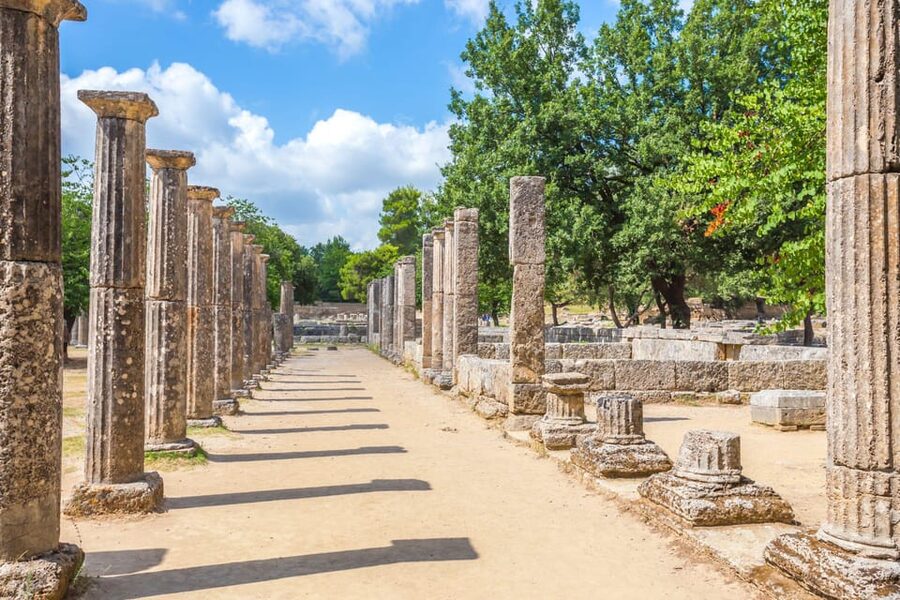
That matters because Olympia is more than one landmark. The site is a whole religious sanctuary, and later it became the symbolic home of the Olympic Games. The tour text points you to major anchors—the Temple of Hera, the Temple of Zeus, the Stadium, and the Bouleuterion—so the area feels organized instead of random.
The “virtual reality” part is phone-based, not a headset experience you rent on-site. That’s a good match for travelers who want portability and control. It also means you should plan for one thing: your attention goes to the screen sometimes. If you’re the type who wants to fully look around with zero tech friction, you might find the rhythm a little interrupted.
Your 4-hour visit plan and how the museum timing rules affect you
You’re choosing a total experience length of about 4 hours, but the visit is really controlled by two entry rules: the museum needs a set time, while the site is time-flexible on your chosen date.
Here’s the practical split:
- Archaeological Museum of Olympia: you must pick a specific date and time, and you can’t change it later after booking
- Archaeological Site: you can enter at any time on your booked date, and you have unlimited time once you’re in
That setup is great when you want a relaxed flow: you can arrive at the ruins when it suits daylight and crowds, then slide into the museum at your scheduled slot. It also helps if you’re traveling with someone who needs breaks, because the site doesn’t force a timed appointment.
One more timing thing to respect: last admission is 15 minutes before closing. If you’re cutting it close, you can lose part of the visit without meaning to. I’d rather you arrive earlier than you think you need, then you can slow down where the place calls for it.
Entering the sanctuary: the Temple of Hera and the Olympic Flame connection
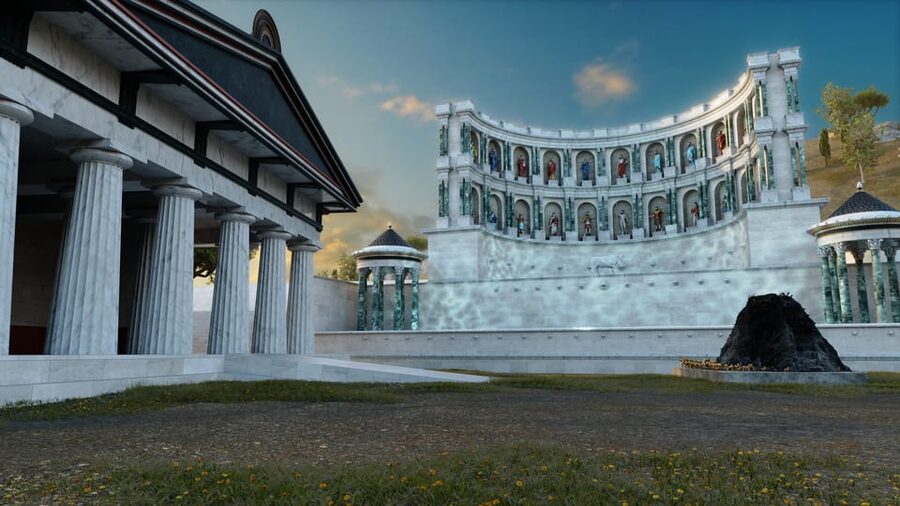
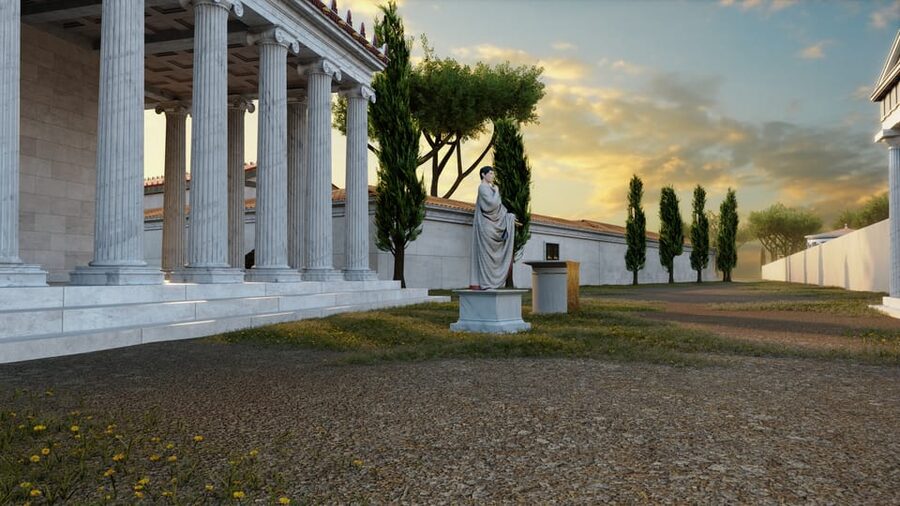
Olympia’s Temple of Hera is one of your first big mental milestones. The tour focuses on the area in front of the temple, which is known for the Olympic Flame during modern-day Games.
That’s a clever way to frame the place. Even if you’re not a “sports history” person, you recognize the Flame concept. It gives you a hook: you’re standing in a sanctuary linked to ritual, then the audio/VR context turns that familiar modern symbol back into its ancient setting.
If you like photo stops with meaning, this is one. You can position yourself where people often connect the story of the flame to the temple area, then use your audio guidance to anchor what you’re seeing. The ruins won’t explain themselves, but the audio will give you something to listen for while you’re there.
A practical note: wear shoes you trust on uneven ground. When you’re trying to line up your phone visuals with your position, you don’t want to be fighting your footing.
Temple of Zeus, the Seven Wonders statue, and why the audio matters here
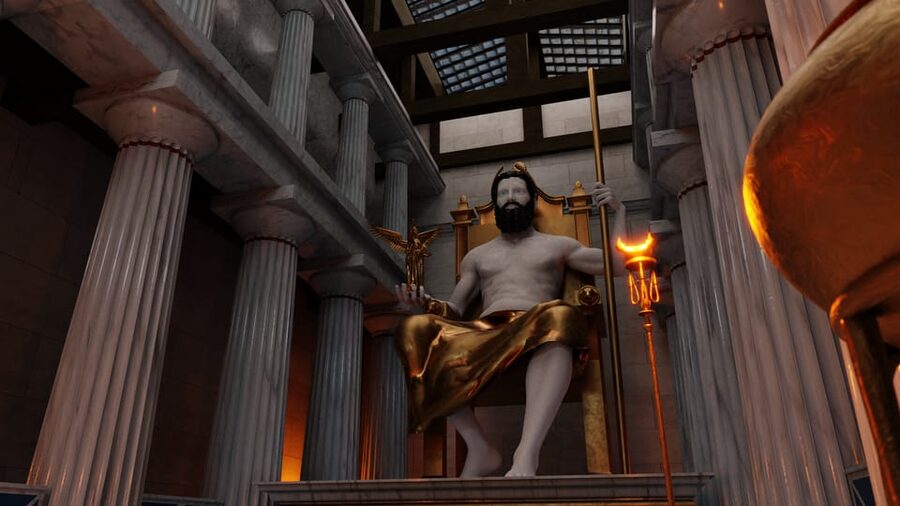
The Temple of Zeus is where Olympia starts to feel like a “big deal,” fast. The information you’ll get points out that the temple once housed the famous Golden and Ivory statue of Zeus, which was counted among the Seven Wonders of the Ancient World.
That detail changes how you look at the remains. Instead of asking what you’re missing, you start asking what was once imagined here on a massive scale. The tour also flags other major structures in the zone, including the original Stadium and the Bouleuterion—the meeting place tied to the sanctuary’s organization.
What makes an audio guide valuable in this section is that you can’t read the site like a textbook. You’ll often be standing in a partial footprint, so the guidance helps you understand scale and purpose. The VR-style element also helps you visualize the original forms, which can make the “missing pieces” feel less frustrating.
If you’re traveling with kids, this part often works better than you’d expect. Large sites can be boring if you’re just walking between walls, but a story with named monuments and a clear “why” keeps attention moving.
Stadium and Bouleuterion: making sense of the space you’re walking through
Olympia’s Stadium isn’t just an object—it’s a built environment for competition. The tour information specifically includes the original Stadium and the Bouleuterion, which helps you treat this as a functioning event space rather than a museum yard.
Here’s the practical advantage of doing this self-guided: you can slow down right where you need time. If you want to stand at a point and understand the layout before you move, you can. If you prefer to walk briskly through the open stretches, you can do that too.
One thing you might feel: Olympia is spread out enough that the phone-based experience requires short pauses to line up visuals. If you’re moving fast, you’ll likely miss the best “wait a moment, look, listen” moments.
I’d plan a rhythm like this:
- Walk the route first without stopping much
- Then return your attention to the audio/VR cues at the most important points
This way you don’t lose time, and you still get the full context.
The Archaeological Museum: your scheduled time slot is the key
The museum is where the day often becomes more real, because you can see artifacts and explanations that the open-air site can’t fully provide.
The catch is the museum timing rule. You must choose a specific date and time when you book, and you cannot change it later. Once you lock it in, you plan your earlier ruin time around it.
To make this work smoothly, I recommend arriving at the museum with breathing room. If you cut too close, you’ll feel rushed through the rooms that are actually meant for careful looking. And because last admission is 15 minutes before closing, late timing doesn’t just waste time—it can shrink the value you get.
Also keep in mind that the package includes entry tickets, but it does not include a live guide. So the museum experience relies on your audio support and your own pacing. If you strongly prefer a person to answer questions, you might want to pair this with a separate guided add-on on-site.
How the VR app experience works on-site (and what can go wrong)
This package is built around a Virtual Reality application plus audio guide in 9 languages: English, German, German, Spanish, Chinese, Polish, Portuguese, Russian, Italian, French.
You’ll also be told the audio guide instructions will be sent with your ticket voucher. And you should bring headphones and a charged smartphone. That’s not a throwaway detail. One review-style warning that matters here: keep your browser/app experience active. Closing the browser can break the flow of the tour.
Some visitors also expected VR glasses. Based on on-the-ground feedback, what you should plan for is the app on your phone, not a separate headset you receive. If you’re imagining a full physical VR device, treat this as a phone-guided recon experience.
Another practical risk: location matching. If you don’t follow the audio’s instruction order, the visuals might not line up with where you are standing. The fix is simple: pause, re-check where the audio wants you, then move on. Don’t try to “guess” the next stop.
And finally, plan as if you won’t have a staff member physically waiting to solve problems. There have been reports of no one meeting at a meeting point and of tickets not being accepted on arrival in some cases. That’s why your best defense is straightforward: read your voucher carefully before you leave, and keep a backup copy on your phone.
Price and value: paying for tickets plus a guided phone experience
At $36 per group up to 1, the value depends on what you’d otherwise pay and what you want from the day.
This package includes:
- the VR application
- entry tickets (museum + archaeological site)
- express security for quicker access
It does not include transportation, and it doesn’t include a live guide. So you’re buying convenience and interpretation, not a person.
Here’s the value math that helps you decide. One reviewer felt the package cost a few euros more than buying regular museum/site entries, but the added explanation and reconstructed views felt worth it. That’s a common trade-off: you pay slightly more for context and less friction.
To keep your expectations aligned:
- Reduced admission tickets and child-infant tickets aren’t available in this setup.
- That means children may require full admission pricing, so the “deal” feel can shrink for families.
So ask yourself honestly: do you want a self-guided interpretation tool that works on your phone? If yes, this price can feel reasonable. If you want someone to walk you step-by-step and answer questions, you might get better value from a live guided tour plus only the museum ticket.
Who should book this Ancient Olympia VR + audio ticket?
I think this experience fits best for travelers who:
- want to move at their own pace
- enjoy listening while walking
- are comfortable using a smartphone tour format
- prefer saving time at security and sorting entry in advance
It’s also a decent match for families who like picture-based explanations. The audio structure and named monuments can keep kids oriented better than random wandering.
It may be a weak fit if:
- you dislike phone-based tours or you don’t want to manage app/battery issues
- you need a live human guide to solve navigation confusion
- you expected VR glasses or a full headset setup
If you’re wheelchair accessible, it’s listed as wheelchair accessible. And pets aren’t allowed, so plan accordingly if you’re traveling with animals.
Should you book this Olympia package?
Book it if you want a practical, self-guided way to connect the big Olympia landmarks with guided context, in 9 languages, and with prebooked entry that helps reduce start-up stress. The biggest wins are the combination of phone-based reconstruction and the timed museum entry that keeps your day from turning into guesswork.
Skip it (or pair it) if you want a human guide, or if you know you’ll struggle with phone tours. The safety rails here are your own planning: charge your phone, bring headphones, keep the tour running, and follow the audio instructions order rather than trying to “wing it.”
If you like the sound of standing at Temple of Hera, then moving to the Temple of Zeus story, and finally making the museum slot feel purposeful, this is a solid match for a half-day in Olympia.
FAQ
How long is the Ancient Olympia entry ticket and virtual reality audio tour?
The duration is listed as 4 hours. You can check availability for starting times.
Do I need a specific time for the archaeological museum?
Yes. You must select a specific date and time for entry to the Archaeological Museum of Olympia, and you cannot change it after booking.
Can I enter the archaeological site anytime that day?
Yes. You can enter the archaeological site at any time on the date you booked, but only on that specific date.
What languages are included in the audio guide?
The audio guide is included in English, German, Spanish, Chinese, Polish, Portuguese, Russian, Italian, and French.
What should I bring with me?
You should bring headphones and a charged smartphone.
Is transportation or a live guide included?
No. Transportation to the site and a live guide or live staff are not included.
Are pets allowed, and is it wheelchair accessible?
Pets are not allowed. It is listed as wheelchair accessible.