REVIEW · ABRUZZO
Among ancient sunny vineyards, visit and taste the wines from the San Lorenzo cellar
Book on Viator →Operated by Gustabruzzo · Bookable on Viator
Wines and vaults, with real technique talk. This 4-hour San Lorenzo Vini visit in Castilenti pairs a slow country walk with an inside look at Vini San Lorenzo winemaking, ending in the De Sterlich barrel cellar for a guided tasting of three native wines. I love how the route walks you through the estate rather than just shuttling you straight to the cellar, and I love that the tasting comes with basic sensory and technique pointers so you taste with more intention than just, yum.
One thing to plan for: it involves a long walk through the property, and the experience depends on good weather. If you’re not into walking on uneven ground, wear shoes you trust and keep expectations flexible around rain.
In This Review
- Key things that make this tour worth your time
- San Lorenzo Vini meeting point: starting your Castilenti wine day right
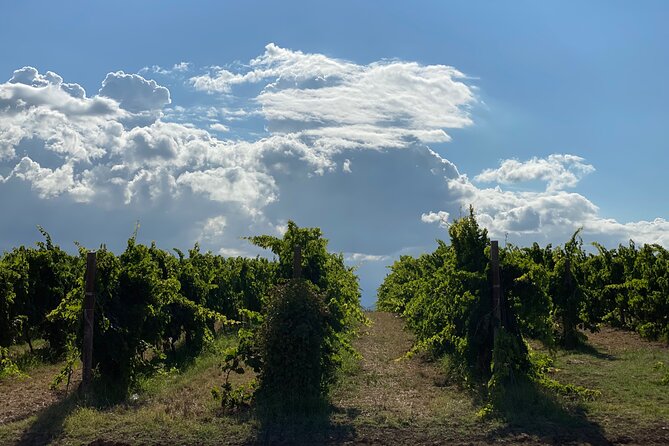
- The slow walk through vineyards, ponds, and old farmhouses
- Transfer to the De Sterlich palace: where the barrel cellar experience happens
- Vineyard stop: technical farming talk you can actually use
- Winery visit: strategies and winemaking techniques, tied to what you saw
- Wine tasting of 3 native wines: how to get more from each glass
- Price and value: is $34.73 fair for an Abruzzo cellar day?
- Who this Castilenti wine tour suits best
- Should you book the San Lorenzo cellar tour?
- FAQ
- FAQ
- How long is the San Lorenzo cellar tour?
- What is included in the experience?
- Where does the tour start?
- What if the weather is bad?
- Can I get a full refund if I cancel?
- How many people are in a group?
Key things that make this tour worth your time
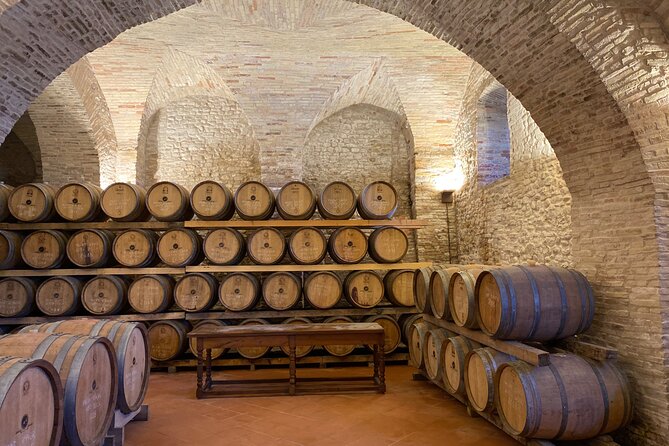
- 16th-century De Sterlich palace cellar: barrel cellar visits in medieval vault-style spaces.
- A real estate walk: vineyards, ponds, and ancient farmhouses along the way.
- Vineyard details you can explain later: conventional/organic-minded farming practices, soil work, breeding, and yield-per-hectare topics.
- Winemaking theory in plain terms: production strategies and techniques, tied to what you’re told on-site.
- Three native wines, guided with sensory basics: a tasting built around how to assess wine, not just drink it.
- Small group feel: maximum of 25 people, so you can ask questions.
San Lorenzo Vini meeting point: starting your Castilenti wine day right
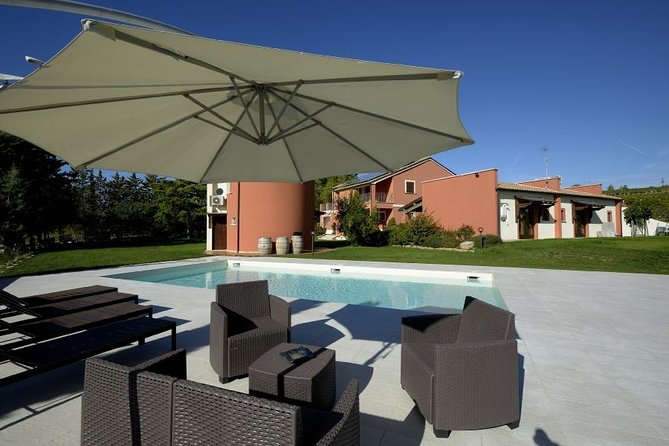
You begin at San Lorenzo Vini, Contrada Plavignano, 2, 64035 Castilenti TE. The tour then ends back at the same meeting point, so you don’t have to worry about getting yourself across town after tasting.
The price is $34.73 per person for about 4 hours, which is a meaningful chunk of a half-day in Abruzzo. The good part is that you’re not just paying for wine; you’re paying for a guided pass through the vineyard and cellar, plus structured tasting instruction.
Tip: if you’re visiting in a high season window, book early. On average, this is booked about 5 days in advance, and that usually means slots can disappear when the weather looks good.
The slow walk through vineyards, ponds, and old farmhouses
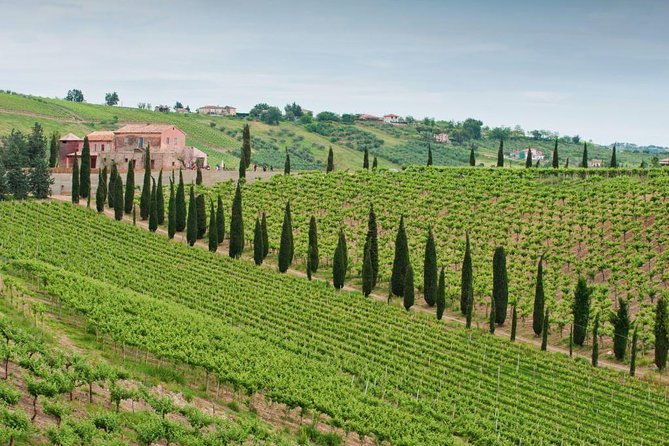
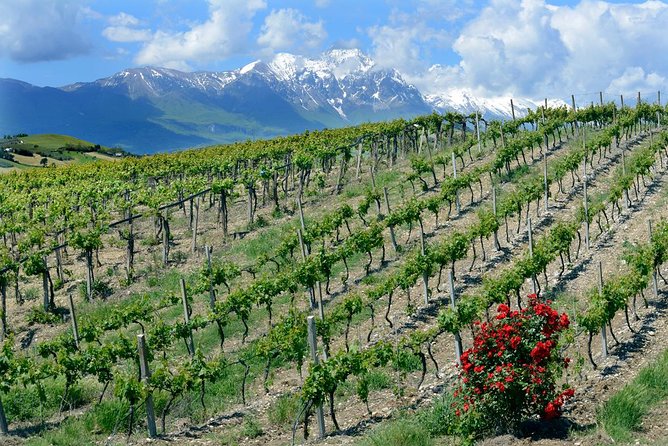
The heart of this experience starts before the first pour. You take a long walk across the estate, moving through areas tied to wine production—vineyards, ponds, and ancient farmhouses—while the story of Vini San Lorenzo’s approach is explained as you go.
I like this format because it helps your brain connect the dots. It’s easy to forget that wine isn’t made in one room. It’s made across seasons, soils, plant choices, and timing. Walking the grounds makes those choices feel less abstract.
Expect to slow down. This isn’t a quick “see everything in 30 minutes” kind of tour. You’re there to notice things and build understanding as you move between production areas. If you need a break often, bring that into the planning. The tour is designed around a walking pace.
Transfer to the De Sterlich palace: where the barrel cellar experience happens
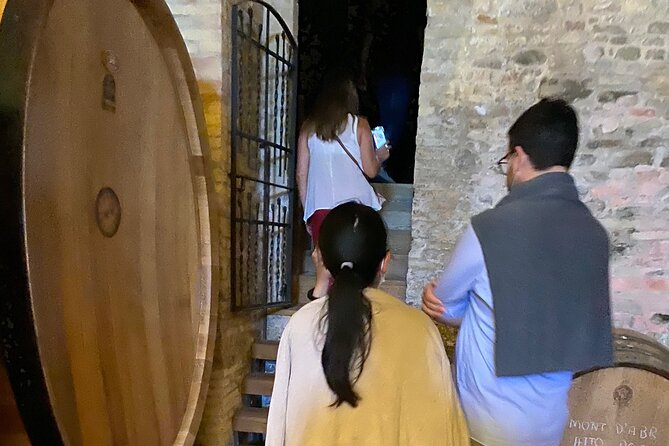
From the start area, you transfer to the Sterlich (De Sterlich) Palace in Castilenti. This is where the experience leans into atmosphere: the ancient cellar is housed in a sixteenth-century palace, with medieval vaults, niches, and convivial spaces.
Why that matters for you: the setting changes how the cellar information lands. Barrels, vault temperatures, and aging time stop being “wine facts” and start feeling like part of a real environment. You’ll have an easier time remembering what you’re taught because you’re learning it in context.
Also, the tour is positioned around a balance of older and newer approaches: ancient traditions paired with modern (avant-garde) techniques. You’ll see that theme echoed in how the vineyard walk and cellar visit connect, rather than treated as two separate stories.
One caution: like many cellar visits, expect cooler interiors and the kind of surfaces that don’t love rushed walking. If you’re prone to slipping, keep your step slow and steady.
Vineyard stop: technical farming talk you can actually use
After you’ve tasted atmosphere, you move back outside to the vineyards with an eye for production details. This portion focuses on technical aspects of cultivation, such as conventional agriculture and organic farming approaches, plus soil processing and vineyard management topics like breeding and yield per hectare.
You’re not expected to memorize numbers. You’re supposed to understand the logic behind them. For example, yield per hectare is often mentioned because it ties directly to how concentrated flavors can become. Soil processing matters because it affects water control and root health. Farming choices matter because they influence consistency year to year.
If you’ve ever wondered why two bottles with the same grape can taste so different, this is where the explanation starts to click. You begin to see farming practices as tools that shape the raw material, not just background scenery.
My advice: ask one practical question during this segment. Something like what practice is most important in this area, or how they decide what to focus on in the vineyard. With a group cap of 25, there’s usually room for questions if you come in with at least one.
Winery visit: strategies and winemaking techniques, tied to what you saw
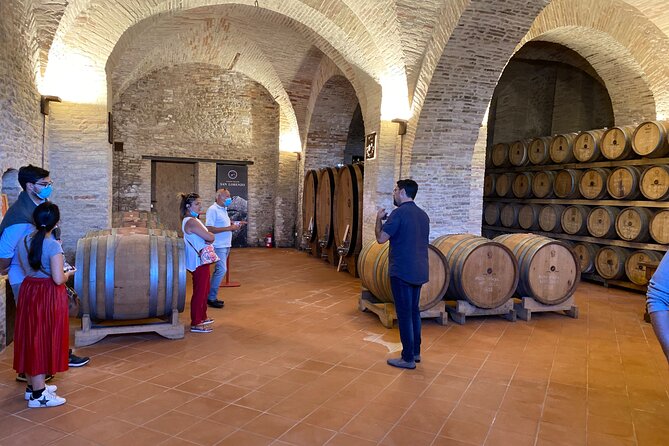
Next comes the cellar visit with a different goal: production strategies and techniques. This phase is designed to help you understand what the producer is doing and why—using the information from the visit to deepen the production story.
They also introduce basic theory of winemaking in a way that’s meant to help you follow along. That’s a big deal, because the cellar can turn into a blur of terms if you don’t have a framework. Here, you’re getting that foundation so the technical talk makes sense while you’re still in the environment.
What I like about the structure is that it stays connected. You walk the vineyard, then you go to the cellar, then you taste. That order keeps you from compartmentalizing everything. You don’t just learn what happens in the barrel cellar; you learn how vineyard choices can end up in the glass.
And yes, the setting helps. Medieval vaults and niches have a way of making explanations feel more grounded. You’re not just learning; you’re seeing where the process has to work.
Wine tasting of 3 native wines: how to get more from each glass
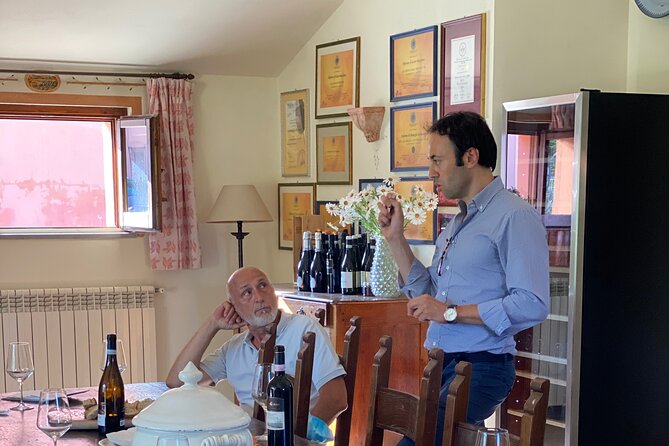
The tasting covers three wines made from the company’s native products. You’ll also get basic notions of sensory analysis and tasting techniques—how to look, smell, and taste with a simple method.
If you want to make this tasting pay off, don’t rush to decide you like or dislike. Instead, use the tasting basics as your checklist. Start with the look—color and clarity. Then smell for fruit, floral notes, and any hints that suggest how the wine might be built. Then taste with attention to balance: acidity, texture, and the way flavors linger.
Three wines might sound like a small number, but with guidance it’s enough to train your palate. You’ll notice differences tied to how the wine is made and what it’s trying to express. The native focus also helps you step out of the generic comfort zone of famous labels, which is exactly the point of doing a local cellar visit.
Practical tip: pace yourself. You’re walking and learning for hours, so hydrate. If you want to remember what you tasted later, take brief notes right after each pour.
Price and value: is $34.73 fair for an Abruzzo cellar day?
At $34.73 per person for about 4 hours, you’re paying for more than the wine. You’re paying for:
- vineyard time with technical conversation,
- a structured winery/cellar visit with winemaking theory,
- and a guided tasting of three native wines.
That’s strong value if you care about understanding what you’re drinking. If you only want a quick sip-and-go, you might feel like it’s too “learny.” But if you like food-and-wine travel that gives you vocabulary and context, this is priced like a smart, real-world experience rather than a showroom performance.
Also, the group size matters. Maximum of 25 keeps things from becoming too crowded. You can usually ask questions and stay engaged without shouting over everyone’s conversation.
Who this Castilenti wine tour suits best
This tour is a good fit if you enjoy:
- wine that’s rooted in a local place (native products, not a generic catalog),
- vineyard-to-cellar understanding,
- and tasting with basic sensory guidance.
It’s less ideal if you hate walking. There’s a long walk across the estate, so plan for time on foot. If you’re bringing older knees, expect the pacing to be slow but still continuous.
It also makes sense for solo travelers who want structure. You’ll get a guided flow, a small group feel, and a tasting that’s explained, not left to guesswork.
Should you book the San Lorenzo cellar tour?
Book it if you want an Abruzzo wine experience that teaches you how to notice what matters—vineyard practices, production choices, and the basics of tasting. I’d especially recommend it to people who are tired of tours that treat wine like a mystery box you pay to open.
Skip it or think twice if you’re extremely weather-sensitive or can’t handle a longer walk on uneven ground. And keep one practical note in mind: there can be last-minute disruptions. I saw an example where a tour was canceled close to start time due to a technical issue in the cellar, with refunds issued and alternatives offered. So it’s smart to keep your schedule flexible around the tour date.
FAQ
FAQ
How long is the San Lorenzo cellar tour?
It’s listed at about 4 hours.
What is included in the experience?
You visit the barrel cellar at the De Sterlich Palace, walk the vineyard with a focus on technical production aspects, tour the winery and learn production strategies and winemaking basics, and do a tasting of 3 wines.
Where does the tour start?
The meeting point is San Lorenzo Vini, Contrada Plavignano, 2, 64035 Castilenti TE, Italy.
What if the weather is bad?
The experience requires good weather. If it’s canceled due to poor weather, you’ll be offered a different date or a full refund.
Can I get a full refund if I cancel?
Yes. You can cancel up to 24 hours in advance for a full refund.
How many people are in a group?
The tour has a maximum of 25 travelers.