REVIEW · ATHENS
Athens: Women in Ancient Greece
Book on GetYourGuide →Operated by Culture Hunters · Bookable on GetYourGuide
One sentence hooks first? “Women’s Athens changes everything you see.” This 2-hour guided walk turns major monuments into a story about daily life, roles, and resistance—so the city feels new, not rehearsed.
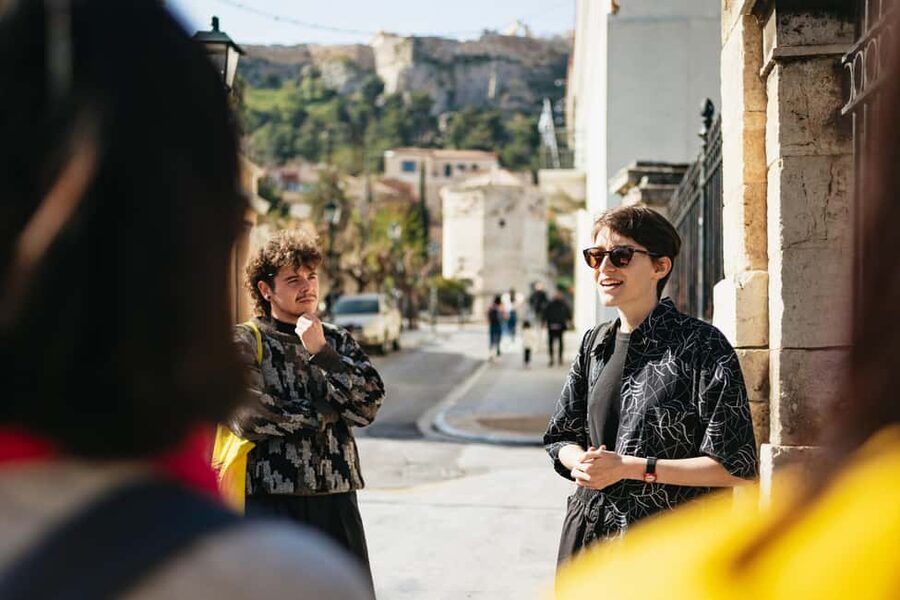
What I like most is the way it connects the famous sites—Hadrian’s Library, the Ancient Agora, and viewpoints toward the Acropolis—to how women actually lived. I also love that the guide, Maelle, keeps it conversational, asking questions and bringing in figures like Sappho and Aspasia without turning it into a lecture.
One consideration: it’s a walking tour with steps and uneven ground, so it may not be the best fit if you have mobility limits or heart issues.
In This Review
- Key highlights at a glance
- Where the walk starts: Monastiraki Square to Pantanassa Church
- Hadrian’s Library and Plaka: seeing the city’s layers through women’s lives
- The Gate of Athena Archegetis: mythology as social rules you can recognize
- The Ancient Agora: politics and daily work seen from different eyes
- Pnyx and early voting: where democracy met strict social boundaries
- Views toward the Acropolis and the finish at Filopappou Hill
- What the tour really is: a women’s lens, not a costume history
- Price and what you get from the $88 value
- Practical tips to help you enjoy it in real Athens heat
- Who should book this women’s perspective walk
- Should you book Athens: Women in Ancient Greece?
- FAQ
- Where is the meeting point for the tour?
- How long is the Athens: Women in Ancient Greece tour?
- Is this tour private?
- What language is the guide available in?
- Are archaeological site tickets included?
- Is food included?
- What should I bring for the walk?
- Is the tour suitable for people with mobility impairments?
- What’s the main sightseeing area covered on the route?
Key highlights at a glance
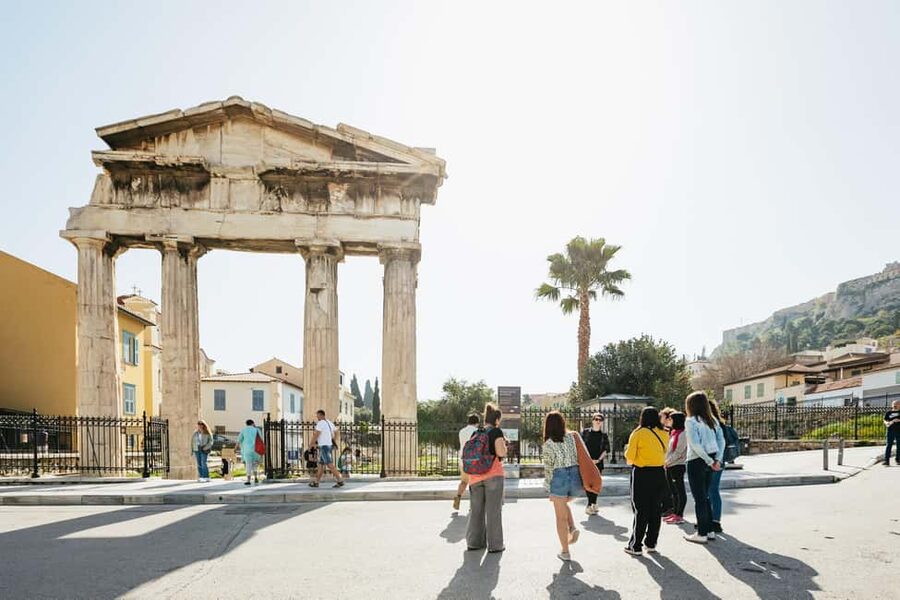
- Women’s perspective on the big monuments, from the Ancient Agora to Acropolis views
- Myth + daily life, with Athena, Penelope, Demeter, and Pandora used to explain social roles
- Defying expectations stories like Sappho, Aspasia, and Agnodice
- Lively Athens street walking, including Plaka and shaded “pause” moments
- A strong guide-led experience led by Maelle, known for clear answers and interactive pacing
Where the walk starts: Monastiraki Square to Pantanassa Church

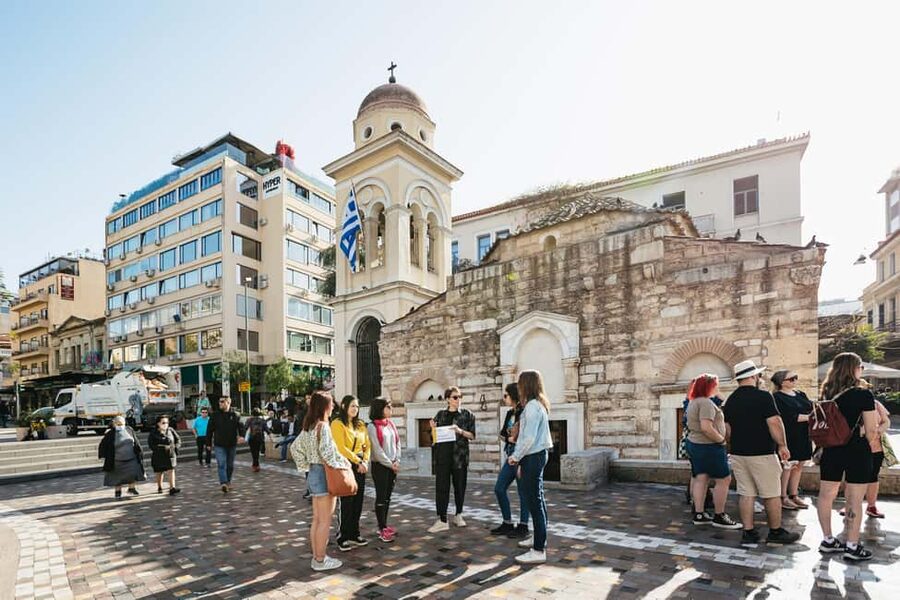
You meet your guide in Monastiraki Square, in front of the Holy Church of the Virgin Mary Pantanassa. The guide holds a sign reading Women in Ancient Greece, which makes the meeting point easy to spot and keeps you from wandering around hunting for your group.
From the start, the format matters. You’re not standing around waiting for history to arrive in one big monologue. Instead, the tour moves through central Athens at a pace that lets the stories land while you’re still looking at the stones.
If you’re coming from a museum day or want a quick “get your bearings” orientation, this works well. It also pairs naturally with a later Acropolis visit since you get context first—especially around civic space and how people moved through it.
You can also read our reviews of more tours and experiences in Athens.


Hadrian’s Library and Plaka: seeing the city’s layers through women’s lives

Early on, you’ll pass by Hadrian’s Library area and then head into the Plaka zone. The key isn’t only the architecture you can recognize from photos—it’s how the guide uses these spots as anchors for everyday life, social expectations, and what people did in public spaces.
In a lot of Athens tours, women show up as footnotes. Here, they’re part of the main storyline, tied to class and household roles as well as public ritual. You’ll hear how myth and religion were not separate from daily routines; they acted like a language people used to talk about proper behavior and identity.
Plaka is also where you’ll feel the contrast between tourist Athens and lived-in Athens. You’ll be walking lively streets while learning to read the city like a map of human relationships, not just a catalog of monuments.
The Gate of Athena Archegetis: mythology as social rules you can recognize

One of the most useful parts of the tour is the way it turns mythology into practical meaning. At the Gate of Athena Archegetis, you’re not just hearing that Athena is wise or brave. You’re learning how goddess stories shaped expectations around women’s roles, protection, and status—then you apply that framing back onto what you’re seeing in the city.
This is where the tone is especially helpful. The guide separates the legend you enjoy from the social reality you need to understand. That matters, because Greek myths can be fun without becoming confusing, and you’ll get both.
You’ll also hit a short “secret stop” that works like a mental reset. It’s brief, but it breaks up the walking rhythm so the stories don’t blend together. You’ll leave with a few moments where the city feels quiet even though you’re in the center of Athens.
The Ancient Agora: politics and daily work seen from different eyes
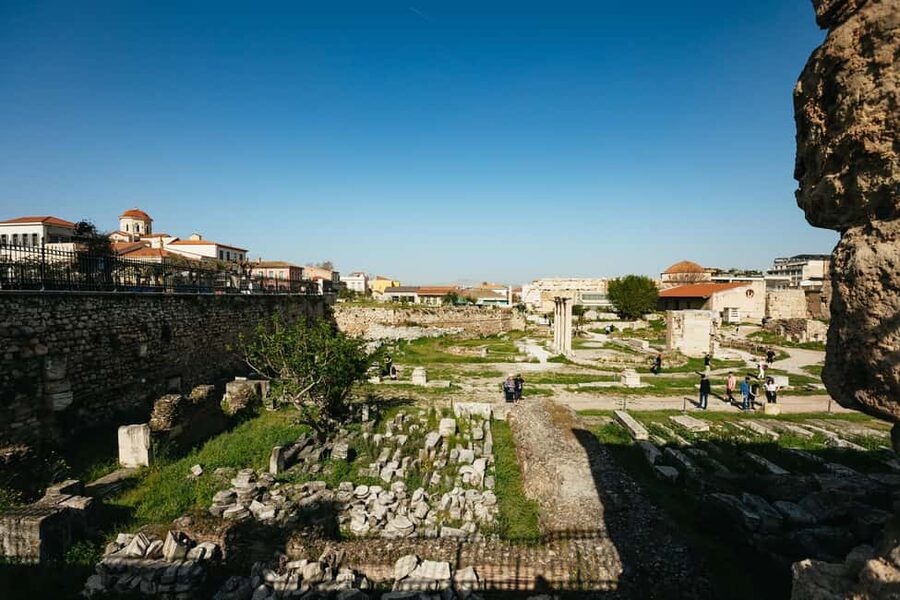
The Ancient Agora of Athens is the tour’s civic backbone. Even if you’ve visited the Agora before, this version changes your attention: you’ll focus less on only the political headline-makers and more on how public space connected to households, labor, ritual, and social boundaries.
The guide ties the civic setting to women’s lives—so you can picture who moved through these areas and why. You’ll also get stories that widen the lens beyond Athens proper, including connections to places such as Sparta and Thebes, which helps you avoid thinking of Greece as one single uniform culture.
If you like history that explains how systems affected real people, this stop delivers. You come away understanding that “women in ancient Greece” wasn’t one single experience; it depended on city, class, family roles, and the expectations enforced by community and religion.
Pnyx and early voting: where democracy met strict social boundaries
Pnyx is a powerful shift. Here you’ll look toward the area where the first democratic votes were cast, and the tour asks a hard but necessary question: democracy didn’t mean equal participation for everyone.
That contrast becomes the point. As you stand in the landscape of civic decision-making, the guide connects the setting to who had voice and who didn’t, then pairs it with stories of women who challenged limits.
This stop also helps you read Athens more critically. Instead of treating ruins as neutral, you start thinking like a citizen: who could speak, who could act, and whose lives stayed off the record.
The tour keeps moving, so you don’t get stuck in heavy topics for too long at once. You’ll get just enough context to make the rest of your day make sense.



Views toward the Acropolis and the finish at Filopappou Hill

You’ll get gaze-up moments that point you toward the Acropolis. The sites you visit on this walk focus on exterior viewing—so you’re using sightlines and city structure to understand where things were, not trying to do every archaeological interior.
That approach works if you want value for time. In only two hours, you get perspective on how neighborhoods, meeting spaces, and sacred landmarks relate, without burning your whole day on ticket lines and indoor reading.
The walk ends at Filopappou Hill, with a scenic finish that feels like a reward. It’s a good place to pause, look back at what you just learned, and connect it to your next stop—whether that’s a full Acropolis visit later or wandering Plaka for dinner.
What the tour really is: a women’s lens, not a costume history

The best thing about this experience is the framing. It’s not trying to replace Athens history with a list of female names. It’s using women’s stories to change how you interpret the city’s public spaces.
You’ll hear about legendary and historical women tied to the big themes: Sappho as a writer who defied expectations, Aspasia as a figure associated with intellectual life, and Agnodice as a story about breaking gender boundaries. Alongside them, you’ll also get myth-based portraits through Athena, Penelope, Demeter, and Pandora—mythic characters used to explain what society expected from women.
You’ll also get at least a couple of plot-style stories that make the walk memorable. Examples include tales like the kidnapped Spartan girls and the mystery around a women’s festival in Athens. Even when you only catch the outline, it pushes you to look at Athens as a place where ritual and power were entangled.
And if you’re the kind of person who likes to ask questions, you’ll likely appreciate the interactive pacing. Many guides talk at you. This one tends to work more like a guided conversation.
Price and what you get from the $88 value
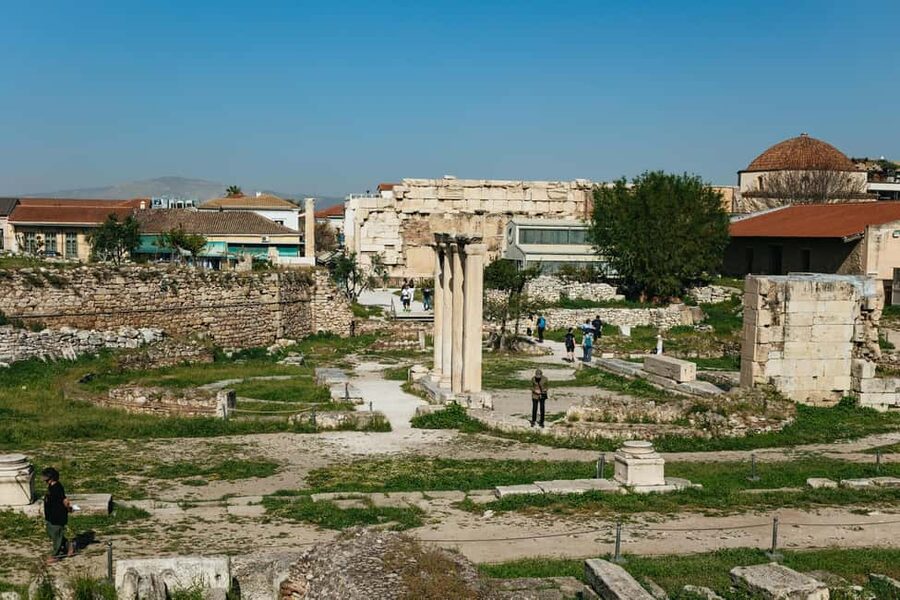
At $88 per person for a 2-hour guided walking tour, the price makes sense if you care about interpretation, not just coordinates. You’re paying for a specialized theme—women’s roles in ancient Greece—plus a guide who can connect the theme to multiple major sites.
Tickets aren’t included for archaeological sites, and the tour keeps things mainly to exterior viewing. That actually helps the value here because it prevents the schedule from getting eaten by entry lines. You still get the big-picture value of seeing the city’s structure and key landmarks while you learn the “why” behind them.
Food and drink aren’t included, so plan to keep this as a morning or early part of your day, then grab a meal afterward at your own pace. Since you’ll be walking and stepping around, you’ll also want to bring what keeps you comfortable.
Practical tips to help you enjoy it in real Athens heat
Bring the basics the tour suggests: sun hat, sunscreen, and water. Athens sun can be relentless, and you’ll be in central areas where shade can be limited unless the guide times stops well.
Wear shoes built for steps and uneven surfaces. The route includes stairs and may not be suitable if you have health limitations or mobility restrictions. If your pace is slower, tell your guide early so they can match the group rhythm.
Also, plan your expectations: this is a walking tour with exterior views. If you’re hoping for deep museum time inside every major site, you’ll be happier pairing it with other visits later.
Who should book this women’s perspective walk
This tour is a great match if you want to see Athens with a different question in mind: not what men did, but how women navigated religion, family roles, civic life, and resistance. It’s also ideal for first-timers who want context before bigger-ticket stops like the Acropolis.
You’ll also enjoy it if you like history that makes you think. The stories aren’t just facts; they’re prompts. Several tour experiences with this theme work like a storybook. This one tends to keep a careful balance between myth and social reality.
If you want only straightforward facts with no interpretation, you might find the thematic focus a bit opinionated. But the overall tone stays grounded and aims to clarify what’s legend versus what’s likely social experience.
Should you book Athens: Women in Ancient Greece?
Book it if you want Athens to feel like a living place instead of a stone museum. The combination of a focused theme, memorable stories (including figures like Sappho and Aspasia), and stops that connect civic Athens to women’s lives makes it a smart way to spend two hours.
Skip it if you need an accessibility-friendly route with minimal steps, or if you expect included site entry tickets and lots of time inside monuments. For everyone else, it’s a high-value, thought-provoking orientation to classical Athens you won’t get from the usual route.
FAQ
Where is the meeting point for the tour?
Meet your guide on Monastiraki Square in front of the Church Pantanassa. Your guide will be holding a sign that says Women in Ancient Greece.
How long is the Athens: Women in Ancient Greece tour?
The tour lasts about 2 hours.
Is this tour private?
It’s listed as a private group experience, with a private tour option depending on what you select.
What language is the guide available in?
The live tour guide is available in English and French.
Are archaeological site tickets included?
No. Tickets to archaeological sites are not included, and the tour is described as exterior view only.
Is food included?
No. Food and drink are not included.
What should I bring for the walk?
Bring a sun hat, sunscreen, and water.
Is the tour suitable for people with mobility impairments?
No. It includes steps and may not be suitable for people with health or mobility difficulties, including wheelchair users.
What’s the main sightseeing area covered on the route?
You’ll walk through central Athens and see key locations such as Hadrian’s Library, the Ancient Agora, Pnyx, views toward the Acropolis, and end at Filopappou Hill.