REVIEW · AMRITSAR
Amritsar Heritage Walking Tour
Book on Viator →Operated by Walk and Explore · Bookable on Viator
Three corners, one story of Amritsar. This walking tour ties big historical moments to everyday Sikh life, starting at the Partition Museum and ending right near the Golden Temple area.
I especially like the storytelling style and the route design. Guides (often named Prerit or Hardik in feedback) bring the city’s architecture and culture to life, and you’ll also get access to old lanes you’d never pick out on your own.
One thing to keep in mind: some major stops require you to pay entry on your own. The Partition Museum and Jallianwala Bagh are both marked as admission not included, so budget for that if you plan to go inside.
In This Review
- Key things I’d make time for
- Where this walk starts: Town Hall to the Golden Temple area
- Partition Museum: the 1947 turning point that frames everything
- Saragarhi Memorial Gurudwara: 21 Sikh soldiers, lasting memory
- Maharaja Ranjit Singh statue: Punjab empire stories in 10 minutes
- Jallianwala Bagh memorial: Baisakhi eve, 1919
- Udasin Akhara on Sangal Wala Road: training spaces with meaning
- Guru Bazar lanes: old streets, Baba Bohar, and a 150-year-old landmark
- How the guide experience shapes the value
- Price and logistics: why $16.66 can actually feel fair
- How heavy is the history? A realistic expectation
- Should you book the Amritsar Heritage Walking Tour?
- FAQ
- How long is the Amritsar Heritage Walking Tour?
- Where do you meet, and where does the tour end?
- What stops are included on the route?
- Is entry admission included for museums and memorials?
- What’s included with the price?
- What’s the group size?
- Can I cancel for a full refund?
Key things I’d make time for
- A tight route from Town Hall to the Golden Temple area so you get your bearings fast in Amritsar
- Partition history as the starting point, with a 1947 focus before you move into Sikh sites
- Jallianwala Bagh memorial time, planned at a respectful walking pace
- Old Akharas and Guru Bazar lanes, where you see how Amritsar’s culture is lived, not just described
- Small group size (max 20) with guides who speak English, Hindi, and Punjabi
- Bargaining tips built in, useful if you want to shop in the old market streets
Where this walk starts: Town Hall to the Golden Temple area
The tour begins at the Partition Museum area at Hall Rd in the Town Hall zone of Amritsar (Katra Ahluwalia side). You’ll end at the Golden Temple area, with the meetup point noted outside Golden temple near Atta Mandi.
That start-and-finish matters. You’re not doing a random scattershot loop. You’re walking a readable arc: from modern history and collective memory, to Sikh military remembrance, to the city’s older commercial streets, and finally into the most iconic spiritual landmark area.
It’s a group walking tour with a maximum of 20 people. If you prefer lots of personal time with a guide, this is still friendly, but it’s not private.
Partition Museum: the 1947 turning point that frames everything
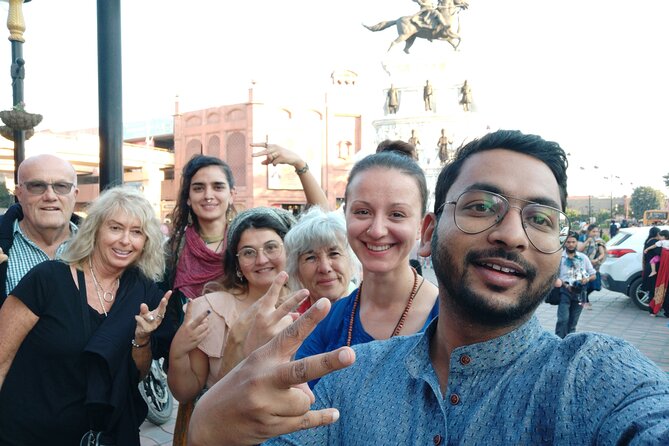
The first stop is the Partition Museum, located in the Town Hall building area. The theme is India-Pakistan Partition in 1947, with the scale described as affecting 18 million-plus people.
This is a smart opening. Partition sits in the background of modern Amritsar, and understanding it early helps the later stops make emotional sense. You’ll have about 10 minutes here, so think of it as a launchpad rather than a full museum visit.
Important practical note: admission tickets are not included. If you want to read and absorb more than a quick pass, you may need extra time and money.
Saragarhi Memorial Gurudwara: 21 Sikh soldiers, lasting memory
From the museum area, you’ll walk toward the Saragarhi Memorial Gurudwara. The tour focus here is dedicated to 21 Sikh soldiers who sacrificed their lives while serving in the British army.
This stop works well because it shifts the story from political rupture to courage and community remembrance. It also gives your legs a chance to move through the city streets at a calmer pace before the emotional weight of the next major memorial.
No admission fee is indicated for this portion, and you’re not expected to do anything complicated besides follow your guide and keep the tone respectful.
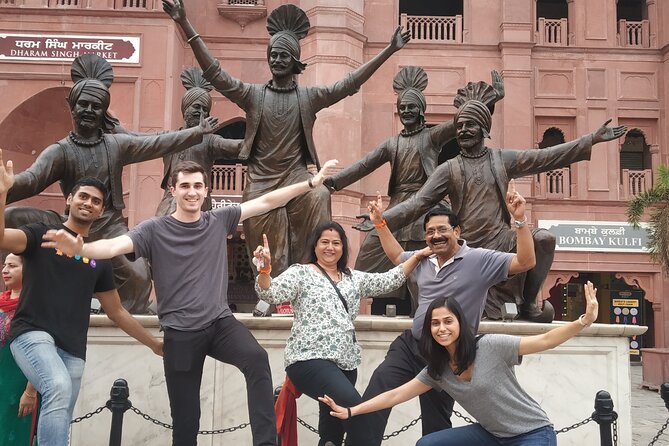
Maharaja Ranjit Singh statue: Punjab empire stories in 10 minutes
Next up is the Maharaja Ranjit Singh statue, with a quick 10-minute visit. The tour frames him as a key figure tied to Punjab’s empire history.
Even though it’s short, it’s valuable because it adds another layer to the region’s identity beyond religion and 20th-century trauma. You’ll get names, context, and the general arc of power that shaped Punjab before modern borders hardened.
If you’re a person who loves when history connects to visible landmarks, this stop will feel like a helpful waypoint.
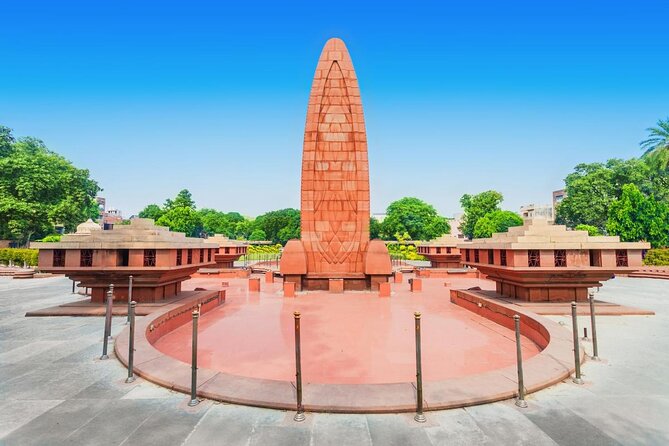
Jallianwala Bagh memorial: Baisakhi eve, 1919
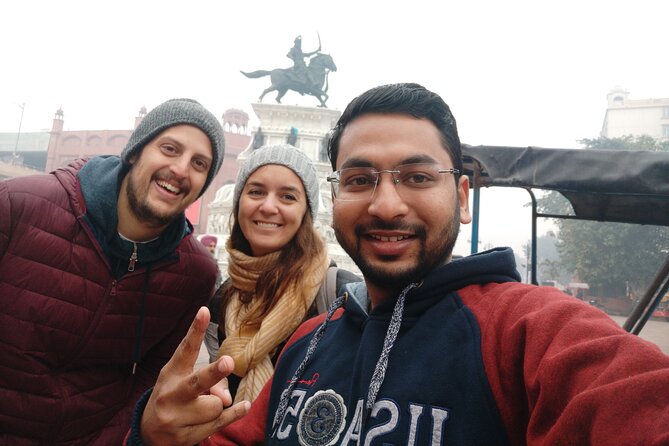
Then you head to Jallianwala Bagh. The tour sets aside about 30 minutes and highlights the massacre that occurred on 13 April 1919 on the festive eve of Baisakhi.
This is the kind of stop where the value is in pacing and interpretation. A guide can explain what happened, why it became a turning point, and how people remember it now. You’ll likely experience a mix of solemn space and intense history, and it’s worth giving it the full time your guide allots.
Another practical note: admission tickets are not included. If you plan to enter any enclosed memorial areas, confirm on the day what you need to pay so you’re not caught off guard.
Udasin Akhara on Sangal Wala Road: training spaces with meaning
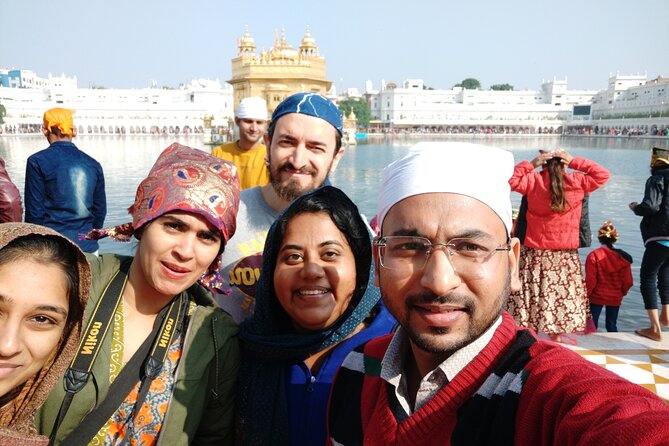
One of my favorite “you won’t find this alone” elements is the visit to Udasin Akhara on Sangal Wala Road. This stop is about 20 minutes and is marked as admission free.
Akharas matter in Punjab. They’re places tied to tradition, training, and religious-cultural practice. Even if you only grasp the basics during the walk, seeing the setting helps you understand why Sikh and Punjabi heritage isn’t only temples and statues. It’s also community spaces with roles and rituals.
If you’re curious about how religious and historical life connects to everyday physical spaces, this is a good one.
Guru Bazar lanes: old streets, Baba Bohar, and a 150-year-old landmark
The longest stretch is through Guru Bazar old streets, about 1 hour 30 minutes. This is where the tour shifts from monuments to daily life.
You’ll walk narrow heritage lanes and learn how local lifestyle and city history intertwine. A standout stop is toward Baba Bohar, described as a large old banyan tree in the middle of the city. That kind of landmark is more than pretty—it’s a social anchor and a time marker for how a place keeps going through centuries.
The tour also includes a visit to a 150-year-old landmark in the same Guru Bazar area. The listing text cuts off before giving the full name, so on the day just listen for the guide’s exact identification and what makes it historically important.
This portion is also where bargaining tips come in. The tour specifically notes advice for bargaining and saving money, which can be handy if you’re tempted by textiles, small gifts, or market snacks along the way. Keep it simple: ask the price, negotiate politely, and don’t let the excitement make you forget your budget.
How the guide experience shapes the value
A big part of this tour’s success is the guide team. The tour includes trained, friendly storytellers who can speak English, Hindi, and Punjabi. Based on named guides in feedback, expect people like Prerit and Hardik, with an emphasis on warm, engaging explanations.
You should also like the “questions welcome” vibe. Multiple comments mention guides answering extra questions and keeping the walk organized and safe-feeling, even for solo visitors navigating lanes.
Group tours do have tradeoffs. You’ll be with up to 20 people, so pacing is shared, and it’s not a private Q-and-A session. But at this price, you’re paying for structure, context, and local access more than a one-on-one deep lecture.
Price and logistics: why $16.66 can actually feel fair
At $16.66 per person, you’re paying for three things: a guided route, interpretation of key memorial sites, and help moving through places that would be hard to find without local context.
Most of the “hard value” moments are time-and-context heavy: Partition Museum orientation, a guided Jallianwala Bagh visit, and the shift into old market life with lanes like Guru Bazar. You’re also getting mobile ticket mentioned, which usually means less hassle on the ground.
What you should budget extra for is admission. The tour marks entry not included for Partition Museum and Jallianwala Bagh. That doesn’t make the tour bad value, but it means your total cost will depend on how much you go inside versus how much you take in from the memorial spaces and guide explanations.
How heavy is the history? A realistic expectation
This tour clearly prioritizes Sikh history and culture, and it touches the major events you’d expect in Amritsar: Partition, Saragarhi remembrance, Jallianwala Bagh, and everyday heritage street life.
Still, the format is a walking tour, not a seminar. One balanced critique in feedback suggested it can feel more like fragments and tidbits than a deeply detailed academic timeline. That doesn’t mean it’s shallow; it means you should come ready for a well-told overview with stories you can build on later.
If what you want is maximum depth—dates, names, and long-form analysis back-to-back—consider pairing this with a longer stop at one site on your own afterward. The tour helps you choose where to return.
Should you book the Amritsar Heritage Walking Tour?
I’d book it if you’re trying to get oriented quickly and you want a mix of major memorial history plus real street-level culture in a single afternoon-block. It’s also a strong choice if you like guides who can connect architecture, community spaces, and Sikh heritage into one walkable story.
Skip it or adjust expectations if you need private pacing, deep academic detail at every stop, or if you’re not willing to pay entry fees for the Partition Museum and Jallianwala Bagh. Also note it’s a group walk, so you’ll share time and attention with others.
If you’re visiting for the first time and want an honest feel for Amritsar beyond a checklist, this is a good value way to start.
FAQ
How long is the Amritsar Heritage Walking Tour?
It runs for about 2 hours 45 minutes.
Where do you meet, and where does the tour end?
You start at the Partition Museum area on Hall Rd, Town Hall, Katra Ahluwalia, Amritsar. You end outside Golden temple at Atta Mandi, Katra Ahluwalia, Amritsar Cantt.
What stops are included on the route?
The tour includes stops at the Partition Museum, Saragarhi Memorial Gurudwara, Maharaja Ranjit Singh statue, Jallianwala Bagh, Udasin Akhara on Sangal Wala Road, and the Guru Bazar area including Baba Bohar and a 150-year-old landmark.
Is entry admission included for museums and memorials?
No. Admission tickets are not included for the Partition Museum and Jallianwala Bagh.
What’s included with the price?
You get a trained guide/storyteller who can speak English, Hindi, and Punjabi, access to several heritage and historic places (8–10), fun facts about local life, and access to hidden lanes and places.
What’s the group size?
The tour has a maximum of 20 travelers.
Can I cancel for a full refund?
Yes. You can cancel up to 24 hours in advance for a full refund.