REVIEW · ANTALYA
Antalya: Perge Ancient City Tour
Book on GetYourGuide →Operated by Antalya Local · Bookable on GetYourGuide
Perge feels like stepping into a sunlit time machine. I love how the tour turns scattered ruins into a clear picture of daily life and history, especially thanks to guide Onder, who explains what you’re looking at in plain terms. I also like the small group size and fast start from Antalya city center, so you’re not stuck waiting around. One thing to plan for: there’s not much shade, and the Perge entrance ticket is bought at the gate—so bring water, a hat, and a card or cash.
This is a 3.5-hour guided experience in Antalya Province that focuses on the big, photogenic hits: the ancient theater, stadium, city gate areas, colonnaded streets, fountains, gymnasion, baths, and more. You get pickup and drop-off in the city center, plus a licensed English-speaking guide, and even skip the ticket line once you’re at the site. If you want a half day that feels more like walking through an ancient neighborhood than reading about it, this one is made for you.
Key highlights (the stuff that really matters)
- Skip-the-ticket-line setup: You buy entry at the gate, but you’re not stuck in the longest wait mode.
- Onder’s small-detail approach: He points out the kinds of things that help ruins stop being random stones.
- Best-of Perge route in 3.5 hours: Theater, stadium, colonnaded streets, fountains, gymnasion, baths, and public spaces.
- A quick model to get your bearings: You’ll see a city model early, so the layout clicks faster.
- Focused photo time at monumental spots: Gates, streets, and large remains give you real angles for pictures.
- Heat reality check: Bring water and sun protection because shade is limited.
In This Review
- Why Perge Feels Different Than Other Antalya Ruin Stops
- The 3.5-Hour Plan: How the Time Works
- Meeting at SHELL Gas Station: The Easiest Part of the Day
- The City Model Stop: Get Oriented Before the Stones Blend
- Ancient Theater: Where Audiences Gathered
- City Gate and Monumental Entrances: Power, Movement, Identity
- Colonnaded Streets and Fountains: The Walk That Feels Like a Story
- Stadium: Training and Local Pride
- Basilica, Agora, and Church Remains: Public Life and Belief
- Gymnasion and Baths: Where Life Slowed Down
- Photo Stops That Don’t Feel Like Forced Poses
- What You’ll Notice Most: The Guide’s Way of Explaining
- Price and Value: Is $59 Worth It?
- What to Pack (Because Perge’s Sun Doesn’t Play)
- Who Should Book This Tour (and Who Might Skip)
- Should You Book the Antalya: Perge Ancient City Tour?
- FAQ
- Is Perge entrance included in the tour price?
- How long is the tour?
- What’s included in the price?
- Do we get skip-the-ticket-line access?
- Where is the meeting point?
- What should I bring?
- Is this tour suitable for wheelchair users or limited mobility?
Why Perge Feels Different Than Other Antalya Ruin Stops
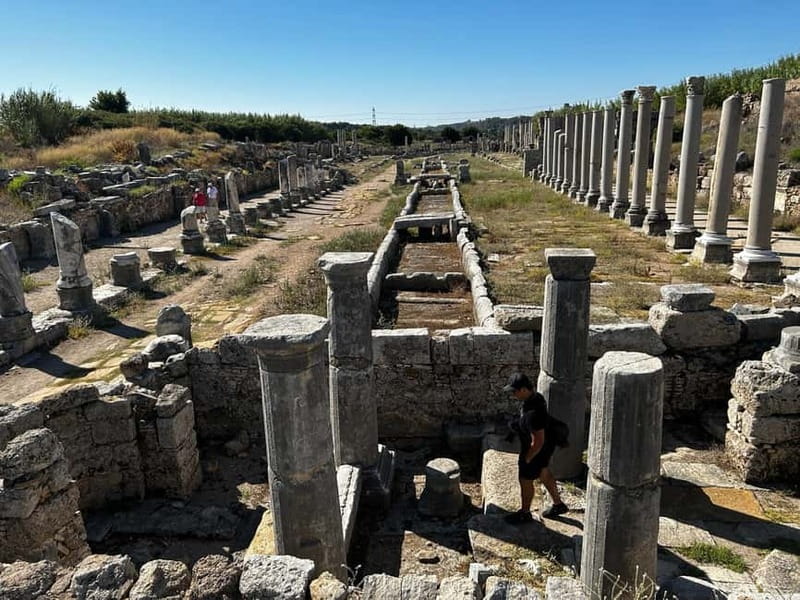
Perge isn’t just another stop on the Antalya coastline. It was the capital of the Pamphylia Region, and it carried serious weight in its day. Later, it was invaded by Alexander the Great. That mix of importance and change shows up in how the city evolved, and a good guide helps you read the site like a timeline instead of a checklist.
The tour does a smart thing: it doesn’t only say what’s there. It helps you connect each building type with how people likely lived. You move from public gatherings to training spaces to baths. That flow is what makes Perge feel like a living ancient city instead of a photo backdrop.
And the ruins are readable. You’ll see a range of monumental structures—ancient theater, city gate areas, colonnaded streets, fountains, basilica-style remains, agora spaces, and more. It’s a site with enough variety that you can tell the difference between where people gathered, walked, trained, worshipped, and relaxed.
The 3.5-Hour Plan: How the Time Works
This tour is designed to fit a half day. In about 3.5 hours, you’ll travel between Antalya city center and Perge, then cover the main highlights inside the ancient site with a guide.
The pacing matters here. With a route like this, you either move fast and miss meaning, or you slow down and spend too much time in one spot. This experience aims for a middle road: enough time at the big visual anchors (like the theater and colonnaded street areas) and enough explanation so the rest doesn’t blur together.
Also, the small-group format—limited to 10 participants—helps you keep your place. You’re less likely to get lost in a crowd shuffle, and it’s easier to ask a question when you’re standing in front of something you don’t instantly understand.
You can also read our reviews of more city tours in Antalya



Meeting at SHELL Gas Station: The Easiest Part of the Day
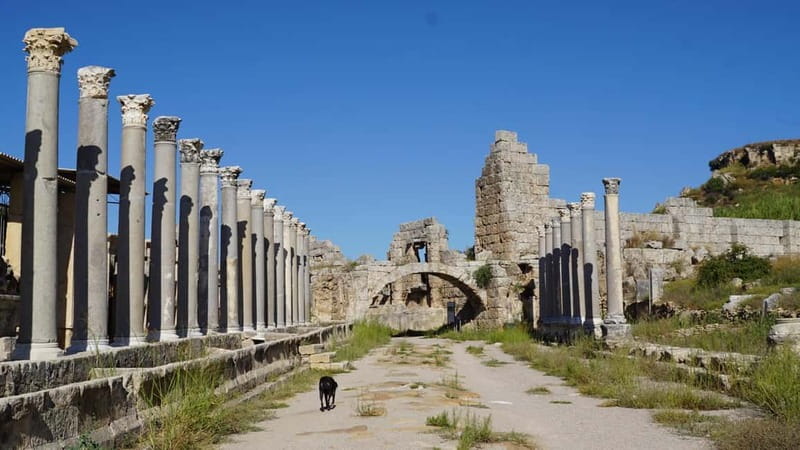
The meeting point is simple: Shell Gas Station. Pickup is from the Antalya city center, so you don’t need to figure out transit logistics on your own.
That little detail matters more than it sounds. Antalya can be confusing if you’re trying to hop around between sites. A clean pickup point reduces stress, and it keeps you focused on the archaeology instead of the clock.
Once you’re back, the tour includes drop-off to the meeting area in Antalya, so you’re not left scrambling for transport afterward.
The City Model Stop: Get Oriented Before the Stones Blend
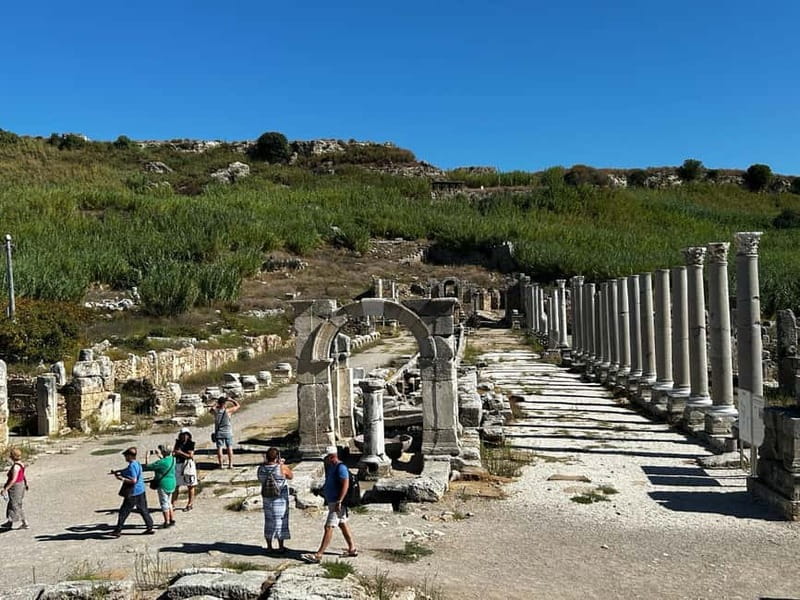
Early in the visit, you’ll see a model of the city. It’s one of those stops that sounds small, but it does real work.
Perge is spread out. Without orientation, it’s easy to stand in the middle of impressive ruins and still feel like you’re only collecting images, not building understanding. A model helps you quickly understand where the major areas sit relative to each other, so when you walk from the theater zone toward the streets, gates, and public spaces, it starts to make sense.
Think of it as the tour’s mental warm-up. It saves time later.
Ancient Theater: Where Audiences Gathered
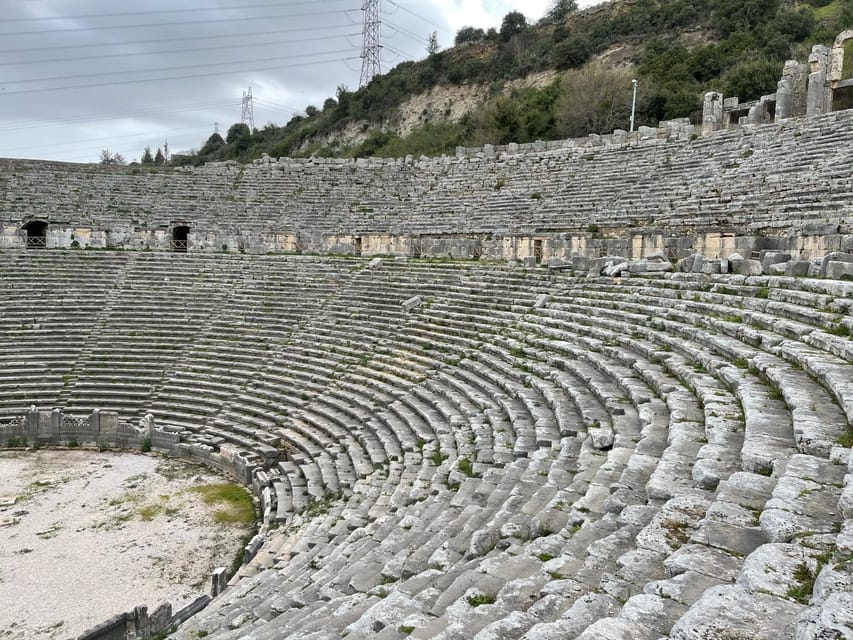
The ancient theater is one of the first major highlights, and it’s a natural place to start because it signals the city’s public-life energy.
You’ll spend time at the theater as your guide explains what you’re seeing. Look for the layout elements that show how crowds would have faced the performance space. Even if you don’t know the technical terms, you can still grasp the big idea: this was a key venue for gatherings—events that brought people together.
Practical tip: take a moment to scan the theater from a couple of angles. The remains can look different depending on where you stand, and pictures often come out better when you don’t just shoot straight-on.
City Gate and Monumental Entrances: Power, Movement, Identity
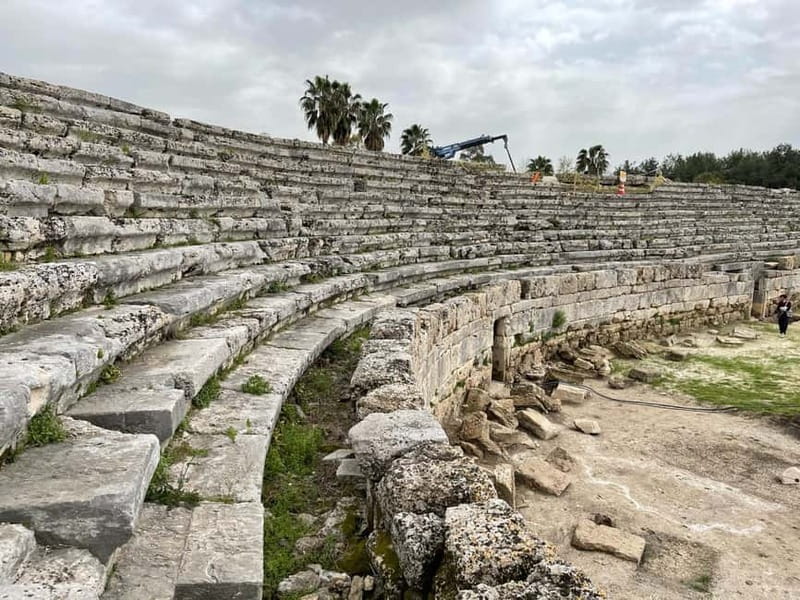
From the theater area, you move into the broader city structure with stops at things like the monumental gates and key entry points.
These areas matter because gates aren’t just about architecture—they’re about control and identity. Where a city enters is where it presents itself. Standing near monumental gates (even in partial ruin form) helps you understand how Perge organized movement and who had the authority to shape that flow.
Your guide helps you connect these structures with how a city functioned day to day. You’re not only looking at stone. You’re picturing arrivals, departures, and the daily movement of people through important zones.
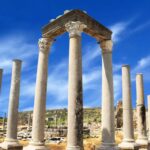

Colonnaded Streets and Fountains: The Walk That Feels Like a Story
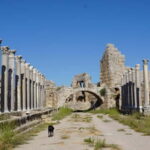
If there’s one area that makes Perge feel like a place people inhabited, it’s the colonnaded streets and the fountains.
A colonnaded street is basically a built-in lifestyle stage: a long walking corridor with rhythm and rhythm matters. It’s easy to imagine merchants moving through, locals stopping to meet, and visitors doing the slow city-tour thing even back then.
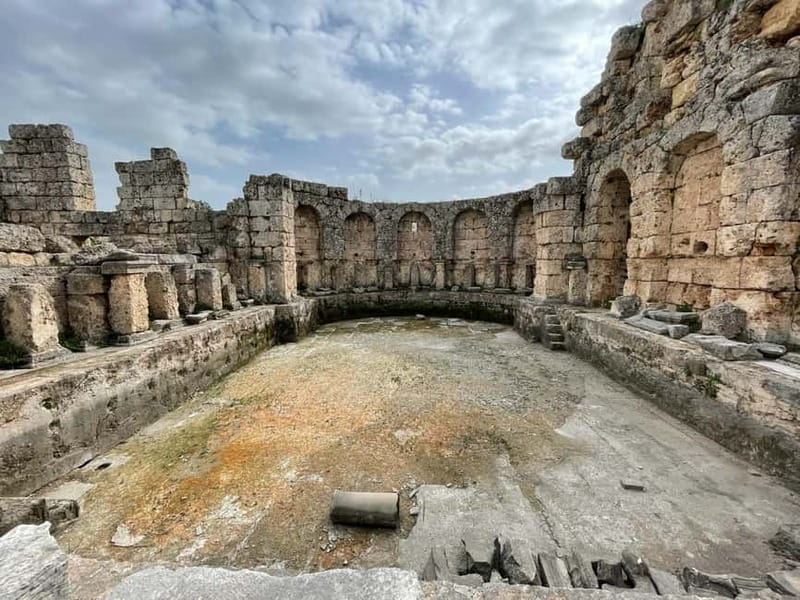
Fountains add another layer. Water sources weren’t just useful; they were social and practical at the same time. When you stand near fountains during the tour, you’ll get the kind of explanation that ties them to daily routines instead of treating them like decorative leftovers.
Heat note: these are also the areas where you’ll likely be walking in full sun. Bring water and take breaks. If you wait too long, you’ll pay for it with tired legs and cranky focus.
Stadium: Training and Local Pride
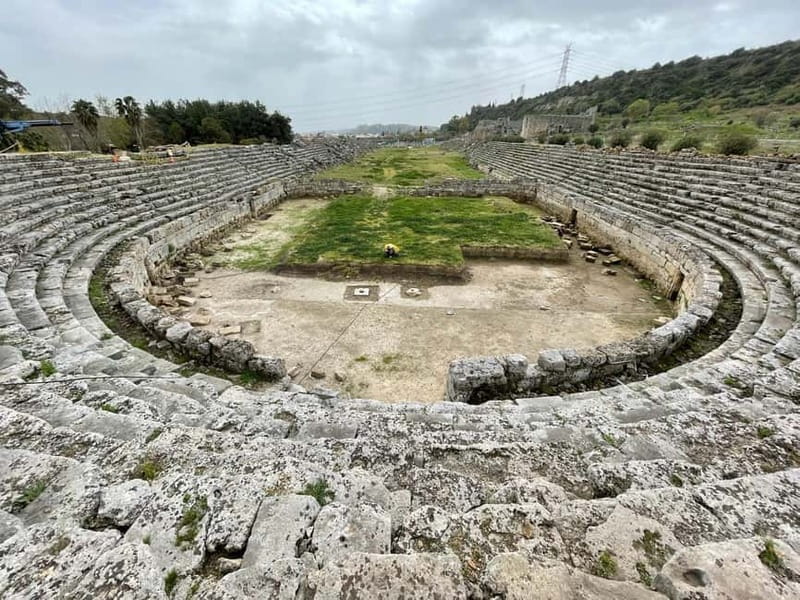
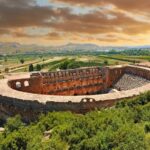
Next up is the stadium. Even if you only have a limited window, it’s worth paying attention here because athletic culture tells you a lot about how a city valued physical training and public events.
Your guide’s explanations help you connect the stadium with other public spaces you’ve already seen, so the city doesn’t feel like separate “zones.” Instead, it feels like a connected system—people gathered, trained, and then returned to civic life.
It’s also a great spot for photos because it gives you wider views than tight streets and doorway remains. If you like architectural angles, this stop gives you more room to work.
Basilica, Agora, and Church Remains: Public Life and Belief
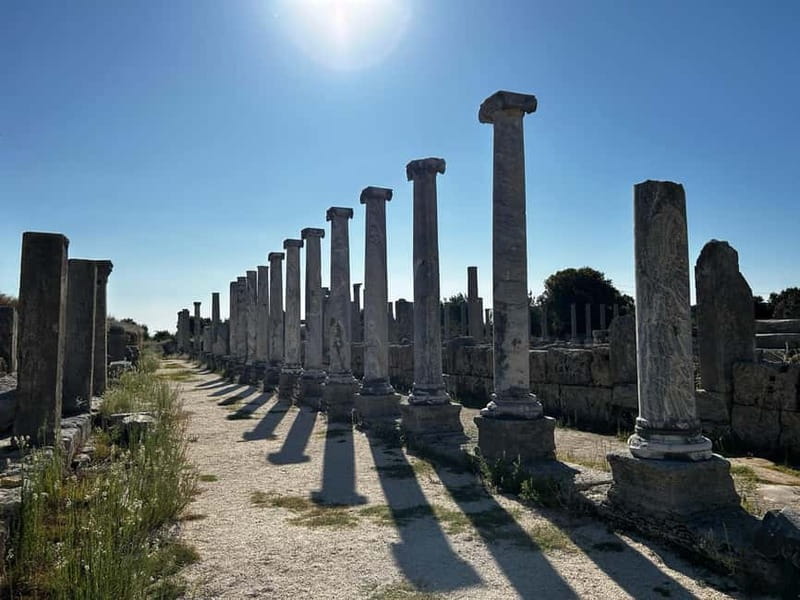
The tour includes stops around civic and religious spaces, including the basilica, agora, and church areas.
Here’s the key value of these stops: they help you understand Perge as more than a spectacle site. You’re seeing the architecture tied to public exchange and belief systems—places where people negotiated ideas, community identity, and faith.
An agora (a public square area) is especially important because it’s where everyday civic interaction happens. It’s not just monuments; it’s where life played out. With your guide’s help, you can see how a city’s social structure shows up in stone.
Gymnasion and Baths: Where Life Slowed Down
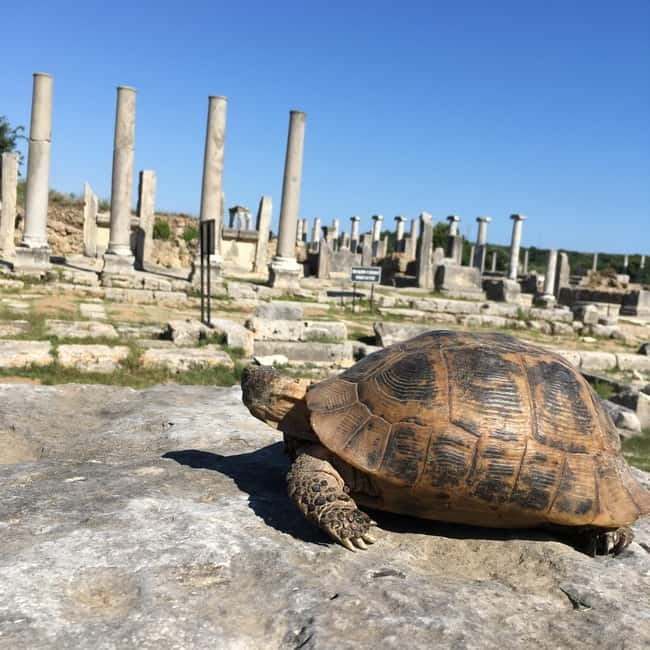
You’ll also see the gymnasion and baths. These two stops are some of the most human-feeling parts of the route.
A gymnasion suggests training, education, and discipline—an environment built around improvement and structured activity. The baths shift the mood. They’re about hygiene, recovery, and social time. Even without detailed technical explanation, it’s pretty natural to connect what you’re seeing with how people spent their bodies-and-belonging time.
If you want Perge to feel personal instead of purely historical, these are the stops that usually do that job. They make you think: people had routines, habits, and comfort needs. Not just big ceremonies.
Photo Stops That Don’t Feel Like Forced Poses
This is a photo-friendly tour, but the best part isn’t just the number of monuments. It’s that the guide helps you see what’s worth photographing and why.
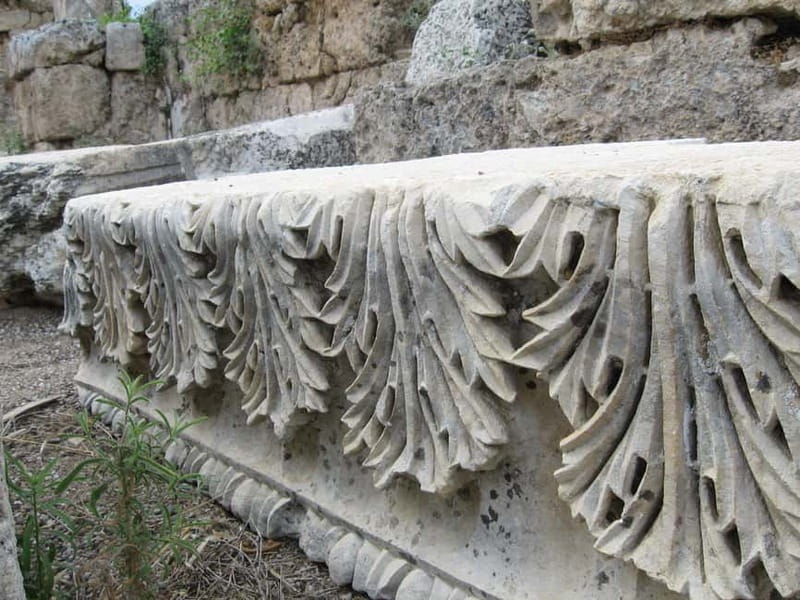
You’ll have chances to take pictures of monumental structures, street views, and impressive remains—especially at the theater, gates, colonnaded street areas, and the larger public-space zones like the agora and basilica areas.
A practical approach that works: take one wide shot for context, then one tighter shot for detail. That way your photos tell a mini-story later, instead of looking like a random pile of ruins.
Also, shoot earlier in the tour if you can. The afternoon sun can make everything bright and harsh, and shade is limited. Your camera will thank you.
What You’ll Notice Most: The Guide’s Way of Explaining
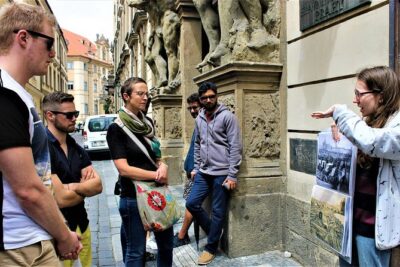
The biggest “value add” here is the guide. Multiple bookings highlight that Onder brings the site to life with clear explanations and attention to smaller details—things that are easy to miss if you wander alone.
I like that this tour leans on guidance that helps you build a mental map. Once you grasp how the theater fits public life, how streets connect movement, and how baths and training relate to daily routines, Perge becomes way more than a set of ruins. It turns into a place with a rhythm.
You can also feel the guide’s local know-how. Even if you only catch a few specifics while walking, it helps you understand why certain parts of the city mattered more.
Price and Value: Is $59 Worth It?
At $59 per person for 3.5 hours, this tour isn’t trying to be a bargain basement deal. The value comes from what you’re actually getting:
- Pickup and drop-off from Antalya city center
- A licensed English live guide
- A small group limited to 10
- Skip-the-ticket-line once you’re at Perge
- A structured route through the main highlights (not just a loose wander)
The entrance ticket itself is not included, and you buy it at the gate. That means your total cost will be a bit higher, but you’re not paying for the guide’s time plus transportation plus structured interpretation. You’re paying for the “how to see it” part, and that’s where the real quality lives.
If you’re the type who likes context—how people lived, why buildings were built—this price makes more sense. If you only want photos and don’t care about explanations, you might feel it costs more than you need.
What to Pack (Because Perge’s Sun Doesn’t Play)
This tour gives you classics: ancient stones, bright sky, and not much shade. So pack like you mean it.
Bring:
- Comfortable shoes (you’ll be walking on uneven surfaces)
- A hat
- Sunscreen
- Water
- Camera
Simple rule: don’t wait until you feel thirsty. The heat can sneak up on you fast.
Also, smoking isn’t allowed. It’s a reasonable rule for a historical site.
Who Should Book This Tour (and Who Might Skip)
This is a good fit for:
- People who want a guided overview with real explanation
- Travelers who like the major anchors—theater, stadium, streets, baths—without spending all day
- Anyone who appreciates small-group attention and the chance to ask questions
It may not be ideal for:
- People with mobility impairments or wheelchair users, since the tour isn’t suitable for that need
If you’re traveling with someone who hates long walks, you should still know the route is active. It’s not a sit-and-watch kind of tour.
Should You Book the Antalya: Perge Ancient City Tour?
Yes, if you want Perge to click fast. This tour focuses on the major structures you’ll want to see—the theater, colonnaded streets, fountains, agora, gymnasion, and baths—and it’s guided by Onder, who helps you understand what the ruins meant in real daily life.
Book it if:
- You’ll enjoy explanations, not just sightseeing
- You want a small group and clear pacing over a half day
- You’re happy to handle entrance tickets at the gate and deal with limited shade
Skip it if:
- You’re mainly chasing photos and want to roam without guidance
- Heat and walking would be a problem for you
If you’re trying to pick one Perge-style experience in Antalya, this one is built for making the site readable—and that’s when ancient cities stop feeling like work.
FAQ
Is Perge entrance included in the tour price?
No. You purchase the Perge Ancient City entrance ticket at the gate. It’s a good idea to have some cash or a card ready.
How long is the tour?
The tour runs for about 3.5 hours.
What’s included in the price?
Pickup and drop-off at the Antalya city center are included, along with a licensed live tour guide (English).
Do we get skip-the-ticket-line access?
Yes, the activity includes skip the ticket line.
Where is the meeting point?
The meeting point is Shell Gas Station.
What should I bring?
Bring comfortable shoes, water, a hat, sunscreen, and a camera.
Is this tour suitable for wheelchair users or limited mobility?
No. It is not suitable for people with mobility impairments or wheelchair users.