REVIEW · ANTALYA
Termessos, Ancient City Hiking Tour
Book on Viator →Operated by Antalya Local Guide · Bookable on Viator
Termessos sits high above Antalya, like a secret in plain sight. This half-day mountain hike pairs ancient ruins with serious views, all topped by a guide who actually makes the stones make sense. You’ll head to Gulluk Mountain (about 1050 m up), where Termessos is built between peaks—often called the Eagle’s Nest.
I especially liked two things. First, the hike is way more manageable than the word hiking makes it sound: you follow well-worn paths with only a short trek and a gentle uphill feel, even if the site is at altitude. Second, the guide, Önder, brings Termessos to life with clear explanations and good humor, and he keeps the group small enough that you’re not shouting over other people.
One watch-out: the entrance ticket is not included, and at the gate you’ll need cash because it can pay only cash. If you forget or you’re traveling light, that part can turn from smooth to annoying fast.
In This Review
- Key things that make this Termessos hike worth your time
- Why Termessos feels like the Eagle’s Nest above Antalya
- Getting there from Antalya: pickup, timing, and where the day starts
- The walk itself: what the “easy” hike feels like on the ground
- Stop-by-stop: what you’ll see at Termessos (and why it matters)
- Gulluk Dagi (Termessos) Milli Parki: the Eagle’s Nest setting
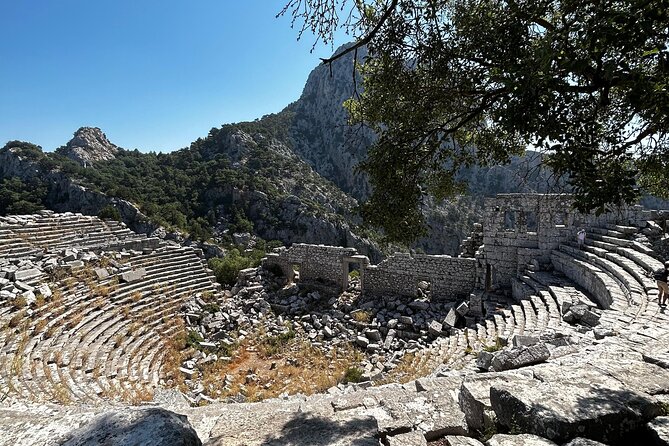
- Theater and public gathering spaces
- Gymnasium and the city’s routines
- Water canals and cisterns: the unglamorous miracle
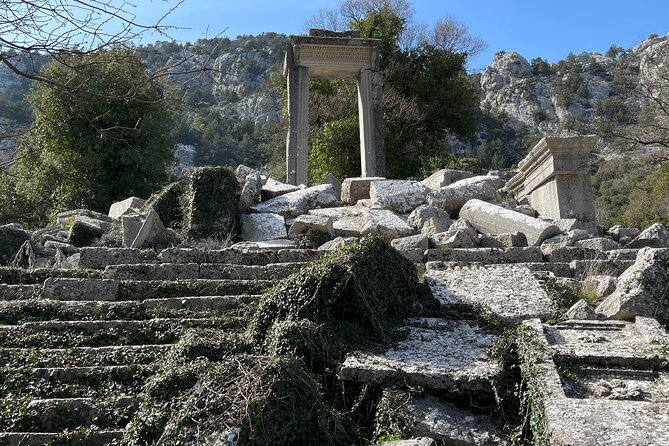
- Colonnaded street and the shopping street feel
- Temple of Artemis and Hadrian, plus major monuments
- Fortifications, gates, necropolis, and rock tombs
- Önder’s guiding style: how the stories make the ruins click
- Price and value: what $60.79 covers (and what doesn’t)
- When to go and what to bring for a smooth mountain morning
- Should you book this Termessos hiking tour?
- FAQ
- How long is the Termessos hiking tour?
- Is the entrance ticket included in the price?
- Can I pay by card at the entrance?
- What time does the tour start?
- Where do pickup and drop-off happen?
- What group size should I expect?
- What happens if the weather is bad?
Key things that make this Termessos hike worth your time
- Small group size (max 14) keeps the day calm and conversation possible
- Easy-to-follow mountain paths make the climb feel like a walk, not a workout
- Eagle’s Nest views over the Taurus Mountains start showing quickly
- Önder’s storytelling connects monuments like the theater, agora, and cistern to daily life
- Early timing (8:00 am start) helps you experience the site in quieter light
- What’s not included (entrance ticket) is simple but requires cash at the gate
Why Termessos feels like the Eagle’s Nest above Antalya
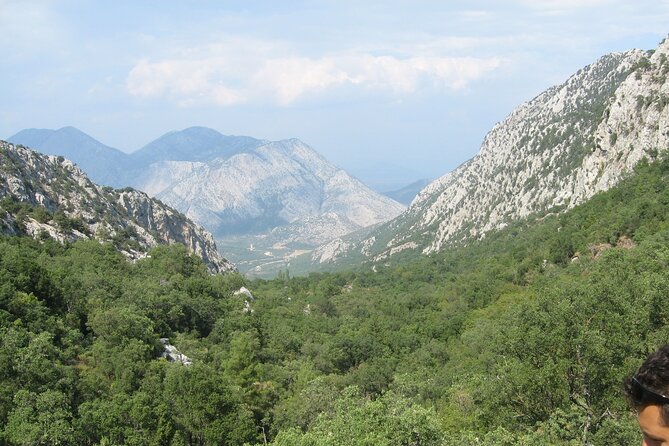
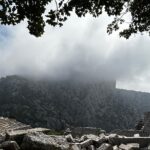
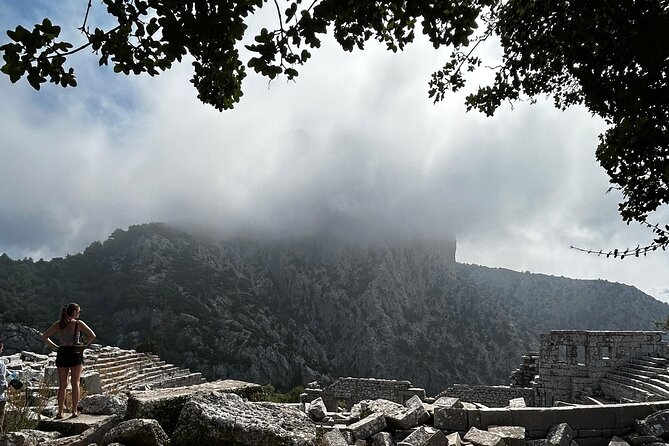
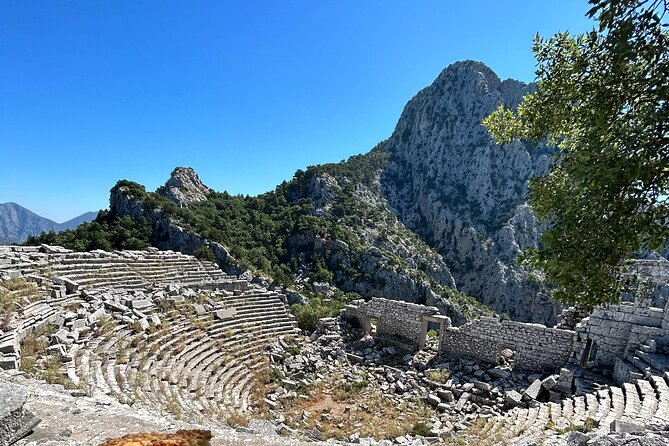
Termessos isn’t just another set of Roman leftovers. It’s an ancient city tucked into the Taurus Mountains, built between two peaks on Gulluk Mountain—part of why people compare it to the high-altitude feel of a famous mountain ruin. You’ll be above Antalya, but you won’t feel like you’re in the middle of nowhere. You’ll feel like you’re in control of the day: a guided drive up, then a walk on paths that are made for visitors.
The setting does a lot of the work for you. Even if you’re not the type who loves ruins for ruins’ sake, the mix of stone, forest, and huge mountain air makes the visit feel alive. You see the remains of daily life—public spaces, water systems, and civic buildings—without the usual heavy crowd energy you get at some headline sites.
And yes, the views are a big part of the payoff. Many people go for the ruins and end up remembering the panorama more than expected. When you’re high in the mountains early in the day, the light hits the rock and the distant slopes in a way that makes Termessos feel extra dramatic.
You can also read our reviews of more city tours in Antalya
Getting there from Antalya: pickup, timing, and where the day starts
This tour is designed to start in the city and end back in the city. You’re picked up by an air-conditioned vehicle from designated points, and dropped off afterward at a different designated location. The meeting point in Antalya is Kanal, Sakarya Blv. No:53 (Kepez). The return pickup point is Çaybaşı near the Burhanettin Onat tram station area (Muratpaşa).
Start time is 8:00 am, and that’s a big deal. Early means you miss some of the heat and you’re more likely to enjoy the site with breathing room. The tour also has a maximum of 14 travelers, which keeps the group from turning into a slow-moving parade.
You should plan on about 4 to 5 hours total, and the walking time is a portion of that. The tour includes guidance and transportation, which means you’re not spending your morning figuring out buses, transfers, or parking. You just show up, meet your guide, and follow the plan.
The walk itself: what the “easy” hike feels like on the ground
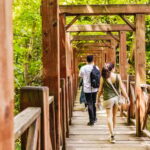
Let’s get practical: you’re not doing a technical climb. The route uses a pathway system inside the national park, and you don’t have to climb your way up like you’re scaling a wall.
From the way this day is described, you should think of it like this:
- A mostly straightforward path with short uphill moments
- Regular stops for explanation and viewpoints
- A pace that gives you time to look, listen, and catch your breath
One review experience mentioned roughly 3 km all in and about 160 m of elevation. That’s the kind of number that helps you decide what shoes to wear and how cautious you need to be. It’s also not the type of hike where you need superhuman stamina. But do bring decent footwear with grip—because even easy routes can get slick depending on the surface and morning conditions.
If you’re traveling with kids or you’re with someone who’s active but not into long hikes, this is the kind of day that can work. The path is described as accessible, and the guide actively manages the group to keep everyone safe.
Stop-by-stop: what you’ll see at Termessos (and why it matters)
Termessos is huge, so a guided route is what makes the visit feel focused instead of overwhelming. You’ll move through key zones that show how the city worked as a place to live, trade, gather, and worship.
Here’s how it typically unfolds:
Gulluk Dagi (Termessos) Milli Parki: the Eagle’s Nest setting
Your day starts when you arrive in the park area. From here, the city’s location becomes obvious fast: it’s built into the mountain, and you can feel how the terrain shaped defense and architecture. The altitude (around 1050 m) also adds that crisp mountain air that makes walking feel more comfortable than lowland heat.
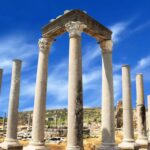
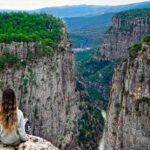
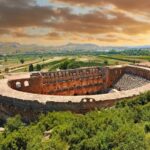
Theater and public gathering spaces
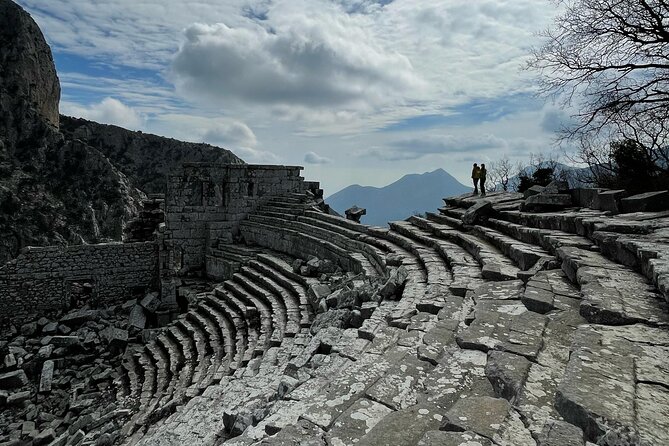
You’ll see the theater, which matters because it wasn’t just for entertainment. In ancient cities, the theater was a civic stage—people gathered, news traveled, and community identity got reinforced through performances.
You’ll also cover civic spaces like the agora (market/public center) and the bouleuterion (council area). These stops are how you connect everyday life to stone ruins. Instead of isolated monuments, you get the feel of a working city.
Gymnasium and the city’s routines
The gymnasium gives you a clue about education and social structure. Even if you don’t know ancient terms, the guide’s job is to translate what these spaces meant—where people trained, learned, and formed relationships.
Water canals and cisterns: the unglamorous miracle
One of the most satisfying parts of Termessos is its infrastructure. You’ll see features like water canals and a cistern. This is the “boring but fascinating” stuff—yet it’s exactly what makes an ancient city feel real. Water systems are what turn a ruin into a home. When you understand that, you start spotting the logic behind the layout.
Colonnaded street and the shopping street feel
The colonnaded street and areas that resemble a shopping street help you imagine motion: people moving from one public zone to another, commerce happening along the walkable spine of the city.
It’s not just pretty columns. It’s a map of how the city handled crowds, trade, and daily movement.
Temple of Artemis and Hadrian, plus major monuments
You’ll visit the temple of Artemis and Hadrian. Temples were both spiritual centers and power statements. They show you what the city honored, what rulers wanted remembered, and how culture mixed over time.
Then come the bigger structural clues about how strong the place was.
Fortifications, gates, necropolis, and rock tombs
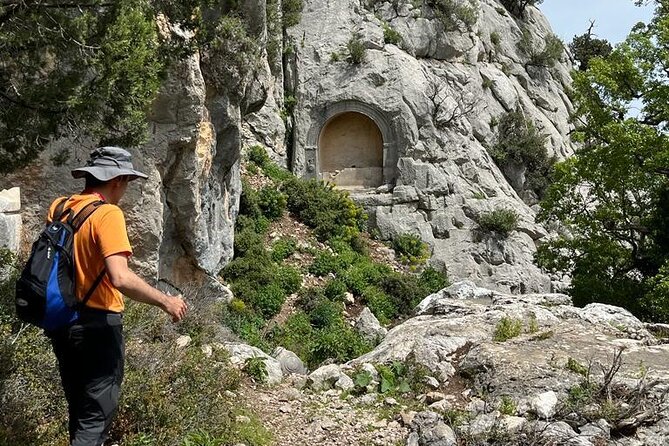
Termessos includes city fortifications and gates, plus burial areas like the necropolis and rock tombs. These are not quick sightseeing stops. If the guide is doing their job right (and Önder clearly does), you’ll start noticing how defense, access, and burial traditions relate to the same mountain setting.
End of tour: you turn back toward the city center. The drive back gives you a chance to decompress before you go back out for lunch or explore Antalya on your own.
Önder’s guiding style: how the stories make the ruins click
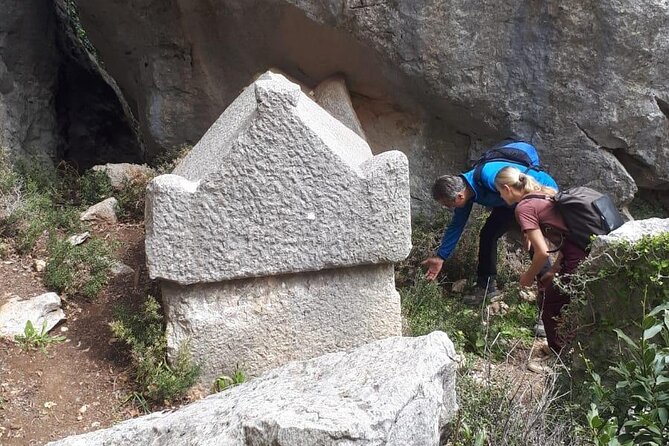
This tour lives or dies on the guide experience, and this one has a standout reputation for Önder. People consistently describe him as friendly and funny, but the real value is that he explains what you’re seeing in a way that feels understandable without turning into a lecture.
I like guides who can do two things at once: point out the details and connect them to real human behavior. Önder does that—talking about how people lived, traded, and built. He also works the day’s pace so you’re learning during the walk, not just stopping at random points to take photos.
A nice bonus: some guides share practical advice for the rest of your Antalya visit. In this case, Önder sent helpful tips for the old city area and even included restaurant recommendations. That’s the kind of extra that costs nothing but can save you time later.
If you want history, you’ll get it. If you just want the ruins to feel meaningful, you’ll still get that. The goal is the same: you leave understanding why Termessos was built here and what life looked like inside those walls.
Price and value: what $60.79 covers (and what doesn’t)
The price is $60.79 per person, and that’s for a short, structured half-day with real logistics handled for you: air-conditioned transport plus pickup and drop-off from designated points, plus guidance by a professional tour guide.
What’s not included is the entrance ticket. You buy it at the gate, and you’ll need cash. The tour also states admission ticket is not included, which matters because it changes the real total you’ll spend that day.
Here’s the value math in plain terms:
- You’re paying for time saved (no transport planning), plus a route that focuses on the key ruins
- You’re paying for context, so you don’t feel lost in a big site
- You’re paying for the benefit of a small group and a guide who can manage pace and attention
If you’re the kind of visitor who likes ruins but hates figuring things out on the ground, the price makes sense. If you already know the site well and you’re comfortable driving and navigating independently, you might decide to DIY. But for most people arriving from elsewhere in Antalya, a guided mountain route is the easiest way to get a high-quality visit without wasting half the day.
When to go and what to bring for a smooth mountain morning
Because this tour runs in good weather, your best bet is to plan with flexibility. The experience requires good weather, and if it can’t run due to weather conditions, you should expect a different date or a refund.
What to bring:
- Grippy walking shoes (the route is easy, but traction matters)
- Sun protection (even mountain walks can still hit you early)
- A small water bottle
- Cash for the entrance ticket, since it’s cash-only at the gate
Also, mentally prepare for the hike to be short but not zero effort. It’s described as accessible, and you don’t need to be “fit-fit” to do it, but you’ll still be walking and moving between viewpoints. If you treat it like a relaxed morning walk, you’ll have a better time than if you treat it like a casual stroll in a museum.
One fun detail from the experience descriptions: you might spot birds and even a large lizard while you’re up in the park. That’s part of why the walk feels more like exploring nature and history at the same time.
Should you book this Termessos hiking tour?
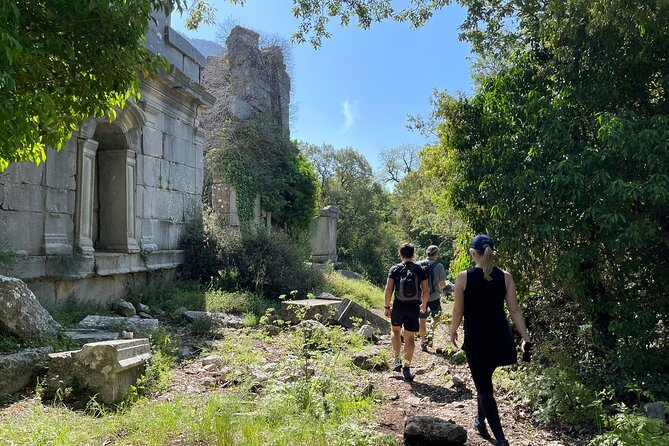
If you want a guided half-day that mixes ancient ruins with mountain atmosphere, I’d book it. The big reasons are simple: easy hiking paths, small group size, and Önder’s guide style that turns “rocks in a forest” into a city you can picture.
Book it if:
- You’re visiting Antalya and want a memorable stop that doesn’t feel overrun
- You like ruins but want help connecting the dots
- You’d rather do a structured tour than figure out tickets and transport by yourself
- You’re traveling with someone who needs an easier hiking day but still wants big views
Skip or reconsider if:
- You don’t want to buy a separate entrance ticket with cash at the gate
- You’re only comfortable with zero elevation and very flat walking (even “easy” includes some uphill)
- Weather is unpredictable for your dates and you don’t want to deal with date changes
If you can handle those basics, Termessos is one of the most satisfying archaeology stops near Antalya—because the setting and the explanation work together.
FAQ
How long is the Termessos hiking tour?
It runs about 4 hours on average (around 4 to 5 hours).
Is the entrance ticket included in the price?
No. You purchase the entrance ticket at the gate.
Can I pay by card at the entrance?
The tour information says the gate ticket can pay only cash.
What time does the tour start?
The start time is 8:00 am.
Where do pickup and drop-off happen?
Pickup is at Kanal, Sakarya Blv. No:53, 07080 Kepez/Antalya. Drop-off is at Çaybaşı, Burhanettin Onat Cd. No:15, 07100 Muratpaşa/Antalya, next to the Burhanettin Onat tram station.
What group size should I expect?
The maximum group size is 14 travelers.
What happens if the weather is bad?
This experience requires good weather. If it’s canceled due to poor weather, you’ll be offered a different date or a full refund.